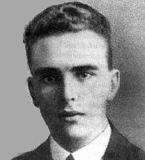
Frederick Bywaters
Murderer Albert Burrows
Murderer · United Kingdom · 1920
Albert Burrows (also named Albert Edward Burrows): married farm labourer who to…
4 victims
Albert Burrows
Murderer · United Kingdom · 1920
Albert Burrows (also named Albert Edward Burrows): married farm labourer who to…
4 victims
 Lock Ah Tam
Murderer · United Kingdom · 1925
Lock Ah Tam was 54 when he killed his wife and two daughters. He had been a suc…
3 victims
Lock Ah Tam
Murderer · United Kingdom · 1925
Lock Ah Tam was 54 when he killed his wife and two daughters. He had been a suc…
3 victims
 Alfred Arthur Rouse
Murderer · United Kingdom · 1930
Alfred Arthur Rouse (6 April 1894–10 March 1931) was a British murderer. It was…
1 victim
Alfred Arthur Rouse
Murderer · United Kingdom · 1930
Alfred Arthur Rouse (6 April 1894–10 March 1931) was a British murderer. It was…
1 victim
 Enrique Estrada
Murderer · USA · 1976
Enrique Estrada Enrique Estrada was a well-known drug abuser who was born in 19…
2 victims
Enrique Estrada
Murderer · USA · 1976
Enrique Estrada Enrique Estrada was a well-known drug abuser who was born in 19…
2 victims
 Jaturun Siripongs
Murderer · USA · 1981
Jaturun Siripongs was a native of Thailand and was known as “Jay” to friends an…
2 victims
Jaturun Siripongs
Murderer · USA · 1981
Jaturun Siripongs was a native of Thailand and was known as “Jay” to friends an…
2 victims
 James Francis Hurley
Murderer · United Kingdom · 1988
James Francis Hurley (born circa 1966) was an English convicted murderer and lo…
1 victim
James Francis Hurley
Murderer · United Kingdom · 1988
James Francis Hurley (born circa 1966) was an English convicted murderer and lo…
1 victim
 Thomas Blanton
Mass murderer · USA · 1963
Thomas Blanton Jr. was a Ku Klux Klan member. A Ku Klux Klan bombing of the Six…
4 victims
Thomas Blanton
Mass murderer · USA · 1963
Thomas Blanton Jr. was a Ku Klux Klan member. A Ku Klux Klan bombing of the Six…
4 victims
 Guy Richard Gamble
Murderer · USA · 1991
Guy Richard Gamble was sentenced to death on August 10, 1993. Gamble and Michae…
1 victim
Guy Richard Gamble
Murderer · USA · 1991
Guy Richard Gamble was sentenced to death on August 10, 1993. Gamble and Michae…
1 victim
 Teófilo Medina
Murderer · USA · 1984
Teofilo Medina, Jr. stole a gun from a pawn shop in Santa Ana, California. In t…
4 victims
Teófilo Medina
Murderer · USA · 1984
Teofilo Medina, Jr. stole a gun from a pawn shop in Santa Ana, California. In t…
4 victims
- Gender
- male
- Country
- United Kingdom
- Location
- London, England, United Kingdom
- Date of birth
- June 27, 1902
- Age at first offence
- 20
- Characteristics
- jealousy
- Victim profile
- Percy Thompson, 32 (his lover's husband)
- Method of murder
- Stabbing with knife
- Date(s) of murder
- October 3, 1922
- Years active
- 1922
- Date of arrest
- Next day
- Status
-
Executed
Executed by hanging in Pentonville Prison on January 9, 1923
Case overview
Frederick Edward Francis Bywaters (27 June 1902 – 9 January 1923) and Edith Jessie Thompson (25 December 1893 – 9 January 1923) were tried together for the murder of Percy Thompson. Both were convicted and sentenced to death by hanging.
Timeline
- October 3, 1922 — Percy Thompson and Edith Thompson attended a performance at the Criterion Theatre in London’s Piccadilly Circus and were returning home when a man jumped out from behind some bushes near their home and attacked Percy; Percy was stabbed and died before Edith could summon help; the attacker fled.
- October 4, 1922 — Bywaters lay in wait until just after midnight for Edith and Frederick who were returning home to Ilford (in Essex) after a night out at a theatre in London; Frederick (as written in the record) was stabbed several times and died at the scene.
- December 6, 1922 — The trial of Frederick Bywaters and Edith Thompson began on December 6, 1922 at the Old Bailey.
- December 11, 1922 — The jury returned a verdict of guilty.
- January 9, 1923 — In Holloway Prison, Edith Thompson was half carried to the scaffold where she had to be held upright while the noose was fitted; in Pentonville Prison, Bywaters was himself hanged; they were hanged simultaneously at 9.00 am, only about half-a-mile apart.
- 1970 — Holloway Prison was being rebuilt; Edith Thompson’s remains were exhumed and reburied together at Brookwood Cemetery in an unmarked grave (as written in the record).
- 1971 — Edith Thompson’s remains, along with three other women hanged at Holloway Prison, were exhumed and reburied together at Brookwood Cemetery in an unmarked grave.
- 1990s — A large, grey granite tombstone was emplaced on Plot 117 to mark Edith Thompson’s grave.
Background
Edith Thompson was born Edith Graydon at 97 Norfolk Road in Dalston, London, as the first of the five children of William Eustace Graydon (1867–1941), a clerk with the Imperial Tobacco Company, and his wife, Ethel Jessie Liles (1872–1938), the daughter of a police constable. She was described as a happy, talented girl who excelled at dancing and acting, and as academically bright with a natural ability in arithmetic. After leaving school, she worked as a bookkeeper for a fabric importer, established a reputation as a stylish and intelligent woman, and was promoted until she became their chief buyer and made regular trips to Paris.
In 1909 she met Percy Thompson, and after a six-year engagement they married in 1916. The couple bought a house in the town of Ilford in Essex and lived a comfortable life.
Freddy (Frederick) Bywaters met Edith Thompson and the record gives that Bywaters and Edith had met nine years earlier when Bywaters had been a school friend of Edith’s younger brother. In 1920 Bywaters joined the merchant navy. The record described Bywaters as handsome and impulsive, with stories of his travels around the world that interested Edith. Percy Thompson was described as staid and conventional, and Bywaters was described as more closely resembling Edith’s romantic ideal. Percy welcomed Bywaters, and the trio, joined by Edith’s sister, holidayed on the Isle of Wight. Upon their return, Percy invited Bywaters to lodge with them. Edith and Bywaters began an affair soon after.
The record states that Percy confronted them when he realised this, and that a quarrel broke out in which Bywaters demanded that Percy divorce Edith and Percy ordered him from the house. Edith later described a violent confrontation with Percy after Bywaters left, saying Percy struck her several times and threw her across the room.
From September 1921 until September 1922 Bywaters was at sea, and during this time Edith Thompson wrote to him frequently. Upon his return they met again.
The offence
On October 3, 1922, Percy Thompson was attacked by a man who jumped out from behind some bushes near their home. The record described a violent struggle in which Edith Thompson was also brutally knocked to the ground, and in which Percy was stabbed. Percy died before Edith could summon help. The attacker fled.
The record states that neighbours later reported hearing a woman screaming hysterically and shouting “no don’t” several times, and that by the time police arrived she had still not composed herself.
At the police station, Edith Thompson appeared distressed and confided to police that she knew who the killer was, naming Freddy Bywaters. She was described as believing herself to be a witness rather than an accomplice, and as providing police with details of her association with Bywaters.
The record also includes a conflicting account stating that on October 4, 1922 Bywaters lay in wait until just after midnight for Edith and Frederick (as written in the record) returning home to Ilford after a night out at a theatre in London and stabbed Frederick several times, and that Frederick died at the scene.
Investigation and arrest
As police investigated further they arrested Bywaters. The record states that police discovered a series of more than sixty love letters from Edith Thompson to Bywaters and arrested her too.
The record states that the letters were the only tangible evidence linking Edith Thompson to the murders and allowed consideration of common purpose: if two people wish to achieve the death of a third and one of them acts on the expressed intentions of both, both are equally guilty by law. The record states that both were charged with murder.
Trial
The trial began on December 6, 1922 at the Old Bailey. The record states that Bywaters co-operated completely. It also states that he led police to the murder weapon he had concealed after the murder and consistently maintained that he had acted without Edith’s knowledge.
The love letters were produced as evidence. In these Edith Thompson declared her love for Bywaters and her desire to be free of Percy. The record states that she said on one occasion she had ground a glass light bulb to shards and fed them to Percy mixed into mashed potato, and on another occasion had fed him poison. It also states that Percy failed to die and failed to become ill, and that Edith implored Freddy to “do something desperate”.
Thompson’s counsel urged her not to testify, stressing that the burden of proof lay with the prosecution and that there was nothing they could prove other than that she had been present at the murder. The record states that Thompson then insisted that she would take the stand. The record says her testimony proved damning and that she was caught in a series of lies.
The record describes her demeanour as variously flirtatious, self pitying and melodramatic, and says her testimony made a poor impression on the judge and the jury, especially when she contradicted herself. When asked about the meaning of some passages in her letters, she said “I have no idea”.
The record states that Thompson’s testimony negated positive testimonies of neighbours who had heard Thompson crying out in horror during her husband’s murder, and also negated statements from police who dealt with the immediate investigation stating Thompson appeared to be in a genuine state of shock and disbelief and attested to her assertions of “Oh god, why did he do it?” and “I never wanted him to do it”.
Bywaters stated that Edith Thompson had known nothing of his plans because he had not intended to murder Percy Thompson. He said his aim was to confront Percy and force him to deal with the situation, and that when Thompson had reacted in a superior manner, Bywaters had lost his temper. Bywaters repeatedly stated that Edith Thompson made no suggestion to him to kill Percy, and that she did not know that he intended to confront him.
In discussing the letters, Bywaters stated that he had never believed Edith Thompson had attempted to harm her husband, but that he believed she had a vivid imagination fuelled by novels she enjoyed reading, and that in her letters she viewed herself as one of fictional characters.
The record includes a further account of Bywaters’ position in which he refused to incriminate Edith and gave his account in a quoted form:
“I waited for Mrs. Thompson and her husband. I pushed her to one side, also pushing him into the street. We struggled. I took my knife from my pocket and we fought and he got the worst of it”
“The reason I fought with Thompson was because he never acted like a man to his wife. He always seemed several degrees lower than a snake. I loved her and I could not go on seeing her leading that life. I did not intend to kill him. I only meant to injure him. I gave him the opportunity of standing up to me like a man but he wouldn't”.
In that account, Edith had been advised against going into the witness box by her lawyer but decided to do so and incriminated herself by answering that she had “no idea” what she had meant when she had asked Bywaters to send her “something to give her husband”.
The record states that, in his summing up, the judge described Edith’s letters as “full of the outpourings of a silly but at the same time, a wicked affection”.
The record also quotes the judge’s directions:
“You will not convict her unless you are satisfied that she and he agreed that this man should be murdered when he could be, and she knew that he was going to do it, and directed him to do it, and by arrangement between them he was doing it.”
The record states that on December 11, the jury returned a verdict of guilty of murder and that both Thompson and Bywaters were sentenced to death by hanging.
After the verdict, the record says Bywaters loudly protested Thompson’s innocence, while Thompson became hysterical and started screaming in court.
Sentencing
Both Edith Thompson and Frederick Bywaters were sentenced to death by hanging.
Appeals
Both lodged appeals, and the record states that both were dismissed.
Imprisonment and execution
The record states that before and during the trial, the couple were the subjects of sensational and critical media commentary, and that after they were sentenced to death there was a dramatic shift in public attitudes and media coverage. It states that almost one million people signed a petition against the death sentences. It also states that Bywaters attracted admiration for his fierce loyalty and protectiveness towards Thompson.
Despite the petition, and a new confession from Bywaters in which he once again declared Thompson to be completely innocent, the Home Secretary, William Bridgeman, did not extend them a reprieve. The record states that Thompson was told of the date fixed for her execution a few days beforehand and lost her composure.
On the morning of her execution, Thompson was heavily sedated but remained agitated. On January 9, 1923 in Holloway Prison, Thompson was half carried to the scaffold where she had to be held upright while the noose was fitted. In Pentonville Prison, Bywaters was hanged. The record states they were hanged simultaneously at 9.00 am, about half a mile apart.
The record further states that later the bodies of Thompson and Bywaters were buried within the walls of the prisons where they had been executed.
Outcome
Edith Thompson and Frederick Bywaters were executed by hanging.
Aftermath
The record states that the hanging of Edith Thompson shocked British society and that many supporters argued she had been hanged for no more than adultery. It states that an autopsy on Percy Thompson had failed to reveal evidence that he had been fed ground glass or any detectable poison.
It states that grave concerns about Thompson’s letters being the work of a bored, imaginative and immature housewife who had fantasised about a life without her husband without intending him harm were insufficient to save her, though supporters continued to speak on her behalf.
The record states that after her death, supporters became more vocal and critical of how the case had been handled. It says Home Office files were marked not to be opened for 100 years, helping to stifle examination of the case while adding fuel to rumours. It also states that many letters were censored during the trial because they dealt with subjects such as menstruation and orgasm, which were not considered fit for public discussion, and which may in part have accounted for keeping them from public scrutiny for 100 years. The record states that at trial, jurors were presented with only snippets from the letters and were prevented from placing them in the context of her extended writing.
The record states that several years later it was revealed that upon dropping through the scaffold Thompson had suffered a massive haemorrhage. It says conjecture arose that she had been pregnant, but that no subsequent post-mortem examination was made. It states that John Ellis, her executioner, eventually committed suicide, and that his closest associates said he had remained haunted by the horror of Thompson’s final moments. It also states that all women hanged in Britain after Thompson were required to wear a special garment to prevent a recurrence of the massive bleeding suffered by Thompson.
The record states that in 1971 Edith Thompson’s remains, along with three other women hanged at Holloway Prison, were exhumed and reburied together at Brookwood Cemetery in an unmarked grave. It adds that in the 1990s a large, grey granite tombstone was emplaced on Plot 117 to mark her grave.
Other details
The record includes statements about a petition against the imposed death sentences and about public reaction.
The record also includes a “case in popular culture” section stating that the couple were the subject of waxworks at Madame Tussauds and were highly popular with patrons. It states that Alfred Hitchcock expressed a wish to make a documentary film on a real life case and repeatedly commented that the Thompson and Bywaters case was the one he would most like to film. The record states that their story provided the basis for several fictional stories and plays, and that P. D. James and Dorothy Sayers wrote fiction based on their story. It states that Lewis Broad wrote “The Innocence of Edith Thompson: A Study in Old Bailey Justice in 1952” in 1952. It states that a study titled “Fred and Edie” by Jill Dawson was published in 2000, and that a biography of Thompson titled “Criminal Justice : The True Story of Edith Thompson” by Rene Weis was published in 1988. It states that a new edition came out in 2001 to coincide with the film “Another Life” which told their story. It states that Natasha Little played Edith Thompson, Nick Moran played Percy Thompson, and Ioan Gruffudd played Freddy Bywaters.
The record also states that in 2006 the writer Molly Cutpurse published “A Life Lived”, a novel about how Edith’s life may have developed had she been allowed to live.
The record contains a further account describing Edith Thompson as “quite attractive”, stating her age as 28 and Percy Thompson’s age as 32, saying they had no children, and describing Edith as manageress of a milliners in London and as having an affair with Bywaters, described as “20 year old Frederick Bywaters” who was a ship’s steward. It states that their relationship started in June 1921 when he accompanied the Thompsons on holiday to the Isle of Wight, that he moved in as lodger waiting for his next job on board ship, and that Percy had chucked him out for getting too friendly with Edith. It says Bywaters witnessed a violent row between Edith and Percy and later comforted Edith. It states that his ship was to sail on the 9th September of 1921 and that he saw Edith secretly from time to time until booking into a hotel with her under false names. It says the record portrayed Bywaters as a decisive (impulsive) young man who, according to him, decided on his own to stab Percy Thompson because he felt Percy was making Edith’s life miserable.
The record includes quoted shouting:
- “no don’t”
- “Oh don’t!”
- “Oh don’t! ”
- “Oh God why did he do it”
- “I didn’t want him to do it”
- “Oh god, why did he do it?”
- “I never wanted him to do it”
- “do something desperate”
- “I have no idea”
The record also includes references to “Darlingest and Darlint” and to Edith having written no less than 62 intimate letters to Bywaters, plus a quote about poison attempts:
“You said it was enough for an elephant”
“Perhaps it was. But you don't allow for the taste making it possible for only a small quantity to be taken”
Spotted an error, or have more information about this case?