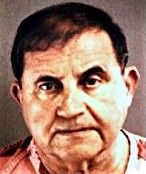
Thomas Blanton
Mass murderer Francisco Paula Gonzales
Mass murderer · USA · 1964
Francisco Paula Gonzales was a passenger on Pacific Air Lines Flight 773. Gonza…
44 victims
Francisco Paula Gonzales
Mass murderer · USA · 1964
Francisco Paula Gonzales was a passenger on Pacific Air Lines Flight 773. Gonza…
44 victims
 John Gilbert Graham
Mass murderer · USA · 1955
John “Jack” Gilbert Graham was born on January 23, 1932, at Denver, Colorado. H…
44 victims
John Gilbert Graham
Mass murderer · USA · 1955
John “Jack” Gilbert Graham was born on January 23, 1932, at Denver, Colorado. H…
44 victims
 Thomas Doty
Mass murderer · USA · 1962
Thomas G. Doty was a passenger on Continental Airlines Flight 11. He was a marr…
44 victims
Thomas Doty
Mass murderer · USA · 1962
Thomas G. Doty was a passenger on Continental Airlines Flight 11. He was a marr…
44 victims
 Julian Andrew Frank
Mass murderer · USA · 1960
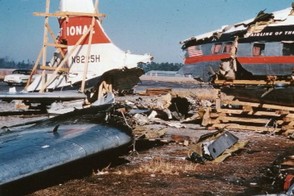
6 January 1960 — National Airlines Flight 2511 exploded and crashed 1-1/2 miles…
33 victims
Julian Andrew Frank
Mass murderer · USA · 1960
6 January 1960 — National Airlines Flight 2511 exploded and crashed 1-1/2 miles…
33 victims
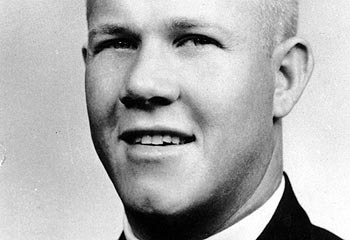 Charles Whitman
Mass murderer · USA · 1966
Charles Joseph Whitman (June 24, 1941 – August 1, 1966) shot and killed 14 peop…
15 victims
Charles Whitman
Mass murderer · USA · 1966
Charles Joseph Whitman (June 24, 1941 – August 1, 1966) shot and killed 14 peop…
15 victims
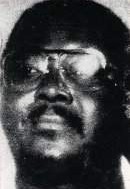 James Edward Pough
Mass murderer · USA · 1971
James Edward Pough (1948 – 18 June 1990) was an American mass murderer. On 18 J…
12 victims
James Edward Pough
Mass murderer · USA · 1971
James Edward Pough (1948 – 18 June 1990) was an American mass murderer. On 18 J…
12 victims
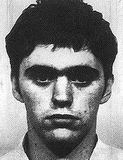 Paul Luckman
Homicide · Australia · 1982
Robin Reid — Australian criminal and co-accused in the murder of 13-year-old Br…
1 victim
Paul Luckman
Homicide · Australia · 1982
Robin Reid — Australian criminal and co-accused in the murder of 13-year-old Br…
1 victim
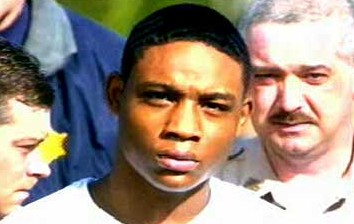 Devin Moore
Murderer · USA · 2003
Devin Moore (born 1985) was a teenager from Alabama. He sparked controversy ove…
3 victims
Devin Moore
Murderer · USA · 2003
Devin Moore (born 1985) was a teenager from Alabama. He sparked controversy ove…
3 victims
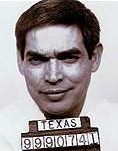 Juan Raul Garza
Murderer · USA / Mexico · 1990
Juan Raul Garza was executed by lethal injection by the U.S. Government at Indi…
8 victims
Juan Raul Garza
Murderer · USA / Mexico · 1990
Juan Raul Garza was executed by lethal injection by the U.S. Government at Indi…
8 victims
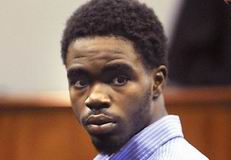 De'Marquise Elkins
Homicide · USA · 2013
De'Marquise Elkins was a Georgia teenager who fatally shot a baby in a stroller…
1 victim
De'Marquise Elkins
Homicide · USA · 2013
De'Marquise Elkins was a Georgia teenager who fatally shot a baby in a stroller…
1 victim
- Gender
- male
- Country
- USA
- Location
- Birmingham, Alabama, USA
- Date of birth
- 1939
- Age at first offence
- 24
- Characteristics
- anarchist, hate crime, murder for hire
- Victim profile
- Denise McNair, 11 / Addie Mae Collins, 14 / Cynthia Wesley, 14 / Carole Robertson, 14
- Method of murder
- P lanting 19 sticks of dynamite in the basement of the church
- Date(s) of murder
- September 17, 1963
- Years active
- 1963
- Date of arrest
- —
- Status
-
Life imprisonment
Sentenced to life in prison on May 2, 2001
Background
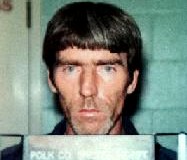
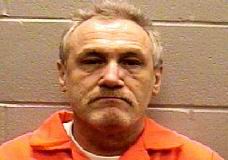
Thomas Blanton Jr. was a Ku Klux Klan member.
A Ku Klux Klan bombing of the Sixteenth Street Baptist Church occurred in Birmingham, Alabama.
Four black girls were killed in the bombing: Denise McNair, Addie Mae Collins, Carole Robertson, and Cynthia Wesley.
The offence
On the early Sunday morning of September 15, 1963, a bomb exploded at the Sixteenth Street Baptist Church in Birmingham, Alabama. The explosion killed four girls and injured twenty people.
Five girls were changing into their choir robes in the church basement. At 10:19 a.m., a bomb exploded, killing four of the girls and injuring twenty people.
The four girls who died were:
- eleven-year-old Denise McNair
- fourteen-year-old Addie Mae Collins
- fourteen-year-old Carole Robertson
- fourteen-year-old Cynthia Wesley
The bombing injured more than 20 people. The blasts also injured 22 people.
The blast injured more than 20 and took the lives of Denise McNair, 11, and Addie Mae Collins, Cynthia Wesley and Carole Robertson, all 14.
The attack was intended to instill fear in those supporting equal civil rights without regard to race. Instead, it caused public outrage and spurred the civil-rights movement to further success.
The three-story 16th Street Baptist Church was a rallying point for civil-rights activities. The church served as an important part of the African-American community and was used as a meeting place during the civil rights movement. It was used for mass rallies and Martin Luther King Jr. was among the many leaders who spoke at these events. It had also been the headquarters for several desegregation protests.
When the church was bombed, it was a sign of the hostility that segregationists had against the civil rights struggle.
The explosion blew a hole in the east side of the church, shattered windows, walls, doors, and filled the air with a thick cloud of dust and soot. As community members dug through the debris in search of survivors, they discovered the bodies of the four victims. The explosion blew a hole in the church’s rear wall, destroyed the back steps, and left intact only the frames of all but one stained-glass window. The lone window that survived the concussion was one in which Jesus Christ was depicted leading young children, although Christ’s face was destroyed.
In addition, five cars behind the church were damaged, two of them completely destroyed, while windows in the laundry across the street were blown out.
Bomb threats had been made in the past, and in those instances the church had been able to take special precautions. On this occasion, no threat had been made.
The attack involved United Klans of America members. The bombing involved Bobby Frank Cherry, Thomas Blanton, and Robert “Dynamite Bob” Chambliss, who planted 19 sticks of dynamite in the basement of the church. Chambliss was also convicted of having 122 sticks of dynamite without a permit.
Investigation
The FBI led the initial investigation into the bombing.
A 1965 FBI memorandum to director J. Edgar Hoover determined that Robert E. Chambliss, Bobby Frank Cherry, Herman Frank Cash, and Thomas E. Blanton Jr. had planted the bomb. Based on the investigation, the Birmingham FBI office recommended prosecuting the suspects.
Hoover blocked prosecution of the case in 1965 by rejecting the recommendation that the federal prosecutor receive the testimony that identified the suspects.
By 1968, charges had not been filed and the FBI closed the case.
In 1971, Alabama Attorney General Bill Baxley reopened the case.
The case was reopened in 1988, and in July 1997, after the FBI received a tip, the investigation continued.
It was stated that the FBI had four suspects initially: Chambliss, Blanton, Herman Cash and Bobby Frank Cherry.
Cash died in 1994 before ever being charged.
Cherry was indicted last year along with Blanton, and his trial was indefinitely postponed early last month when Garrett ruled that he was not mentally competent. Prosecutors sought another psychiatric evaluation, hoping to challenge Garrett’s ruling.
There were FBI tapes. The jurors later acknowledged that the FBI tapes were the evidence that led them to convict.
The tapes had remained secret until 1997, when the case was reopened.
The prosecution presented FBI agent testimony describing surveillance and secret taping of Blanton. Some tapes were made on a tape recorder placed by the FBI in the trunk of Burns’s car. Other tapes were obtained by the use of a microphone implanted in a wall of the kitchen of Blanton’s apartment by FBI technicians, who, posing as truck drivers, had rented the adjoining unit.
In crucial sections of the tapes, Blanton told Burns that the bombing of the 16th St. Church “wasn’t easy,” and in a conversation with his then-wife, Blanton talked of going to a meeting “to plan the bomb.”
Mitchell Burns acknowledged under cross-examination that in none of the many conversations he had had with Blanton had he ever done so that Blanton explicitly admitted to having carried out the bombing.
In one recorded conversation between Blanton and his wife, Blanton told her that he was at the Klan meeting where both the bombing was planned and the bomb was made.
In another recorded conversation, Blanton spoke about the bombing to an FBI informant while driving in a car.
It was stated that years later it was found that the FBI had accumulated evidence against the bombers that had not been revealed to the prosecutors, by order of FBI director J. Edgar Hoover.
The FBI listening device in 1964 caught Blanton telling his wife about planning and building “the bomb.”
Arrest
The record stated that Blanton was indicted nearly a year before the trial after reopening of the investigation into the Sept. 15, 1963, bombing of the Sixteenth Street Baptist Church.
Trial
People and roles
Doug Jones was the U.S. attorney who led the prosecution team in state court.
John C. Robbins was appointed as Blanton’s attorney.
The jurors heard evidence in a crowded courtroom.
Mitchell Burns was an informant.
The prosecution used segments of FBI tapes.
FBI agents testified regarding their interviews with Blanton after the bombing and investigation over the following months.
Trial evidence and witness testimony
The prosecution presented numerous witnesses who were present at the time of the bombing.
Witnesses included the mother of Denise McNair, who was teaching a Sunday school class, and the pastor, the Reverend John Cross, who described digging through the rubble to find the bodies of the girls.
Other testimony described the surveillance and secret taping of Blanton.
Witnesses testified to the virulence of Blanton’s segregationist views and to his involvement in Ku Klux Klan activities.
The trial took place over a little over a week. The case went to the jury on May 1. Jurors deliberated for only a little over two hours before returning a verdict.
The defense was unsuccessful in seeking to prevent the playing of the tapes, which were made in 1964 and 1965 before Congress restricted such secret taping without a court order.
Courtroom statements and arguments (verbatim)
Assistant U.S. Attorney Robert Posey began the day by reminding jurors of testimony that Blanton was a violent racist and a womanizer in the 1960s.
Posey said: "This defendant killed this beautiful child because of the color of her skin," Posey said. "He killed those four worshippers in God's house on a Sunday morning because he was a man of hate."
Robbins urged jurors to look at what he called insufficient evidence. Robbins said: "We leave the emotion at home on the doorstep with the families, where it belongs," Robbins said. The jury, he said, needed to show the world that "we are not going to simply sacrifice some person for some closure. "If you do that, if you make your decision that way, then those four girls died in vain," Robbins said.
Posey used the same phrase for the prosecution. Posey said: "These children must not have died in vain," Posey said. "Don't let the deafening blast from his bomb be what's left ringing in our ears."
Robbins told jurors their civic duty lay in rendering an impartial verdict, not righting the wrongs of Birmingham's past. Robbins said: "Don't get lost in the moment," Robbins told the jury. "We've got a courtroom full of people thinking this is some moment in history that we all have to watch. Don't get caught up in that."
Jones played to the 11-woman, one-man jury by gesturing toward Maxine McNair and Alpha Robertson, Carole Robertson's wheelchair-bound mother. Jones said: "A mother's heart never stops crying," Jones said several times.
Jones recalled testimony from Sarah Collins Rudolph, another sister of Addie's. Jones said: "As Sarah called out to Addie," said Jones, noting Monday would have been the dead girl's 51st birthday, "today, let us call out to Addie."
Verdict
Jurors deliberated for only a little over two hours before returning a verdict of guilty on all four counts.
The verdict automatically meant four sentences of life in prison.
Jurors later acknowledged that the FBI tapes were the evidence that led them to convict.
Blanton did not testify, and the defense called only two witnesses.
Sentencing
Thomas Blanton was sentenced to a term of life imprisonment for each of the four murders.
The record stated that Thomas Blanton Jr. was sentenced to a term of life imprisonment for each of the four murders, and also that the sentence was on May 2, 2001.
It was stated that one juror wept as the forewoman, a middle-aged black woman, read the verdicts in a quavering voice.
The verdict read by the forewoman resulted in four life prison sentences for Blanton.
Blanton told the judge through the record’s quoted statement: "I guess the good Lord will settle it on Judgment Day," the former Ku Klux Klansman told Jefferson County Circuit Judge James Garrett.
Three sheriff’s deputies led Blanton from the courtroom in handcuffs.
Blanton’s lawyer John Robbins said his client would appeal.
Appeals
Robbins said the short deliberations indicated jurors disregarded the evidence and ruled with their sentiments.
Robbins said a main issue on appeal would be the legality of surveillance tapes the FBI made at Blanton's apartment in 1964 without a warrant.
Robbins said he planned to raise issues with the appeals court involving jury selection but did not specify.
Robbins said: "You saw the makeup of the jury," he said of the final panel, which included no white men. "Draw your own conclusions."
Outcome
Thomas Blanton Jr. was found guilty on all four counts.
Two of the four main suspects had received life sentences by 2001, with Robert Chambliss receiving life sentences earlier.
It was stated that Robert Chambliss, known as “Dynamite Bob,” was convicted in 1977 and died in prison in 1985.
Aftermath
Outrage at the bombing and grief that followed resulted in violence across Birmingham, with two more African-American youths dead by the end of the day.
Sixteen-year-old Johnnie Robinson was shot and killed by police after throwing stones at cars with white people inside.
Thirteen-year-old Virgil Ware was killed by two whites riding on a motor scooter.
Three days after the tragedy, former Birmingham police commissioner Bull Connor further inflamed matters by saying to a crowd of 2,500 people at a Citizen’s Council meeting, "If you're going to blame anyone for getting those children killed in Birmingham, it's your Supreme Court."
Connor recalled that in 1954, after the Brown v. Board of Education decision had been reached, he said: "You're going to have bloodshed, and it's on them (the Court), not us."
He also proposed that African-Americans may have set the bomb deliberately to provoke an emotional response, saying: "I wouldn't say it's above (Dr. Martin Luther) King's crowd."
After reopening the case several times, the FBI in 2000 assisted the state authorities in bringing charges against Cherry and Thomas Blanton.
Though Cherry publicly denied involvement, relatives and friends testified that he “bragged” about being part of the bombing, and his ex-wife testified, "He said he lit the fuse."
It was stated that the conviction of Blanton and Cherry was a long awaited victory for the family and friends of the four murdered girls.
At the funeral of three of the girls, Martin Luther King, Jr. spoke about life being "as hard as crucible steel." More than 8,000 mourners, including 800 clergymen of both races, attended the service.
Other details
Related timing and additional trial names
The record stated that jurors were sequestered and alternates were dismissed before jury deliberations.
Garrett had sequestered the jurors and alternates since April 23 and declined to release their names.
None of them commented to the media Tuesday.
One person said: "We just want to go home and relax."
Jones praised the jury and said: "They thought about it. They deliberated. They analyzed the evidence," he said. "There was not an overwhelming amount of evidence for them to look at. ... That doesn't mean that they didn't give it due consideration."
Estella Boyd, 73, a longtime church member who knew the victims, wept softly moments after the verdict. Boyd said: "I'm just happy he had the courage to drive the matter."
Woods said: "Justice delayed is still justice, and we've got it right here in Birmingham tonight," said Jones. "I hope they get a little comfort in the verdict," Robbins said of the victims' families. "Our hearts go out to them."
Robbins said: "I would think that this trial in another community... probably would have had a different verdict."
Woods said the verdict "makes a statement of how far we've come."
The record said protesters, motorists, and clapping were reported as the news of the verdict spread over the radio.
It also quoted Woods as saying: "I'll sleep well tonight, better than I've slept in many years."
Jones said: "Justice delayed is still justice," he said.
Named individuals connected to the victims
Chris and Maxine McNair were Denise’s parents.
Junie Collins was Addie’s sister.
Alpha Robertson was Carole Robertson’s wheelchair-bound mother.
The record stated that the jurors heard testimony that Sarah Collins Rudolph was another sister of Addie.
Victims: personal details (as stated)
Denise McNair was born November 17, 1951. She was the first child of photo shop owner Chris and schoolteacher Maxine McNair. Her playmates called her Niecie. She had many friends and was a pupil at Center Street Elementary School. She held tea parties, was a member of the Brownies, and played baseball. She helped raise money to support muscular dystrophy by creating plays, dance routines, and poetry readings, which became an annual event. People gathered in the yard to watch the show in Denise’s carport, the main stage. Children donated their pennies, dimes, and nickels. Denise was a schoolmate and friend of Secretary of State Condoleezza Rice.
Cynthia Wesley was born April 30, 1949. She was the first adopted daughter of Claude and Gertrude Wesley, who were both teachers. Her mother made her clothes because of her petite size. Cynthia went to school at Ullman High School, which no longer exists. She excelled in math, reading, and band. Cynthia held parties in her backyard for all her friends. Upon Cynthia’s death she was so mutilated the only way to identify her was by the ring she wore, which was recognized by her father.
Carole Robertson was born April 24, 1949. She was the third child of Alpha and Alvin Robertson. Her sister was Dianne and her brother was Alvin. Her father was a band master at the local elementary school. Her mother was a librarian, avid reader, dancer, and clarinet player. Carole enjoyed reading and excelled at school. She was a straight-A student, a member of Parker High School marching band and science club. She was also a Girl Scout and belonged to Jack and Jill of America. When she was at Wilkerson Elementary School she sang in the choir. Her legacy helped create the Carole Robertson Center for Learning in Chicago, a social service agency that serves children and their families.
Addie Mae Collins was born April 18, 1949, the daughter of Oscar and Alice. Her father was a janitor and her mother a homemaker. She was one of seven children. Addie was the peacemaker between the bunch. She was also an avid softball player. A youth center dedicated to Addie and her ideals was created in Alabama.
Music, film, literature, and cultural references
The song “Birmingham Sunday,” composed by Richard Farina and recorded by Joan Baez, chronicled the events and aftermath of the bombing.
The song “Mississippi Goddam” was composed and sung by Nina Simone in reaction to the racially-motivated bombings.
A 1997 documentary about the bombing, 4 Little Girls, directed by Spike Lee, was nominated for an Academy Award for “Best Documentary”.
The song “Alabama’ on John Coltrane’s Live at Birdland (recorded November 18, 1963) served as an elegy to the bombing.
The song “Ronnie & Neil” on Drive-By Truckers' double album, Southern Rock Opera, referenced the event in the opening line of the song, "Church blows up in Birmingham/ Four little black girls killed/ For no goddamned good reason."
The novel The Watsons Go to Birmingham: 1963 by Christopher Paul Curtis mentioned the events of the bombing.
The poem “The Ballad of Birmingham” by Dudley Randall was referenced.
The song “American Guernica” by Adolphus Hailstork was referenced.
A 2002 television drama Sins of the Father, directed by Robert Dornhelm, was based on the events of the bombing.
Further reading listed:
- Branch, Taylor (1988). Parting the Waters: America in the King Years, 1954 -1963 . New York: Simon & Schuster. ISBN 0-671-68742-5.
- Sikora, Frank (April 1991). Until Justice Rolls Down: The Birmingham Church Bombing Case . Tuscaloosa, AL: University of Alabama Press. ISBN 0-8173-0520-3.
- Cobbs, Elizabeth H.; Smith, Petric J. (April 1994). Long Time Coming: An Insider’s Story of the Birmingham Church Bombing that Rocked the World . Birmingham, AL: Crane Hill. ISBN 1-881548-10-4.
Spotted an error, or have more information about this case?