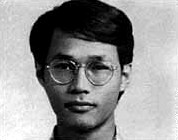
Jaturun Siripongs
Murderer Ervil LeBaron
Murderer · USA · 1972
Ervil Morrell LeBaron (1925 to August 16, 1981) was the leader of a polygamous…
35 victims
Ervil LeBaron
Murderer · USA · 1972
Ervil Morrell LeBaron (1925 to August 16, 1981) was the leader of a polygamous…
35 victims
 Brian Kevin Rosenfeld
Murderer · USA · 1985
Brian Kevin Rosenfeld Brian Kevin Rosenfeld was sentenced to three concurrent l…
23 victims
Brian Kevin Rosenfeld
Murderer · USA · 1985
Brian Kevin Rosenfeld Brian Kevin Rosenfeld was sentenced to three concurrent l…
23 victims
 Marvin Gray
Murderer · USA · 1975
Marvin Gray was convicted killer who claimed responsibility for 23 slayings and…
23 victims
Marvin Gray
Murderer · USA · 1975
Marvin Gray was convicted killer who claimed responsibility for 23 slayings and…
23 victims
 Yahweh ben Yahweh
Murderer · USA · 1980
Yahweh ben Yahweh was born and legally named Hulon Mitchell Jr. (October 27, 19…
23 victims
Yahweh ben Yahweh
Murderer · USA · 1980
Yahweh ben Yahweh was born and legally named Hulon Mitchell Jr. (October 27, 19…
23 victims
 Russell Ellwood
Murderer · USA · 1991
Russell Ellwood was a former taxi driver. Authorities suspected him of killing…
20 victims
Russell Ellwood
Murderer · USA · 1991
Russell Ellwood was a former taxi driver. Authorities suspected him of killing…
20 victims
 Veronica Gonzales
Murderer · USA · 1995
Defendant: Veronica Utilia Gonzales (Veronica Gonzales) · Alias/names used in p…
1 victim
Veronica Gonzales
Murderer · USA · 1995
Defendant: Veronica Utilia Gonzales (Veronica Gonzales) · Alias/names used in p…
1 victim
 James Emery Paster
Murderer · USA · 1980
James Emery Paster (#752) was convicted of capital murder and sentenced to deat…
3 victims
James Emery Paster
Murderer · USA · 1980
James Emery Paster (#752) was convicted of capital murder and sentenced to deat…
3 victims
 Andrew Urdiales
Serial killer · USA · 1986
Andrew Urdiales was in the Marines. While he was in the Marines, he was called…
8 victims
Andrew Urdiales
Serial killer · USA · 1986
Andrew Urdiales was in the Marines. While he was in the Marines, he was called…
8 victims
 Rev. Gerald Robinson
Murderer · USA · 1980
Rev. Gerald Robinson (born April 14, 1938) was an American murderer and a Roman…
1 victim
Rev. Gerald Robinson
Murderer · USA · 1980
Rev. Gerald Robinson (born April 14, 1938) was an American murderer and a Roman…
1 victim
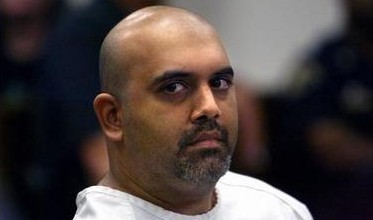 Naveed Afzal Haq
Murderer · USA · 2006
Name: Naveed Afzal Haq Naveed Afzal Haq was an American man of Pakistani descen…
1 victim
Naveed Afzal Haq
Murderer · USA · 2006
Name: Naveed Afzal Haq Naveed Afzal Haq was an American man of Pakistani descen…
1 victim
 Michael Sams
Murderer · United Kingdom · 1991
Michael Sams was sentenced to life in prison in 1992. Michael Sams (born August…
1 victim
Michael Sams
Murderer · United Kingdom · 1991
Michael Sams was sentenced to life in prison in 1992. Michael Sams (born August…
1 victim
- Gender
- male
- Country
- USA
- Location
- Orange County, California, USA
- Date of birth
- 1955
- Age at first offence
- 26
- Characteristics
- robbery, burglary, rape
- Victim profile
- Packovan Wattanaporn (store manager) and Quach Nguyen (store clerk)
- Method of murder
- Strangulation / St abbing with knife
- Date(s) of murder
- December 15, 1981
- Years active
- 1981
- Date of arrest
- 2 days after
- Status
-
Executed
Executed by lethal injection in California on February 9, 1999
Background
Jaturun Siripongs was a native of Thailand and was known as “Jay” to friends and family. He had lived in the United States for about a year when he committed the robbery at the Pantai Market.
Jaturun Siripongs trained briefly as a Buddhist monk and later left the monastery. Lawyers said he had survived a rough childhood in Thailand, including living for a while without running water and electricity in a rat-infested compound. A juror described him as having “no remorse” for the victims.
At the time of his execution, he was executed by lethal injection in California. He made no last statement.
The offence
Jaturun Siripongs was convicted of robbery, burglary and two counts of first-degree murder in the December 15, 1981 deaths of Packovan (“Pat”) Wattanaporn (female) and Quach Nguyen (male).
The bodies of Wattanaporn and Nguyen were found in a storeroom of the Wattanaporn’s small retail store, Pantai Market, in Garden Grove, California. Wattanaporn had been strangled to death. Nguyen, a store employee, suffered multiple stab wounds to his head, neck, and defensive wounds on his hands and right arm, and police found a cord tied around his right arm. Police found bloodstains throughout the store.
The bodies were found a few hours later in the store’s storage closet, lying face down in a puddle of blood. Police also estimated the time of death for both victims to be 12:30 p.m.
Investigators believed the two victims were brought into the room separately and killed.
Police said that jewelry used in the store’s business was missing from the crime scene, and that the robbery involved theft of jewelry and credit cards.
Jaturun Siripongs admitted helping rob the store but insisted he was not the killer. He refused to name the accomplice. Lawyers said he accepted responsibility for his role in the crime and offered daily penance “for his deeds, for the shame he has brought his family and ancestors, and for the suffering he has brought to others.”
Investigation
The next day, police searched a dumpster and found bloodstained clothing and a bloody cord like the one tied around Nguyen’s arm.
During the investigation, police searched a dumpster near the Cerritos home of Siripongs’ girlfriend. Prosecutors submitted more than 100 items of evidence at trial, including items recovered from the dumpster.
At trial, evidence included:
- Wattanaporn’s wallet and purse.
- A pair of bloodstained shoes found to be Siripongs’ size.
- A bloody kitchen knife.
- A camera case, a Buddha statue and a sugar jar stuffed with jewelry found at Siripongs’ Hawthorne home.
- Department store receipts for purchases bearing Mrs. Wattanaporn’s name dated after her murder.
- Five other credit cards and a gold necklace belonging to Wattanaporn found in Siripongs’ wallet.
- Eight credit card receipts found with forged signatures.
- A bloody jacket, shirt, pants and shoes.
- A bloodstained serrated kitchen knife.
- A cord and paperwork from the Pantai Market in a dumpster near Siripongs’ girlfriend’s house.
- Four hours after his arrest, a recorded phone call conducted in Thai by Siripongs, in which he asked Peung to go to his house to find and remove jewelry and items from the Pantai Market.
Police arrested Siripongs after a credit check and based on credit cards belonging to the Wattanaporns.
Siripongs’ blood analysis was used in the investigation. A subsequent analysis of Siripongs’ blood revealed that several bloodstains found at the murder scene, the bloodstained clothes and the bloody cord were consistent with his blood type.
Police said Siripongs had numerous cuts on his fingers, and that the cuts suggested a struggle.
In addition, juror-related accounts and mitigation-related materials were part of the broader legal proceedings after the investigation, including letters seeking clemency and descriptions of Siripongs’ behavior in prison.
Arrest
Jaturun Siripongs was arrested on December 17 after he tried to make purchases using credit cards belonging to the Wattanaporns.
Investigators later learned he attempted to purchase a television set from a department store in Westminster using a credit card belonging to Wattanaporn’s husband.
At the time of arrest, he had cuts on his hands.
Trial
Jaturun Siripongs put forth no affirmative defense and called no witnesses. Counsel’s primary defense tactic was to cross examine the state’s witnesses and criticize the state’s evidence. At the penalty phase, defense counsel’s presentation was described as very brief.
A jury convicted Siripongs of murder and sentenced him to death.
On direct appeal, the California Supreme Court affirmed the conviction and sentence. The United States Supreme Court denied certiorari.
Sentencing
An Orange County jury sentenced Siripongs to death on April 22, 1983.
Appeals
Federal appeal and collateral proceedings
Siripongs filed petitions for writs of habeas corpus and sought discovery and evidentiary hearings. Claims included ineffective assistance of counsel and other alleged trial errors.
In 1994, the United States Court of Appeals for the Ninth Circuit issued an opinion involving whether he was entitled to an evidentiary hearing on ineffective assistance of counsel claims. The court stated that it held that Siripongs was entitled to an evidentiary hearing and remanded for evidentiary hearing on appellant’s claims of ineffective assistance of counsel at the guilt and penalty phases of his trial, while affirming summary judgment dismissing the remaining claims.
The Ninth Circuit described undisputed aspects of the trial counsel’s performance including that trial counsel put on no defense at the guilt phase, conducted little or no investigation into the possibility that the murders were committed by an accomplice, conducted no inquiry into Siripongs’ background in Thailand, and was running for Congress during most of the time he should have been preparing the case for trial.
The Ninth Circuit also addressed an interpreter bias claim and other claims including claimed prosecutorial intimidation of potential penalty phase witnesses, an intercepted phone call, admission of evidence found in Siripongs’ car, search of Siripongs’ wallet, juror misconduct, the application of the Witherspoon/Witt standard in voir dire, and erroneous instructions at the penalty phase. The Ninth Circuit concluded that the district court granted summary judgment on those matters without an evidentiary hearing and that certain claims did not warrant habeas relief as presented.
The case was later addressed in a different appellate matter concerning attorney’s fees under the Prison Litigation Reform Act; that appeal did not alter the execution outcome.
Clemency and clemency-related litigation
Governor Pete Wilson refused to spare Siripongs’ life and denied clemency.
A federal civil action under 42 U.S.C. § 1983 was pursued, involving claims that Governor Wilson’s clemency proceedings violated Siripongs’ rights. The litigation resulted in a dispute about attorney’s fees under the Prison Litigation Reform Act, and the denial of attorney’s fees was affirmed on appeal.
Outcome
Jaturun Siripongs was executed by lethal injection in California on February 9, 1999.
Aftermath
Statements and reactions
Outside San Quentin, about 150 death penalty opponents staged a candlelight vigil despite gusty winds and driving rain.
Jaturun Siripongs made no last statement.
A juror, Marshall Hovde, said: “I think it was well-deserved,” and described his memory of the trial as having “no doubt in my mind ... that he was very guilty. He didn't seem to show any remorse for the victims.” He also learned of the execution after waking up to take a reporter’s telephone call before noon Tuesday.
Juror Sylvia Twomey said: “I saw it last night on the news,” adding: “I felt sick. I felt sick in my stomach and in my heart. I will never, ever again sit on a case where the penalty might be death.” She said: “I don't think what I did was right, either,” and: “He did a premeditated murder. Basically, we, the state, did the same thing. But I can't blame it all on the state; I agreed to do it.” She also said: “I thought I could vote for the death penalty and it wouldn't haunt me. I was wrong.”
Orange County Deputy District Attorney Jim Tanizaki said he believed justice was served and stated: “It was done in a very humane fashion,” and: “Contrast that to the treatment of the victims. They were never able to say goodbye in a special way to their loved ones. They did not die in a humane way. I think Siripongs got the benefit of society's mercy.”
A letter attached to clemency included a statement from Surachai Wattanaporn: “As a Buddhist I do not seek revenge for my wife's death, and ask you to please consider exercising mercy.”
Siripongs’ appellate attorney, Linda Schilling, had previously told the San Francisco Examiner that Siripongs’ remorse was so intense that he wrote to the judge, before his trial, and asked to be sentenced immediately. She said: “He said, 'I do not want to burden the court. I do not want to contribute to anybody else's suffering,'”
A pro-death-penalty argument included language attributed to Orange County prosecutor Jim Tanizaki in a response to a clemency petition: “Siripongs has been privileged to live over 16 years since his conviction and sentence. “These are 16 years that Quach Nguyen and Pat Wattanaporn, and their respective families, have been denied.”
Execution timing account
A news account described the lethal injection timeline and reported that Siripongs lasted 15 minutes, while earlier executions in the same way were reported to have taken 5 minutes or less, and that an average time of death reported in the account was 7 minutes. A Department of Justice spokesman was quoted saying: “I don't believe it's ever taken quite that long,” and: “I don't know,” followed by: “maybe they're doing things differently out there.” A California Department of Corrections spokesman said: “There's no explanation for that,” and: “A lot of it has to do with an individual's system.”
Other details
Victims
Packovan (“Pat”) Wattanaporn (female), manager of Pantai Market, was 36 at the time described in the clemency-related reporting. She was strangled.
Quach Nguyen (male), a store employee and a Vietnamese immigrant and father of 4, was 52 at the time described in the clemency-related reporting. He was stabbed multiple times in the head and neck.
Trial and evidentiary details
A letter addressed to a sister of Siripongs’ girlfriend was found near Nguyen’s body. The sister was identified as Sainam Peung “Peung” Vecharungspri, known as “Noon.” Investigators later learned that Vecharungsri was the sister of Siripongs’ girlfriend.
Vecharungsri testified that she had put the letter found at the scene of the crime in the pocket of a jacket that she left at Siripongs’ house, and that it was the same jacket found in the dumpster.
Investigators found blood-stained items and a cord similar to the one found around Nguyen’s arm.
At trial, it was described that Siripongs worked as an optical lens grinder and had not reported to work on the day of the murder. He returned to work on December 17.
A police search revealed a knife set similar to the weapon used to kill Nguyen, and several pieces of Mrs. Wattanaporn’s jewelry were found.
Evidence and alleged accomplice claims discussed in appellate review
The Ninth Circuit’s summary described evidence including:
- A strand of brown hair found on the ring finger of one of the victims that did not match the hair of either victim or Siripongs.
- Hair and blood in the dumpster that could not be identified as belonging to Siripongs or the victims.
- Clothing found in the dumpster believed to have belonged to Siripongs did not contain optical grinding material that would have been present on his clothing if he had worn it to work.
- Five types of shoeprints found at the crime scene, with two never identified.
- Blood on the front passenger and rear seats of Siripongs’ car, as well as on the passenger kickplate, suggesting more than one person was in Siripongs’ car at the time.
- Siripongs being cut on both hands, which prosecution witnesses described as potentially defensive cuts if he had attempted to prevent the killings.
- Claims that trial counsel did not meaningfully pursue forensic testing and did not follow up on leads indicating multiple involvement.
The Ninth Circuit also described a witness statement that implicated a person named Chartree Sakulsingh. A witness at trial told investigating officers he received a call from a Thai male who threatened to kill him if he testified about the murders, and that when asked who might have made the call, he implicated Chartree.
Conflicting stories were described involving Siripongs’ girlfriend Peung, Peung’s sister Noon, and Noon’s whereabouts and a boyfriend of another of Peung’s sisters.
Prison and clemency-related descriptions
Guards described Siripongs as “unfailingly polite and cooperative.” Former San Quentin State Prison Warden Daniel Vasquez recommended clemency on grounds of exemplary behavior and set a good example for other inmates.
Pope John Paul II joined clemency pleas hours before the execution.
Art and death row portrayal
Supporters displayed an art collection in Oakland including an autobiographical sketch in pencil called “Transformation,” showing a young boy in big square glasses, a religious figure among lotus blossoms, a muscular man and, finally, a skull.
A news account described Siripongs on death row: “A former Buddhist monk was executed by injection early Tuesday for killing two people during a 1981 robbery.” The same account reported that he moved many from his death row cell with “his remorse, humble manners and vivid art works.”
A note quoted from a prison officer to Siripongs included: “At this time, not knowing what to say, I want you to know that knowing you and having worked for you has enriched my life.”
Spotted an error, or have more information about this case?