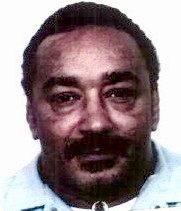
Manuel Pina Babbit
Murderer Ervil LeBaron
Murderer · USA · 1972
Ervil Morrell LeBaron (1925 to August 16, 1981) was the leader of a polygamous…
35 victims
Ervil LeBaron
Murderer · USA · 1972
Ervil Morrell LeBaron (1925 to August 16, 1981) was the leader of a polygamous…
35 victims
 Brian Kevin Rosenfeld
Murderer · USA · 1985
Brian Kevin Rosenfeld Brian Kevin Rosenfeld was sentenced to three concurrent l…
23 victims
Brian Kevin Rosenfeld
Murderer · USA · 1985
Brian Kevin Rosenfeld Brian Kevin Rosenfeld was sentenced to three concurrent l…
23 victims
 Marvin Gray
Murderer · USA · 1975
Marvin Gray was convicted killer who claimed responsibility for 23 slayings and…
23 victims
Marvin Gray
Murderer · USA · 1975
Marvin Gray was convicted killer who claimed responsibility for 23 slayings and…
23 victims
 Yahweh ben Yahweh
Murderer · USA · 1980
Yahweh ben Yahweh was born and legally named Hulon Mitchell Jr. (October 27, 19…
23 victims
Yahweh ben Yahweh
Murderer · USA · 1980
Yahweh ben Yahweh was born and legally named Hulon Mitchell Jr. (October 27, 19…
23 victims
 William Tager
Murderer · USA · 1994
William Tager was born on November 9, 1947. He was a Charlotte, North Carolina…
1 victim
William Tager
Murderer · USA · 1994
William Tager was born on November 9, 1947. He was a Charlotte, North Carolina…
1 victim
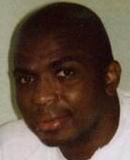 Charles Mamou
Murderer · USA · 1998
Name: Charles Mamou · TDCJ Number: 999333 · Date of birth: 12/06/1974 · Receive…
2 victims
Charles Mamou
Murderer · USA · 1998
Name: Charles Mamou · TDCJ Number: 999333 · Date of birth: 12/06/1974 · Receive…
2 victims
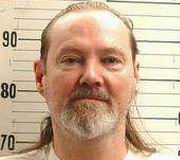 David Lee McNish
Murderer · USA · 1983
Defendant: David Lee McNish · Victim: Gladys E. Smith (also referred to as Mrs.…
1 victim
David Lee McNish
Murderer · USA · 1983
Defendant: David Lee McNish · Victim: Gladys E. Smith (also referred to as Mrs.…
1 victim
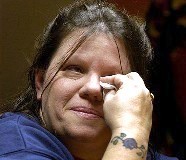 Laura Rogers
Murderer · USA · 2004
Laura Rogers was convicted of manslaughter after the shooting death of her husb…
1 victim
Laura Rogers
Murderer · USA · 2004
Laura Rogers was convicted of manslaughter after the shooting death of her husb…
1 victim
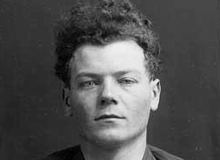 Martin Lecian
Serial killer · Czech Republic · 1927
Martin Lecián was a Czech serial killer. He was executed on October 6, 1927. ·…
11 victims
Martin Lecian
Serial killer · Czech Republic · 1927
Martin Lecián was a Czech serial killer. He was executed on October 6, 1927. ·…
11 victims
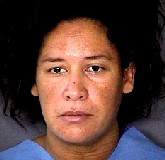 Otty Sanchez
Homicide · USA · 2009
Otty Sanchez Otty Sanchez dismembered her newborn baby and mutilated the infant…
1 victim
Otty Sanchez
Homicide · USA · 2009
Otty Sanchez Otty Sanchez dismembered her newborn baby and mutilated the infant…
1 victim
- Gender
- male
- Country
- USA
- Location
- Sacramento County, California, USA
- Date of birth
- 1949
- Age at first offence
- 31
- Characteristics
- rape, robbery
- Victim profile
- Leah Schendel (female, 78)
- Method of murder
- Beating ( heart failure caused by stress)
- Date(s) of murder
- December 19, 1980
- Years active
- 1980
- Date of arrest
- —
- Status
-
Executed
Executed by lethal injection in California on May 4, 1999
Case details
Manuel Pina Babbitt was convicted in Sacramento County of first degree murder with special circumstances, and of additional offences including attempted rape and robbery.
Timeline
- 12/18/1980 — 12/19/1980 — Babbitt broke into the South Sacramento apartment of Leah Schendel, brutally beat her, sexually assaulted her, and attempted to rape her before ransacking and robbing her residence.
- 12/19/1980 — The following night, Babbitt attempted to rape another Sacramento woman, grabbed and beat her unconscious, and robbed her of money and jewelry.
- 06/16/1988 — Court action: affirmed.
- 04/20/1982 — A California jury convicted Babbitt of all charges.
- 05/08/1982 — Babbitt was found sane.
- 07/06/1982 — Babbitt was sentenced to death.
- 03/1998 — While serving time on death row, Babbitt was awarded the Purple Heart for wounds received in the Vietnam War 30 years previously.
- May 3, 1999 — The United States Court of Appeals for the Ninth Circuit denied Babbitt’s motion for a stay of execution and an application for leave to file a successive petition for writ of habeas corpus.
- May 4, 1999 — The execution by lethal injection of Manuel Pina Babbitt began at 12:29 a.m. in San Quentin State Prison’s execution chamber and he was pronounced dead at 12:37 a.m.
Background
Babbitt was a Vietnam veteran and a decorated Vietnam veteran. In March 1998, while serving time on death row, he was awarded the Purple Heart for wounds received in the Vietnam War 30 years previously. Babbitt was also described as having mental health problems, including testimony about his deteriorating mental condition and his often strange behavior during trial. The later federal appeal material stated that Babbitt relied on a mental-state defense including expert testimony of Post Traumatic Stress Disorder (PTSD) stemming from his Vietnam experiences and testimony of family members about his deteriorating mental condition and often strange behavior.
The offence
Leah Schendel (78)
On the night between Dec. 18 and Dec. 19, 1980, Babbitt broke into the South Sacramento apartment of Leah Schendel and brutally beat and sexually assaulted the 78-year-old woman. The offender attempted to rape Mrs. Schendel before ransacking and robbing her residence. Mrs. Schendel’s semi-nude body was found lying on the floor of her bedroom, partially covered by a bloodstained mattress. Later coroner examinations indicated that she may have been sexually assaulted. Her cause of death was determined to be heart failure caused by stress related to the robbery and beating. The coroner material also described her death as a heart attack brought on by a severe beating and possible suffocation.
Babbitt was found guilty of the first-degree murder of Leah Schendel after she died of heart failure during Babbitt’s commission of a burglary, robbery, and attempted rape.
Another Sacramento woman (victim count: 1)
The following night, Dec. 19, 1980, Babbitt attempted to rape another Sacramento woman. He grabbed and beat her unconscious before robbing her of money and jewelry. The record described that Babbitt was convicted of robbing and attempting to rape another Sacramento woman.
Investigation and arrest
After his arrest, Babbitt did not deny committing the crimes but said he had no memory of what happened. Several items of Mrs. Schendel’s property were found in his possession, linking him to her murder. The police captured Babbitt with the aid of Bill Babbitt, who was seeking help for his brother.
Babbitt’s brother, Bill Babbitt, said the police “urged me to try to solicit a confession from him so it would expedite his 'care.' They told me, 'You don't have to worry about your brother going to the gas chamber. We're going to find a hospital for him, perhaps a place like Vacaville,'” and referred to the state prison that has a medical and psychiatric facility.
Trial
A Sacramento County jury found Babbitt guilty of first degree murder with special circumstances. The material also stated that Babbitt was convicted of murder, robbery and attempted rape, and that he was also convicted of robbing and attempting to rape another Sacramento woman.
The Ninth Circuit appeal material stated:
The Ninth Circuit appeal material stated that Babbitt relied on a mental-state defense including expert testimony of Post Traumatic Stress Disorder (PTSD) stemming from Babbitt’s Vietnam experiences and testimony of family members about his deteriorating mental condition and often strange behavior.
Sentencing
Babbitt was sentenced to death on 07/06/1982.
The Ninth Circuit appeal material stated that Babbitt’s death eligibility under California law involved findings that the murder was committed while the defendant was engaged in the commission of a robbery, attempted rape, and burglary.
Appeals
California Supreme Court
The material stated that the California Supreme Court rejected Babbitt’s consolidated appeal and habeas corpus petition and unanimously affirmed Babbitt’s conviction and death penalty judgment.
United States Supreme Court
The material stated that the United States Supreme Court denied certiorari.
Ninth Circuit (successive habeas request and stay)
On May 3, 1999, Babbitt, a California state prisoner, filed a motion for a stay of execution and an application for leave to file a successive petition for writ of habeas corpus. The Supreme Court of California denied Babbitt’s latest habeas petition and request for a stay of execution that afternoon. The Ninth Circuit denied the motions presented.
The Ninth Circuit material included Babbitt’s claims and the court’s disposition:
- Babbitt argued ineffective assistance of counsel due to his trial counsel’s alcohol abuse during the guilt, sanity, and penalty phases.
- The Ninth Circuit stated that it would not consider new factual grounds in support of the same legal claim already presented and denied the application.
- Babbitt also contended racially biased conduct by trial counsel created structural error, including failure to interview African-American witnesses, failure to protest peremptory challenges removing African-American venire persons, and failure to communicate adequately with Babbitt.
- The Ninth Circuit concluded the factual predicates could have been discovered through due diligence and rejected the racially animus claim under AEDPA.
The Ninth Circuit material stated that, in other words, Babbitt’s claims, even if proven, would be insufficient to establish by clear and convincing evidence that but for constitutional error no reasonable factfinder would have found Babbitt guilty of the underlying offence or eligible for the death penalty under California law. The material further noted that the findings making Babbitt eligible were that the murder was committed while the defendant was engaged in the commission of a robbery, attempted rape, and burglary.
State Supreme Court stay request referenced in relation to execution
The material described that earlier in the day before the execution, the state Supreme Court denied a request that Babbitt’s execution be stayed while a hearing was held to decide whether the condemned man should have a new trial based on evidence his lawyers said had recently surfaced.
The material quoted Chief Justice Ronald M. George in a tersely worded ruling:
- Chief Justice Ronald M. George called defense arguments about racism in jury selection and excessive drinking by Babbitt’s 1st attorney “untimely” and “repetitious”.
- Only two of the seven justices voted for a stay of execution, and one did not participate in the ruling.
Outcome
Conviction and sentence upheld prior to execution
The material stated that state and federal courts upheld Babbitt’s convictions and sentence, and that the Supreme Court denied review of his appeal.
Execution
The execution took place at San Quentin State Prison.
- At 12:29 a.m., May 4, 1999, the execution by lethal injection of Manuel Pina Babbitt began.
- Babbitt was pronounced dead at 12:37 a.m. in San Quentin State Prison’s execution chamber.
Babbitt declined a last meal and fasted until his execution. He spent his last hours with family, friends and his attorneys.
Babbitt’s last words were quoted as:
- “I forgive all of you.”
- Another reported last words statement: “I forgive you all.”
The material described the execution procedure: Babbitt was strapped and handcuffed to a gurney with his arms out; intravenous lines injected him with a cocktail of chemicals. It also stated that his body bucked several times, his chest straining against the straps. It described that Laura Thompson, Schendel’s granddaughter, looked away at that point.
In a statement after the execution, Laura Thompson said:
- “It is our hope that this conclusion will bring a sense of closure to our family. We know that nothing will bring Leah Schendel back to us, but we feel that we have done everything in our power to see that justice was done in her name.”
The material also stated that Babbitt declined a last meal and asked that the $50 allotted instead be donated to feed homeless veterans.
Other details
Victim and family references
Laura Thompson was identified as Schendel’s granddaughter. Don Schendel was identified as the dead woman’s son. William Babbitt was described as Babbitt’s older brother who turned Babbitt into police for Schendel’s murder after, as he said, being assured Babbitt would get help rather than execution.
Quotes involving people connected to the execution and appeals
- Governor Gray Davis rejected Babbitt’s appeal for clemency and the material quoted Davis: “Countless people have suffered the ravages of war, persecution, starvation, natural disasters, personal calamities and the like, but such experiences cannot justify or mitigate the savage beating and killing of defenseless, law-abiding citizens.”
- Charles Patterson, an attorney for Babbitt, described him as “completely peaceful.”
- Babbitt’s attorney Charles E. Patterson described him as resigned to his fate and wanting “to die with dignity.”
- The material quoted Beverly Lopes, Babbitt’s 5th-grade teacher: “he's doing very well. ” and also quoted: “I told him I was honored to be his teacher,” and “I blessed him on his birthday. . . . I told him to 'hold your head up high and face the world, so when I go back to my classroom, I will go and hold my head up high.' ”
- The material quoted Patricia Tavares as saying: “we don't have the death penalty and I'm proud of it,” and she also said: “when you see these people, you're seeing Manny. Manny's not leaving us. . . . Manny just wants to go out in dignity, and that's all we want--privacy and dignity.”
- The material quoted Lyle Grosjean as saying: “served our country well,” and also: “The least we can do is not kill him,” and “The least we can do is not kill him,” Grosjean said.
- The material quoted Larry Yepez as saying he hoped to leave his Marine dress uniform “for Manny,” and Yepez said he suffers from post traumatic stress disorder and believes that the country “turned its back” on soldiers like himself and Babbitt.
- Kristine McClymonds was quoted: “Half those people in there should die,” and her companion Aaron, who refused to give a last name, was quoted: “It's not about vengeance. It's about what's right.”
- The material quoted Babbitt’s attorney Patterson about how Babbitt tried to sleep: “by listening to his heart beat,” and quoted: “He tries to catch that last heartbeat before falling asleep. He believes that if he is executed, he will again listen to that last heartbeat.”
- The material quoted Lance Lindsey, executive director of Death Penalty Focus, as saying: “They're not the usual suspects that are always against the death penalty,” and he planned to lead a vigil outside San Quentin Monday night in protest of the execution.
- The material quoted Babbitt in a clemency tape presented to Davis: “Countless people have suffered the ravages of war, persecution, starvation, natural disasters, personal calamities and the like, but such experiences cannot justify or mitigate the savage beating and killing of defenseless, law-abiding citizens.”
- The material quoted Babbitt in the clemency tape: “I don't know how I made it across,” and also: “The next thing I remember was waking up on a lawn somewhere in Sacramento on one of those streets. That's all I remember of that night.”
- The material quoted Don Schendel: “I don't remember anyone speaking about the color of a person throughout this whole ordeal,” and also: “It's all subterfuge. It's a shame.”
- The material quoted Vernell Crittendon as spokesman for San Quentin State Prison: “He was completely calm,” and also described Chuck Patterson, an attorney for Babbitt, as saying “He was completely calm,”.
- The material quoted William Babbitt as saying: “I'm at peace,” and “I pray that the Schendel family is.”
- The material quoted William Babbitt about turning Babbitt in and the socks: “I was so grateful for those socks. That's the only benefit I got for turning in my beloved brother,” Babbitt said.
- The material quoted William Babbitt about the execution: “My brother died as a result of state-sanctioned murder, and history will come to realize that fact.”
Procedural posture and court actors (from the Ninth Circuit material)
The Ninth Circuit panel included:
- BRUNETTI, THOMPSON and HAWKINS, Circuit Judges. The material stated the case caption:
- Manuel Pina Babbitt, Petitioner, v. Jeanne Woodford, Acting Warden, California State Prison At San Quentin, Respondent. United States Court of Appeals, Ninth Circuit.
The Ninth Circuit material stated:
- The Supreme Court of California denied Babbitt’s latest habeas petition and request for a stay of execution.
- The Ninth Circuit had jurisdiction under 28 U.S.C. § 2244.
- The Ninth Circuit denied the motions Babbitt presented.
Evidence and counsel details referenced in appeals
- Babbitt argued trial counsel alcohol abuse and ineffective assistance across guilt, sanity, and penalty phases.
- The material said Babbitt alleged he only recently discovered evidence while preparing for his clemency hearing.
- The material described that the “recent discoveries include his trial counsel's recent resignation from the State Bar as a result of a legal malpractice action alleging that he had been drinking during the trial.”
- The Ninth Circuit material described that counsel’s staff revealed trial counsel had drunk “three or four drinks” on “a number of occasions” during lunch recesses of the trial.
The Ninth Circuit material also described:
- Babbitt argued trial counsel racially biased conduct including use of a racial epithet and speaking negatively of the capabilities of African-American jurors in meetings with William Babbitt and his wife prior to trial.
- The Ninth Circuit concluded Babbitt had enough facts earlier to trigger his obligation to raise the racially biased counsel claim in his previously filed federal habeas petition.
Spotted an error, or have more information about this case?