
David Lee McNish
Murderer
1known / alleged victims
Similar offenders
LE
Leonard Laws
Murderer · USA · 1980
Leonard M. Laws was convicted in the State of Missouri v. Leonard M. Laws, 661…
24 victims
 Brian Kevin Rosenfeld
Murderer · USA · 1985
Brian Kevin Rosenfeld Brian Kevin Rosenfeld was sentenced to three concurrent l…
23 victims
Brian Kevin Rosenfeld
Murderer · USA · 1985
Brian Kevin Rosenfeld Brian Kevin Rosenfeld was sentenced to three concurrent l…
23 victims
 Marvin Gray
Murderer · USA · 1975
Marvin Gray was convicted killer who claimed responsibility for 23 slayings and…
23 victims
Marvin Gray
Murderer · USA · 1975
Marvin Gray was convicted killer who claimed responsibility for 23 slayings and…
23 victims
 Yahweh ben Yahweh
Murderer · USA · 1980
Yahweh ben Yahweh was born and legally named Hulon Mitchell Jr. (October 27, 19…
23 victims
Yahweh ben Yahweh
Murderer · USA · 1980
Yahweh ben Yahweh was born and legally named Hulon Mitchell Jr. (October 27, 19…
23 victims
 Russell Ellwood
Murderer · USA · 1991
Russell Ellwood was a former taxi driver. Authorities suspected him of killing…
20 victims
Russell Ellwood
Murderer · USA · 1991
Russell Ellwood was a former taxi driver. Authorities suspected him of killing…
20 victims
JO
Joseph Dewey Akin
Murderer · USA · 1990
Joseph Dewey Akin was a hospital nurse who killed patients. Akin worked at Coop…
18 victims
Random profiles
 Robert Lowe
Murderer · Australia · 1991
Robert Arthur Selby Lowe was born in England in 1937. He attended boarding scho…
1 victim
Robert Lowe
Murderer · Australia · 1991
Robert Arthur Selby Lowe was born in England in 1937. He attended boarding scho…
1 victim
JO
Johnny Taylor
Murderer · USA · 1980
Johnny Taylor, Jr. was executed by electrocution at the Louisiana State Peniten…
1 victim
 Kelley Gann
Murderer · USA · 2012
Kelley Lynn Gann was a 32-year-old Rosenberg woman. Kelley Gann caused the deat…
1 victim
Kelley Gann
Murderer · USA · 2012
Kelley Lynn Gann was a 32-year-old Rosenberg woman. Kelley Gann caused the deat…
1 victim
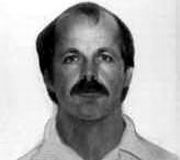 Christopher Wilder
Serial killer · USA · 1984
Christopher Bernard Wilder (March 13, 1945 – April 13, 1984) was a serial kille…
8 victims
Christopher Wilder
Serial killer · USA · 1984
Christopher Bernard Wilder (March 13, 1945 – April 13, 1984) was a serial kille…
8 victims
CH
Christopher Burger
Homicide · USA · 1977
Christopher Burger was a soldier stationed at Fort Stewart, Georgia. On the nig…
1 victim
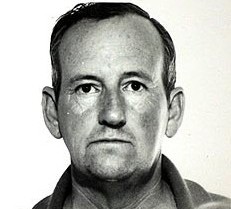 Mack Ray Edwards
Serial killer · USA · 1953
Mack Ray Edwards was an American serial killer who murdered at least six childr…
6 victims
Mack Ray Edwards
Serial killer · USA · 1953
Mack Ray Edwards was an American serial killer who murdered at least six childr…
6 victims
Case Facts
- Gender
- male
- Country
- USA
- Location
- Carter County, Tennessee, USA
- Date of birth
- July 15, 1953
- Age at first offence
- 30
- Characteristics
- robbery, abuse
- Victim profile
- Gladys E. Smith, 72 (his neighbor)
- Method of murder
- Beating with a glass vase
- Date(s) of murder
- April 5, 1983
- Years active
- 1983
- Date of arrest
- Same day
- Status
-
Sentenced to death
Sentenced to death by electrocution; sentenced to death on August 15, 1984
Case Summary
Case information
- Defendant: David Lee McNish
- Victim: Gladys E. Smith (also referred to as Mrs. Gladys Smith), 72, a widow
- Location: Lynnwood Apartments, Elizabethton, Tennessee; Gladys Smith lived alone in an upstairs apartment in the complex
Status and outcome
- David Lee McNish was convicted of murder in the first degree and sentenced to death by electrocution.
- The Court of Criminal Appeals affirmed the verdict and sentence.
- The Tennessee Supreme Court affirmed McNish’s first degree murder conviction and death sentence on direct appeal in 1987.
- The state Supreme Court denied an appeal by David Lee McNish in March 2000 by rejecting eight issues raised in his post-conviction appeal.
- McNish’s post-conviction petition was denied by the trial court in 1997 and by the Court of Criminal Appeals in 1999.
- Costs were taxed to the appellant.
Timeline
- 1983 — David Lee McNish was accused of beating his elderly neighbor, Gladys E. Smith, 72, to death; she died of head injuries after she refused to lend him money.
- 8 p.m. on April 5, 1983 — At about 6:20 p.m., McNish borrowed Gladys Smith’s automobile; he returned about 7 p.m. and spoke with two acquaintances in a parking lot of the apartment complex.
- At about 8 p.m. on April 5, 1983 — Greg Peters heard loud thumping noises, then the sound of glass breaking and moans coming from the victim’s apartment; he heard glass breaking and moans emanating from her apartment.
- April 5, 1983 — The murder was committed by bludgeoning of Mrs. Gladys Smith with a glass vase in her apartment; the jury found this to be “especially heinous, atrocious, or cruel in that it involved torture or depravity of mind . . . .”
- November 1983 — McNish wrote a letter to the District Attorney stating that he had known all along that two other persons were responsible for her death and had conspired to kill her.
- 1984 — McNish was 31 years of age at the time of the trial; the jury sentenced him to death.
- 1987 — McNish’s first degree murder conviction and death sentence were affirmed on direct appeal by the Tennessee Supreme Court.
- 1990 — McNish filed a petition for post conviction relief.
- 1997 — The trial court denied McNish’s post-conviction petition.
- 1999 — The Court of Criminal Appeals denied McNish’s post-conviction relief.
- March 6, 2000 — The state Supreme Court denied McNish’s post-conviction appeal; eight issues raised by McNish were rejected.
- August 15, 1984 — McNish was sentenced to death.
- August 3, 1987 — The sentence was to be carried out as provided by law on August 3, 1987, unless stayed.
The offence
- McNish was accused of beating his elderly neighbor, Gladys E. Smith (72), to death in 1983 after she refused to lend him money.
- Gladys Smith died of head injuries.
- The jury found that the murder by bludgeoning of Mrs. Gladys Smith, a 70-year-old widow, in her apartment on April 5, 1983, was “especially heinous, atrocious, or cruel in that it involved torture or depravity of mind . . . .”
- The bludgeoning involved repeated blows with a glass vase; the fragments of the vase were found in the victim’s apartment.
- The vase itself was shattered, the victim’s skull was fractured in several places, and hemorrhaging of the brain resulted which compressed the brain stem and prevented breathing.
- Mrs. Smith died within a short time after the beating, although she was still alive when first found after it occurred.
- The State introduced photographs of the deceased at the sentencing hearing to support the aggravating circumstance found by the jury.
- The State relied on another aggravating circumstance that the murder was committed while McNish was attempting to commit robbery, but the jury did not find that circumstance established by the evidence.
- Evidence showed that McNish was short of funds, and his own testimony confirmed that he planned to go to Mrs. Smith’s apartment in an effort to obtain some money from her.
Investigation and evidence
- Mrs. Smith lived alone in an upstairs apartment in the Lynnwood Apartments in Elizabethton, Tennessee.
- The parents of McNish had an apartment in the same complex; Mrs. Selena Richardson (who was at that time Mrs. Selena Welch) was dating McNish.
- Police found bloodstained trousers in the car in which McNish was riding at the time of his arrest.
- Tests showed the blood matched that of the victim, Mrs. Smith.
- Scientific tests of blood found on McNish’s trousers showed it matched that of Mrs. Smith and was not the blood of McNish.
- Some blood particles taken from McNish’s fingernails were human blood, but in quantities too small to test.
- An analysis performed at the Tennessee Bureau of Investigation laboratories showed that a fragment of glass found inside the packaging material in which McNish’s trousers had been transmitted matched the glass particles found on the rug and floor of Mrs. Smith’s apartment.
- Throughout the weeks and months immediately following the death of Mrs. Smith, McNish remained silent and adhered to the position that he knew nothing whatever about the subject.
People and relationships
- McNish was dating Mrs. Selena Welch.
- McNish had previously been divorced.
- Mrs. Smith had been frail and weighed less than one hundred pounds but was capable of independently living in her own apartment.
- Greg Peters lived with his wife and infant child in the apartment next to Mrs. Smith.
- Mr. Frank Garland lived in the apartment directly beneath Mrs. Smith.
- Mrs. Irene Nave lived in the apartment next to Garland; Mrs. Nave had a son.
- McNish drove Mrs. Welch’s automobile to the residence of his former wife, Mrs. Janie Bradley.
- Mrs. Bradley testified that McNish’s speech was slurred and that he appeared to be under the influence of a drug or narcotic.
Events on April 5, 1983
- At about 6:20 p.m. on April 5, 1983, McNish borrowed Mrs. Smith’s automobile.
- McNish returned about 7 p.m.
- The three agreed to meet later at the apartment of one of these men to watch television.
- McNish told his friend that he needed to borrow some money to purchase beer and that he might try to borrow the money from Mrs. Smith.
- Shortly before 8 p.m. on April 5, 1983, Greg Peters heard loud thumping noises in Mrs. Smith’s apartment.
- Peters heard glass breaking and moans emanating from the apartment; as he reached for the door, McNish rushed out exclaiming that Mrs. Smith had fallen and was hurt.
- Peters went inside and found Mrs. Smith partially conscious, lying in the kitchen in a pool of blood, with broken glass from a shattered flower vase scattered on the floor.
- Peters ran outside and called for help.
- Mr. Frank Garland also heard noises from Mrs. Smith’s apartment; he then heard Peters calling for help and saw McNish coming down the steps from the upstairs apartments.
- Garland testified McNish stopped and spoke to the son of Mrs. Nave, spoke briefly to Mrs. Nave at the doorway, then went to the parking lot and drove away in Mrs. Welch’s automobile.
- Hearing Peters call again, Garland went upstairs and found Mrs. Smith unconscious in her kitchen; he attempted to call for help and had his wife summon the police.
- Mrs. Nave had placed a call for an emergency rescue squad, which appeared within a few minutes.
- McNish drove Mrs. Welch’s automobile about one mile and one-half to two miles to the residence of his former wife, Mrs. Janie Bradley.
- En route near a cemetery, McNish had a mishap and damaged the car slightly, and he claimed he received minor injuries in the accident.
- When McNish reached Mrs. Bradley’s residence, she testified that his speech was slurred and he appeared under the influence of a drug or narcotic.
- McNish told Mrs. Bradley that he had taken a number of pills, that he had wrecked Mrs. Welch’s car, and that he had been in a fight with someone he would not identify.
- McNish told Mrs. Bradley he had been hit with a “tool”; his nose was cut and bruised and there was a cut inside his mouth.
- There was some blood on McNish’s trousers and on his hands.
- McNish requested a bottle of beer, which Mrs. Bradley did not have; she gave him some Tylenol for his headache.
- McNish washed his hands and face and lay down briefly.
- McNish told Mrs. Bradley he needed to “get out of there” and asked her to take him to a Mental Health Center in Johnson City, where he had previously received treatment.
- At her request, Mrs. Bradley drove Mrs. Welch’s automobile to a nearby school and parked it in the rear of the kitchen.
- Mrs. Bradley then drove him to McNish’s parents’ apartment where she obtained fresh trousers for him.
- McNish lay in the back seat of Mrs. Bradley’s automobile while this occurred.
- Mrs. Bradley then drove to a nearby market to purchase bread for McNish’s mother while he changed trousers in the back seat of the car.
- As they approached the market, an Elizabethton detective observed the automobile similar to Mrs. Welch’s; he had been advised of the beating of Mrs. Smith and of McNish’s leaving.
- The detective apprehended McNish as he sat in the back seat of Mrs. Bradley’s automobile at the market.
- The detective retrieved McNish’s bloodstained trousers from the automobile.
- During the interval between the attack and apprehension, McNish did not state to Mrs. Bradley, his parents, Mrs. Welch, or the police officer that Mrs. Smith had been injured or killed, that he had observed her, or that he had any information concerning her.
- This was emphasized later by the State after McNish professed to remember the events of April 5, 1983, and accused Mrs. Welch and Mr. Peters of conspiring to murder Mrs. Smith.
Statements to police and subsequent letter
- McNish was taken to police headquarters by a county deputy sheriff.
- The deputy testified that McNish volunteered the statement, “I guess I'm in trouble for what I did.”
- McNish denied making this statement.
- The deputy testified he had not questioned McNish before or after the statement, had not pursued the matter further besides telling McNish he did not wish to talk with someone who had beaten an elderly lady, and that he received no response.
- When questioned at police headquarters, McNish denied any knowledge of the incident involving Mrs. Smith.
- He stated he was partially under the influence of narcotics but did not admit involvement in the beating that resulted in her death.
- Police officers testified that McNish’s statement was given voluntarily and after he was fully advised of his rights; they testified he appeared under the influence of some intoxicant but without an odor of alcohol and that he was in full command of his faculties.
- Tests of his blood revealed small traces of sedatives; a toxicologist called on behalf of McNish testified the quantities would not have caused him to appear abnormal or irrational to observers.
- Some seven months after Mrs. Smith’s death, in November 1983, McNish wrote a letter to the District Attorney claiming he had known that two other persons were responsible for her death and had conspired to kill her.
- McNish gave a statement to the District Attorney similar to his later trial testimony, stating Mrs. Welch, who was nineteen years old, was jealous of him and suspected him of being sexually intimate with the 70-year-old Mrs. Smith.
- McNish also stated to police and later testified at trial that Peters disliked Mrs. Smith and that he had heard Mrs. Welch and Mr. Peters threatening to murder her.
- McNish testified at trial that on April 5, 1983, he went to Mrs. Smith’s apartment to borrow money and happened upon Greg Peters “standing there, shaking her by the hair of the head, telling her to shut up.”
- McNish testified he struggled with Peters until Peters struck him on the bridge of his nose and knocked him unconscious.
- McNish testified that when he recovered, he found Mrs. Smith in the kitchen and attempted to move her to a couch in the living room but was unable to do so.
- McNish testified he heard Peters making noise outside and that by the time he reached the door someone else came up the stairs; he advised the other person that Mrs. Smith was injured and needed assistance.
- McNish testified he followed the other person into Mrs. Nave’s apartment and asked Mrs. Nave to call the rescue squad.
- McNish claimed he was “all to pieces” and severely emotionally shaken, needed to talk to someone, and decided to go to a mental health center.
- McNish testified he could not drive safely and instead went to the home of his former wife for assistance.
- McNish testified he ascribed his behavior to confusion, fear, and the effects of drugs.
- The trial included conflicting testimony about whether Peters was or was not involved in the homicide, and major credibility issues were presented.
Trial
Charges and verdict
- McNish was charged with first-degree murder.
- The jury found him guilty of murder in the first degree.
- The case was appealed to the Court in accordance with § 39-2-205.
Evidence supporting guilt and credibility findings
- The Court stated that the record abundantly supported the verdict.
- It noted that Mrs. Smith was mercilessly beaten to death by repeated blows by an assailant shown to be much more powerful than her.
- It stated McNish was shown by Peters’s testimony and by his own statements and testimony to have been in Mrs. Smith’s apartment and then fled quickly without a satisfactory explanation.
- It stated McNish consistently denied knowing anything about the homicide or being involved until months later, when he presented a story seeking to implicate Peters and Mrs. Welch.
Jury findings on aggravating and mitigating circumstances
- The sentencing hearing included jury findings that the murder was “especially heinous, atrocious, or cruel in that it involved torture or depravity of mind . . . .”
- The jury found that no mitigating circumstance was established sufficient to outweigh the aggravating circumstance.
- The State relied on an aggravating circumstance that the murder was committed while McNish was attempting to commit robbery, T.C.A. § 39-2-203 (i)(7), but the jury did not find that circumstance established.
- McNish relied upon mitigating circumstances of absence of any prior criminal record, T.C.A. § 39-2-203 (j)(1), and extreme mental or emotional disturbance, T.C.A. § 39-2-203 (j)(2).
Appeals issues addressed on direct appeal
- McNish raised eighteen issues on direct appeal, with the first having eleven subsections.
- Only one of the challenges addressed sufficiency of evidence to support verdict or sentence.
- The Court found no merit in challenges about bias, prejudice, and passion against the appellant and sympathy for the victim.
- McNish challenged the constitutionality of Tennessee statutory provisions respecting the death penalty in first-degree murder cases; the Court found the issues without merit, referencing prior opinions.
- The Court addressed proportionality under statute, including that the death penalty had been upheld in similar cases.
Court’s reasoning on sentencing phase evidence and instructions
- The Court discussed photographs introduced at sentencing and found no error admitting them, stating they were highly probative of the nature and extent of the injuries for the aggravating circumstance.
- The Court addressed impeachment by questioning McNish’s father about a prior criminal charge against McNish when juvenile and found it was relevant because appellant’s father testified McNish had never “been in any kind of trouble with the law” and had always conducted himself properly.
- The Court addressed jury instructions on premeditation, stating premeditation did not require any particular period of time for formation, and that repeated blows supported the instruction.
- The Court addressed instructions about whether the murder was committed during an attempt to rob or steal, noting the circumstance was not found established by the jury and was not the basis of the death penalty, but evidence showed McNish was short of funds and planned to go to the victim’s apartment to obtain money.
- The Court addressed jury instructions on a presumption of malice and found the instructions referred only to a permissible inference and did not shift the burden of proof.
- The Court addressed admission of a letter written by McNish to the District Attorney while incarcerated and while represented by appointed counsel.
- The Court addressed admissibility and suppression of McNish’s initial statement after custody on April 5, 1983, noting a suppression hearing and finding it voluntarily given after rights waiver.
- The Court addressed the county deputy’s transportation statement and found no error in admission because it was spontaneous, voluntary, and not elicited by interrogation.
Other trial rulings
- The Court addressed an issue about not permitting argument about “the realities” of death by electrocution and found no evidence was offered on the subject and counsel’s argument would have been improper without supporting evidence.
- The Court addressed limitations on examination of witnesses or admission of evidence and found no error.
- The Court addressed cross-examination of McNish about prior treatment at a mental health center and found the subject had been explored during the State’s case in chief and direct examination of the appellant.
- The Court addressed the claim that the trial judge erred in not granting psychiatric assistance, noting no citation to the record or written motion was provided.
Signature and concurrences/dissent
- The opinion was delivered by Harbison, J.; Harbison, J., Fones and Drowota, JJ., and Franks, Sp. J., concur.
- Chief Justice Brock concurred in affirming the conviction but dissented with respect to imposition of the death penalty for reasons stated in his dissenting opinion in State v. Dicks.
Quotes reproduced verbatim
- Deputy sheriff testified: “I guess I'm in trouble for what I did.”
- McNish told Mrs. Bradley: “tool.”
- McNish asked: “get out of there.”
- McNish’s trial testimony included Peters “standing there, shaking her by the hair of the head, telling her to shut up.”
- McNish testified he was “all to pieces”.
Sentencing
- McNish was sentenced to death by electrocution.
- The trial judge approved the verdict and overruled post-trial motions filed on behalf of McNish.
- The Court held that the death sentence would be carried out as provided by law on August 3, 1987 unless stayed by order of the Court or other proper authority.
Appeals and post-conviction
- McNish filed a petition for post conviction relief in 1990.
- The trial court denied post-conviction relief in 1997.
- The Court of Criminal Appeals denied post-conviction relief in 1999.
- On March 6, 2000, the state Supreme Court denied McNish’s post-conviction appeal and rejected eight issues, including:
- whether electrocution is cruel and unusual punishment,
- whether he was denied his right to the effective assistance of counsel,
- whether the prosecutor withheld information vital to the defense,
- whether the aggravating circumstance jurors used to impose the death sentence was constitutional,
- whether jury instructions during sentencing were proper,
- whether McNish received a full and fair post-conviction hearing.
Background and personal history described at trial
- McNish was 31 years of age at the time of the trial in 1984.
- He had been unemployed at least since the summer of 1982.
- He spent a great deal of time in and near the apartment complex, visiting his parents and Mrs. Welch.
- He testified that he was a friend of the deceased and attentive to her needs, frequently running errands for her and otherwise assisting her.
- McNish testified he held a black belt in karate.
- Since 1974, McNish had used prescription drugs rather heavily for headaches resulting from injuries in an automobile accident during that year.
- McNish testified he purchased street drugs from time to time.
- Having little income, he sometimes borrowed a few dollars from friends, including Mrs. Smith.
- The Court described conflicting testimony on Peters’s involvement and major credibility issues.
Other details
- At the sentencing hearing, the State introduced photographs of the deceased in support of the aggravating circumstance found by the jury.
- The Court discussed proportionality by citing similar cases, including where a victim was bludgeoned to death by a heavy vase while her home was being burglarized.
- The record emphasized that after the assault, McNish did not tell others or police that Mrs. Smith had been injured or killed, even though later issues involved accusations of conspiracy by Mrs. Welch and Mr. Peters.
Spotted an error, or have more information about this case?