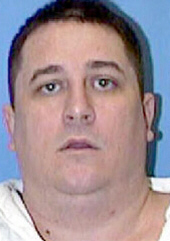
Dennis Wayne Bagwell
Mass murderer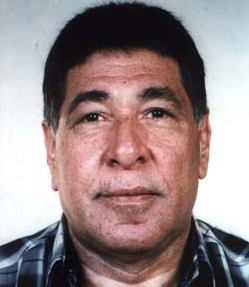 Gameel Al-Batouti
Mass murderer · USA · 1999
Gameel Al-Batouti (also rendered “Gamil ElBatouty” or “El Batouty” in U.S. offi…
216 victims
Gameel Al-Batouti
Mass murderer · USA · 1999
Gameel Al-Batouti (also rendered “Gamil ElBatouty” or “El Batouty” in U.S. offi…
216 victims
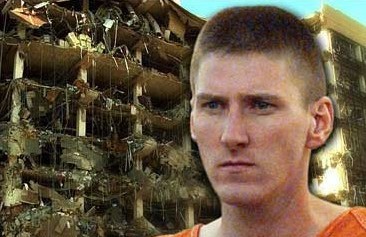 Timothy McVeigh
Mass murderer · USA · 1995
Timothy James McVeigh (April 23, 1968 – June 11, 2001) was a United States Army…
168 victims
Timothy McVeigh
Mass murderer · USA · 1995
Timothy James McVeigh (April 23, 1968 – June 11, 2001) was a United States Army…
168 victims
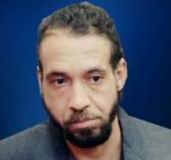 Julio Gonzalez
Mass murderer · USA · 1990
Julio Gonzalez was sentenced to 174 twenty-five-year sentences (a total of 4,35…
87 victims
Julio Gonzalez
Mass murderer · USA · 1990
Julio Gonzalez was sentenced to 174 twenty-five-year sentences (a total of 4,35…
87 victims
 David Burke
Mass murderer · USA · 1987
David Augustus Burke (May 18, 1952–December 7, 1987) was an employee of USAir,…
43 victims
David Burke
Mass murderer · USA · 1987
David Augustus Burke (May 18, 1952–December 7, 1987) was an employee of USAir,…
43 victims
 George Jo Hennard
Mass murderer · USA · 1991
George Jo Hennard carried out a mass killing at a Luby’s Cafeteria in Killeen,…
23 victims
George Jo Hennard
Mass murderer · USA · 1991
George Jo Hennard carried out a mass killing at a Luby’s Cafeteria in Killeen,…
23 victims
 Ronald Gene Simmons
Mass murderer · USA · 1987
Ronald Gene Simmons was a retired United States Air Force sergeant. Over the Ch…
16 victims
Ronald Gene Simmons
Mass murderer · USA · 1987
Ronald Gene Simmons was a retired United States Air Force sergeant. Over the Ch…
16 victims
 John Rowles
Murderer · 1929
John Rowles was the subject of an investigation that connected multiple disappe…
3 victims
John Rowles
Murderer · 1929
John Rowles was the subject of an investigation that connected multiple disappe…
3 victims
 Christian Nielsen
Mass murderer · USA · 2006
Christian Nielsen pleaded guilty to four counts of murder and was sentenced to…
4 victims
Christian Nielsen
Mass murderer · USA · 2006
Christian Nielsen pleaded guilty to four counts of murder and was sentenced to…
4 victims
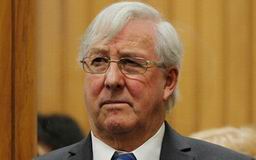 Menzies Hallett
Murderer · New Zealand · 1979
Name: Menzies Hallett Age: 72 Year of sentencing status: Sentenced to life in p…
1 victim
Menzies Hallett
Murderer · New Zealand · 1979
Name: Menzies Hallett Age: 72 Year of sentencing status: Sentenced to life in p…
1 victim
 James Ruppert
Mass murderer · USA · 1975
James Ruppert killed his mother, brother, sister-in-law, and eight nieces and n…
11 victims
James Ruppert
Mass murderer · USA · 1975
James Ruppert killed his mother, brother, sister-in-law, and eight nieces and n…
11 victims
 Bryan Toles
Murderer · USA · 1993
Bryan Anthony Toles was convicted in the District Court, Comanche County, of fi…
2 victims
Bryan Toles
Murderer · USA · 1993
Bryan Anthony Toles was convicted in the District Court, Comanche County, of fi…
2 victims
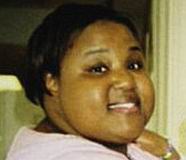 Veronica Cirella
Murderer · USA · 2011
Veronica Cirella was 31 and lived in Plainview, New York. She was the mother of…
1 victim
Veronica Cirella
Murderer · USA · 2011
Veronica Cirella was 31 and lived in Plainview, New York. She was the mother of…
1 victim
- Gender
- male
- Country
- USA
- Location
- Wilson County, Texas, USA
- Date of birth
- December 27, 1973
- Age at first offence
- 22
- Characteristics
- parricide
- Victim profile
- 1 male / 4 female ( his mother; her granddaughter; his half-sister; and her daughter, 4 )
- Method of murder
- Several
- Date(s) of murder
- September 1995
- Years active
- 1995
- Date of arrest
- September 20, 1995
- Status
-
Executed
Executed by lethal injection in Texas on February 17, 2005
Case details
Dennis Wayne Bagwell was executed by lethal injection in Texas on February 17, 2005.
Bagwell and his girlfriend, Victoria Wolford, lived in a small travel trailer which Bagwell had parked on property owned by his mother, Leona McBee, and his stepfather, Ron Boone. McBee and Boone lived on the property in a mobile home with a two bedroom addition. Libby Best, Reba Best, and Tassy Boone lived with McBee and Boone. Ronald Boone found all four victims when he came home from work.
About two weeks before the killings, McBee asked Bagwell and Wolford to stop living on the property. Bagwell and Wolford then moved in with friends in San Antonio. The travel trailer they had been living in remained on McBee and Boone’s property.
Timeline
- September 20, 1995 — Ronald Boone returned home from work and found the bodies of Leona McBee, Libby Best, Reba Best, and Tassy Boone.
- September 20, 1995 — Bagwell was indicted by a Wilson County grand jury for capital murder in the deaths of Leona McBee, Libby Best, Reba Best, and Tassy Boone.
- November 1, 1996 — A jury found Bagwell guilty of capital murder.
- November 7, 1996 — The court sentenced Bagwell to death.
- March 31, 1999 — The Texas Court of Criminal Appeals affirmed Bagwell’s conviction and sentence.
- September 28, 1998 — Bagwell filed an application for writ of habeas corpus in state district court.
- September 29, 1999 — The Texas Court of Criminal Appeals adopted the district court’s recommendation and denied habeas relief.
- March 3, 2000 — Bagwell filed a habeas petition in a San Antonio federal court.
- August 19, 2003 — The court denied Bagwell’s federal writ petition.
- May 11, 2004 — The 5th U.S. Circuit Court of Appeals denied Bagwell’s request for permission to appeal.
- November 14, 2004 — The U.S. Supreme Court denied certiorari review.
- February 17, 2005 — Bagwell was executed by lethal injection in Texas.
- 6:19 p.m. — Bagwell was pronounced dead.
The offence
Bagwell was convicted of the 1995 capital murders of Leona McBee, Tassy Boone, Libby Best, and Reba Best.
The victims were killed at a mobile home in a rural area of Wilson County near Stockdale, about 35 miles southeast of San Antonio. The murders occurred in Wilson County and were described as taking place near Stockdale.
Leona McBee, 47, had been beaten and strangled, and her neck was broken. Libby Best, 24, had been shot twice in the head. Tassy Boone, 14, had been beaten, strangled, and sexually assaulted, and her neck was also broken. Reba Best, 4, had been beaten and her skull was crushed.
The killings were described as having involved strangling, beating, and shooting. Bagwell’s girlfriend testified that Bagwell had asked for money, and that McBee gave him only $20.
At trial, Bagwell denied any involvement in the crime. His lawyers implicated Tassy’s mother, Monica Boone, as the killer, and she established that she was in California at the time of the crime. Bagwell denied involvement in the massacre of his mother and three others.
A bloody shoeprint found underneath Tassy Boone’s body linked Bagwell to the crime, and Bagwell denied involvement. The defense presented evidence to suggest Monica Boone committed the crime, including evidence of a difficult relationship and that Monica physically abused Tassy. The defense also presented evidence that, on the night of the murders, a woman resembling Monica appeared at a bar near the crime scene intoxicated and mumbling about having lost her hammer. On rebuttal, Monica Boone was called to establish she had been in California at the time of the murders, and law enforcement testified they identified the woman at the bar, determined she was not Monica Boone, and ruled her out as a suspect.
Monica Boone was identified as Tassy Boone’s mother.
Investigation and evidence
Wolford testified about events on September 20, 1995. According to her testimony, she and Bagwell drove to McBee’s house on September 20, 1995, to borrow money. Wolford retired to the travel trailer because she had a headache. A short time later, Bagwell walked over to the travel trailer and told Wolford that his mother would only give him $20. Bagwell then went back into McBee’s house.
Wolford stood outside the travel trailer. Through the window, Wolford saw Bagwell strike McBee, then heard screams and two popping noises. She heard Tassy Boone yell, “No, no,” and heard Reba Best scream. Later, Wolford heard McBee yell at the dogs and gasp for air. Through the window, she saw Bagwell hit McBee with a long-handled gun.
Later, Bagwell took some towels and wetted them with a water hose. He wiped off a hammer and told Wolford he was going inside to wipe off fingerprints he might have left in the house. He told Wolford he was trying to make the crime look like a robbery and a rape of Tassy Boone.
In the habeas proceedings, it was noted that law enforcement officers and scientific experts linked significant physical evidence from the murders to Bagwell. Items taken from the Boone residence included a pair of tennis shoes and a pair of shorts. An expert witness testified that one of the tennis shoes matched a bloody shoe print found at the crime scene under the body of Tassy Boone, and that the tennis shoes in question belonged to Bagwell. A firearms expert testified that bullet fragments removed from Libby Best’s cranium matched a shattered rifle recovered by law enforcement officers.
The state offered evidence that Bagwell had discarded incriminating evidence along the getaway route based on information Wolford provided.
Arrest and detention
Before trial, the prosecution moved to have Bagwell restrained while in the courtroom.
At the hearing on restraining Bagwell, Wilson County Deputy Sheriff Johnny Deagan testified that:
- Bagwell had made numerous threats against law enforcement personnel during his pretrial detention.
- Unidentified members of the victims’ families had threatened Bagwell.
- Restraining Bagwell through use of a leg brace would aid court security personnel in the event Bagwell needed to be removed from the courtroom and would reduce Bagwell’s ability to retaliate against anyone who attacked him.
Calvin Pundt, an investigator for the Wilson County Sheriff’s Department, testified that Bagwell threatened several law enforcement personnel, vowing to “take one of you out before we hit the floor.”
The defense did not rebut the testimony concerning Bagwell’s threats against law enforcement personnel.
Bagwell was directed to have leg restraints worn beneath his clothing and concealed while he was seated in the courtroom, and that the restraints must not be shown to the jury or any prospective juror in any restraint. Bagwell did not object to the leg restraints throughout the pendency of the trial or on direct appeal.
Trial
Charging and venue
On September 20, 1995, Bagwell was indicted by a Wilson County grand jury for capital murder in the deaths of Leona McBee, Libby Best, Reba Best, and Tassy Boone.
A change of venue was granted and the case was transferred to Atascosa County.
Conviction
On November 1, 1996, a jury found Bagwell guilty of capital murder.
Sentencing
On November 7, 1996, the court sentenced Bagwell to death.
At trial, a jury found that Bagwell killed the victims during the same criminal transaction, and under Texas law murdering more than one person during the same criminal transaction was a capital offense.
At trial, Wolford testified for the state. The defense did not call Bagwell as a witness. Bagwell did not testify during the trial or during the penalty phase.
The defense offered witnesses including psychiatric testimony and evidence to suggest Monica Boone committed the crime. The defense also offered five witnesses in the penalty phase, including Bagwell’s ex-wife and former parole officer, each of whom testified that Bagwell should receive a sentence of life imprisonment rather than the death penalty. The jury sentenced Bagwell to death after a four-hour deliberation.
Shackling claim and presumption of innocence issue
In federal habeas proceedings, Bagwell raised due process and presumption of innocence issues regarding being shackled in the courtroom throughout the trial. It was held that he was not entitled to a certificate of appealability on that issue.
Sentencing and prior criminal history
At the punishment phase of his trial, the state presented evidence of Bagwell’s future dangerousness.
Bagwell had been sentenced on September 27, 1982, to eighteen years in state prison for attempted capital murder, and he was on parole for this crime at the time of the 1995 capital murders. The prior offense involved robbing and slitting the throat of an undocumented immigrant.
Bagwell had also had a prior conviction for misdemeanor assault.
The state proved that only two weeks prior to the capital murders, Bagwell had murdered the elderly custodian of a business in Seguin, Texas, George Barry, who was described as a 63-year-old janitor.
The state also presented evidence of a history of parole violations, threats of violence, disciplinary violations, and refusals to accept psychiatric treatment while in prison. During the capital murder trial, Bagwell was required to wear leg restraints during the trial because of numerous threats he had made to law enforcement personnel. Bagwell had a lengthy history of threats and disciplinary violations and refusals to accept psychiatric treatment while in prison.
It was stated that Bagwell frequently abused cocaine and told Victoria Wolford that his God “put me here to kill some people."
Appeals
State direct appeal
Bagwell appealed his conviction and sentence to the Texas Court of Criminal Appeals, which affirmed the conviction and sentence on March 31, 1999.
State habeas
Bagwell filed an application for writ of habeas corpus in state district court on September 28, 1998. After an evidentiary hearing, the district court recommended that Bagwell be denied relief. The Texas Court of Criminal Appeals adopted the district court’s recommendation on September 29, 1999.
Federal habeas
Bagwell filed a petition for writ of habeas corpus in a San Antonio federal court on March 3, 2000. On August 19, 2003, the court denied Bagwell’s federal writ petition.
Afterward, Bagwell sought permission to appeal from the 5th U.S. Circuit Court of Appeals, but the court denied his request on May 11, 2004.
Bagwell later filed a petition for writ of certiorari in the U.S. Supreme Court, but the Court denied certiorari review on November 14, 2004.
Certificate of appealability issues
Bagwell v. Dretke, 372 F.3d 748 (5th Cir. 2004) (Federal Habeas) involved a request for a certificate of appealability. The court denied the request on both claims, including the claim about shackling during trial and the claim about trial counsel coercing him into waiving his right to testify.
Bagwell’s trial court and federal district court had declined to grant a certificate of appealability on any issue.
Execution and last statements
Bagwell was scheduled to be executed after 6 p.m. Thursday, February 17, 2005. On February 17, 2005, he was executed by lethal injection in Texas.
Bagwell did not acknowledge the four relatives of his victims, but he thanked a spiritual adviser for being there. He told people he had invited to watch him die: “I love you all.”
A brief final statement was reported as: “I love you all. All right, Warden, I’m ready,” said by Bagwell while strapped to a gurney in the Texas death chamber.
Bagwell was pronounced dead at 6:19 p.m.
Final meal
Bagwell’s final meal was a beef steak, medium rare with A1 Sauce, three fried chicken breast, three fried chicken thighs, BBQ ribs, a large order of french fries, a large order of onion rings, a pound of fried bacon, a dozen scrambled eggs with onions, fried tatters with onions, sliced tomatoes, a salad with ranch dressing, two hamburgers with everything, peach pie or cobbler, ketchup, salt and pepper, milk and coffee, ice tea with real sugar.
Other details
Bagwell v. State, 956 S.W.2d 709 (Tex.Cr.App. 1997) (Direct Appeal) included an unrelated capital murder case background about Bagwell being convicted for capital murder in Guadalupe County after a jury found he killed George Barry during the course of a robbery by stomping on his face and neck, with the state waiving the death penalty and the jury sentencing him to life imprisonment.
In that earlier case, on September 5, 1995, a delivery person found the body of George Barry in the supply room of a local bar, Jim’s Place, in Seguin, where Barry worked as a night stocker. Police arrived shortly after discovery, took photographs, and dusted for fingerprints. Wolford testified that on the evening of September 4, she and Bagwell met Donnie Halm, owner of Jim’s Place, at a rest stop on Highway 123, and Bagwell sold Halm a television, stereo, and VCR belonging to a local rent-to-own store for $200. Wolford testified they then bought rock cocaine for $150, smoked it, and later Bagwell wanted to return to Seguin for more drugs, marijuana. Wolford dressed and they drove to Jim’s Place, where Bagwell went into the bar and later returned with three money bags and an injured finger. Wolford testified that Bagwell told her he planned to rob and kill George Barry in the restaurant stocking beer for the next day, and that Bagwell later told her he had killed Barry by smashing his throat in with his foot. Wolford testified Bagwell was wearing black, heavy boots. Bagwell denied involvement in the later murders and was said to have made inconsistent stories about how he had hurt his hand, including statements that he hit a black man, hit a black man and robbed him, or smashed his hand down on the roof of an automobile.
An expert on fingerprints testified about Bagwell’s fingerprints and palm prints being found near Barry’s body on a file cabinet. An expert on pattern injuries testified that he could not rule out the possibility that Bagwell’s shoes had caused injuries to Barry’s face and neck. A San Antonio police officer testified to finding one cloth bank bag with the words “First Commercial” on it in the room Wolford and Bagwell shared in San Antonio. Bar employees testified the bag was “similar” to those used by Jim’s Place.
Bagwell was also described as growing up in the Rio Grande Valley and the Dallas area and being born in Denver.
Bagwell’s tattoos included one on his left arm that spelled out in big letters: “MOM.”
Bagwell said in an interview on the day before his execution: “They're fixin' to execute an innocent man,” and he said he hoped his execution would “hurry up and go through.” He also said: “If they offered me a life sentence, I wouldn't take it. I'm not walking through these hallways as an 80- or 90-year-old for something I didn't do,” and: “I'm ready to go. I'm tired of living in a cage like an animal.” He also said: “I’m at peace with it,” and: “I’m ready to go. I’m tired of living in a cage like an animal and being treated like an animal.” He said: “What better way to go than being put to sleep, rather than suffering the rest of your life.”
A Wilson County Sheriff Joe Tackitt was quoted as saying: “He’s at peace with it” and “He deserves what he gets.” (As reported, the quote about “He’s at peace with it” was associated with Tackitt’s remarks; other execution reporting also included Bagwell statements “I’m at peace with it.”)
Spotted an error, or have more information about this case?