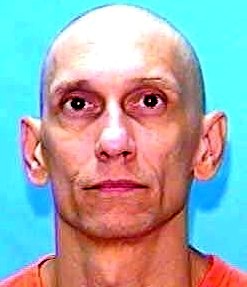
Donald Dufour
Serial killer Carl Eugene Watts
Serial killer · USA · 1974
Carl Eugene Watts (born November 7, 1953; died September 21, 2007), also known…
100 victims
Carl Eugene Watts
Serial killer · USA · 1974
Carl Eugene Watts (born November 7, 1953; died September 21, 2007), also known…
100 victims
 Rodney Alcala
Serial killer · USA · 1977
Rodney James Alcala (born August 23, 1943) was also known as Rodrigo Jacques Al…
100 victims
Rodney Alcala
Serial killer · USA · 1977
Rodney James Alcala (born August 23, 1943) was also known as Rodrigo Jacques Al…
100 victims
 Donald Leroy Evans
Serial killer · USA · 1975
Donald Leroy Evans (born July 5, 1957) was an American serial killer who murder…
60 victims
Donald Leroy Evans
Serial killer · USA · 1975
Donald Leroy Evans (born July 5, 1957) was an American serial killer who murder…
60 victims
 Michael Swango
Serial killer · USA · 1981
Michael Swango (Joseph Michael Swango) was a physician and American serial kill…
60 victims
Michael Swango
Serial killer · USA · 1981
Michael Swango (Joseph Michael Swango) was a physician and American serial kill…
60 victims
 Efren Saldivar
Serial killer · USA · 1989
Efren Saldivar (born 30 September 1969) was an American serial killer who murde…
50 victims
Efren Saldivar
Serial killer · USA · 1989
Efren Saldivar (born 30 September 1969) was an American serial killer who murde…
50 victims
 Gary Ridgway
Serial killer · USA · 1982
Gary Leon Ridgway Ridgway was born 18-February-1949 in Salt Lake City, UT. He w…
49 victims
Gary Ridgway
Serial killer · USA · 1982
Gary Leon Ridgway Ridgway was born 18-February-1949 in Salt Lake City, UT. He w…
49 victims
 David Smith
Spree killer · USA · 1980
David Smith was sentenced to death in 1983. Smith was angered because his girlf…
4 victims
David Smith
Spree killer · USA · 1980
David Smith was sentenced to death in 1983. Smith was angered because his girlf…
4 victims
 Glen Edward Chapman
Murderer? · USA · 1992
Defendant: Glen Edward Chapman Legal case references: In the Supreme Court of N…
2 victims
Glen Edward Chapman
Murderer? · USA · 1992
Defendant: Glen Edward Chapman Legal case references: In the Supreme Court of N…
2 victims
 Yuji Nishizawa
Murderer · In the air. Japan · 1999
Yuji Nishizawa (西沢裕司 Nishizawa Yūji) hijacked All Nippon Airways Flight 61 on J…
1 victim
Yuji Nishizawa
Murderer · In the air. Japan · 1999
Yuji Nishizawa (西沢裕司 Nishizawa Yūji) hijacked All Nippon Airways Flight 61 on J…
1 victim
- Gender
- male
- Country
- USA
- Location
- Mississippi/Florida, USA
- Date of birth
- March 22, 1956
- Age at first offence
- 26
- Characteristics
- robbery, rape
- Victim profile
- Edward Wise, 47, and his live-in lover, John Stinson, 44 / Zack Miller / Danny King, 32, and Earl Peeples, 34 (gay men)
- Method of murder
- Shooting / Stabbing with knife
- Date(s) of murder
- July-October 1982
- Years active
- 1982
- Date of arrest
- October 14, 1982
- Status
-
Sentenced to death
Sentenced to death in Mississippi in March 1983; sentenced to death in Florida on July 3, 1983
Name and case identifiers
Donald Dufour
Overview
On the afternoon of July 15, 1982, a postman working Henry Balch Drive in middle-class Orlando, Florida, noticed that deliveries of mail at Edward Wise's home had not been taken in for several days. The circumstance was curious but not disturbing. The carrier became aware of rancid odors emanating from the house itself, and police were summoned. Police forced the door, and inside they found Ed Wise, age 47, and his live-in lover, 44-year-old John Stinson, shot and stabbed to death.
The medical examiner declared they had been dead at least a week, perhaps ten days.
Though gay, the men had not been known as “cruisers,” and police did not initially suspect them of inviting home “rough trade.”
The offence
Wise and Stinson homicide (Florida)
Ed Wise, age 47, and John Stinson, 44-year-old live-in lover of Wise, were shot and stabbed to death in the home on Henry Balch Drive.
In January 1983, first-degree murder indictments were returned against Dufour in Florida for the deaths of Wise and Stinson.
During Florida proceedings, Dufour entered a plea in which the State agreed to drop another murder charge against him for the murder of John Stinson, who was killed at the same time as Wise.
Miller homicide (Florida)
A young man riding his motorcycle through an Orlando citrus grove discovered a corpse, partially covered by an orange blanket, beside a dirt road. The victim was a male. He had been shot twice— in the head and back— with a .25-caliber pistol.
A gasoline receipt recovered from his pocket identified him as Zack Miller, of Boston, Georgia, reported missing by his family two days earlier. Zack Miller’s car was discovered on September 7.
In September, first-degree murder indictments were returned against Dufour in Florida for the Miller homicide.
King and Peeples homicide (Mississippi)
In Jackson, Mississippi, Dufour was charged with double murder in the stabbing deaths of Danny King, age 32, and 34-year-old Earl Peeples. Both men had been slain in the apartment occupied by Peeples.
Forensic evidence proved more persuasive to a Jackson jury than Dufour’s plea of innocence.
Investigation
Police summoned to the Wise home forced the door and found Ed Wise, age 47, and John Stinson, 44-year-old live-in lover of Wise, shot and stabbed to death.
In Jackson, investigators searching for Dufour were startled by the news of his arrest four days after the attempted robbery.
Homicide investigators in Florida were later linked to Dufour through attempted robbery evidence.
Arrest and related events
Attempted robbery and capture of a gunman (Florida)
On October 10, three gunmen tried to rob a local fast food restaurant in Orlando. One of them was captured near the scene. The clumsy stick-up artist named the “brains” behind the job as Don Dufowr, a cocky thief who boasted of a recent murder in an orange grove, with the victim robbed of jewelry.
In fact, the would-be robber told detectives that Don had bragged of killing something like a dozen people, altogether.
Arrest in Jackson, Mississippi
Dufour was arrested in Jackson, Mississippi, four days after the attempted robbery.
Trial
Mississippi trial (Peeples homicide)
Dufour was convicted of the Peeples homicide on March 31, 1983.
For Danny King’s murder, prosecutors expressed their intention to try Dufour again after the first conviction and death sentence in Mississippi.
In the Mississippi case, Dufour was sentenced to die in Mississippi’s electric chair.
Sentencing
Mississippi
Convicted of the Peeples homicide, Dufour was sentenced to die in Mississippi’s electric chair in March 1983.
Dufour was sentenced to death in Mississippi in March 1983.
Florida
In Florida, Dufour was sentenced to death on July 3, 1983.
Direct evidence and trial testimony (Florida murder of Zack Miller)
Stacey Sigler, Dufour’s former girlfriend, testified that on the evening of 09/04/82, Dufour told her that he planned to find a homosexual man, and then rob and kill him. Dufour requested that Sigler drop him off at a bar and await his call. About one hour later, he called Sigler to have her pick him up at his brother’s house.
When she arrived, Dufour was searching the trunk of a car that Sigler did not recognize and was wearing new jewelry; both the car and jewelry belonged to the victim, later determined to be Zack Miller.
Robert Taylor testified that Dufour told him that he (Dufour) had used a .25 caliber pistol to shoot Zack Miller in an orange grove and then take his car.
Taylor purchased a piece of the stolen jewelry from Dufour and helped him disassemble the pistol and discard the pieces in a junkyard.
Raymond Ryan testified that Dufour told him of the killing and admitted to stealing the jewelry. Ryan also saw Dufour and Taylor disassemble the pistol.
A prison acquaintance of Dufour, Henry Miller, testified that Dufour also told him the details of the murder.
Zack Miller was found in an orange grove, with two gunshot wounds to his back and head.
Jury verdict and sentence recommendation (Florida)
Information presented by the State included charging one count of First-Degree Murder. A jury returned a guilty verdict on 05/31/84. The jury recommended a death sentence by a vote of 12-0 on 05/31/84.
Dufour was sentenced to death on 07/03/84.
Plea and disposition regarding Wise and Stinson (Florida)
On 03/06/86, Dufour pled no contest and was sentenced to Life Imprisonment for the First-Degree Murder of Edward Wise (Case# 83-319), committed on 07/04/82.
In return for the plea, the State agreed to drop another murder charge against Dufour for the murder of John Stinson, who was killed at the same time as Wise.
Mississippi conviction tied to Florida co-defendants
Robert Taylor, who testified against Dufour as to the murder of the Florida man, was a codefendant of Dufour and was convicted and sentenced to death for another murder committed at the same time as Dufour’s murder of Peeples.
Appeals
Florida direct appeal
Dufour filed a Direct Appeal with the Florida Supreme Court on 08/06/84, citing the following errors:
- denial of motion to suppress evidence;
- admission of evidence from Miller that violated his 6 th Amendment right to counsel;
- denial of several motions for mistrial (inappropriate prosecutorial evidence during opening statements);
- inappropriately limiting the cross-examination of Taylor;
- allowing a witness to read into evidence a statement made by Taylor;
- failure to issue a mistrial for prosecutorial comments during closing arguments that drew attention to Dufour’s failure to take the stand during the trial;
- conducting pretrial motion hearings in Dufour’s absence;
- denial of Dufour’s motions for continuance;
- declining to impose sanctions for prosecutorial misconduct regarding discovery;
- forcing Dufour to wear leg shackles during trial led to jury prejudice;
- denial of Dufour’s motion for mistrial due to failure to dismiss a juror that had received a “strange” phone call;
- denial of proposed special jury instructions during the penalty phase of trial;
- admission of evidence of another murder in Mississippi;
- denial of a motion to strike death as a possible penalty due to failure to list all aggravating circumstances that might apply in the case;
- failure to establish two aggravating circumstances (avoiding a lawful arrest and cold, calculated, and premeditated murder);
- and unconstitutionality of Florida’s death penalty statute.
The Florida Supreme Court affirmed the conviction and sentence on 09/04/86.
U.S. Supreme Court certiorari petition (Florida litigation)
Dufour filed a Petition for Writ of Certiorari with the U.S. Supreme Court on 12/27/86 that was denied on 02/23/87.
Post-conviction and habeas proceedings (Florida)
Dufour filed a 3.850 Motion with the Circuit Court on 09/21/92 and amended the Motion on 10/16/01. On 05/30/03, the Circuit Court denied the Motion.
Dufour filed a 3.850 Motion Appeal with the Florida Supreme Court on 07/30/03, primarily citing allegations of ineffective assistance of counsel. On 04/14/05, the Florida Supreme Court affirmed the denial of the Motion.
Dufour filed a Petition for Writ of Habeas Corpus with the Florida Supreme Court on 02/19/04, citing allegations of ineffective assistance of counsel. On 04/14/05, the Florida Supreme Court denied the Petition.
Dufour filed a 3.203 Motion with the Circuit Court on 11/24/04 and amended the motion on 8/9/05. The motion was pending.
United States Supreme Court proceeding (Mississippi death sentence)
Floridacapitalcases.state.fl.us 479 U.S. 891 107 S.Ct. 292 93 L.Ed.2d 266
Donald William DUFOUR v. MISSISSIPPI No. 85-6889
Supreme Court of the United States
October 14, 1986
On petition for writ of certiorari to the Supreme Court of Mississippi. The petition for a writ of certiorari is denied.
Justice BRENNAN, dissenting:
Adhering to my view that the death penalty is in all circumstances cruel and unusual punishment prohibited by the Eighth and Fourteenth Amendments, Gregg v. Georgia, 428 U.S. 153, 227, 96 S.Ct. 2909, 2950, 49 L.Ed.2d 859 (1976), I would grant certiorari and vacate the death sentence in this case.
Justice MARSHALL, dissenting from denial of certiorari:
Adhering to my view that the death penalty is under all circumstances cruel and unusual punishment forbidden by the Eighth and Fourteenth Amendments, I would vacate the judgment of the Supreme Court of Mississippi insofar as it left undisturbed the death sentence imposed in this case. Gregg v. Georgia, 428 U.S. 153, 231, 96 S.Ct. 2909, 2973, 49 L.Ed.2d 859 (1976) (MARSHALL, J., dissenting). However, even if I believed that the death penalty could be imposed constitutionally under certain circumstances, I nevertheless would grant certiorari because this petition presents an important issue concerning the application of this Court's decision in Strickland v. Washington, 466 U.S. 668, 104 S.Ct. 2052, 80 L.Ed.2d 674 (1984).
Justice MARSHALL’s discussion included:
- “Petitioner Donald Dufour was convicted of capital murder occurring in the course of a robbery.”
- “His appointed counsel presented no evidence in mitigation of sentence at the penalty phase of his trial.”
- “The jury found that the State had established two aggravating circumstances and recommended a sentence of death.”
- “The State Supreme Court affirmed petitioner's conviction and death sentence.”
- “Dufour v. State, 453 So.2d 337 (Miss.1984).”
- “This Court denied certiorari. Dufour v. Mississippi, --- U.S. ----, 105 S.Ct. 1231, 84 L.Ed.2d 172 (1985).”
MARSHALL continued about post-conviction proceedings:
- the trial court summarily denied ineffective-assistance claims and the State Supreme Court affirmed;
- Dufour requested appointment of a psychiatrist to assist counsel in showing prejudice from absence of psychological evidence;
- Dufour submitted the affidavit of Dr. Stanley, “the court-appointed psychiatrist who had previously examined him for the purpose of determining his competency to stand trial.”
- Dr. Stanley “stated that the limited examination he had conducted for purposes of determining competency bore no relation to the more extensive and qualitatively different investigation required to present useful assistance to trial counsel on the subject of mitigation.”
MARSHALL quoted the State Supreme Court:
"Petitioner claims that defense counsel failed to make application to the trial court for funds to conduct a psychological evaluation of petitioner for the purpose of determining whether mitigating circumstances existed. Further, that he had no expert assistance because counsel did not request it. However, petitioner was examined pursuant to a court order. The professionals were not people selected by the State, but by the trial court. Petitioner has failed to present facts which show there existed mitigating circumstances of a psychological nature, which could have been presented by Dr. Stanley. It is not shown that such an examination would have produced the claimed results, nor has prejudice been shown."
MARSHALL discussed Strickland’s two-part standard, quoting:
"First, the defendant must show that counsel's performance was deficient. This requires showing that counsel made errors so serious that counsel was not functioning as the 'counsel' guaranteed the defendant by the Sixth Amendment. Second, the defendant must show that the deficient performance prejudiced the defense. This requires showing that counsel's errors were so serious as to deprive the defendant of a fair trial, a trial whose result is reliable."
MARSHALL also quoted from Strickland as part of his dissent:
"a showing that the performance of a defendant's lawyer departed from constitutionally prescribed standards requires a new trial regardless of whether the defendant suffered demonstrable prejudice thereby."
MARSHALL noted:
“Petitioner's claim was denied because he did not proffer the psychiatric evidence which he contended should have been introduced at trial.” and stated: “He did not do so precisely because, as an indigent, he could not afford to retain a psychiatrist to make an examination either in preparation for trial or upon his application for post-conviction relief.”
MARSHALL referenced Ake v. Oklahoma and stated:
“the assistance of a psychiatrist may well be crucial to the defendant's ability to marshal his defense,” and: “the accused is entitled to the appointment of psychiatric assistance at public expense.”
MARSHALL concluded:
“Because I believe that such application of the Strickland standard is incompatible with the requirements of the Constitution, I would grant the petition for certiorari.”
MARSHALL’s footnotes included:
“I would not reach the question of whether counsel's failure in this case to move for the appointment of a psychiatrist was constitutionally deficient representation under the first part of the test established by Strickland v. Washington… The correctness of the State Supreme Court's determination on the question of prejudice is the sole issue posed by the petition.” and: “I note that petitioner's trial counsel failed to present any evidence at all in mitigation of sentence. As I have previously stated, I believe that in all but the most extraordinary cases, such failure is, without more, a denial of effective assistance of counsel.”
Other details
Trial and legal representation identifiers (Florida)
Ninth Judicial Circuit, Orange County Case # 82-5467 Sentencing Judge: The Honorable Michael F. Cycmanick Attorney, Trial: Jay P. Cohen – Private Attorney Direct Appeal: Brynn Newton – Assistant Public Defender Attorney Collateral Appeals: Mark Gruber – CCRC-M Date of Offense: 09/04/82 Date of Sentence: 07/03/84
Circumstances and planning described at trial (Miller homicide)
Stacey Sigler testified about Dufour’s plan to find a homosexual man and rob and kill him. Dufour requested that she drop him off at a bar and await his call. When she arrived at his brother’s house, Dufour was searching the trunk of a car and wearing new jewelry, both belonging to the victim later determined to be Zack Miller.
Criminal counts and outcomes mentioned
- Dufour was convicted of the Peeples homicide and sentenced to death in Mississippi.
- Dufour was sentenced to death in Florida for the Miller homicide.
- Dufour pled no contest and was sentenced to Life Imprisonment for the First-Degree Murder of Edward Wise.
- The State agreed to drop a murder charge against Dufour for the murder of John Stinson in return for the plea.
Disputed or contested points at trial/appeal (as alleged in appeal)
Dufour’s direct appeal cited challenges including denial of motion to suppress evidence; admission of evidence violating his Sixth Amendment right to counsel; denial of mistrials; limitations on cross-examination; witness reading a statement into evidence; failures to dismiss jurors; and denial of motions related to the death penalty statute and aggravating circumstances.
Spotted an error, or have more information about this case?