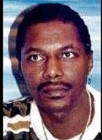
Wesley Eugene Baker
Murderer Brian Kevin Rosenfeld
Murderer · USA · 1985
Brian Kevin Rosenfeld Brian Kevin Rosenfeld was sentenced to three concurrent l…
23 victims
Brian Kevin Rosenfeld
Murderer · USA · 1985
Brian Kevin Rosenfeld Brian Kevin Rosenfeld was sentenced to three concurrent l…
23 victims
 Russell Ellwood
Murderer · USA · 1991
Russell Ellwood was a former taxi driver. Authorities suspected him of killing…
20 victims
Russell Ellwood
Murderer · USA · 1991
Russell Ellwood was a former taxi driver. Authorities suspected him of killing…
20 victims
 Robert Martines Perez
Murderer · USA · 1994
Name: Robert Martines Perez · Other name used in proceedings: Robert Martinez P…
15 victims
Robert Martines Perez
Murderer · USA · 1994
Name: Robert Martines Perez · Other name used in proceedings: Robert Martinez P…
15 victims
 Billy Frank Vickers
Murderer · USA · 1993
Billy Frank Vickers Vickers was executed by lethal injection in Texas on Januar…
14 victims
Billy Frank Vickers
Murderer · USA · 1993
Billy Frank Vickers Vickers was executed by lethal injection in Texas on Januar…
14 victims
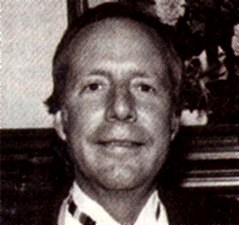 John Eleuthère DuPont
Homicide · USA · 1996
John Eleuthère duPont (November 22, 1938 – December 9, 2010) was an American bi…
1 victim
John Eleuthère DuPont
Homicide · USA · 1996
John Eleuthère duPont (November 22, 1938 – December 9, 2010) was an American bi…
1 victim
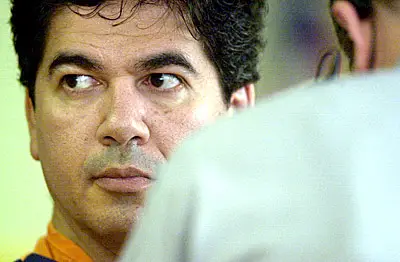 Reinaldo Rivera
Serial killer · USA · 1999
Reinaldo Rivera was arrested in a motel room where he tried to kill himself by…
4 victims
Reinaldo Rivera
Serial killer · USA · 1999
Reinaldo Rivera was arrested in a motel room where he tried to kill himself by…
4 victims
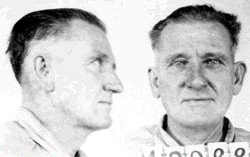 Lee Albert Smith
Murderer · USA · 1944
Lee Albert Smith, white, was executed by asphyxiation-gas in Arizona on April 6…
1 victim
Lee Albert Smith
Murderer · USA · 1944
Lee Albert Smith, white, was executed by asphyxiation-gas in Arizona on April 6…
1 victim
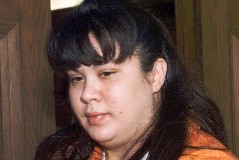 Christina Riggs
Murderer · USA · 1997
Christina Riggs was executed in Arkansas by lethal injection. Riggs was convict…
2 victims
Christina Riggs
Murderer · USA · 1997
Christina Riggs was executed in Arkansas by lethal injection. Riggs was convict…
2 victims
- Gender
- male
- Country
- USA
- Location
- Baltimore County, Maryland, USA
- Date of birth
- March 26, 1958
- Age at first offence
- 33
- Characteristics
- robbery, rape?, drug addict
- Victim profile
- Jane Tyson (female, 49)
- Method of murder
- Shooting
- Date(s) of murder
- June 6, 1991
- Years active
- 1991
- Date of arrest
- Same day
- Status
-
Executed
Executed by lethal injection in Maryland on December 4, 2005
Case overview
Wesley Eugene Baker was convicted of murdering Jane Tyson in the course of a robbery in Maryland and was sentenced to death. He was executed by lethal injection.
Jane Tyson was 49 years old. She was married with three children and six grandchildren and worked as a teacher's aide at a local elementary school. Tyson went to the Westview Mall near Baltimore with her two grandchildren, six-year-old Adam and four-year-old Carly. As she was entering her car in the parking lot to leave, Baker approached her, put a gun to her head, and fired once, killing her. Baker then jumped into a blue truck and fled.
A witness followed the truck out of the lot and recorded the license plate number, then returned to the mall and informed police. Police spotted the vehicle and gave chase. The truck stopped abruptly and a passenger later identified by the witness as Baker fled on foot. The driver, Gregory Lawrence, was arrested.
Baker was arrested a short time later, found to have blood on his shoe, sock, and leg. Subsequent testing revealed that the blood was Tyson's. Officers also found Tyson's purse and wallet in the path of Baker's flight. The firearm used in the shooting was recovered from the truck, and fingerprints from Baker's right hand were found on the driver's side of Tyson's vehicle.
A conviction and sentence were imposed not only on Baker for capital murder but also on Gregory Lawrence, who was convicted of murder and sentenced to life without parole.
Baker had a death sentence that was upheld on direct appeal and later challenged through post-conviction and federal habeas proceedings. His execution took place after further legal challenges were rejected and after Gov. Robert L. Ehrlich Jr. declined to intervene and commute the sentence.
Victims
Jane Tyson
Jane Tyson was 49 years old. She was married with three children and six grandchildren. She worked as a teacher's aide at a local elementary school and was shot once in the head outside Westview Mall in the parking lot where she was entering her car with her grandchildren. Her death occurred after a man approached her, put a gun to her head, and fired once while two grandchildren watched.
Tyson helped the six-year-old boy and four-year-old girl into her Buick LeSabre earlier that evening, then settled behind the wheel. The gunman appeared at her window, and police said the boy later recalled hearing his grandmother scream "No" before she was shot. The gunman grabbed her purse, which police said contained $10 in cash, and fled with another man in a blue Chevrolet Blazer. At the time of her death, her husband, John Tyson, was principal at Johnnycake Elementary School.
Tyson was active in her church, which was then St. Lawrence Church in Woodlawn, and was taking a class to become a Catholic. She was remembered for her generous spirit and fondness for the children in her family and the students at Riverview Elementary School in southwest Baltimore County, where she had worked for 10 years.
Adam and Carly
Adam was six years old and was Tyson's grandson. He and Carly were present as Tyson was shot. Adam heard a scream and saw the man shoot Tyson. Carly was four years old.
Timeline
- June 6, 1991 — Jane Tyson was shot in the head outside Westview Mall near Baltimore as she entered her car with grandchildren Adam and Carly; Baker fled in a blue truck with accomplice Gregory Lawrence.
- October 1992 — Baker was convicted of first-degree murder, robbery, and weapons charges.
- Late Monday; time of execution — Baker was executed by lethal injection; his time of death was 9:18 p.m. and the execution began with the curtain opening and chemical administration through intravenous lines.
- December 4, 2005 — Baker was executed by lethal injection in Maryland.
The offence
On the evening of June 6, 1991, Jane Tyson went to Westview Mall near Baltimore with her grandchildren, six-year-old Adam and four-year-old Carly. After shopping for shoes, Tyson helped her grandchildren into her Buick LeSabre and then settled behind the wheel around 8:30 p.m. A gunman appeared at her window. Adam later recalled hearing his grandmother scream "No" before she was shot.
Baker approached Tyson in the parking lot as she was entering her car to leave. Baker put a gun to her head and fired once, killing her. Baker then fled in a blue truck.
A witness observed the getaway. The witness described a blue Chevrolet Blazer leaving the scene with two men in it: one in the driver's seat later identified as Gregory Lawrence and the passenger later identified as Baker. The witness recorded the license plate number and returned to the mall to inform police.
The robbery included taking Tyson's purse. Police said the purse contained $10 in cash.
Investigation and evidence
Scott Faust testified that he was driving by the mall and saw a blue Blazer parked in the lot, with a man entering the driver's side followed by another man running from a nearby car and jumping into the passenger side before the truck sped out of the parking lot. Faust followed the Blazer and recorded the license tag number, then returned and gave the information to police.
Baltimore County police officers spotted the vehicle and pursued it. When the Blazer stopped abruptly, the passenger fled on foot and the driver, Gregory Lawrence, was arrested. Officers also arrested Baker a short time later.
During Baker’s arrest, an officer noticed blood on Baker's sock and shoe, and when Baker's pants leg was lifted officers discovered blood on his shoe, sock, and leg. No blood was observed on Lawrence's clothing after a visual inspection.
Officers found Tyson's purse, wallet, and a photograph holder on the path of Baker's flight. Tyson’s wallet and purse were identified at trial as belonging to Jane Tyson. A bank card was also found in the Blazer’s passenger-side floorboard.
The firearm used in the shooting was recovered from the Blazer. Fingerprints from Baker’s right hand were found on the driver's side of Tyson’s vehicle, including fingerprints on the driver's side door and window of Tyson’s Buick. Fingerprints were also found on the exterior of the Blazer’s passenger side, including a palm print.
Dr. Ann M. Dixon, Chief Deputy Medical Examiner, testified that the gunshot wound that killed Jane Tyson was a contact wound, meaning that the end of the gun was up against the deceased's ear at the time it was discharged. Tyson died from the single wound to the left side of her head.
Arrest
Gregory Lawrence was arrested after the Blazer stopped and the passenger fled on foot. Wesley Eugene Baker was arrested a short time later by Officer James Conaboy. Officers observed blood on Baker’s sock and shoe and discovered blood on his shoe, sock, and leg.
Trial
Charges and procedural posture
Baker was indicted for murder and the State filed notice of its intent to seek the death penalty. The State filed a notice of intent to seek death pursuant to Maryland Code. Baker was charged with first-degree murder, robbery with a deadly weapon, and use of a handgun during the commission of a felony.
During trial, a stipulation was admitted for Adam’s testimony. The stipulation stated that if Adam were called, he would testify that on June 6, 1991 he was six years old, was the grandson of Jane Tyson, the victim in the offense, and was present with his grandmother when she was shot. It also stated that he heard his grandmother scream "NO", saw blood coming out of her mouth, and saw who he believed were two good guys chasing after the man who shot her. It further stated that the black man ran to his blue truck with black windows and “took off” as fast as he could, and that the only other description Adam would give was that the shooter had short hair.
A witness positively identified Baker at a police show-up later that evening and also made a positive in-court identification during trial.
The jury found Baker guilty of first-degree premeditated murder and felony murder, robbery with a deadly weapon, and the use of a handgun during the commission of a felony. By special verdict, the jury found Baker was a principal in the first degree.
The Circuit Court for Harford County trial court proceedings were held after Baker requested the venue be moved from Baltimore County.
Sentencing proceedings
Baker elected to be sentenced by the court rather than by the jury. Before the sentencing hearing commenced, Baker was advised of his right to be sentenced by either the court or a jury, and he elected to be sentenced by the court.
At the sentencing hearing, the State incorporated all evidence from the trial and introduced Baker’s prior criminal record. The record revealed prior criminal convictions for unauthorized use in 1975 and 1978, two 1979 convictions for robbery with a deadly weapon, and a 1989 conviction for unlawful possession of a pistol and a controlled dangerous substance. At the time of the murder, Baker had been on parole for less than nine months.
The State presented testimony from John Tyson regarding the impact of the victim’s death on him and other family members. Appellant presented testimony from Paul Davis, Chairman of the Maryland Parole Commission, and Dr. Robert Johnson, an expert in criminal justice and prison adjustment.
Defense counsel did not call Baker’s mother, Dolores Williams, or Lori James, a social worker who prepared a history of Baker’s family, to testify at the sentencing hearing. Defense counsel explained that Baker directed counsel not to call those witnesses because it would involve painful testimony and because they had to respect Baker's clear directions. The judge expressed concern about not hearing anything about Baker’s social background but ultimately did not call the individuals after Baker’s statements in court.
Baker waived his right of allocution. After closing arguments and consideration of factors, the judge imposed a sentence of death.
Sentencing
The Circuit Court sentenced Baker to death.
The Circuit Court also sentenced Baker to twenty years incarceration for robbery with a deadly weapon and to a consecutive twenty years incarceration for the use of a handgun in the commission of a felony.
Appeals
Direct appeal
Baker’s conviction and death sentence were affirmed on direct appeal.
Post-conviction and related state proceedings
Baker filed a Petition for Post Conviction Relief in the Circuit Court for Harford County on December 23, 1994. In his petition, Baker alleged denial of the constitutional right to a fair and impartial jury, denial of the constitutional right to trial by a jury selected from a fair cross-section of the community, and denial of effective assistance of trial counsel in violation of the Sixth, Eighth, and Fourteenth Amendments and the Maryland Declaration of Rights.
After a hearing on July 6 and July 7, 1995, the Circuit Court for Harford County denied Baker’s petition.
On October 21, 1996, Baker filed a Motion to Reopen the Post Conviction Proceeding, which was denied by the Circuit Court on December 19, 1996.
Federal habeas corpus and further appellate review
Baker filed a Petition for Writ of Habeas Corpus in the United States District Court for the District of Maryland. The petition was denied and the United States Court of Appeals for the Fourth Circuit affirmed the District Court’s decision.
In federal proceedings, claims included challenges to counsel effectiveness, trial court instructions, premeditation instruction issues, and other habeas issues raised through attempts to reopen state post-conviction proceedings and related motions.
Outcome
Baker’s death sentence proceeded through multiple levels of review. Gov. Robert L. Ehrlich Jr. On December 4, 2005, Wesley Eugene Baker was executed by lethal injection in Maryland.
Execution
Baker was executed at the Metropolitan Transition Center prison in Baltimore. The lethal injection execution began after a group of witnesses entered the viewing area and the curtain was opened. Baker lay on a gurney covered to his chest with a white sheet, with intravenous lines in place.
A prison chaplain, the Rev. Charles Canterna, stood beside Baker, touched his forehead and chest, and nodded in prayer. There were no last words. No one asked Baker whether he wished to say something.
At 9:08 p.m., the curtains opened. Lethal doses of three chemicals were added to the saline drip flowing into Baker’s veins at a signal from the execution commander. Baker’s breathing became rapid and loud with a gasping, suction-like noise audible through the glass. His hands remained balled in loose fists. Baker’s chest heaved, the priest returned to his side and touched him again, and about 40 seconds later his breathing became rapid and loud. Minutes later, the curtains were closed and Baker’s time of death was 9:18 p.m.
The manner of death provided by the medical examiner was homicide.
Final meal
Baker’s final meal was breaded fish, pasta marinara, green beans, orange fruit punch, bread and milk.
Other details
People and roles mentioned
- Gregory Lawrence — the driver of the getaway vehicle who was arrested and later convicted of murder and sentenced to life without parole.
- John Tyson — Tyson’s husband and the principal at Johnnycake Elementary School at the time of her death; he provided impact testimony at sentencing.
- Adam — Tyson’s six-year-old grandson; his testimony was admitted via stipulation describing what he would say if called.
- Carly — Tyson’s four-year-old granddaughter; she was present at the time of the shooting.
- Scott Faust — a witness who followed the Blazer and positively identified Baker.
- Paul Davis — Chairman of the Maryland Parole Commission; testified at Baker’s sentencing.
- Dr. Robert Johnson — expert in criminal justice and prison adjustment; testified at Baker’s sentencing.
- Lori James — social worker who prepared a history of Baker’s family; was not called at the initial sentencing hearing.
- Dolores Williams — Baker’s mother; was not called at the initial sentencing hearing.
- Gary W. Christopher — federal public defender who represented Baker for a decade and was present during execution.
- Franklin W. Draper — worked on Baker’s case for several years; was present during execution.
- Katy O’Donnell — chief of the state public defender’s capital defense division; was present during execution.
Quote in sentencing proceedings
“Mr. Baker, my inclination, at this moment, is to ask those witnesses to testify, recognizing that information may come out which could be painful to you or painful to other members of your family, but also looking at the reality of the decision that I have to make, literally, whether or not you live or die, and that whatever pain that your family is suffering from the information coming out, in my judgment, is not apt to be more painful than it would be if I imposed a sentence of death and did not have the information, and the feeling that had they overridden your choices, that at least that would have been considered. So, I am at a loss as to believe that any more pain can be inflicted on your family than a sentence of death without their having had the opportunity to speak. Do you wish to comment?”
“I feel like the information will be more damaging than helpful to me.”
“Say that again.”
“I feel as though the information would be more damaging than helpful towards me and my case.”
“Is that your reason for asking [that] I not do this? Because you believe it is more damaging?”
“THE DEFENDANT: That reason and personal reasons.”
Statement by Gov. Robert L. Ehrlich Jr.
“After a thorough review of the request for clemency, the facts pertinent to this petition, and the judicial opinions regarding this case, I decline to intervene.”
“My sympathies tonight lie with the families of all those involved in this heinous and brutal crime”
Final words
Baker had no last words.
Spotted an error, or have more information about this case?