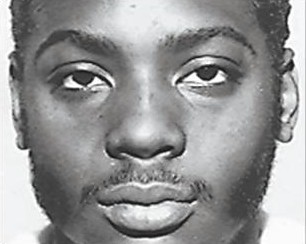
Herman Charles Barnes
Murderer Brian Kevin Rosenfeld
Murderer · USA · 1985
Brian Kevin Rosenfeld Brian Kevin Rosenfeld was sentenced to three concurrent l…
23 victims
Brian Kevin Rosenfeld
Murderer · USA · 1985
Brian Kevin Rosenfeld Brian Kevin Rosenfeld was sentenced to three concurrent l…
23 victims
 Marvin Gray
Murderer · USA · 1975
Marvin Gray was convicted killer who claimed responsibility for 23 slayings and…
23 victims
Marvin Gray
Murderer · USA · 1975
Marvin Gray was convicted killer who claimed responsibility for 23 slayings and…
23 victims
 Yahweh ben Yahweh
Murderer · USA · 1980
Yahweh ben Yahweh was born and legally named Hulon Mitchell Jr. (October 27, 19…
23 victims
Yahweh ben Yahweh
Murderer · USA · 1980
Yahweh ben Yahweh was born and legally named Hulon Mitchell Jr. (October 27, 19…
23 victims
 Russell Ellwood
Murderer · USA · 1991
Russell Ellwood was a former taxi driver. Authorities suspected him of killing…
20 victims
Russell Ellwood
Murderer · USA · 1991
Russell Ellwood was a former taxi driver. Authorities suspected him of killing…
20 victims
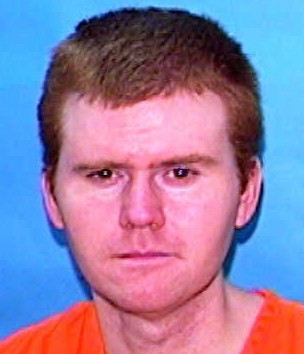 Jonathan Huey Lawrence
Murderer · USA · 1998
Jonathan Huey Lawrence was born 04/12/75. His case references included DC# 8985…
1 victim
Jonathan Huey Lawrence
Murderer · USA · 1998
Jonathan Huey Lawrence was born 04/12/75. His case references included DC# 8985…
1 victim
 Charles Daniel Thacker
Murderer · USA · 1993
Charles Daniel Thacker was a white male convicted in Harris County, Texas, of c…
1 victim
Charles Daniel Thacker
Murderer · USA · 1993
Charles Daniel Thacker was a white male convicted in Harris County, Texas, of c…
1 victim
 John Maden
Murderer · United Kingdom · 2010
John Maden was convicted after pleading guilty to the rape and murder of his si…
1 victim
John Maden
Murderer · United Kingdom · 2010
John Maden was convicted after pleading guilty to the rape and murder of his si…
1 victim
 Joshua Krueth
Murderer · USA · 2004
Joshua A. Krueth was a 20-year-old man described by authorities as responsible…
2 victims
Joshua Krueth
Murderer · USA · 2004
Joshua A. Krueth was a 20-year-old man described by authorities as responsible…
2 victims
 Sharon Carr
Homicide · United Kingdom · 1992
Sharon Louis Carr was born 21 December 1979. She was twelve years old when she…
1 victim
Sharon Carr
Homicide · United Kingdom · 1992
Sharon Louis Carr was born 21 December 1979. She was twelve years old when she…
1 victim
- Gender
- male
- Country
- USA
- Location
- Hampton, Virginia, USA
- Date of birth
- 1965
- Age at first offence
- 20
- Characteristics
- robbery, abuse, drug addict
- Victim profile
- Clyde Jenkins, 72/Mohammad Afifi, 42 ( supermarket owner/store clerk )
- Method of murder
- Shooting
- Date(s) of murder
- June 27, 1985
- Years active
- 1985
- Date of arrest
- —
- Status
-
Executed
Executed by lethal injection in Virginia on November 13, 1995
Case details
Herman Charles Barnes was executed by lethal injection in Virginia on November 13, 1995.
The case involved the murder of a supermarket owner and a store clerk during an attempted robbery at Bon’s Supermarket.
Timeline
- June 27, 1985 — Barnes planned to rob Bon’s Supermarket with the help of an accomplice, James Corey; at approximately 10 p.m. Barnes approached a supermarket employee, pushed a pistol in his side, used him as a shield, entered the store, struggled with the store owner Clyde Jenkins, shot Jenkins twice, then shot and killed store employee Mohammed Afifi; Barnes then shot Jenkins a third time and fled.
- June 27, 1985 — Clyde Jenkins engaged Barnes in a struggle at the front of the store.
- June 27, 1985 — Barnes shot Jenkins twice; Mohammed Afifi jumped on Barnes, Barnes shook Afifi off, and Barnes shot and killed Afifi.
- June 27, 1985 — Barnes pointed the gun at Ricky Adams and then shot Jenkins a third time and fled.
- July 1986 — Barnes was tried in a bench trial in the Circuit Court for the City of Hampton.
- September 4, 1987 — The Virginia Supreme Court affirmed Barnes’ convictions and sentence.
- September 1986 — Barnes was sentenced to death.
- September 1986 — The court found beyond a reasonable doubt that Barnes’ “conduct in committing the offense was outrageously and wantonly vile ... in that it did involve an aggravated battery to the victim.”
- October 1988 — Barnes filed a petition for writ of habeas corpus in the Circuit Court in Hampton.
- November 19, 1990 — Barnes filed a habeas petition in federal court.
- June 1991 — Barnes moved for and was granted a voluntary dismissal of his federal petition.
- January 18, 1994 — After a two-day hearing, the district court held the Commonwealth violated Barnes’ due process rights by withholding the gun’s precise location and that the death sentence had to be vacated.
- August 10, 1995 — The United States Court of Appeals decision was issued in Barnes v. Thompson.
- November 13, 1995 — Barnes’ execution was carried out by lethal injection in Virginia.
- November 16, 1995 — A Virginia man was given a lethal injection for murdering a supermarket owner and a store clerk during an attempted robbery in 1986.
The offence
Barnes planned to rob Bon’s Supermarket with the help of an accomplice, James Corey, on June 27, 1985.
At approximately 10 p.m., Barnes approached Ricky Adams, a supermarket employee sweeping the parking lot, and pushed a pistol in his side. Using Adams as a shield, Barnes entered the store. Clyde Jenkins, the store owner, engaged Barnes in a struggle at the front of the store. Barnes shot Jenkins twice. Mohammed Afifi came from the back of the store and jumped on Barnes. Barnes shook Afifi off, shot and killed him. Barnes then turned and pointed the gun at Adams. At that moment Jenkins stirred and attempted to rise from the floor; Barnes shot Jenkins a third time and fled.
Although Jenkins survived two weeks in the hospital, he ultimately died from the gunshot wounds.
A handgun belonging to Jenkins was found under or near him when police arrived. It had not been fired. Barnes never asserted, and did not assert, that he saw this gun.
Clyde Jenkins was described as a supermarket owner aged 72. Mohammed Afifi was described as a store clerk aged 42. Barnes was described as 31 at the time of being sentenced to death in 1986 and as 29 and later as 31 in different passages.
Investigation
It had not been fired.
At the preliminary hearing, Barnes’ counsel questioned a detective regarding the victim’s revolver and was told that the gun “was recovered at the scene, shortly after the incident occurred.”
The gun’s exact location became part of later litigation regarding exculpatory evidence.
Trial
Barnes was tried in a bench trial in July 1986 in the Circuit Court for the City of Hampton. The victim’s gun was admitted into evidence. The exact location where police found the gun was never drawn into question, and there was no testimony as to the location of the gun.
The court convicted Barnes on five counts, including capital murder.
A stipulation stated: "A .38 caliber Smith & Wesson revolver serial number 204J49, Commonwealth's Exhibit Nine was located inside the Bon's Super Market by police the night of the shooting. Jeff Jenkins, grandson of Clyde Jenkins, and also an employee of the store, has identified this weapon as belonging to his grandfather. The weapon had not been fired. J.A. at 57"
After the court found beyond a reasonable doubt that Barnes’ “conduct in committing the offense was outrageously and wantonly vile ... in that it did involve an aggravated battery to the victim,” the court sentenced Barnes to death in September 1986.
Sentencing
In September 1986, the court sentenced Barnes to death.
The sentencing included a finding that Barnes’ conduct involved an aggravated battery to the victim and was “outrageously and wantonly vile ...
Appeals
State appellate review
The Virginia Supreme Court affirmed Barnes’ convictions and sentence on September 4, 1987, in Barnes v. Commonwealth, 234 Va. 130, 360 S.E.2d 196 (1987).
Barnes’ attempt at appeal following habeas corpus petitions included the Virginia Supreme Court’s refusal of one petition for appeal.
Federal appellate review
Barnes’ federal habeas proceedings resulted in a district court vacating the death sentence and the United States Court of Appeals reversing in part and affirming in part.
The United States District Court for the Eastern District of Virginia had vacated the death sentence of habeas corpus petitioner Herman Barnes, holding that the Commonwealth withheld exculpatory evidence in contravention of Brady v. Maryland and United States v. Bagley, and that Barnes had shown cause for his failure to present timely his exculpatory-evidence claim in Virginia courts. The federal appellate court reversed that judgment granting the writ of habeas corpus and remanded with instructions to reinstate the death sentence, affirming the district court’s finding that Barnes received effective assistance of counsel.
Barnes v. Thompson panel decision
The appellate court decision was issued under case references:
- Herman Charles Barnes, Petitioner-Appellee, v. Charles E. Thompson, Warden, Respondent-Appellant.
- Herman Charles Barnes, Petitioner-Appellant, v. Charles E. Thompson, Warden, Respondent-Appellee.
- No. 94-4001, 94-4002
- Federal Circuits, 4th Cir.
- August 10, 1995
- Appeals from the United States District Court for the Eastern District of Virginia, at Richmond.
- James R. Spencer, District Judge.
The panel consisted of:
- MURNAGHAN, LUTTIG, and WILLIAMS, Circuit Judges.
The majority opinion was written by Judge LUTTIG, joined by Judge WILLIAMS, and a concurring opinion was written by Judge MURNAGHAN.
OPINION LUTTIG, Circuit Judge: The appellate court reversed the district court’s judgment granting the writ of habeas corpus and remanded with instructions to reinstate the death sentence. It also affirmed that the district court found Barnes received effective assistance of counsel.
MURNAGHAN, Circuit Judge, concurring in the judgment: Judge MURNAGHAN agreed with the result reached in Part II but expressed disagreement with the majority’s statement about what constitutes proof of vileness.
Judge MURNAGHAN’s concurrence included these statements:
- "Because Barnes' habeas counsel has failed to present affirmative evidence that Barnes may have seen the victim drawing a gun, Barnes has not borne his burden of showing a reasonable probability that the outcome of his sentencing proceeding would have been different had the prosecution disclosed the location of the victim's gun."
- "However, because Barnes' habeas counsel has failed to present affirmative evidence that Barnes may have seen the victim drawing a gun, Barnes has not borne his burden of showing a reasonable probability that the outcome of his sentencing proceeding would have been different had the prosecution disclosed the location of the victim's gun. Therefore, although I do not agree with the majority's statement as to what constitutes proof of vileness, I concur in the result reached by the majority in Part II."
Denial of stay
A subsequent order denied a request for a stay.
ORDER (Federal Circuits, 4th Cir., No. 95-4015, November 13, 1995): Barnes raised claims that Virginia’s “vileness” aggravating factor was unconstitutionally vague and that he had been subjected to application of ex post facto law. The order stated:
- The “vileness” claim was procedurally defaulted due to failure to challenge on direct appeal and again due to failure to raise the claim before the court in an appeal from the judgment in a second federal habeas proceeding.
- The ex post facto claim was held procedurally defaulted by the Virginia Supreme Court and by the federal district court on Barnes’ second federal habeas, and Barnes did not assign as error the district court’s disposition.
- The request for stay was denied.
The order stated: "Accordingly, Barnes is entitled to federal review of these claims only if he can show "cause and prejudice" for his failure to advance timely and properly these claims." It further stated: "Plainly, there is no cause that prevented the timely and proper presentation of these claims." And: "Accordingly, the request for stay is denied."
Outcome
Barnes’ death sentence was reinstated after federal appellate review reversed the portion of the judgment vacating the death sentence. Barnes was executed by lethal injection in Virginia on November 13, 1995.
Aftermath
Barnes was pronounced dead at 10:11 P.M. Monday at the Greensville Correctional Center in Jarratt, Va., with Warden John M. Jabe saying he was pronounced dead.
Other details
Barnes was described as spending his days behind bars at Mecklenburg Correctional Center while awaiting a new sentencing hearing.
Warden John M. Jabe said Barnes was pronounced dead at 10:11 P.M. Monday.
The case described additional details about the evidence dispute:
- The prosecution argued that the evidence was not exculpatory because there was no reason to believe Barnes had seen the gun.
- District Judge James R. Spencer said: "I don't know how anybody could possibly say this is not exculpatory," and: "It is clear that Hutton knew where the gun was found. That's crystal clear to everybody."
Hampton Commonwealth's Attorney Christopher Hutton was quoted through Barnes’ lawyers’ writings: "Hutton purposely concealed that evidence because he believed it might help him win."
Barnes’ lawyers argued the trial court and Virginia Supreme Court had been misled into believing Barnes decided to shoot two victims, when Barnes probably had been confronted with a life-threatening situation. Barnes’ lawyers wrote: "The trial court and the Virginia Supreme Court were duped into believing that Mr. Barnes decided to shoot two helpless and defenseless victims, when in fact he probably was presented with a life-threatening situation."
A chief deputy commonwealth's attorney in Hampton, Linda Curtis, declined to discuss exculpatory evidence because the case was pending, and said: "The defendant denied being in the store at all," and: "He wasn't saying he shot in self-defense. He was saying he wasn't there at all."
John O'Brien was described as a lawyer who represented Barnes and said: "It was extremely egregious by the prosecution. They suppressed information that could have had bearing on whether he received the ultimate penalty of death."
During later discussion of the offence, testimony described Jenkins attempting to rise from the floor after being shot twice.
A district court discussion described a hypothetical regarding sentencing if the gun’s location had been known, including the possibility that a fact finder could infer Barnes was motivated by fear for his safety and that the nature of Barnes’ actions might not have constituted an aggravated battery, but the appellate court’s ultimate disposition resulted in reinstatement of the death sentence.
The appellate decision included references to Wainwright v. Sykes, Coleman v. Thompson, McCleskey v. Zant, Clanton v. Muncy, Waye v. Murray, United States v. Frady, and Strickland v. Washington. The appellate decision also referenced Brady v. Maryland and United States v. Bagley.
Spotted an error, or have more information about this case?