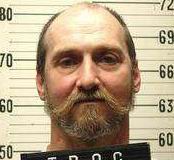
David Earl Miller
Murderer Ervil LeBaron
Murderer · USA · 1972
Ervil Morrell LeBaron (1925 to August 16, 1981) was the leader of a polygamous…
35 victims
Ervil LeBaron
Murderer · USA · 1972
Ervil Morrell LeBaron (1925 to August 16, 1981) was the leader of a polygamous…
35 victims
 Brian Kevin Rosenfeld
Murderer · USA · 1985
Brian Kevin Rosenfeld Brian Kevin Rosenfeld was sentenced to three concurrent l…
23 victims
Brian Kevin Rosenfeld
Murderer · USA · 1985
Brian Kevin Rosenfeld Brian Kevin Rosenfeld was sentenced to three concurrent l…
23 victims
 Marvin Gray
Murderer · USA · 1975
Marvin Gray was convicted killer who claimed responsibility for 23 slayings and…
23 victims
Marvin Gray
Murderer · USA · 1975
Marvin Gray was convicted killer who claimed responsibility for 23 slayings and…
23 victims
 Yahweh ben Yahweh
Murderer · USA · 1980
Yahweh ben Yahweh was born and legally named Hulon Mitchell Jr. (October 27, 19…
23 victims
Yahweh ben Yahweh
Murderer · USA · 1980
Yahweh ben Yahweh was born and legally named Hulon Mitchell Jr. (October 27, 19…
23 victims
 Russell Ellwood
Murderer · USA · 1991
Russell Ellwood was a former taxi driver. Authorities suspected him of killing…
20 victims
Russell Ellwood
Murderer · USA · 1991
Russell Ellwood was a former taxi driver. Authorities suspected him of killing…
20 victims
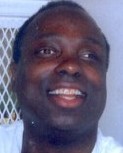 Rodney Rachal
Murderer · USA · 1990
Rodney Charles Rachal was the petitioner-appellant in the United States Court o…
1 victim
Rodney Rachal
Murderer · USA · 1990
Rodney Charles Rachal was the petitioner-appellant in the United States Court o…
1 victim
 Tracey Grissom
Murderer · USA · 2012
Tracey Grissom was convicted of the murder of her ex-husband, Hunter Grissom. S…
1 victim
Tracey Grissom
Murderer · USA · 2012
Tracey Grissom was convicted of the murder of her ex-husband, Hunter Grissom. S…
1 victim
 Jin Ruchao
Mass murderer · China · 2001
Jin Ruchao was blamed and arrested for planning and carrying out the Shijiazhua…
108 victims
Jin Ruchao
Mass murderer · China · 2001
Jin Ruchao was blamed and arrested for planning and carrying out the Shijiazhua…
108 victims
 Wendi Andriano
Murderer · USA · 2000
Wendi Andriano was sentenced to death on December 22, 2004. Wendi Elizabeth Och…
1 victim
Wendi Andriano
Murderer · USA · 2000
Wendi Andriano was sentenced to death on December 22, 2004. Wendi Elizabeth Och…
1 victim
- Gender
- male
- Country
- USA
- Location
- Knox County, Tennessee, USA
- Date of birth
- July 16, 1957
- Age at first offence
- 24
- Characteristics
- rape, torture
- Victim profile
- Lee Standifer, 23
- Method of murder
- Beating with a poker kept - Stabbing with knife
- Date(s) of murder
- May 20, 1981
- Years active
- 1981
- Date of arrest
- 9 days after
- Status
-
Sentenced to death
Sentenced to death on March 17, 1982
Case overview
David Earl Miller was convicted of first-degree murder for the May 1981 killing of Lee Standifer, 23.
Miller received a sentence of death based upon the aggravating circumstance that the murder was especially heinous, atrocious, or cruel in that it involved torture or depravity of mind.
Timeline
- May 20, 1981 — Miller had his last conversation with Lee Standifer’s mother at about 5:30 p.m.; Standifer called her parents’ home in Knoxville two or three times a day and visited them almost every weekend, and she had her last conversation with her mother at about 5:30 p.m. on May 20, 1981.
- May 21, 1981 (early) — Thomas drove Miller on I-40 to the Mabry Hood Road exit, gave him twenty-five dollars, and understood that Miller intended to hitch-hike to Houston, Texas; Thomas did not return to his home until about 6:30 p.m. on the evening of May 21.
- May 21, 1981 (evening) — Thomas saw a blue T-shirt hanging on a dogwood tree in his backyard, examined it, and saw a nude female body lying face up with dried blood; pieces of rope were wrapped around it; he assumed the person to be dead and called the police; investigating police officers found blood spots on walls and other locations that night and the next day.
- May 29, 1981 — Miller was apprehended in Columbus, Ohio, waived extradition, and was returned to Knoxville by Detectives Winston and Ailor of the Knoxville Police Department.
- May 30, 1981 (6:00 p.m.) — Miller’s Knoxville interview began at 6 p.m.; he confirmed prior testimony and gave a statement about striking Standifer and the subsequent handling of her body.
- June 25, 1984 — Rehearing was denied.
- May 29, 1984 — The Supreme Court of Tennessee at Knoxville affirmed the conviction, set aside the death sentence, and remanded the cause for a new sentencing hearing.
- March 17, 1982 — Miller was sentenced to death.
Background
Lee Standifer had diffused brain damage when born and was mildly retarded. She was twenty-three years old when she was murdered. She had been employed for about two years with a company that hired handicapped persons and was living at the Y.W.C.A. in downtown Knoxville, as a step toward her independence. She called her parents’ home in Knoxville two or three times a day and visited them almost every weekend.
Defendant was hitch-hiking through Knoxville in July 1979 and was picked up by Benjamin Calvin Thomas, an ordained minister and school principal. On that occasion Miller cut the grass at Thomas’ house in South Knoxville, was paid, and resumed hitch-hiking. Miller returned to Knoxville a few weeks later and at the time of the murder had been living in the home of Thomas for more than a year.
Thomas admitted that he had homosexual drives or inclinations and that early in his acquaintance with Miller they had a homosexual relationship. Thomas testified that Miller was not interested or responsive, that such a relationship gave him religious problems, and that after a short period they were merely friends living together, and that their relationship was almost that of father and son.
A book checked out by Miller of the Knoxville Public Library and other books belonging to him found at the Thomas Home would support an inference that Miller had a morbid interest in sex.
The offence
In the early evening of May 20, 1981, Miller was at the Hideaway Lounge in downtown Knoxville. Lee Standifer was a few blocks away at the Y.W.C.A. and Miller and Standifer conversed by telephone. They had been seen together at the Trailways Bus Station cafeteria prior to that date.
After their telephone conversation Miller was seen walking to the Y.W.C.A., the victim awaiting there, and they were seen walking away together. Apparently they first went to the Hideaway Lounge. They were next seen at the Knoxville Public Library, and then at the Trailways cafeteria, both in downtown Knoxville. At Trailways, Miller engaged a taxi driver who drove Miller and Ms. Standifer to a point in South Knoxville near the Thomas residence.
Later that evening Thomas returned from Wednesday night church activities and drove into the basement garage of his home. He noticed that the area was wet, and after he got out of his bar he saw Miller on the stairs to the basement. Miller was not wearing a shirt and was in blue jeans. Thomas asked him why the basement floor was wet and Miller said he had “just hosed it out” because it needed to be cleaned.
Thomas found the kitchen floor wet and two streams of blood leading from the living room to the dining room and kitchen area. Thomas testified that when he asked for an explanation Miller said he had gotten into a fight and received a bloody nose. Thomas testified that he thought his carpet was ruined and told Miller that he could not “take this mess, you are just going to have to leave.”
The next morning Thomas drove Miller on I-40 to the Mabry Hood Road exit, gave him twenty-five dollars, and understood that Miller intended to hitch-hike to Houston, Texas.
Thomas did not return to his home until about 6:30 p.m. on the evening of May 21. As he was going down his driveway he saw a blue T-shirt hanging on a dogwood tree in his backyard. He got out of his car, walked over to examine the T-shirt, and saw a nude female body lying face up with dried blood on the face, head, and portions of the body. Pieces of rope were wrapped around it and he assumed the person to be dead. He went into his house and called the police.
That night and the next day investigating police officers found blood spots on the walls of the living room near the fireplace, the kitchen, the inside of the garage door in the basement, and other places. A poker was in the living room and a hammer was found in the yard about fifty feet from the body near a jacket, shoes and panties identified as belonging to the victim and all blood-stained. The body was approximately 100 feet from the house near a large tree in a sheltered thicket and in an unkept part of the yard with a deep accumulation of leaves. The victim’s arms were extended over her head.
A large hemp rope had been tied around her neck and extended up to bind her wrists, with sufficient extra length to use to drag the body.
A pathologist, Dr. Evans, testified that the victim had a wound on the right side of the forehead and a wound over the left eye, each of which was approximately three inches long and one-half inch wide; each resulted in a skull fracture and a subarachnoid hematoma. Dr. Evans was of the opinion that those two wounds could have been caused by the poker kept in the living room of the Thomas residence.
Dr. Evans testified that a stab wound passed completely through the neck and shattered the jawbone; he testified that this indicated the use of an instrument such as a Bowie knife and that substantial force had necessarily been used to pass the instrument through the jawbone.
Dr. Evans testified there were a total of five stab wounds in the chest area and one stab wound in the stomach. He testified there was a stab wound into the floor of the mouth made with an instrument similar to that used to produce the neck stab wounds. Dr. Evans testified there was a stab wound over the heart, eight to nine inches in depth that passed through the heart and aorta, another stab wound went through the rib cage and completely through the fifth rib, and a third stab wound went through the center of the chest. Dr. Evans indicated that human strength may have been inadequate to plunge an instrument into a bony rib and that a hammer might have been used to drive a sharp instrument into those wounds. There were two stab wounds in the back; one passed through the bony rib and the other hit the left shoulder blade and did not penetrate except to the depth of the blade, approximately one inch.
Dr. Evans testified there were multiple bruises on the upper left and right thighs; two were about the size of a hand that required a great deal of force and were inflicted before death. He identified a number of the stab wounds as probably having been inflicted after the death of the victim.
Dr. Evans testified there were numerous scrapes and scratches and minor bruises to the legs, knees, and upper body front and back, probably caused by dragging the body over rough surfaces.
Dr. Evans testified that he found spermatozoa of fairly recent origin in the vagina of the victim.
Investigation
That night and the next day, police found blood spots in multiple locations in the Thomas residence. A poker was found in the living room, and a hammer was found in the yard about fifty feet from the body near blood-stained items identified as belonging to the victim.
The body was found about 100 feet from the house near a large tree in a sheltered thicket and in an unkept part of the yard with a deep accumulation of leaves. The victim’s arms were extended over her head, and a hemp rope was tied around her neck and extended up to bind her wrists with extra length to drag the body.
Arrest and custody interviews
Miller was apprehended in Columbus, Ohio, on May 29, 1981, waived extradition, and was returned to Knoxville by Detectives Winston and Ailor of the Knoxville Police Department. The officers interviewed Miller on tape in Columbus and again in Knoxville.
Miranda rights were read and waived in writing on both occasions. The Columbus tape was not introduced into evidence because, according to Winston, it was of poor quality.
During the Knoxville interview that began at 6 p.m. on May 30, 1981, Miller confirmed prior testimony that he was at the Hideaway Lounge, had a telephone conversation with Lee Standifer, and went to the Y.W.C.A. He stated they took a taxi at the Trailways Bus station and got out at Wise Hills and Stone Road. He did not remember going to the library but said he might have. He said he got out of the taxi and walked the remainder of the way to Thomas’ house to clear his head and that he was drunk and a little sick.
Miller stated that when they got to the house Standifer wanted to talk and they went into the living room by the fireplace. He said Standifer wanted to know what he was going to do and he told her he was going back to Houston. Miller said she became upset because she did not want him to leave, grabbed his arm, and he “turned around and hit her.”
Miller stated he hit her with his fist and she fell down, and when asked about additional blows he said he could not remember.
“WINSTON: Okay, tell me about when you removed her body from the room.
MILLER: I dragged her, pulled her out in the kitchen, went downstairs, got a rope and came back up, tied her up. And, she...
WINSTON: Tied what?
MILLER: I don’t know.
WINSTON: Did you tie her neck or her hands or what did you tie?
MILLER: I might have tied her neck and her hands, her hands or feet. I don’t remember.
WINSTON: But you do remember hitting her don't you?
MILLER: Yes.
WINSTON: And you do remember the blood?
MILLER: Yeah, it just sprayed all over when I hit her.
WINSTON: It did? You knew you'd hurt her bad didn't you?
MILLER: Yeah.
WINTON: You knew she was dead by the time you got her in the kitchen, didn't you? Had she quit moving them?
MILLER: She quit breathing.
WINSTON: She quit breathing? What did you do then?
MILLER: Drug her downstairs through the basement and out through the yard. And pulled her over into the woods.”
Miller further related that he went back inside and “started rinsing everything down.” His version of what happened after Thomas came home and his leaving the next morning was consistent with Thomas’ testimony.
Trial
Defences
The defences at trial were that the evidence was insufficient to prove guilt beyond a reasonable doubt, that Miller was so intoxicated he could not be convicted of premeditated murder, and that he was insane.
The court held that no evidence was introduced by either the State or the defendant sufficient to raise a reasonable doubt as to Miller’s sanity, unless the atrocious, brutal acts inflicted upon Lee Standifer by themselves were sufficient to do so.
A psychiatrist examined Miller in June and November of 1981 and was called by the State. The psychiatrist expressed the opinion that Miller was not suffering from any mental disease or defect at the time of the murder, that he knew right from wrong, and that he was able to conform his conduct to the requirements of the law. The trial court concluded that any sanity question was submitted to the jury under a correct charge and that the jury necessarily found Miller was sane.
Intoxication evidence
The issue of intoxication from drugs or alcohol or both, and whether its degree was sufficient to negate premeditation, was contested.
State witnesses gave opinions prior to trial about intoxication on the night of May 20, 1981, which indicated a higher degree of intoxication than their direct testimony at trial.
Charlotte Jane Campbell testified for Miller that she was at the Hideaway Lounge the afternoon of May 20, 1981, saw Miller buy one or more hits of L.S.D., and saw him put the cardboard containing L.S.D. in his mouth and chew it. She bought some of the same drug and said it took effect on her in about thirty minutes and lasted about twelve hours; she testified that it was a stronger drug than she normally had experienced. Campbell testified she bought three hits and chewed one and one-half hits, sharing the other half with a friend. She testified she did not know whether Miller had more than one hit or whether he was also drinking intoxicating liquor.
Three witnesses who saw Miller and the victim at the public library testified that Miller was intoxicated, noting that he was loud and staggered; two smelled alcohol on his breath. The court noted they were vague with respect to the degree of intoxication.
The cashier at the Trailways cafeteria, who had known Miller for about eight months, testified that Miller spilled coffee all the way to a booth, swayed, and had dilated eyes with a strange look.
The court also noted there was testimony from witnesses for the State supporting the jury’s finding that intoxication was not sufficient to render Miller incapable of forming a premeditated and deliberate design to kill; the jury was properly charged and its verdict was approved by the trial judge.
Suppression and admissibility
Miller contended the Knoxville taped interview and typed transcript should have been suppressed because it was tainted by the Ohio interview, which he alleged had inaccurate Miranda warnings and trickery in procuring the signed waiver. The court found no Miranda violation based upon the initial aspect of the interrogation in Ohio, crediting Winston’s testimony that Winston read to Miller the typed form of complete Miranda rights preceding the waiver.
Miller also contended interrogation techniques employed by Winston and Ailor at the jail in Ohio were psychologically coercive and that taint rendered the Knoxville interrogation inadmissible. The court disagreed, stating that Miller did not repudiate confessions at the suppression hearing or at trial.
The court stated it was uncontradicted that when the officers first undertook to interrogate Miller, he asked what evidence they had against him; they advised they could not discuss the matter until he signed a waiver, which he did. The court said Miller began his statement with an obvious falsehood—that he was engaged in a fight with another man at the home where the murder occurred and that his own extensive nosebleeding accounted for the blood. The court stated officers then advised him of the evidence they had and, when faced with that, Miller admitted striking the decedent and disposing of her body; he never admitted stabbing or otherwise mutilating the body.
The court stated there was no indication in the record that Miller thought he would escape the death penalty, life sentence, or other heavy penalty. The court referenced two points in the transcript of the first tape where Miller stated he knew he could spend the rest of his life behind bars and might receive the death penalty. The court said he was not misled by any statement that he might receive as little as ten years.
The court noted that at more than thirty places in the transcript of the original tape, the reporter marked it as indiscernible, and that there was substantial background noise. The court stated it believed it was not merely a ruse to avoid use at trial and that the second tape was clear and concise.
Under State v. Kelly, 603 S.W.2d 726 (Tenn. 1980), the court held the trial court correctly admitted the statements as voluntary and given after proper warning, not the result of improper influence or persuasion.
Sentencing
At sentencing, the State introduced evidence that Miller had been twice arrested on charges of rape. Both charges were dismissed. The court held introduction of this evidence was improper and required a new sentencing hearing. The court cited State v. Teague, 645 S.W.2d 392 (Tenn. 1983) and State v. Adkins, 653 S.W.2d 708 (Tenn. 1983).
The court discussed the State’s point about an apparent inconsistency between State v. Teague and Houston v. State, 593 S.W.2d 267 (Tenn. 1980), explaining that ordinarily arrests or indictments are not evidence of prior crime but charges or accusations, and should generally be inadmissible unless the accused makes them admissible for impeachment or other specific issue makes them relevant.
Appeals
Majority opinion
The Supreme Court of Tennessee at Knoxville affirmed the conviction of murder in the first degree. It set aside the death sentence and remanded for a new sentencing hearing. Costs on appeal were taxed to the State.
The opinion was written by Harbison, J. Cooper, Brock and Drowota, JJ., concur; Fones, C.J., filed a dissenting opinion. The court’s opinion was delivered by Harbison.
The Supreme Court described the aggravating circumstance as involving torture or depravity of mind and held the record supported a finding of sanity and submission of intoxication and sanity issues to the jury under correct instructions.
It held that the incriminating statements were voluntary and admissible and that there was reversible error only with respect to sentencing.
The death sentence was set aside and the cause remanded for a new sentencing hearing.
Dissenting opinion
Wm. H. D. Fones, Chief Justice dissented.
He stated he agreed with Sections I, II and the first grammatical paragraph of Section III of the majority opinion. He agreed with Miller’s contention that interrogation techniques employed by Officers Winston and Ailor, including misrepresentation and deception at the jail in Ohio, were psychologically coercive, that the confession was improperly influenced and involuntary, and that taint rendered the Knoxville interrogation and confession inadmissible. He did not agree that any such taint had dissipated.
Fones’ dissent quoted and discussed Miranda and included a discussion of psychological coercion, including tactics described as displaying confidence in the suspect’s guilt, directing comments toward the reasons the subject committed the act, and minimizing the moral seriousness of the offense and casting blame on the victim or society.
Fones also quoted excerpts from the transcript of the Ohio interrogation:
“AILOR: David, you, look at you -- you are on the verge of crying right now.
WINSTON: I believe you cared for that little girl.
AILOR: It's tearing you up inside.
WINSTON: I don't believe you're that kind of guy.
AILOR: You can help yourself by telling the truth.
WINSTON: If you was drinking and you made a mistake, son (indiscernable). If you was drunk -- (Whereupon there was a pause.)
MILLER: If I was drunk, if I was sober, I've still got the rest of my life to look at behind bars.
WINSTON: You're a young man. It makes a difference. She was drinking too, you know, I don't believe you meant to kill her. I believe you got carried away though after you -- after you hit her. (Whereupon there was a pause.)
WINSTON: Did she scratch your eyes or something?
MILLER: No.
AILOR: David, we have placed you drinking all afternoon, we have placed you picking her up, we have placed you taking her out -- I think it was the Hideaway -- where we have got a witness. I don't have all the notes right here with me. Place you in the library. Place her urinating on herself. It appeared to be you were drunk or high. We have got a police officer that you know, a cab driver that you know, both from going in the Trailways, could see you getting in a cab. The time frames all fit. We have got you with her at the house; and just a few minutes later we have got Calvin coming home in a house covered with blood, and you disappearing the next day. Son, you can only help yourself. No matter what happens, you're going to have to have peace of mind sooner or later.
WINSTON: She -- her hair didn't look like that when you was dating her, did it?
AILOR: You are going to have to get it off your chest sooner or later.
MILLER: One of you all got a match?
AILOR: I don't have any cigarettes; I've got a match though. Do they let you keep matches here?
AILOR: Keep them.
MILLER: Thank you.
WINSTON: I don't believe you meant to do it, Dave. I don't believe you're that -- that hard a person. I believe that liquor made you do it, and the pills.
MILLER: It wasn't liquor; it was the acid.
AILOR: Just tell us what happened David. What -- what --
WINSTON: Son, we are trying to help you.
AILOR: What set it off that night? (Whereupon there was a pause.)
AILOR: On acid -- I have seen people on acid, and I have had good friends that were on it. And Somebody could do something, and you change from must being in one frame of mind, and all at once you are just like that (snapped fingers) in another one, right? Is that basically what happened? (Whereupon there was a pause.)
WINSTON: Did you have a bad trip when you all got to the house? (Whereupon there was a pause.)
AILOR: David, there's two ways you can look at this. We've got -- we've got (indiscernible) evidence on you. You can more or less throw yourself on the mercy of the Court, even though you are probably going to do some years. But if you keep it bottled up inside of you, ten years is going to seem like a lifetime. And you can get paroled in ten years. I have seen a lot of people on a murder charge get out in ten years, or less.
WINSTON: We are not saying you could get out in that -- in that length of time, but if -- AILOR: We're not --
WINSTON: -- if you were on acid, and the preacher come in, and he -- he knows you was on acid. He said you was high.
MILLER: He knows I'm always getting high.
WINSTON: That's kind of like a drunk driver killing somebody, you know?
AILOR: If you get it off your chest, Dave, it's going to make -- if you do serve time it's going to make that time easier. And if you cooperate with the police department and the District Attorney's Office who authorized us to come up here -- we can't make you any deals, but if you try not to cover it up, Dave, and tell us what happened, it can't hurt you. Let's look at it that way. Look at it in that light. It can't hurt you. You can look at you and tell that it's eating you up inside, (indiscernible) at you.”
Fones stated that the Knoxville interrogation was closely connected with the Ohio interrogation and could be described as a mere continuation; he argued that no event occurred during the automobile trip that made even a slight start in dispelling psychological coercion and implied promises.
He cited State v. Painter, 614 S.W.2d 86 (Tenn. Crim. App. 1981), Deathridge v. State, 33 Tenn. 75 (Tenn. 1853), Strady v. State, 45 Tenn. 300 (Tenn. 1868), and United States v. Bayer, 331 U.S. 532 (1947), and discussed that subsequent confessions could be admitted only if delusive hopes or fears had been repelled, or other circumstances showed influences had ended.
He cited cases including Gilpin v. United States, 415 F.2d 638 (5th Cir. 1969), and Harney v. United States, 407 F.2d 586 (5th Cir. 1969).
Fones concluded that the illegal influences had not been dispelled when the Knoxville interrogation was conducted, that the incriminating responses were improperly influenced and inadmissible, and that the erroneous admission was not harmless beyond a reasonable doubt, stating defendant should be granted a new trial.
Outcome
The Supreme Court of Tennessee at Knoxville affirmed the first-degree murder conviction. The Supreme Court set aside the death sentence and remanded for a new sentencing hearing due to reversible error.
Other details
People identified in the case
- Lee Standifer — victim; 23 years old at the time she was murdered.
- Benjamin Calvin Thomas — ordained minister and school principal; he was the person in whose home Miller lived at the time of the murder.
- Charlotte Jane Campbell — testified for the defendant; she described seeing Miller buy and use L.S.D.
- Dr. Evans — pathologist who testified about the victim’s injuries and forensic findings.
- Detectives Winston and Ailor — interviewed Miller in Columbus and again in Knoxville.
- Wm. H. D. Fones, Chief Justice — filed a dissenting opinion.
- Harbison, J. — wrote the opinion for the majority.
- Cooper, Brock and Drowota, JJ. — concurred.
- Fones, C.J. — filed dissenting opinion.
- Richard R. Ford — judge at Knox Criminal.
Evidence and location details
The Thomas residence had a basement garage, living room with a fireplace, dining room, kitchen, and yard with a deep accumulation of leaves. A large hemp rope was tied around the victim’s neck and extended up to bind her wrists, and was used to drag the body. Blood spots were found in the basement garage door area, living room near the fireplace, and in the kitchen, among other places.
Defendant’s statement includes specific actions
In the Knoxville interview, Miller admitted he struck Standifer, said he “dragged her” and pulled her out in the kitchen, went downstairs, got a rope, returned, and “tied her up,” and said she “quit breathing.” He said he “Drug her downstairs through the basement and out through the yard. And pulled her over into the woods.” He also stated he started rinsing everything down.
Spotted an error, or have more information about this case?