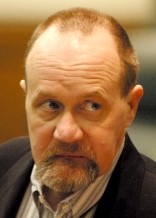
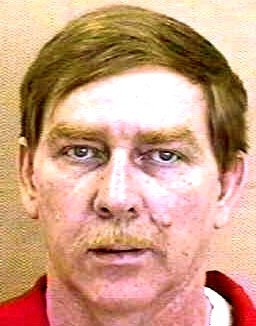
Rocky Barton
Murderer Robert Martines Perez
Murderer · USA · 1994
Name: Robert Martines Perez · Other name used in proceedings: Robert Martinez P…
15 victims
Robert Martines Perez
Murderer · USA · 1994
Name: Robert Martines Perez · Other name used in proceedings: Robert Martinez P…
15 victims
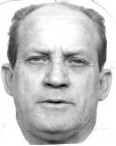 Billy Frank Vickers
Murderer · USA · 1993
Billy Frank Vickers Vickers was executed by lethal injection in Texas on Januar…
14 victims
Billy Frank Vickers
Murderer · USA · 1993
Billy Frank Vickers Vickers was executed by lethal injection in Texas on Januar…
14 victims
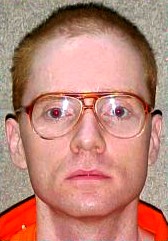 Robert Glen Jones
Murderer · USA · 1996
Defendant: Robert Glenn Jones (ADC#070566) · Co-defendant: Scott Nordstrom (ADC…
7 victims
Robert Glen Jones
Murderer · USA · 1996
Defendant: Robert Glenn Jones (ADC#070566) · Co-defendant: Scott Nordstrom (ADC…
7 victims
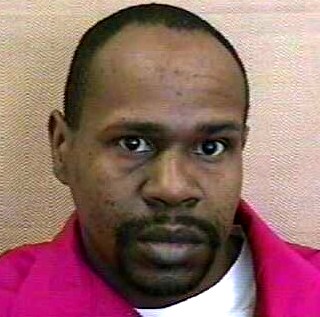 John Dennis Daniels
Murderer · USA · 1990
Name: John Dennis Daniels · Sex: Male · Race: Black · Date of birth: 05/22/1957…
1 victim
John Dennis Daniels
Murderer · USA · 1990
Name: John Dennis Daniels · Sex: Male · Race: Black · Date of birth: 05/22/1957…
1 victim
 Nanette Johnston
Murderer · USA · 1994
Nanette Johnston was sentenced to life in prison without the possibility of par…
1 victim
Nanette Johnston
Murderer · USA · 1994
Nanette Johnston was sentenced to life in prison without the possibility of par…
1 victim
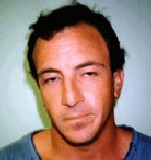 Scott Watson
Murderer · New Zealand · 1998
Scott Watson (born 28 June 1971) was a New Zealander who was convicted in May 1…
2 victims
Scott Watson
Murderer · New Zealand · 1998
Scott Watson (born 28 June 1971) was a New Zealander who was convicted in May 1…
2 victims
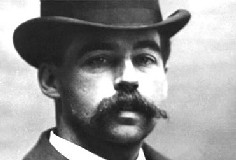 Herman Webster Mudgett
Serial killer · USA - Canada · 1886
Herman Webster Mudgett (May 16, 1861 – May 7, 1896), better known under the ali…
27 victims
Herman Webster Mudgett
Serial killer · USA - Canada · 1886
Herman Webster Mudgett (May 16, 1861 – May 7, 1896), better known under the ali…
27 victims
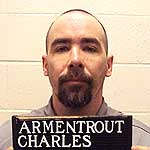 Charles Armentrout
Murderer · USA · 1995
Charles W. Armentrout was released from prison in August of 1994, having served…
1 victim
Charles Armentrout
Murderer · USA · 1995
Charles W. Armentrout was released from prison in August of 1994, having served…
1 victim
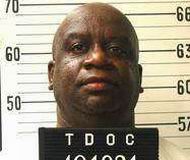 Robert Lee Faulkner
Murderer · USA · 1999
Robert Lee Faulkner was convicted of first degree premeditated murder of his wi…
1 victim
Robert Lee Faulkner
Murderer · USA · 1999
Robert Lee Faulkner was convicted of first degree premeditated murder of his wi…
1 victim
- Gender
- male
- Country
- USA
- Location
- Warren County, Ohio, USA
- Date of birth
- J uly 28, 1956
- Age at first offence
- 47
- Characteristics
- parricide
- Victim profile
- Kimbirli Jo Barton, 44 (h is fourth wife)
- Method of murder
- Shooting
- Date(s) of murder
- January 16, 2003
- Years active
- 2003
- Date of arrest
- Same day (suicide attempt)
- Status
-
Executed
Executed by lethal injection in Ohio on July 12, 2006
Case record: Rocky Barton
Parties
- Defendant: Rocky Barton
- Victim: Kimbirli Jo Barton (fourth wife)
Charges and conviction
- The grand jury returned a two-count indictment against Barton.
- Count 1: aggravated murder of Kimbirli Barton with prior calculation and design, including:
- a gun specification
- a death-penalty specification tied to a prior attempted-murder conviction
- Count 2: unlawful possession of a firearm while under a disability from a prior conviction
- Barton pleaded guilty to the weapon-under-disability charge, but elected a jury trial on the aggravated-murder charge.
- The death-penalty specification was separately tried to the court.
- The jury convicted Barton of:
- aggravated murder with prior calculation and design
- the firearm specification
- The trial court found Barton guilty of the death-penalty specification.
Sentencing
- The trial court sentenced Barton to death on the aggravated-murder count.
- The court also imposed consecutive terms of:
- three years for the gun specification
- five years for the weapons-under-disability offense.
- Warren County Common Pleas Judge Neal B. Bronson imposed the death sentence on Oct. 10, 2003.
Timeline
- January 16, 2003 — Barton awakened Jamie at 7:20 a.m. and told her to get her things; later he shot Kimbirli Jo Barton and then shot himself; EMS arrived after 911 calls.
- Sept. 29, 2003 — Barton was convicted of aggravated murder and urged jurors to recommend the death penalty.
- Sept. 23, 2003 — Barton pleaded guilty to Count 2: Having Weapon While Under Eligibility.
- Sept. 30, 2003 — A jury found Barton guilty as charged in Count 1.
- Oct. 10, 2003 — Sentence of death imposed and concurrent/consecutive terms entered for specifications.
- April 5, 2006 — The Supreme Court of Ohio decision was dated April 5, 2006.
- June 19, 2006 — The Ohio Adult Parole Authority held a special meeting concerning death-sentence clemency.
- July 5, 2006 — Ohio Department of Rehabilitation and Correction media advisory confirmed execution was scheduled for July 12, 2006.
- July 12, 2006 — Barton was executed by lethal injection; death pronounced at 10:27 a.m. EDT.
Background
- Barton and Kimbirli had known each other for many years and married on June 23, 2001, during his incarceration for attempted murder in Kentucky.
- After his release from prison in 2002, Barton lived in a Warren County farmhouse on Bellbrook Road owned by his father, Donald, with Kim and Jamie, Kim’s 17-year-old daughter from a prior marriage.
- Barton and Kimbirli planned to renew their wedding vows in May or June 2003.
- Tiffany (Kim’s 22-year-old daughter from a prior marriage) described Kim’s relationship with Barton as “[s]ometimes good, sometimes bad, the highs were very high, the lows were really low.”
- Julie (Kim’s 27-year-old daughter from a prior relationship) described Kim and Barton's relationship as “up and down. * * * [R]eally good [or] really bad.”
- Tiffany described Barton as “[v]ery moody, possessive, * * * controlling [,] * * * just very manipulative.”
- Julie also thought Barton could be, at times, “very jealous, very controlling, very manipulative, always accusing [Kim] of things, causing fights.”
- Jamie agreed that Barton acted “controlling and possessive,” and she described him as the only father figure she could depend upon.
The offence
- On January 16, 2003, the morning of the murder:
- Barton awakened Jamie at 7:20 a.m. and told her to get her things together:
- “You’re going to Tiff’s house. The wedding’s off. Your mom’s a psycho bitch.”
- Barton drove Jamie to Tiffany’s home and told Tiffany that her mother “had gone off the deep end and that she was crazy and she was leaving him.”
- Jamie described Barton as acting “[r]eally strange” and “aggravated.”
- Barton awakened Jamie at 7:20 a.m. and told her to get her things together:
- Around 7:30 a.m., Kim arrived at Lasik Plus, where she worked as a technical assistant.
- Co-workers Karla Reiber and Molly Wolfer recalled Barton called more than six times that morning.
- Wolfer described Kim as crying “very frantic” and “very scared” when she left work around 10:30 a.m.
- Police later recovered a spent shotgun shell in a bedroom at Barton’s home, supporting Kim’s suspicion that Barton fired while talking on the telephone.
- Barton left messages and made calls the same day:
- Around 7:45 a.m., Barton left a message with his employer saying he would not be at work due to a family emergency.
- Around 10:45 a.m., Barton spoke with his supervisor Carol Williamson and informed her that Kim had been “acting strange” due to her medication and that Kim intended to leave him.
- Barton called Randy Hacker and left a message:
- “[B]efore I go on to my demise, I should call you.”
- In a later call, Barton told Hacker that Kim intended to move out and that he would be going back to jail.
- Barton also spoke with insurance agent Glen Barker multiple times; Barker had a background in counseling and offered to mediate.
- Barton visited Barker at his office around 9:30 a.m. and seemed calm and quiet, but Barker testified Barton adamantly refused to allow Kim to collect her possessions from their house.
- Barton's father, Donald, spoke with Barton and Kim from Florida in an effort to defuse the situation.
- Donald told Barton not to worry because anything Kim might take could be replaced, and Donald told Kim she could keep his car.
- Barton’s uncle, Larry Barton, spoke with Barton several times by telephone and offered assistance.
- Larry testified Barton vowed that “he wouldn’t go back to jail.”
- Around 11:00 a.m., Kim arrived at Tiffany’s home.
- Jamie and Tiffany overheard Barton cursing and yelling on the telephone and described his voice as “scary.”
- Jamie overheard him tell Kim: “I'm going to kill you, you f* * *ing bitch,” and testified it caused Kim to become “really nervous and scared” while “crying and shaking.”
- Around 3:00 p.m., Kim and Jamie made plans to return to their Bellbrook Road home to retrieve clothing and personal effects.
- When Larry arrived at Tiffany’s house, he strongly advised Kim not to go home; she stayed away but gave Larry a list of items to retrieve.
- Immediately after Larry left, Barton called and persuaded Kim and Jamie to come to Bellbrook Road to obtain their things.
- When Larry arrived, Barton had locked the gate.
- Larry asked Barton to open the gate; Barton refused and repeatedly said, “I’ve lost it.”
- Barton stood near his truck behind the locked gate while Larry’s truck remained parked on the road.
- When Kim and Jamie arrived, Barton unlocked the gate and instructed Larry to lock it after they entered because he did not want “the police * * * coming in.”
- Barton got into his truck, backed up “real fast” into the garage, and closed the garage door.
- Barton shot Kim and Jamie:
- As Kim got out of the car and turned to shut her door, Barton came out the side door of the garage with a shotgun.
- As he ran toward Kim, he yelled “You aren’t going anywhere, you f* * *ing bitch,” and he fired the shotgun while four to six feet from her, striking her in her side.
- Kim fell but moved toward Jamie, yelling, “Oh, Jamie, Oh Jamie.”
- When Jamie reached for her mother, Barton shot her in the back from a distance of one to two feet.
- Jamie screamed:
- “Mom, can you hear me? Can you hear me? Please stay with me, mommy, please stay with me.”
- Barton aimed the gun at Jamie’s head and at Larry.
- Barton walked to the side of Larry’s truck, said, “I told you I was insane,” dropped to his knees, and shot himself in the face.
- Barton then walked into the house.
- Calls for help and medical findings:
- Jamie and Larry called 911.
- EMS personnel arrived and found Kim ashen in color, not breathing, with fixed and dilated pupils and no pulse.
- After an autopsy, Dr. Karen Powell, a forensic pathologist, determined Kim died from “shotgun wounds of the left shoulder and right back regions” causing injuries to her lungs, heart, and liver.
- Police located Barton inside the house as alert and cooperative.
- An EMS technician described Barton as suffering from a gunshot wound with non-life-threatening injuries to his chin, mouth, and nose.
- Evidence collected:
- Police confiscated the murder weapon, a .410 pump-style shotgun, and four spent shotgun shells.
- Police also recovered six live shotgun shells from Barton at the hospital.
Criminal history
- Juvenile offences: None known.
- Adult offences:
- 10/15/1986 — Driving Under the Influence, Fairborn, Ohio.
- 11/30/1988 — Guilty; Driving Under the Influence, Lebanon, Ohio.
- 9/14/1989 — Guilty; Driving Under the Influence, Warren County, Ohio.
- 1/11/1990 — Guilty; Driving Under the Influence.
- 1/4/1991 — Attempted Murder; Theft by Unlawful Taking; Madison County, Kentucky.
- 4/9/1991 — 15 years concurrent with 2 years; age 34.
- 6/30/1999 — paroled; Case #91-CR-021.
- 2/9/2001 — returned to Kentucky as a parole violator due to conviction for Domestic Violence.
- 2/1/2002 — discharged.
- 9/18/2000 — Domestic Violence.
- 12/5/2000 — 30 days jail with credit for time served, 2 years probation, $200 fine; 2/9/2001 probation terminated due to parole violation.
- 1/16/2003 — Aggravated Murder, Having Weapon Under Disability (instant offense); Case #03CR20526.
Details of Kentucky attempted murder (contained in institutional/parole materials)
- On 1/4/1991, Barton struck Brenda Johnson over the head with a shotgun and continued to beat her until she passed out.
- Brenda Johnson woke up to find Barton tied her feet with electrical tape and her hands with an electrical cord.
- Barton told her he had planned to kill her for some time.
- He ransacked the house and forced her to take several pills and to lick blood off his hands and shoes.
- Barton stabbed her three times in the back and cut her throat.
- She lost consciousness.
- Barton stole her car, leaving her for dead; when she awoke, she was able to make it to a neighbor’s home for help.
- On 2/7/1991, Barton was arrested in San Diego, California and was extradited to Kentucky on 2/14/1991 as a result of the offense.
Details of domestic violence allegation (contained in institutional/parole materials)
- On 9/18/2000, Jamie Barton of Waynesville, Ohio reported she was divorcing Barton.
- She reported Barton tried to enter her house, caused damage to the doorframe, and she had been receiving numerous phone calls from Barton.
- On 9/17/2002, the charges related to these allegations were dismissed.
Investigation and evidence
- Police confiscated the shotgun and spent shells during the investigation.
- EMS described Barton’s injuries as non-life-threatening.
- The spent shotgun shell recovered in a bedroom at Barton’s home supported Kim’s suspicion that Barton fired while talking on the telephone.
Trial
Parties appearing in the penalty-phase record
- Defense counsel included Christopher J. Pagan and Chris McEvilley.
- The state’s prosecution included Rachel Hutzel and other listed prosecutors/assistants in the appellate materials.
Penalty phase and unsworn statement
- At the start of the penalty phase, defense counsel and Barton made an on-the-record statement regarding mitigation witness decisions and a neuropsychologist.
- Defense counsel said:
- “MR. HOWARD [defense counsel]: * * * Since we're beginning to start the mitigation phase in this case, I want to put on the record that throughout the representation that Mr. Oda and I have undertaken on behalf of Mr. Barton, he has consistently, from day one, * * * insisted that we not call any family members on his behalf as witnesses in mitigation.
- “We have enlisted, with the court's approval, a neuropsychologist to examine Mr. Barton for the possibility of offering testimony or mitigation evidence in regard to this case. That was a Jeffrey Smalldon.
- “Dr. Smalldon came down from Columbus on two occasions, spent about five or six hours with Mr. Barton. Mr. Barton basically refused to cooperate with any testing or participate in any testing with Dr. Smalldon and has instructed us not to call Dr. Smalldon as a potential witness.
- “And we just wanted to put that on the record and have Mr. Barton acknowledge that for purposes of the record; is that true?”
- Barton replied:
- “MR. BARTON: Yes.”
- The trial court asked for confirmation:
- “THE COURT: Okay. Mr. Barton, that's a fair representation of what's transpired in your case, sir? That's a fair representation that Mr. Howard has just made for the record?”
- Barton replied again:
- “MR. BARTON: Yes.”
- The trial court declared Barton “would have every opportunity to review [the statement] with his counsel, reduce it to writing, and touch all points per the direction and advice of counsel.”
- Barton made an unsworn statement to the jury:
“MR. BARTON: At this time my attorneys advised me to beg for my life. I can't do that. I strongly believe in the death penalty. And for the ruthless, cold-blooded act that I committed, if I was sitting over there, I'd hold out for the death penalty. * * * I've recently done 10 years in prison. Life in prison would be a burden to all the citizens of Ohio. It would be at their cost. I wouldn't have nothing to worry about. I'd get fed every day, have a roof over my head, free medical, you people pay for it, I'd have a stress-free life. That's not much of a punishment.
“Punishment would be to wake up every day and have a date with death. That's the only punishment for this crime. That's all I've got to say.”
- After the unsworn statement, Barton's counsel urged the jury to impose life:
- Counsel argued Barton wanted to die and that a death sentence would be giving him “what he wanted on January the sixteenth and what he wants today.”
- Counsel argued: “Death is not a stiff enough sentence for Rocky Barton because it completes the plan * * *.”
Verdict and sentence recommendation
- After court instructions and deliberation, the jury recommended a sentence of death.
- The trial court imposed the death sentence.
Appeals
- State v. Barton, 108 Ohio St.3d 402, 844 N.E.2d 307 (Ohio 2006) was the Supreme Court of Ohio decision.
- The Supreme Court’s holdings included:
- Ashworth inquiry was not required under the circumstances of the case.
- The trial court had no duty to sua sponte order evaluation of competency to stand trial based on the waiver of mitigation and attempted suicide.
- The trial court’s refusal to permit question-and-answer format for an unsworn statement did not violate constitutional right to counsel.
- Indictment for having a weapon while under a disability was not defective.
- The aggravating circumstance involving prior attempted murder outweighed mitigating factors.
- The death sentence was not excessive or disproportionate.
- Pro se motions were filed:
- On October 4, 2004, Barton filed a pro se motion “to withdraw any and all direct appeals filed on his behalf.”
- On October 24, 2005, Barton filed a pro se motion to “waive all review of his conviction,” seeking to cease all review and forgo “all federal habeas and future pending appeals.”
- The Supreme Court stated these pro se motions were moot.
Clemency and parole board materials
Parole Authority special meeting
- The Ohio Adult Parole Authority held a special meeting on June 19, 2006 at 1030 Alum Creek Drive, Columbus, Ohio 43205.
- The meeting subject was Death Sentence Clemency.
- The clemency file identified the crime and conviction as:
- Aggravated Murder with Gun Specification and Aggravating Circumstance Specification
- consecutive with Having Weapon While under Disability
- The parole board noted that clemency initiation involved:
- Honorable Bob Taft, Governor of the State of Ohio, and the Ohio Parole Board, pursuant to specified Ohio Revised Code sections.
- The meeting records stated:
- On May 19, 2006, Barton declined an opportunity to be interviewed by a representative of the Parole Board at Mansfield Correctional Institution.
- Barton submitted two letters to the Parole Board indicating he did not want clemency and did not want attorney Christopher J. Pagan to represent him at the Clemency Hearing.
- Barton’s counsel and co-counsel were not present.
People who testified or were cited in opposition to clemency
- Arguments in opposition were presented by:
- Warren County Prosecutor Rachel A. Hutzel
- the victim’s family including Sheri Hathway (sister), Tiffany Reising (daughter), and Julie Vickers (daughter)
- Other listed participants included:
- Warren County Assistant Prosecutor Andrew Sievers
- Warren County Prosecutors Office Law Clerk Katie Stenman
- Senior Deputy Attorney General Heather Gosselin
- Deputy Attorney General Matthew Hellman
- Assistant Attorney General Anna Franceschelli
- Assistant Attorney General Thomas Madden
Decision and recommendation
- The Board voted unanimously to provide an UNFAVORABLE recommendation to Governor Bob Taft.
- The Board concluded:
- Barton was lawfully convicted of the Aggravated Murder of his 4th wife, Kimbirli Barton.
- Barton was lawfully convicted of a specification for prior attempted murder of his 2nd wife.
- Barton was lawfully convicted of domestic violence with death threats against his 3rd wife.
- Barton’s diagnosis of Major Depression with psychotic features did not rise to the level of a serious mental disease or defect to warrant sufficient mitigation against imposition of the death penalty.
- A reprieve or stay of execution was not warranted due to lack of credible evidence of incompetence.
- The Board stated that credible evidence supported findings that Barton appeared fully competent to waive his rights, and that he repeatedly expressed intentions in clear language.
- The Board also stated that the diagnosis and mental health treatment was additional mitigation evidence not known by the jury or sentencing judge.
- The Board cited Barton's “accurate self-assessment & unsworn statement to the jury during the mitigation phase” including:
- …
Mental health status and competency issues (as recorded in clemency materials and appellate case analysis)
- Barton requested that he no longer be represented by attorney Christopher J. Pagan or any other counsel; Pagan filed a motion to evaluate competency to waive further challenges.
- As of June 22, 2006, the Supreme Court of Ohio remanded for “an evidentiary hearing to determine whether the defendant’s competency to waive further appeals should be psychiatrically evaluated.”
- The Parole Authority materials stated Barton was housed in the mental health unit at Mansfield Correctional Institution with a diagnosis of Major Depression with psychotic features, and a self-reported history including:
- delusional thinking
- auditory hallucinations
- impaired insight
- attempted suicide during commission of the instant offense.
- The materials stated that Barton was admitted in July 2005 to Oakwood Correctional Facility for evaluation, was treated with medication, and was discharged after one week.
- The materials further stated that prior to May 2005, there was no documented history of mental illness other than a five-hour pre-trial session with a neuropsychologist named Dr. Smalldon who noted no indications of mental disturbance.
Execution details
Scheduling and facility
- Ohio Department of Rehabilitation and Correction authorities confirmed Barton was scheduled for execution on Wednesday, July 12, 2006, at 10:00 AM.
- The execution was to occur at the Southern Ohio Correctional Facility located in Lucasville, Ohio.
- Ohio law required lethal injection as the manner of execution.
- The execution was described as the fifth “volunteer” execution in Ohio.
Execution procedure and witnesses (reported alongside the execution)
- Two injection sites were established on Rocky Barton: one as a backup if something went wrong with a vein.
- Prison officials indicated the process went smoothly, and Barton died at 10:27 a.m.
- A report described three drugs being administered:
- Sodium Pentothal
- Pancuronium Bromide
- Potassium Chloride
- Warden Edwin C. Voorhies Jr. pronounced Barton dead at 10:27 a.m.
Final meal and final words
- Barton was given a meal Tuesday evening consisting of:
- pork chops, potatoes, biscuits with gravy, fried eggs over easy, cherry pie, and a caffeine-free soft drink.
- Final words included an apology and statement attributed to Barton:
“I’m sorry for what I done. I’m sorry for killing your mama. I’m not asking you to forgive me. Not a day goes by that I’m not trying to forgive myself. Don't let your anger and hate for me destroy your lives.”
- Barton also apologized to his parents for “embarrassment and shame” and said:
- “As Gary Gilmore said, ‘Let’s do it.’”
- Another quoted set of final statements included:
- “I'm sorry for what I done, sorry for killing your mama and for what I done to you.”
- “I’m sorry for what I done,”
Other details (family, incarceration, and related events stated in the record)
- Barton’s parents Donald and Wilma Barton witnessed the execution.
- Barton’s victim’s daughters Tiffany and Jamie Reising witnessed the execution.
- Another witness described as Joseph Reynolds (Kimbirli’s son) was referenced in final statements and in the record of what Barton told him.
- Jamie Reising was allowed to leave a jail in Lebanon to watch the execution; she was serving a drug trafficking charge.
- Tiffany Reising was described as wearing a button with her mother’s picture on it; she stated she would mourn the loss but believed justice was served.
- Barton did not seek clemency from Governor Bob Taft.
- A judge ruled Barton was competent to give up his appeals; the ruling was described as made “last week” in one report.
- Barton’s lead attorney at trial and in the mitigation waiver context was referenced as needing a psychiatric evaluation motion in May; Neal Bronson is identified as presiding judge and imposed sentence.
Citation
- State v. Barton, 108 Ohio St.3d 402, 844 N.E.2d 307 (Ohio 2006) (Direct Appeal).
Spotted an error, or have more information about this case?