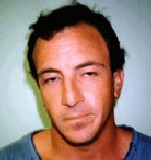
Scott Watson
Murderer William Dwane Bell
Murderer · New Zealand · 2001
William Dwane Bell (born 1978) was a convicted murderer in New Zealand. Bell wa…
3 victims
William Dwane Bell
Murderer · New Zealand · 2001
William Dwane Bell (born 1978) was a convicted murderer in New Zealand. Bell wa…
3 victims
 Bruce Howse
Murderer · New Zealand · 2001
Bruce Howse was the partner of Charlene Aplin and the stepfather of Saliel Apli…
2 victims
Bruce Howse
Murderer · New Zealand · 2001
Bruce Howse was the partner of Charlene Aplin and the stepfather of Saliel Apli…
2 victims
 John Barlow
Murderer · New Zealand · 1994
16 February 1994 — Financial dealers Eugene and Gene Thomas, father and son, we…
2 victims
John Barlow
Murderer · New Zealand · 1994
16 February 1994 — Financial dealers Eugene and Gene Thomas, father and son, we…
2 victims
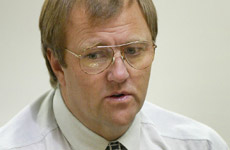 Mark Edward Lundy
Murderer · New Zealand · 2000
Mark Edward Lundy was the husband and father of the victims Christine Marie Lun…
2 victims
Mark Edward Lundy
Murderer · New Zealand · 2000
Mark Edward Lundy was the husband and father of the victims Christine Marie Lun…
2 victims
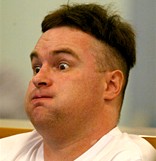 Antonie Dixon
Murderer · New Zealand · 2003
Antonie Ronnie "Tony" Dixon (1968 – 4 February 2009) · 21 January 2003 — Dixon…
1 victim
Antonie Dixon
Murderer · New Zealand · 2003
Antonie Ronnie "Tony" Dixon (1968 – 4 February 2009) · 21 January 2003 — Dixon…
1 victim
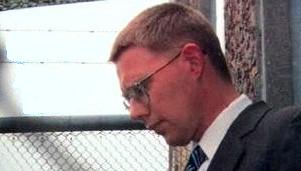 Christopher John Lewis
Murderer · New Zealand · 1996
Christopher John Lewis was found dead in his cell by Auckland Mt Eden prison st…
1 victim
Christopher John Lewis
Murderer · New Zealand · 1996
Christopher John Lewis was found dead in his cell by Auckland Mt Eden prison st…
1 victim
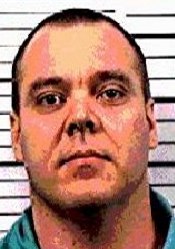 Frank Duane Welch
Murderer · USA · 1987
Name: Frank Duane Welch On February 25, 1987, Tracy Cooper arrived at his Norma…
2 victims
Frank Duane Welch
Murderer · USA · 1987
Name: Frank Duane Welch On February 25, 1987, Tracy Cooper arrived at his Norma…
2 victims
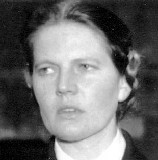 Denise Labbé
Murderer · France · 1954
Denise Labbé was convicted of the murder of her 2-year-old daughter, Catherine.…
1 victim
Denise Labbé
Murderer · France · 1954
Denise Labbé was convicted of the murder of her 2-year-old daughter, Catherine.…
1 victim
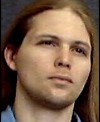 Karl Anthony Terry
Murderer · USA · 1994
Karl Anthony Terry was sentenced to death on November 22, 1995. This case under…
2 victims
Karl Anthony Terry
Murderer · USA · 1994
Karl Anthony Terry was sentenced to death on November 22, 1995. This case under…
2 victims
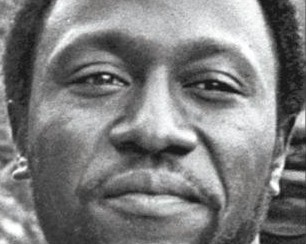 Richard Townes
Murderer · USA · 1985
Richard Townes shot Virginia Goebel, a Virginia Beach convenience store clerk,…
1 victim
Richard Townes
Murderer · USA · 1985
Richard Townes shot Virginia Goebel, a Virginia Beach convenience store clerk,…
1 victim
- Gender
- male
- Country
- New Zealand
- Location
- Marlborough Sounds, South Island, New Zealand
- Date of birth
- June 28, 1971
- Age at first offence
- 27
- Characteristics
- miscarriage of justice, the bodies were never found
- Victim profile
- Ben Smart (21) and Olivia Hope (17)
- Method of murder
- ???
- Date(s) of murder
- January 1, 1998
- Years active
- 1998
- Date of arrest
- June 15, 1998
- Status
-
Life imprisonment
Sentenced to life in prison with a non-parole period of 17 years in 1999
Overview
Scott Watson (born 28 June 1971) was a New Zealander who was convicted in May 1999 after an 11-week trial of the murders of Ben Smart and Olivia Hope on his boat Blade on 1 January 1998. The bodies of Smart and Hope have never been found.
Watson petitioned for the exercise of the royal prerogative of mercy and applied for a royal pardon.
Timeline
- 1 January 1998 — Ben Smart (21) and Olivia Hope (17) disappeared in the early hours after attending an all-night New Year’s Eve party; the disappearances occurred on Watson’s boat Blade.
- 2 January 1998 — Gerald Hope, Olivia’s father, reported Ben Smart and Olivia Hope missing.
- May 1999 — Watson was convicted after an 11-week trial for the murders of Ben Smart and Olivia Hope.
- 1999 — Watson was sentenced to life in prison with a non-parole period of 17 years.
- April and May 2000 — Watson’s appeal went to the Court of Appeal; three Appeal Court judges heard submissions from both prosecution and defence and decided there was no new evidence to recommend a second trial.
- 2001 — Mike Kalaugher published a book critical of police methods used to obtain the conviction of Scott Watson.
- 2003 — Keith Hunter released a television documentary about the case, and Watson’s lawyers Mike Antunovic and Greg King applied to the Privy Council, which found no grounds for further appeal.
- 2004 — Watson married Coral Branch in Paremoremo prison.
- 2006 — Keith Hunter published a book about the case.
- 2007 — Watson and Coral Branch split in 2007.
- 2007 — A magistrate found Watson guilty of assaulting another inmate in Paparua Prison.
- 2008 — Watson’s appeal against that assault conviction failed; Watson wrote to New Zealand’s Governor General seeking advice as to obtaining a Royal Prerogative of Mercy.
- 2008 — Watson’s appeal against the assault conviction failed.
- 2009 — The Ministry of Justice appointed Kristy McDonald QC to investigate the case as a result of Watson’s appeal to the Governor General.
- 2010 — A 2010 report by the Independent Police Conduct Authority cleared police of allegations by Keith Hunter and Chris Watson, finding the police investigation had fallen short of best practice in areas which "had no significant bearing on the outcome of the investigation"; the authority found no evidence to support Hunter’s other claims.
- 8 July 2016 — Watson was expected to be released.
- December 2007 — Mike White published "Ben and Olivia 10 years on – Did We Get it Wrong?/Sounds of Disquiet" in North & South (46–56).
The offence
On the morning of 1 January 1998, Ben Smart and Olivia Hope disappeared after attending an all-night New Year’s Eve party. They were last seen boarding a yacht moored off Furneaux Lodge in the Marlborough Sounds, in Endeavour Inlet, at the northern point of the South Island of New Zealand.
Ben Smart was 21 and Olivia Hope was 17. The disappearances occurred on Watson’s boat Blade.
Investigation and missing persons development
The disappearances were initially treated as a missing persons enquiry. Gerald Hope, Olivia’s father, reported Smart and Hope missing on Friday 2 January. No sightings of them had been made since the early hours of 1 January.
A sonar search of the entrance to Tory channel, an area of interest to the investigating police, found that "there is no indication that the missing remains of Ben Smart and Olivia Hope are present or visible on the sea bed inside the search area".
Conviction and sentence
Watson was convicted in May 1999 after an 11-week trial of the murders of Ben Smart and Olivia Hope.
He was sentenced to life in prison with a non-parole period of 17 years in 1999. He was serving a life sentence with a non-parole period of 17 years and was expected to be released on 8 July 2016.
Prior convictions and further offending in prison
Watson had 48 prior convictions, including some for theft and assault.
He was subsequently convicted for one more assault while in prison. In 2007, Watson was found guilty by a magistrate of assaulting another inmate in Paparua Prison. In 2008, his appeal against that conviction failed.
Appeals
The New Zealand Court of Appeal rejected Watson’s appeal.
Watson’s lawyers Mike Antunovic and Greg King applied to the Privy Council. The Privy Council found no grounds for further appeal.
Royal prerogative of mercy / royal pardon
After being turned down for an appeal to the Privy Council, Watson wrote to New Zealand’s Governor General in 2008, seeking advice as to obtaining a Royal Prerogative of Mercy.
In 2009, the Ministry of Justice appointed Kristy McDonald QC to investigate the case as a result of Watson’s appeal to the Governor General.
Watson was applying for a royal pardon.
Other claims about the investigation
Questions were raised about the manner of the police investigation by Mike Kalaugher, Keith Hunter, and a 2006 book by Keith Hunter.
A 2010 report by the Independent Police Conduct Authority cleared police of allegations by Keith Hunter and Chris Watson. It found that "the police investigation had fallen short of best practice in areas which 'had no significant bearing on the outcome of the investigation'." The authority found no evidence that supported Hunter's other claims.
Independent Police Conduct Authority findings (Operation Tam)
The IPCA launched an inquiry into the police investigation after it received complaints from journalist Keith Hunter and Watson's father Chris. No complaint was received from Scott Watson himself.
The authority found police investigation known as Operation Tam fell short in three respects:
- An affidavit to obtain search warrants signed by Detective Inspector Rob Pope, now the Deputy Commissioner, contained errors and fell short of the high standard of accuracy needed for warrants. The authority rejected Hunter's allegation that Pope intended to mislead, and found the errors did not "strike at the heart of the document." It also found Pope had not known the document was inaccurate when he signed it and that his mistake did not constitute misconduct or neglect of duty.
- The authority found it was "highly undesirable" for a member of the investigation team to give a suspect profile of Scott Watson to a community group.
- It also found the construction of photo montages of Watson and the methods used to show them to witnesses were undesirable. However, due to a lack of documentation, it could not determine how decisions about the montages were made, and by whom.
The authority chairwoman Justice Lowell Goddard said:
"On the basis of what Detective Inspector Rob Pope knew, it was reasonable and appropriate for him to focus resources on investigating Scott Watson. Indeed, he would have been remiss had he not,"
Justice Goddard also said:
"The unprecedented and unrelenting nature of the media focus throughout the inquiry can only have served to make an already complex and difficult investigation even more so,"
And:
"In these difficult circumstances, some actions of police fell short of best practice, some mistakes were made, and these were compounded by the actions of others, in particular the media and members of the community who openly discussed the investigation with each other and with reporters."
The IPCA found no evidence behind many of Hunter's complaints. Hunter alleged that Detective Inspector Rob Pope concluded Watson was guilty within five days of the investigation, ignored evidence to the contrary, created and circulated false rumours about Watson, told a "strategic lie" to media about whether Watson was a suspect, bought the testimony of secret witnesses, and planted DNA evidence.
The authority noted that many of the issues raised in Hunter's complaint were available to Watson's defence team to raise at trial and on appeal, and that the conduct of the trial and appeal were not matters within its jurisdiction. The authority stated its investigation was exhaustive, with investigative staff and legal analysts spending hundreds of hours examining some 25,000 documents. It also stated that Operation Tam was the largest police investigation ever conducted by New Zealand police at the time.
The authority said that about 1650 people who were in the Marlborough Sounds at the time had to be contacted, and more than 100 vessels were identified and traced.
Assorted public discussion and related statements
ACT leader Rodney Hide attended an Act-arranged public meeting in Epsom, Auckland, where Keith Hunter spoke to a crowd of 40 people about the Watson case.
At the meeting, Keith Hunter emphasised his belief that during the case certain police, the prosecution team, the judge and the Court of Appeal members involved "acted without integrity and without any regard whatever for truth and justice". Hunter said he intended to make it as hard as he could for the justice system to ignore its conduct.
Hide told the Sunday Star-Times that he was a fan of Hunter's 2007 book Trial By Trickery: Scott Watson, the Sounds Murders and the Game of Law and said he would like authorities, including Crown Law and police, to provide a step-by-step response to each of Hunter’s criticisms, which addressed the use of jailhouse informants, the misquoting or misinterpretation of evidence, manipulation of the media, misleading the jury, and the prosecution introducing a new scenario in its closing address.
Hide said:
"It's very hard to read that book and then hear a deafening silence and then have confidence in the processes,"
Hide said:
(These remarks were attributed to Hide in the meeting coverage.)
Green Party MP and human rights spokesman Keith Locke also spoke at the meeting. He told the Star-Times that readers of Trial by Trickery were left with "the clear conclusion that there could have been a miscarriage of justice". He said he would like an Independent Criminal Appeals Review Office set up and constitutional changes to make appeals more independent of executive government.
The meeting was organised by Act members Brian Nicolle, John Banks' former campaign manager, and Stuart Macfarlane.
Auckland Regional Council's chairman Mike Lee attended and told the Star-Times he thought Watson was innocent.
Ben Smart’s father John, 70, died of melanoma. His funeral was held on Friday.
Marital and prison life
Watson was photographed by the police on 8 January 1998. Watson was taken to the Christchurch District Court in a police car before being charged with the murder of Ben Smart and Oliva Hope in 1998.
Watson married Coral Branch in Paremoremo prison in 2004. They split in 2007.
Works cited in the case material
Jayson Rhodes and Ian Wishart authored Ben and Olivia - What Really Happened? (Auckland: Howling At The Moon Publishing, 1999) ISBN 0-9582054-4-2.
John Goulter authored Silent Evidence (Auckland: Random House, 2000) ISBN 1-86941-386-5.
Mike Kalaugher authored The Marlborough Mystery (Auckland: Tandem Press, 2001) ISBN 1-877178-91-8.
Keith Hunter authored Trial by Trickery: Scott Watson, the Sounds Murders and the Game of Law (Auckland: Hunter Productions, 2006) ISBN 0-473-11721-5.
Mike White published "Ben and Olivia 10 years on – Did We Get it Wrong?/Sounds of Disquiet" in North & South in December 2007, pages 46–56.
Other details
Smart and Hope were last seen boarding a yacht moored off Furneaux Lodge in the Marlborough Sounds.
The bodies of Ben Smart and Olivia Hope have never been found.
Spotted an error, or have more information about this case?