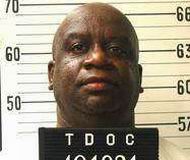
Robert Lee Faulkner
Murderer Russell Ellwood
Murderer · USA · 1991
Russell Ellwood was a former taxi driver. Authorities suspected him of killing…
20 victims
Russell Ellwood
Murderer · USA · 1991
Russell Ellwood was a former taxi driver. Authorities suspected him of killing…
20 victims
 Robert Martines Perez
Murderer · USA · 1994
Name: Robert Martines Perez · Other name used in proceedings: Robert Martinez P…
15 victims
Robert Martines Perez
Murderer · USA · 1994
Name: Robert Martines Perez · Other name used in proceedings: Robert Martinez P…
15 victims
 Billy Frank Vickers
Murderer · USA · 1993
Billy Frank Vickers Vickers was executed by lethal injection in Texas on Januar…
14 victims
Billy Frank Vickers
Murderer · USA · 1993
Billy Frank Vickers Vickers was executed by lethal injection in Texas on Januar…
14 victims
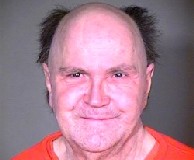 Robert Moormann
Murderer · USA · 1984
Robert Henry Moormann was convicted in Arizona of the first degree murder of hi…
1 victim
Robert Moormann
Murderer · USA · 1984
Robert Henry Moormann was convicted in Arizona of the first degree murder of hi…
1 victim
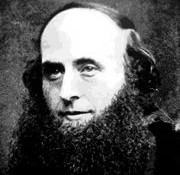 Edward Pritchard
Murderer · United Kingdom · 1865
Edward Pritchard was a Scottish doctor who was convicted of poisoning his wife…
2 victims
Edward Pritchard
Murderer · United Kingdom · 1865
Edward Pritchard was a Scottish doctor who was convicted of poisoning his wife…
2 victims
 Anthony Ray Westley
Murderer · USA · 1984
Anthony Ray Westley was executed by lethal injection in Texas on May 13, 1997.…
1 victim
Anthony Ray Westley
Murderer · USA · 1984
Anthony Ray Westley was executed by lethal injection in Texas on May 13, 1997.…
1 victim
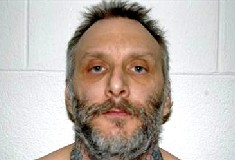 Robert Gleason
Murderer · USA · 2007
Robert Charles Gleason was serving life imprisonment for the 2007 fatal shootin…
3 victims
Robert Gleason
Murderer · USA · 2007
Robert Charles Gleason was serving life imprisonment for the 2007 fatal shootin…
3 victims
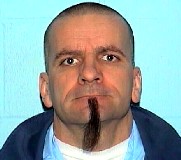 Niels Nielsen
Murderer · USA · 1995
Niels Christian Nielsen was convicted of killing his ex-wife, Sue Marshel, and…
2 victims
Niels Nielsen
Murderer · USA · 1995
Niels Christian Nielsen was convicted of killing his ex-wife, Sue Marshel, and…
2 victims
 Eleanor Jarman
Murderer · USA · 1933
Eleanor Jarman was born in 1904. She was the youngest of eight children born to…
1 victim
Eleanor Jarman
Murderer · USA · 1933
Eleanor Jarman was born in 1904. She was the youngest of eight children born to…
1 victim
- Gender
- male
- Country
- USA
- Location
- Shelby County, Tennessee, USA
- Date of birth
- August 1, 1955
- Age at first offence
- 44
- Characteristics
- parricide
- Victim profile
- Shirley Faulkner (his wife)
- Method of murder
- Beating with a frying pan and a metal horseshoe
- Date(s) of murder
- January 21, 1999
- Years active
- 1999
- Date of arrest
- 3 days after (surrenders)
- Status
-
Sentenced to death
Sentenced to death on March 10, 2001
Case record: Robert Lee Faulkner
Parties and identification
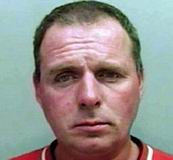
Robert Lee Faulkner was convicted of first degree premeditated murder of his wife, Shirley Faulkner.
Timeline
- September 1998 — Robert Faulkner and Shirley Faulkner married.
- December 1998 — Robert Faulkner and Shirley Faulkner separated.
- January 3, 1999 — Faulkner lost his job.
- January 17, 1999 — Shirley Faulkner reported that she was hit in the face on Sunday, which was January 17.
- January 18, 1999 — Shirley Faulkner filed a complaint with the Memphis Police Department alleging that on the previous night Faulkner struck her with his fist, held an ashtray over her head, and threatened to kill her.
- January 18, 1999 — Faulkner called Shirley Faulkner several times on the morning of January 18, again threatening to kill her.
- January 19, 1999 — Shirley Faulkner visited a physician and was treated for trauma to the left side of her face.
- January 21, 1999 — At approximately 11:00 p.m., Shirley Faulkner clocked out from her shift as a cashier at a grocery store, purchased groceries, and left.
- January 21, 1999 — Faulkner’s friend Jimmy Osby, called “brother,” committed suicide.
- January 21 to January 22 (night of murder) — Robert Faulkner reported the incident occurred around 12:00 to 12:30 a.m. on the night of January 21 and 22.
- Shortly after midnight on January 22, 1999 — Andre King arrived to check on Shirley Faulkner because a tornado watch was in effect for Memphis.
- January 22, 1999 — Shirley Faulkner did not report for work at her second job as a housekeeper for an apartment complex; Joe Ann Stewart learned this and contacted police.
- January 22, 1999 — Two officers entered the house using Ms. King’s key and discovered Shirley Faulkner’s body badly beaten about the head.
- January 24, 1999 — Robert Faulkner went to the fugitive office of the Shelby County Sheriff’s Department and announced he wanted to turn himself in for killing his wife on Thursday.
- January 24, 1999 — Faulkner was placed on suicide precaution.
- March 1976 — Faulkner was convicted of assault with intent to commit first degree murder, assault with intent to commit robbery, and assault with intent to commit voluntary manslaughter.
- September 1984 — Faulkner was convicted of four robberies.
- October 1984 — Faulkner was convicted of second degree murder.
- September 26, 2003 — The Court of Criminal Appeals issued its decision (appeal number shown in the appendix).
- January 28, 2005 — Janice M. Holder, J. delivered the opinion of the court in Supreme Court of Tennessee State v. Faulkner.
- August 18, 2005 — The sentence of death was scheduled to be carried out as provided by law.
Background
Robert Faulkner married Shirley Faulkner in September 1998 and separated from her in December 1998. Faulkner moved in with his grandmother while Shirley continued to live at her house in Memphis.
The offence
Alleged prior conduct and threats
On January 18, 1999, Shirley Faulkner filed a complaint with the Memphis Police Department alleging that on the previous night Faulkner struck her with his fist, held an ashtray over her head, and threatened to kill her.
According to Shirley Faulkner, she suspected Faulkner had been high on cocaine, and Faulkner called her several times on the morning of January 18, again threatening to kill her. The officer who took the report testified that the victim was nervous and shaking and that her left temple was swollen.
On January 19, 1999, a physician treated Shirley Faulkner for trauma to the left side of her face. She reported to the physician that she had been hit in the face on Sunday, which was January 17.
Events leading to the killing
At approximately 11:00 p.m. on January 21, Shirley Faulkner clocked out from her shift as a cashier at a grocery store and purchased groceries before leaving. Her supervisor testified that she appeared normal when she left. A security guard who escorted her to her car described her as shaking and crying.
Shirley told the guard she was afraid to go home because her husband might be waiting there. She refused the guard’s offer to escort her home and left by herself.
That same night, Shirley’s son-in-law, Andre King, decided to check on her because a tornado watch was in effect for Memphis. When King arrived shortly after midnight, he noticed that the lights were on in the victim’s house but that no car was in the driveway. He waited outside for approximately thirty minutes and then left.
The next day, January 22, Shirley’s friend, Joe Ann Stewart, learned that Shirley had not reported for work at her second job as a housekeeper for an apartment complex. Stewart called Shirley’s daughter, Twyla King, and asked her to meet Stewart at Shirley’s house. Stewart also contacted the police.
Two officers arrived and used Twyla King’s key to enter the house, which showed no signs of forced entry. They observed bags of groceries in the doorway of the kitchen, and the lights were on in the library and the kitchen, and the television was on in the den. However, Shirley’s bedroom at the back of the house was dark and the door was closed. When the officers entered the bedroom, they discovered Shirley’s body badly beaten about the head and lying face up on the floor.
Cause of death and nature of injuries
Dr. O’Brien Cleary Smith, the Shelby County Medical Examiner, testified that trauma to Shirley’s head was entirely focused on her head. Shirley suffered at least thirteen blows to her head, most of them to her face. She had numerous bruises and tears to the skin and fractures of the facial bones.
Dr. Smith testified that the injuries produced bruising of the brain and some of the bone fragments cut into the base of her brain. Shirley’s facial bones were so fragmented that Dr. Smith could not count the fractures or determine the sequence of the blows.
Shirley’s upper denture plate had been split in half, with one piece found on the floor and the other still in her mouth. Dr. Smith testified that after inhaling her own blood, Shirley’s efforts to breathe caused a red frothy foam to obstruct her airway, and she also swallowed over a pint of blood. Dr. Smith testified that Shirley must have been alive, although not necessarily conscious, to have swallowed that amount of blood. Dr. Smith concluded that the cause of death was blunt trauma to the head.
Dr. Smith found no defensive injuries on Shirley’s body or any evidence that she had tried to escape the beating. Blood stains indicated that her head had moved after the beating began, but her arms had not.
Based on blood-splatter evidence indicating the attack occurred while Shirley was lying on the floor, Dr. Smith opined that Shirley had been stunned or rendered unconscious by an initial blow or blows to the back of the head and may have felt nothing after she was first struck. Because Shirley’s blood had clotted before the end of the attack, Dr. Smith concluded that the beating had lasted six minutes, the minimum time necessary for clotting.
The crime scene unit of the Memphis Police Department discovered blood in Shirley’s bedroom, in the foyer next to the bedroom, and in the hallway running the entire length of the house. Blood was smeared on the handles of two grocery bags, in the kitchen doorway, and on the inside and outside knobs of the front door.
Officers found a broken handle from a skillet on the bed near Shirley’s body, and the rest of the skillet was never located. Shirley’s car was also missing and was discovered the day after the murder near the residence of Faulkner’s sister, with blood stains found inside the car.
Confession and description of the attack
On January 24, Faulkner went to the fugitive office of the Shelby County Sheriff’s Department and announced that he wanted to turn himself in for killing his wife on Thursday. Faulkner was transferred to Sergeant William Ashton of the Memphis Police Department. Sergeant Ashton testified that Faulkner was “very calm and very rational” during the interview.
After informing Faulkner of his Fifth Amendment rights and receiving a written waiver, Sergeant Ashton asked Faulkner if he went by any other names. Faulkner replied, “Yes, Skillet.” Faulkner then grinned and said, “That's what I hit her with, too.”
Faulkner stated that the incident occurred around 12:00 to 12:30 a.m. on the night of January 21 and 22. He said that he hit his wife with a frying pan and a metal horseshoe.
Faulkner claimed that his wife had called him at lunchtime on January 21 and asked him to meet her at her house that evening. He described what happened:
“My conversation with my wife was reconciling, and she had on her mind divorce. She said she just wanted the divorce, and I asked her why didn't she just call me on the phone and tell me that. I said, you didn't have to make me walk all the way from Shasta Street in the rain just to tell me you wanted a divorce. I sat back down on the bed and explained to her that I had enough problems already over my head and had to bury my brother on Monday. Everything I've tried to do since being out has just collapsed. I've lost my job, I've lost my wife, I was subject to being sent back to the penitentiary because I can't be without a job for 30 days. And you called me back here to discuss a divorce, and I only came to reconcile and ask we set aside our differences and go to my brother's funeral together. And she responded she was going, but she wasn't going with me. * * * So as we were finishing our conversation that was turning into an argument, I proceeded to walk from her bedroom to the front door as I was leaving. She walked behind me and asked me not to come back while I was standing in the hallway and everything just exploded. And I pushed her back off me and grabbed the two items that I seen, and I struck her repeatedly across the head. Faulkner estimated that he struck his wife between seven and eight times. He acknowledged that the victim fell to the floor after the second blow and that he continued to hit her while she was on the floor. After the attack, Faulkner put the murder weapons in a bag and drove away in the victim's car. He threw the murder weapons and his bloody clothes into a flooded viaduct and then parked the car where it was later found. He slept in empty houses instead of returning to his grandmother's house. Faulkner concluded his statement by professing, “I loved my wife with all my heart. I never meant to take her life. Everything that I had ever tried to do right turned out wrong. Under all the pressure, stress and strain, I made a wrong decision. I only like to say that I'm sorry.” Faulkner requested that he be placed on suicide watch in jail.”
Investigation and discovery
Officers entered Shirley Faulkner’s home using Twyla King’s key and found no signs of forced entry. The victim’s body was discovered in the bedroom, and multiple locations in and around the house contained blood evidence, including blood smeared on grocery bag handles, the kitchen doorway, and front door knobs. The officers discovered a broken handle from a skillet on the bed near Shirley’s body, and Shirley’s car was later found near the residence of Faulkner’s sister with blood stains inside.
Arrest and custody
On January 24, Faulkner turned himself in and was transferred to Sergeant William Ashton. After the interview and waiver of rights, Faulkner requested to be placed on suicide watch in jail. A Shelby County jailer testified that Faulkner was placed on suicide precaution on January 24.
Trial
Jury and charges
At the guilt phase of the trial, the jury convicted Faulkner of first degree premeditated murder.
State’s proof at the guilt phase
The State presented proof including:
- Shirley Faulkner’s complaint and allegations from January 18, 1999.
- Medical treatment for trauma to the left side of Shirley’s face.
- Security guard testimony that Shirley appeared shaking and crying and that she said she was afraid to go home because her husband might be waiting there.
- Andre King’s testimony that lights were on but no car was in the driveway and that he waited outside for approximately thirty minutes.
- Investigation testimony that there were no signs of forced entry and that Shirley was found badly beaten about the head and lying face up on the floor.
- Medical examiner testimony from Dr. O’Brien Cleary Smith about blunt trauma to the head, number of blows, fractures, denture plate damage, inhalation of blood, and the conclusion that death was caused by blunt trauma to the head.
- Crime scene blood evidence throughout the house and blood smeared on door knobs and grocery bag handles.
- Physical evidence including the broken handle from a skillet and the absence of the rest of the skillet.
- Proof that Shirley’s car was missing and then found near Faulkner’s sister’s residence with blood inside.
The State also introduced evidence related to threats and the victim’s suspicion that Faulkner had been high on cocaine.
Defense evidence at the guilt phase
Faulkner’s proof at the guilt phase included testimony from the security guard who escorted Shirley to her car that the guard did not know Faulkner as the guard had claimed and that the guard had been fired for carrying an unauthorized weapon.
Evidence was also introduced that Faulkner had lost his job on January 3, and that Jimmy Osby, called his “brother,” committed suicide on January 21.
Sentencing
Aggravating circumstances and sentence
A sentencing hearing determined punishment. At the penalty phase:
- The State presented evidence that in March 1976, Faulkner was convicted of assault with intent to commit first degree murder, assault with intent to commit robbery, and assault with intent to commit voluntary manslaughter.
- The State also presented evidence that Faulkner was convicted of four robberies in September 1984 and second degree murder in October 1984.
Forensic testimony at sentencing
Paulette Sutton, a forensic serologist and blood-stain expert, testified that based on her analysis of blood-stain patterns the victim collapsed fairly quickly but that the attack continued for six minutes. Sutton theorized that the victim’s arms had not moved because Faulkner was straddling her during part of the assault rather than because she was unconscious.
Victim impact testimony
The victim’s daughter, Twyla King, testified. She stated she had two brothers: Musenda Spencer, age twenty-one, and Jamil Spencer, age seventeen. She testified that Musenda was a freshman in college at the time of the murder and that because of the loss of his mother’s financial support, Musenda now had to work while attending school.
She testified that Jamil had “problems” and was incarcerated at the time of the murder. Twyla King also testified that taking custody of her younger brother affected her emotionally and financially.
She testified that she and her husband had three daughters. She stated that the oldest daughter had been very close to her grandmother, suffered emotionally because of the murder, and was in counseling at the time of the trial. She concluded by stating that she missed her mother’s emotional support.
Mitigation testimony
The defense presented two witnesses.
- Dr. Fred Steinberg, a forensic and clinical psychologist, testified after interviewing and testing Faulkner for twelve hours. Dr. Steinberg opined that Faulkner was not malingering. He testified that Faulkner experienced a very rough childhood, including neglect and abuse. He testified that both parents were alcoholics and that one abused drugs. He stated that Faulkner lived with foster parents at times.
Dr. Steinberg testified that Faulkner suffered from chronic substance abuse. He testified that on the night of the murder Faulkner’s predisposition toward impulsive behavior was made significantly worse by stressors including:
- his attempt to establish himself outside of prison,
- his difficult relationship with his wife,
- the loss of his job in early January,
- his grandmother’s hospitalization in early January due to Alzheimer’s disease,
- his friend’s suicide the day before the murder, and
- his frequent use of cocaine.
Dr. Steinberg defined “stressor” as a life change that impacts an individual and has an effect upon his psychological and physiological condition. Dr. Steinberg stated that Faulkner had the ability to form intent but that he could not suppress his emotions and that his ability to “cap” his behavior was diminished.
Dr. Steinberg testified that he conceded Faulkner had no mental disease or defect and that Faulkner was sane and competent. He diagnosed Faulkner as having mixed personality features and exhibiting paranoid thinking typical of cocaine usage.
On cross-examination, the State elicited information concerning Faulkner’s record of fighting with fellow inmates, possessing weapons, and threatening officers while incarcerated.
- Patricia McNealy, a counselor at an alcohol and chemical abuse center, testified. She had worked with Faulkner beginning in November 1998 when he tested positive for cocaine while on parole. McNealy testified that Faulkner attended classes twice a week.
She testified that she noticed stress in his life and observed Faulkner began using cocaine again after losing his job in early January 1999. She testified that around January 20, Faulkner called her to tell her he would not attend his next group session because his “brother” had committed suicide. McNealy testified that during the call Faulkner admitted he had been using cocaine.
Jury findings and death sentence
Based on this proof, the jury found that the State proved the statutory aggravating circumstance that the “defendant was previously convicted of one (1) or more felonies, other than the present charge, whose statutory elements involve the use of violence to the person.” Tenn. Code Ann. § 39-13-204(i)(2) (1997).
The jury also found beyond a reasonable doubt that the statutory aggravating circumstance outweighed any mitigating circumstances. The jury therefore sentenced Faulkner to death for the murder of Shirley Faulkner.
Appeals
Supreme Court of Tennessee: procedural issues and rulings
On automatic appeal, the Supreme Court of Tennessee designated the following issues for oral argument:
- whether the trial court improperly excluded testimony at the guilt phase regarding Faulkner’s “diminished capacity,”
- whether the trial court committed harmful error in its instructions defining “intentionally” and “knowingly,”
- whether the failure of the verdict form to recite that the jury found the aggravating circumstance “beyond a reasonable doubt” rendered the verdict invalid, and
- whether the sentence of death is disproportionate or invalid under the mandatory review of Tennessee Code Annotated section 39-13-206(c)(1) (2003).
Janice M. Holder, J. delivered the opinion. Frank F. Drowota, III, C.J., and E. Riley Anderson, and William M. Barker, JJ., joined. Adolpho A. Birch, Jr., J. filed a concurring and dissenting opinion.
Exclusion of guilt-phase “diminished capacity” testimony
Faulkner sought to introduce testimony of Dr. Steinberg and Patricia McNealy during the guilt phase to establish “diminished capacity.”
At a jury-out hearing, Dr. Steinberg testified about stressors including loss of job, marital problems, exacerbation of a drug problem, grandmother’s hospitalization, and best friend’s suicide. Dr. Steinberg testified that these stressors in combination affected Faulkner’s “predisposed tendency to have a short fuse,” but that Dr. Steinberg found no indication that Faulkner suffered from a mental disease or defect at the time of the offense.
The trial court ruled that Dr. Steinberg’s testimony was inadmissible at the guilt phase under State v. Hall because Dr. Steinberg could not testify Faulkner was incapable of forming intent as a result of a mental disease or defect. The trial court excluded McNealy’s testimony as admissibility depended on Dr. Steinberg’s testimony.
The Supreme Court concluded that the trial court properly excluded the testimony of both Dr. Steinberg and Patricia McNealy during the guilt phase.
Jury instructions defining “intentionally” and “knowingly”
The trial court instructed the jury that:
- “‘[a] person acts intentionally with respect to the nature of the conduct or to a result of the conduct when it is the person's conscious objective or desire to engage in the conduct or cause the result.’”
- “‘Knowingly’ means that a person acts knowingly with respect to the conduct or to the circumstances surrounding the conduct when the person is aware of the nature of the conduct or that the circumstances exist. A person acts knowingly with respect to a result of the person's conduct when the person is aware that the conduct is reasonably certain to cause the result.”
Faulkner argued, relying on State v. Page, that the trial court erred by failing to limit the definitions to the result-of-conduct language.
The Supreme Court addressed waiver and plain error. It concluded the issue was waived because Faulkner did not raise it in any of his three motions for a new trial, and relief required plain error.
The Supreme Court concluded that the inclusion of the nature-of-conduct language in the “intentionally” definition was not constitutional in nature and that the error, if any, was harmless. It further concluded that Faulkner was not entitled to relief under the plain error doctrine. Because Faulkner was not convicted of second degree murder, the issue regarding the erroneous instruction defining “knowingly” was moot.
Verdict form omitting “beyond a reasonable doubt” language
Faulkner contended that the verdict form violated the United States and Tennessee Constitutions because it did not recite that the jury found the aggravating circumstance “beyond a reasonable doubt.”
The jury verdict stated:
“We, the jury, unanimously find the following listed statutory aggravating circumstance or circumstances: the defendant was previously convicted of one or more felonies other than the present charge. The statutory elements of which involve the use of violence to the person. We, the jury, unanimously find that the state has proven beyond a reasonable doubt that the statutory aggravating circumstances so listed above outweighs any mitigating circumstances. Therefore, we, the jury, unanimously find that the punishment for the defendant, Robert Faulkner, shall be death.”
The Supreme Court noted that the trial court had instructed the jury on seven occasions that it was required to consider any statutory aggravating circumstances proven beyond a reasonable doubt, and that the verdict form incorporated Tennessee Code Annotated section 39-13-204(g)(1)(B) (1997). It concluded that the failure to recite “beyond a reasonable doubt” did not render the verdict invalid.
Mandatory proportionality review and affirmance
The Supreme Court stated it was bound by statute to review whether:
- (A) the sentence was imposed arbitrarily,
- (B) the evidence supports the jury’s finding of statutory aggravating circumstance(s),
- (C) the evidence supports the jury’s finding that the aggravating circumstance(s) outweighed mitigating circumstances, and
- (D) the sentence is excessive or disproportionate to the penalty imposed in similar cases, considering both the nature of the crime and the defendant.
The Supreme Court concluded:
- there was no indication the sentence was imposed in an arbitrary fashion,
- the State presented sufficient proof of prior violent felony convictions under Tenn. Code Ann. § 39-13-204(i)(2) (1997),
- the evidence supported the jury’s finding that aggravating circumstances outweighed mitigating circumstances beyond a reasonable doubt, and
- the death sentence was not excessive or disproportionate after comparative proportionality review.
The Supreme Court recounted that Faulkner brutally killed his wife by hitting her in the head and face with a skillet; four days prior he hit her with his fist and threatened to kill her with an ashtray; the next day he repeated the threat. It also recounted that during the attack he struck her at least thirteen times over at least six minutes, that she was alive and breathing during a portion of the attack (though may have been unconscious after the first few blows), that he took her car, threw murder weapons and bloody clothes into a flooded viaduct, and later turned himself in and confessed.
It noted Faulkner was an African-American male who was forty-three years old at the time of the murder and had prior convictions for second degree murder, assault with intent to commit first degree murder, assault with intent to commit robbery, assault with intent to commit voluntary manslaughter, and robbery.
It noted mitigation included evidence of neglect and abuse as a child, that both parents were alcoholics with one using drugs, that he was placed in foster care, and expert testimony that at the time of the murder he had a predisposition toward impulsive behavior worsened by stressors including loss of job and suicide of a close friend. The Supreme Court also stated there was some evidence that Faulkner was using crack cocaine at or about the time of the murder.
Outcome
The Supreme Court of Tennessee affirmed Faulkner’s conviction and sentence of death and concluded that the issues raised by Faulkner did not warrant relief. It also stated that it affirmed the decision of the Court of Criminal Appeals with respect to the issue of photographic evidence that was raised but not addressed in the opinion.
The Supreme Court also stated that “The sentence of death shall be carried out as provided by law on the 18th day of August, 2005, unless otherwise ordered by this Court or other proper authority.” It further stated that because Faulkner was indigent, costs of the appeal were taxed to the State of Tennessee.
Other details
Photographs issue (appendix excerpts)
During the guilt phase, seven color photographs were admitted, and seven color photographs were admitted during the sentencing phase. The appendix described the exhibits admitted at each phase and the trial-court reasoning for admitting them.
Guilt phase exhibits listed in appendix
Exhibit # 3: color photograph of the victim’s body lying on the floor near a dresser; blood visible on the victim’s head and on the carpet beneath the victim’s body. Exhibit # 33: color photograph of the victim’s head during the autopsy; photo depicted the number and position of wounds to the victim’s head. Exhibit # 34: color autopsy photograph revealing close-up of “cleaned-up” wound to victim’s head; wound showed repeated blows but was not accompanied with pooled or running blood. Exhibit # 35: color autopsy photograph of victim’s facial features, specifically the nose and mouth region; photo revealed “a definite gap or dent or cut in the bottom lip.” Exhibit # 36: color autopsy photograph of victim’s facial features, specifically the mouth and chin region; tape measure indicated size of wounds. Exhibit # 37: color autopsy photograph of victim’s facial features, specifically the upper mouth, nose, and left eye region; photo indicated number of wounds to facial area. Exhibit # 41: color autopsy photograph of front view of victim’s head; photo depicted severity of facial wounds inflicted upon the victim.
Penalty phase exhibits listed in appendix
Exhibit # 47: color photograph of victim’s body lying on bedroom floor. Exhibit # 48: color photograph of close-up of victim’s body as found on bedroom floor. Exhibit # 49: color photograph of victim’s body lying on bedroom floor. Exhibit # 50: color photograph of victim’s body lying on bedroom floor; different angle showing little or no blood spatter on right side of victim’s body. Exhibit # 56: color photograph depicting blood stain on carpet. Exhibit # 60: color photograph of victim’s body lying on bedroom floor; photograph indicated presence of blood clots on victim’s person and on carpet. Exhibit # 61: color photograph of close-up of victim lying on bedroom floor; photograph indicated presence of blood clots or spatter on dresser behind victim’s body.
The appendix included verbatim quotations from the Defendant complaining about admission of the photographs and from the trial court addressing the probative value and unfair prejudice, including these quoted statements by the trial court:
- “the probative value of this photograph is not outweighed by any unfair prejudice. It's not, in my mind, other than showing someone dead who obviously has been beaten around the head, it's not inflammatory.”
- “This [exhibit # 33] shows a wound. Apparently, her scalp has been shaved on the right top side of her head to show the wound there. Other than having a little blood in her ear, that seemed to pool in the ear, this picture is a cleaned up picture.”
- “Well, I find that this will help assist the jury. It's very probative as to the position and the repeated wounds, and it's been cleaned up. And there's nothing gross or heinous about it other than the obvious wound that was inflicted. So I'm going to allow number nine [exhibit # 33].”
- “Well, for the record, photograph number twelve [exhibit # 34] is a scalp shaved showing a wound or, apparently, several wounds․ Because it's a close up showing the obvious repeated blows to that area, I'm going to allow this. It's been cleaned up. And although the wound is red, there is no running blood or pooled blood, so I'm going to allow picture 12.”
- “Looking at picture eight [exhibit # 35] in it[ ]s totality, there's nothing gross or heinous about it. It's much less graphic than number seven. There is a definite gap or dent or cut in the bottom lip that you can see in this picture, you can't in the other one. I don't think there's any additional unfair prejudicial value at all to number eight, so I'm going to allow number eight also.”
- “Well, this photograph [exhibit # 37] is a close up of the nose and her left eye and the left side of her mouth, and that shows other things that I didn't see in any other pictures. One, it shows a cut to her nose, to the left side of her nose; it shows two to three cuts to the top left of her mouth, and also a definite cut or blow to the left eye. There's a line on the eyelid. Although her eyelid is partially open, and up at the top-I mean, up in the right eye area, you can barely start to see a wound there. There's nothing about this picture in my mind that's inflammatory, and for that reason, it's probative, and I'm going to allow it.”
- “Well, of all 13 pictures, this is the one that is the most unpleasant to look at because it shows her frontal face., it shows the area where her right eye would be as just a big dent in her head. It show a denture-a partial denture-in her mouth․ Her face has been cleaned up and there's no blood. There are open wounds, but there's no pools of blood or dripping blood, and it shows repeated-what seems to me numerous, repeated blows to the front of her face. Which, in my mind ․ would be very probative of the fact that she just laid on the ground. Apparently, if someone hits her in the face like this to cause this wound, her body would have moved. Laying on the ground with someone standing over her, hitting her repeatedly with an object or objects, which is extremely probative of premeditation.”
- “This is a 3-D picture ․ you can see that not only was she struck repeatedly, but from different angles which would take some time to do-to do this damage. And I find that it's cleaned up. And other than being unpleasant, because we have a person who has been killed by these wounds, I don't think that it's being introduced as inflammatory. Any unfair prejudice in this picture over a diagram would be slight, and it does not at all, I think, overcome the extreme probative value of it.”
The appendix included that the defense claimed the photographs violated the Defendant’s rights under the federal and state constitutions and the Tennessee Rules of Evidence, and quoted the State’s response:
- “the introduction of gruesome photographs of the victim violates the Defendant's rights under the federal and state constitutions, as well as the Tennessee Rules of Evidence.”
- “the relevance of these photographs was not substantially outweighed by the danger of unfair prejudice,”
The appendix excerpts also stated the trial court’s ruling that five other photographs were excluded and that the trial court admitted the referenced exhibits.
Concurring and dissenting opinion excerpt (appendix)
Adolpho A. Birch, Jr., J. The appendix included statements that, while concurring in affirming the conviction, he continued to adhere to his views that the comparative proportionality review protocol was inadequate to shield defendants from arbitrary and disproportionate imposition of the death penalty, referencing Tenn. Code Ann. § 39-13-206(c)(1)(D) (1995 Supp.) and discussing his views previously expressed in dissents in multiple cases.
The appendix included that he respectfully dissented from the portion of the majority opinion affirming the imposition of the death penalty in this case.
Spotted an error, or have more information about this case?