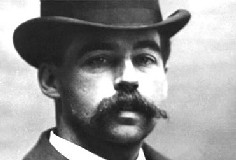
Herman Webster Mudgett
Serial killer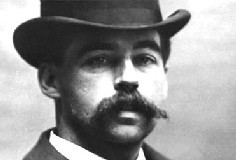 Herman Webster Mudgett
Serial killer · USA - Canada · 1886
Herman Webster Mudgett (May 16, 1861 – May 7, 1896), better known under the ali…
27 victims
Herman Webster Mudgett
Serial killer · USA - Canada · 1886
Herman Webster Mudgett (May 16, 1861 – May 7, 1896), better known under the ali…
27 victims
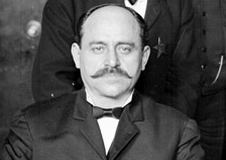 Johann Otto Hoch
Serial killer · USA · 1890
Johann Otto Hoch (1855 - 1906) was the most famous and last-used alias of a Ger…
15 victims
Johann Otto Hoch
Serial killer · USA · 1890
Johann Otto Hoch (1855 - 1906) was the most famous and last-used alias of a Ger…
15 victims
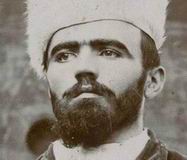 Joseph Vacher
Serial killer · France · 1894
Joseph Vacher (November 16, 1869 – December 31, 1898) was a French serial kille…
11 victims
Joseph Vacher
Serial killer · France · 1894
Joseph Vacher (November 16, 1869 – December 31, 1898) was a French serial kille…
11 victims
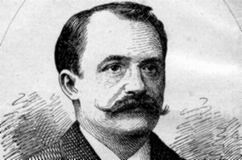 Hugo Schenk
Serial killer · Austria · 1883
Hugo Schenk was executed by hanging on April 22, 1884. · April 22, 1884 — Hugo…
6 victims
Hugo Schenk
Serial killer · Austria · 1883
Hugo Schenk was executed by hanging on April 22, 1884. · April 22, 1884 — Hugo…
6 victims
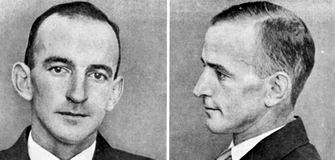 William Alfred Bayly
Murderer · New Zealand · 1933
William Alfred Bayly was executed by hanging in Mount Eden prison, Auckland, on…
2 victims
William Alfred Bayly
Murderer · New Zealand · 1933
William Alfred Bayly was executed by hanging in Mount Eden prison, Auckland, on…
2 victims
 David Stephen Middleton
Murderer · USA · 1994
David Stephen Middleton was a one-time Miami police officer who was sentenced t…
2 victims
David Stephen Middleton
Murderer · USA · 1994
David Stephen Middleton was a one-time Miami police officer who was sentenced t…
2 victims
 Donald Eugene Harding
Serial killer · USA · 1979
Donald Eugene Harding was convicted of the January 25, 1980 murders of Robert W…
7 victims
Donald Eugene Harding
Serial killer · USA · 1979
Donald Eugene Harding was convicted of the January 25, 1980 murders of Robert W…
7 victims
 Andrew Randall
Murderer · United Kingdom · 2005
Andrew Randall (born 1974) was a British murderer. He murdered his seven-week-o…
1 victim
Andrew Randall
Murderer · United Kingdom · 2005
Andrew Randall (born 1974) was a British murderer. He murdered his seven-week-o…
1 victim
 Gregory Scott Johnson
Murderer · USA · 1985
Gregory Scott Johnson was scheduled to be executed by lethal injection at the I…
1 victim
Gregory Scott Johnson
Murderer · USA · 1985
Gregory Scott Johnson was scheduled to be executed by lethal injection at the I…
1 victim
- Gender
- male
- Country
- USA - Canada
- Location
- Indiana/Pennsylvania/Illinois, USA - Canada
- Date of birth
- May 16, 1861
- Age at first offence
- 25
- Characteristics
- torture, to collect insurance money, history of mental illness
- Victim profile
- Men, women and children
- Method of murder
- Several
- Date(s) of murder
- 1886 - 1894
- Years active
- 1886–1894
- Date of arrest
- November 17, 1894
- Status
-
Executed
Executed by hanging at Moyamensing Prison, Philadelphia, on May 7, 1896
Case information
Herman Webster Mudgett (May 16, 1861 – May 7, 1896), better known under the alias “Dr. H. H. Holmes,” was an American serial killer.
Holmes was sometimes referred to as America’s first serial killer, with his crimes occurring after those of other offenders such as Thomas Neill Cream, the Austin Axe Murderer and the Bloody Benders.
Early life
Holmes was born in Gilmanton, New Hampshire. He was the son of Levi Horton Mudgett and his wife, formerly Theodate Page Price.
The family was descended from among the first settlers to the area. Holmes grew up with a father who was a strict disciplinarian, and he was often bullied as a child. He claimed that, as a child, he had been forced by other students to view and touch a human skeleton after they found out about his fear of the local doctor’s office.
Holmes graduated from the University of Michigan Medical School in 1884. While enrolled, he stole bodies from the school laboratory, disfiguring the corpses and claiming that the people had been accidentally killed. He collected insurance money from policies taken out on each one.
He earned a doctor’s degree from the University of Michigan.
Marriages and relationships
On 8 July 1878, Holmes married Clara A. Lovering of Alton, New Hampshire.
On 28 January 1887, he (bigamously) married Myrta Z. Belknap in Minneapolis, Minnesota; they had a daughter named Lucy.
He filed a petition for divorce from his first wife after marrying his second, but it never became final.
Holmes married his third wife, Georgiana Yoke, on 9 January 1894.
Holmes was also the lover of Julia Smythe, the wife of Ned Connor, one of his trusted associates. Julia later became one of his victims.
Background and criminal activity
Holmes managed to secure a Chicago pharmacy by defrauding the pharmacist, and built a block-long, three-story building on the lot across the street that he called “The Castle,” which he opened as a hotel for the 1893 World’s Fair.
The bottom floor of the Castle contained shops, the top housed his personal office, and the middle floor consisted of a maze of over one hundred windowless rooms. Over a period of three years, Holmes selected female victims from among his hotel guests and tortured them in soundproof and escapeproof chambers fitted with gas lines that permitted Mudgett to asphyxiate the women at any time.
Holmes repeatedly changed builders to ensure that no one understood the design well enough to report it to the police. Once dead, the victims’ bodies went by chute to the basement, where they were either sold to medical schools or cremated and placed in lime pits for destruction.
Holmes had two giant furnaces and pits of acid, bottles of various poisons, and a stretching rack.
He performed hundreds of illegal abortions in a remote room in the Castle. Some of his patients died as a result of his abortion procedures, and their corpses were processed and the skeletons sold.
Following the World’s Fair, Holmes left Chicago and apparently murdered people as he traveled around the country.
Victims and number of killings
Holmes trapped, tortured, and murdered possibly hundreds of guests at the Chicago hotel.
The number of Holmes’ victims has typically been estimated between 20 and 100, and even as high as 200. Victims were primarily women, but included some men and children.
Holmes was put on trial for murder, confessed to 27 murders (in Chicago, Indianapolis and Toronto) and six attempted murders, and was held responsible in court for the murders of Pitezel and his children.
Investigation and capture
Holmes was arrested in 1895 when he was discovered with the body of a former business associate, Benjamin Pitezel, and three of his children.
In the same year, Holmes’s “castle” in Chicago burnt down on August 19, revealing the carnage to police and firemen.
After the World’s Fair, detectives began investigating his operations in Philadelphia and his role in the Pitezel situation, especially regarding the three missing children.
Philadelphia detective Frank Geyer was given the task of finding out what had happened to the three missing children, and his quest received wide publicity.
Trial
While Holmes sat in prison in Philadelphia, Chicago and Philadelphia police investigated his operations. He was put on trial for the murder of Pitezel and confessed, following his conviction, to 27 murders in Chicago, Indianapolis and Toronto, and six attempted murders.
Holmes was paid $7,500 by the Hearst Papers in exchange for this confession.
Holmes gave various contradictory accounts of his life, initially claiming innocence, and later that he was possessed by Satan.
During the trial, Holmes was described as discharged his attorneys and attempted to conduct his own defense. The jury deliberated for just two and half hours before returning a guilty verdict.
Holmes was sentenced to death for the murders of Pitezel and his children. The Supreme Court denied Holmes’ petition for a new trial, and the Pennsylvania Supreme Court affirmed the verdict.
Execution
On May 7, 1896, Holmes was hanged at Moyamensing Prison, also known as the Philadelphia County Prison.
He requested that he be buried in concrete so that no one could ever dig him up and dissect his body, as he had dissected so many others. This request was granted.
It was reported that when the executioner had finished all the preliminaries of the hanging, he asked, "Ready, Dr. Holmes?", to which Holmes said, "Yes. Don't bungle."
The executioner “bungle[d],” because Holmes’ neck did not snap immediately. He died slowly and painfully of strangulation over about 15 minutes. He was pronounced dead after the trap was sprung.
After the execution, Holmes denied he had killed Pitezel or his children when he began to speak as he stood on the gallows.
Aftermath
Marion Hedgepeth, who had been pardoned for informing on Holmes, was shot and killed by a police officer during a hold up at a Chicago saloon on New Year’s Eve in 1910.
On March 7, 1914, a story in the Chicago Tribune reported the death of the former caretaker of the Murder Castle, Pat Quinlan. Quinlan had committed suicide by taking strychnine, and the paper reported that his death meant “the mysteries of Holmes’ Castle” would remain unexplained. Quinlan’s surviving relatives claimed Quinlan had been “haunted” for several months before his death and that he could not sleep.
Detective Frank Geyer, in The Holmes-Pitezel Case, used an unattributed quote to end the chapter on the discovery of Howard Pitezel’s body: “Truth, like the sun, submits to be obscured but like the sun, only for a time.”
Other details
Holmes was described as sometimes keeping calm and amiable until the moment of his death, with very few signs of fear, anxiety or depression.
Holmes was described as having a history of mental illness in the context of his portrayal as “mentally ill” and “history of mental illness,” and as being a serial killer.
Holmes’ execution was associated with coverage describing the crowd as surging to and fro and making coarse jests.
Holmes’ burial location was later described as Holy Cross Cemetery in Yeadon, with his body placed in cement as part of his burial instructions. His grave was described as without a headstone and marked by anonymity.
Holmes’ coffin was described as being lowered into the ground and covered with cement.
Timeline
- May 16, 1861 — Herman Webster Mudgett was born in Gilmanton, New Hampshire.
- May 7, 1896 — Holmes was hanged at Moyamensing Prison, Philadelphia.
- 8 July 1878 — Holmes married Clara A.
- 28 January 1887 — Holmes married Myrta Z. Belknap in Minneapolis, Minnesota.
- 9 January 1894 — Holmes married Georgiana Yoke.
- 1895 — Holmes was arrested after being discovered with the body of Benjamin Pitezel and three children.
- August 19, 1895 — The Castle in Chicago burnt down.
- May 7, 1896 — The execution at Moyamensing Prison occurred.

Spotted an error, or have more information about this case?