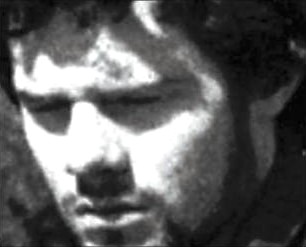
Gregory Beaver
Murderer Brian Kevin Rosenfeld
Murderer · USA · 1985
Brian Kevin Rosenfeld Brian Kevin Rosenfeld was sentenced to three concurrent l…
23 victims
Brian Kevin Rosenfeld
Murderer · USA · 1985
Brian Kevin Rosenfeld Brian Kevin Rosenfeld was sentenced to three concurrent l…
23 victims
 Marvin Gray
Murderer · USA · 1975
Marvin Gray was convicted killer who claimed responsibility for 23 slayings and…
23 victims
Marvin Gray
Murderer · USA · 1975
Marvin Gray was convicted killer who claimed responsibility for 23 slayings and…
23 victims
 Yahweh ben Yahweh
Murderer · USA · 1980
Yahweh ben Yahweh was born and legally named Hulon Mitchell Jr. (October 27, 19…
23 victims
Yahweh ben Yahweh
Murderer · USA · 1980
Yahweh ben Yahweh was born and legally named Hulon Mitchell Jr. (October 27, 19…
23 victims
 Russell Ellwood
Murderer · USA · 1991
Russell Ellwood was a former taxi driver. Authorities suspected him of killing…
20 victims
Russell Ellwood
Murderer · USA · 1991
Russell Ellwood was a former taxi driver. Authorities suspected him of killing…
20 victims
 Robert Madden
Murderer · USA · 1985
Robert Anthony Madden (born Sept. 9, 1963); executed as Robert Madden #822 at a…
2 victims
Robert Madden
Murderer · USA · 1985
Robert Anthony Madden (born Sept. 9, 1963); executed as Robert Madden #822 at a…
2 victims
 Sergey Gordeyev
Homicide · Russia · 2014
Sergey Gordeyev (also spelled as Sergei Gordeev; Russian: Сергей Гордеев) was a…
2 victims
Sergey Gordeyev
Homicide · Russia · 2014
Sergey Gordeyev (also spelled as Sergei Gordeev; Russian: Сергей Гордеев) was a…
2 victims
 Dedrick Owens
Homicide · USA · 2000
Perpetrator: Dedrick Owens (born in 1993), a 6-year-old first grader. · Victim:…
1 victim
Dedrick Owens
Homicide · USA · 2000
Perpetrator: Dedrick Owens (born in 1993), a 6-year-old first grader. · Victim:…
1 victim
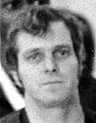 Ellis Wayne Felker
Murderer ? · USA · 1981
Ellis Wayne Felker (c. 1948 – November 15, 1996) was convicted of murder and re…
1 victim
Ellis Wayne Felker
Murderer ? · USA · 1981
Ellis Wayne Felker (c. 1948 – November 15, 1996) was convicted of murder and re…
1 victim
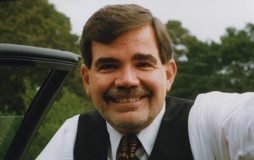 Michael Nicholaou
Murderer · USA · 2005
Michael Nicholaou (56) was Aileen Nicholaou’s husband. · Aileen Nicholaou (47)…
2 victims
Michael Nicholaou
Murderer · USA · 2005
Michael Nicholaou (56) was Aileen Nicholaou’s husband. · Aileen Nicholaou (47)…
2 victims
- Gender
- male
- Country
- USA
- Location
- Prince George County, Virginia, USA
- Date of birth
- 1966
- Age at first offence
- 19
- Characteristics
- to avoid arrest, rape
- Victim profile
- Leo Whitt, 49 (Virginia State Trooper)
- Method of murder
- Shooting
- Date(s) of murder
- April 12, 1985
- Years active
- 1985
- Date of arrest
- Same day
- Status
-
Executed
Executed by lethal injection in Virginia on December 3, 1996
Case overview
Gregory Warren Beaver was a 30-year-old man who was executed by lethal injection in Virginia for the capital murder of Virginia State Trooper Leo Whitt.
Timeline
- April 12, 1985 — Beaver shot and killed Trooper Leo Whitt during a traffic stop on Interstate 95 in Prince George County.
- July 8, 1985 — The case came to trial and a jury was selected.
- July 9, 1985 — Beaver changed his plea to guilty on both charges.
- September 16, 1985 — The sentencing hearing continued and the trial court found beyond a reasonable doubt that there was a probability Beaver would commit criminal acts of violence that would constitute a continuance [sp] and serious threat to society.
- 1986 — Thomas O. Rainey III was appointed Dinwiddie County's chief prosecutor.
- March 3, 1994 — Beaver filed a petition for a writ of habeas corpus in the United States District Court for the Eastern District of Virginia.
- August 22, 1996 — The United States Court of Appeals for the Fourth Circuit decided the appeal (No. 95-4003), affirming the denial of habeas relief.
- September 30, 1996 — The Fourth Circuit stayed its mandate for 30 days to expire on October 30, 1996, “in order that ... [Beaver] may file his petition for certiorari in the Supreme Court.”
- October 30, 1996 — Beaver filed a motion to extend the stay of the mandate and for a stay of execution.
- November 12, 1996 — The Fourth Circuit entered an amended order extending the stay of its mandate until November 29, 1996, and denying a stay of execution.
- December 3, 1996 — Beaver was executed by lethal injection in Virginia.
The offence
On April 12, 1985, Beaver shot and killed Trooper Leo Whitt of the Virginia State Police during a traffic stop on Interstate 95 in Prince George County.
A hitchhiker riding in the car with Beaver testified that Trooper Whitt requested Beaver’s license and registration. Beaver instructed the hitchhiker to look in the glove compartment for the documents. Trooper Whitt moved to the front of the car and appeared to write down the number of a license plate displayed in the front windshield. When the officer returned to the driver’s side window, the hitchhiker informed Beaver that he could not find the license or registration. Beaver raised a gun and shot Trooper Whitt once, and then as the trooper struggled for his own gun, Beaver shot him a second time, causing the officer to fall to the ground.
Beaver drove away and continued north on Interstate 95 until he exited onto a side road. He stopped at a fast food restaurant near Richmond to change the license tags. He followed the hitchhiker into the restaurant and went into the restroom. Pretending to place an order, the hitchhiker told a restaurant employee to call the police because the man he was with had shot a state trooper.
Investigation and charges
Beaver was charged and convicted of capital murder for the willful, deliberate, and premeditated killing of a law enforcement officer for the purpose of interfering with his official duties, and the use of a firearm in commission of a felony in violation of Va. Code §§ 18.2-31(f) and 53.1.
Trial
The trial came to trial on July 8, 1985, and a jury was selected.
On July 9, 1985, Beaver changed his plea to guilty on both charges according to a written plea agreement.
The sentencing hearing began on July 9, 1985 and continued on September 16, 1985. The trial court found beyond a reasonable doubt that there was “a probability that Beaver would commit criminal acts of violence that would constitute a continuance [sp] and serious threat to society.” The court relied on Va. Code § 19.2-264.2.
Beaver was sentenced to death for capital murder.
Plea agreement
The plea agreement contained the following passage that was at issue on appeal: “The Commonwealth agrees not to argue sentence. The Commonwealth agrees to submit the issue of sentence to the court without comment.”
In the record, Beaver acknowledged:
- “Do you understand that in exchange for your plea of guilty, the Commonwealth, through the Commonwealth's Attorney, agrees simply not to argue the issue of sentence and that the Commonwealth agrees to submit the issue of appropriate sentence to the court without argument or comment. That is the sum total of the Commonwealth's obligation to you under the terms of the negotiated plea agreement?”
- “Yes, Sir.”
Beaver also acknowledged:
- “Under the second indictment to which you have plead [sp] guilty, that is the capital murder of a police officer for the purpose of interfering with the performance of his official duties, under that indictment, if the court finds you guilty under your plea or guilty and upon the evidence that the two permissible sentences are, one, death, and two, life in the penitentiary?”
- “Yes, sir.”
People
Defendant
- Gregory Warren Beaver — Defendant; 30-year-old. He was convicted of capital murder for the willful, deliberate, and premeditated killing of a law enforcement officer and sentenced to death.
Victim
- Leo Whitt — Trooper, Virginia State Police; shot and killed during a traffic stop on Interstate 95 in Prince George County.
Counsel and lawyers
- John Maclin, IV — Court-appointed representative for Beaver.
- T.O. Rainey, III — Appointed to assist Maclin; a part-time assistant prosecutor in neighboring Dinwiddie County.
- Thomas O. Rainey III — Named in a separate opinion. The record identified him as having been hired by the Commonwealth in 1978 as a part-time prosecuting attorney in Dinwiddie County and appointed chief prosecutor in 1986. (The separate opinion continued to refer to him as Rainey.)
Commonwealth’s personnel and experts
- Dr. Dimitris — Commonwealth’s expert witness at the sentencing hearing on future dangerousness; later quoted in the appellate opinion.
- Dr. Reddy — Psychiatric expert called for Beaver.
- Dr. Cornell — Forensic psychologist who testified on behalf of Beaver in the state habeas hearing.
- Craig S. Cooley — Attorney expert witness who testified for Beaver in the state habeas hearing.
- David Boone — Attorney expert witness who testified for Beaver in the state habeas hearing.
- David Rosenberg — Expert on legal ethics who would have been called to testify about Rainey’s employment as a part-time Commonwealth’s attorney being a breach of legal ethics; the state court did not permit that testimony.
- Dr. Lee — Clinical psychologist who testified for the Commonwealth at the sentencing hearing.
Family and other witnesses
- Sandy Beaver — Beaver’s father; called as a witness at the state habeas hearing.
- May Lowers — Beaver’s mother.
- Beaver’s grandmother — Called as a witness at the state habeas hearing.
- Beaver’s uncle — Called as a witness at the state habeas hearing.
- Beaver’s ex-wife — Called as a witness at the state habeas hearing.
- Beaver’s half-sister — Called as a witness at the state habeas hearing.
- Jimmy Compher — Beaver’s stepfather, referred to in the appellate discussion.
- The hitchhiker — Testified at trial about Trooper Whitt requesting license and registration and about Beaver shooting.
Sentencing
The trial court sentenced Beaver to death for capital murder after a sentencing hearing starting on July 9, 1985 and continuing on September 16, 1985.
Habeas corpus and appeals
State habeas proceedings
After his guilty plea and sentencing, Beaver filed a petition for a writ of habeas corpus in the Circuit Court of Prince George County.
That court found:
- “the record of the trial proceedings conclusively established that the plea was voluntarily and intelligently made with a full understanding of the consequences of the plea”
- and “habeas relief should be denied under the rule of Anderson v. Warden, 281 S.E.2d 885 (Va. 1981).”
The court also found a claim that the Commonwealth breached the plea agreement was barred because Beaver had not raised it at trial or on direct appeal.
In all, the state court denied or dismissed ten of Beaver’s twelve claims and scheduled an evidentiary hearing to address remaining claims of ineffective assistance of counsel and conflict of interest.
A two-day evidentiary hearing was held on May 23, 1991, and September 11, 1991. After that hearing, the court adopted the Commonwealth’s proposed factual findings and denied the claims. The state court’s denial was recorded as Sept. 10, 1992.
Beaver appealed to the Supreme Court of Virginia, which affirmed. The United States Supreme Court denied certiorari.
Federal habeas proceedings
Having exhausted state remedies, Beaver filed a petition for a writ of habeas corpus in the United States District Court for the Eastern District of Virginia on March 3, 1994.
The district court:
- denied Beaver’s request for an evidentiary hearing,
- dismissed the habeas claims,
- and denied his motion for reconsideration.
The district court decisions were recorded as Nov. 25, 1994 and Jan. 13, 1995.
Beaver then appealed to the Fourth Circuit (No. 95-4003).
Fourth Circuit decision
The Fourth Circuit opinion was argued on September 27, 1995, and decided on August 22, 1996, affirming.
Beaver raised five issues on appeal:
- He was deprived of a constitutional right to an attorney free from disqualifying conflict of interest.
- His guilty plea was not knowingly and voluntarily made and resulted from ineffective assistance of counsel.
- His counsel were ineffective in failing to investigate and present vital evidence about his background and in handling psychiatric evidence.
- The district court erred in failing to hold an evidentiary hearing.
- Virginia’s capital murder statute was unconstitutional.
The Fourth Circuit affirmed denial of habeas relief, and the panel held the state habeas hearing was full and fair, that the capital murder statute claim lacked merit, that Beaver failed to show a conflict of interest, and that ineffective assistance and plea validity claims failed.
Other legal issues discussed in the opinion
Evidentiary hearing denial
The Fourth Circuit addressed Beaver’s request for another evidentiary hearing and discussed standards drawn from Townsend v. Sain and related cases, including Keeney v. Tamayo-Reyes. The court held Beaver did not establish entitlement to an evidentiary hearing under the described framework and found no fundamental error in evidentiary rulings during the state habeas proceedings.
Capital murder statute
Beaver argued Virginia’s capital murder statute was unconstitutionally vague due to alleged conflicts between Va. Code § 19.2-264.2 and § 19.2-264.4. The Fourth Circuit stated the argument had been rejected by the Virginia Supreme Court in LeVasseur v. Commonwealth and declined to reconsider, stating the claim was without merit.
Conflict of interest analysis
The Fourth Circuit required convincing evidence of an actual conflict and resulting adverse effect on performance and held Beaver failed to show a conflict of interest in Rainey’s representation.
The court also rejected Beaver’s argument that Rainey’s part-time Commonwealth role required a per se rule based on Goodson v. Peyton, concluding the circumstances did not establish such a per se conflict rule.
Quotes and verbatim statements preserved
Plea agreement passage
Trial-court findings during sentencing
“a probability that Beaver would commit criminal acts of violence that would constitute a continuance [sp] and serious threat to society.”
Court-appointed counsel testimony excerpt
On questioning at the habeas hearing, Maclin testified:
“It would have to be either presenting evidence or cross-examination.”
“Something to that effect.”
“I more than likely said, ‘Yes, it's pursuant to our agreement.’ Nothing more was said of the event until the matter of ineffective counsel was raised after the trial.”
Record exchange at the time of the guilty plea
“Do you understand that in exchange for your plea of guilty, the Commonwealth, through the Commonwealth's Attorney, agrees simply not to argue the issue of sentence and that the Commonwealth agrees to submit the issue of appropriate sentence to the court without argument or comment. That is the sum total of the Commonwealth's obligation to you under the terms of the negotiated plea agreement?”
“Yes, Sir.”
Dr. Dimitris quoted testimony
Dr. Dimitris stated:
“my opinion cannot be raised to the point of having medical certainty, so far in giving me insights, but not the basis to quote an opinion with reasonable medical certainty.”
He also replied regarding the likelihood of future criminal conduct:
“it was his impression that Mr. Beaver had not profited from his experiences in the Second Genesis program.”
Outcome
The Fourth Circuit affirmed the district court’s denial of habeas relief.
Execution-related appellate orders
On November 12, 1996, the Fourth Circuit entered an amended order concerning Beaver’s scheduled execution.
It stated:
- A stay of the mandate was extended until November 29, 1996, on which date the mandate would issue.
- Beaver’s motion to stay the execution, which had been set for December 3, 1996, was denied.
Judge Widener’s opinion and the concurrences/dissents were filed in connection with the amended order. The opinions also addressed disagreement regarding whether a stay of execution should issue pending certiorari.
Aftermath
Beaver’s execution proceeded, and he was executed by lethal injection in Virginia on December 3, 1996.
Spotted an error, or have more information about this case?