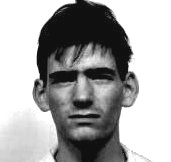
Robert Madden
Murderer Brian Kevin Rosenfeld
Murderer · USA · 1985
Brian Kevin Rosenfeld Brian Kevin Rosenfeld was sentenced to three concurrent l…
23 victims
Brian Kevin Rosenfeld
Murderer · USA · 1985
Brian Kevin Rosenfeld Brian Kevin Rosenfeld was sentenced to three concurrent l…
23 victims
 Marvin Gray
Murderer · USA · 1975
Marvin Gray was convicted killer who claimed responsibility for 23 slayings and…
23 victims
Marvin Gray
Murderer · USA · 1975
Marvin Gray was convicted killer who claimed responsibility for 23 slayings and…
23 victims
 Yahweh ben Yahweh
Murderer · USA · 1980
Yahweh ben Yahweh was born and legally named Hulon Mitchell Jr. (October 27, 19…
23 victims
Yahweh ben Yahweh
Murderer · USA · 1980
Yahweh ben Yahweh was born and legally named Hulon Mitchell Jr. (October 27, 19…
23 victims
 Russell Ellwood
Murderer · USA · 1991
Russell Ellwood was a former taxi driver. Authorities suspected him of killing…
20 victims
Russell Ellwood
Murderer · USA · 1991
Russell Ellwood was a former taxi driver. Authorities suspected him of killing…
20 victims
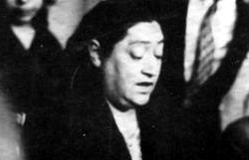 Felicitas Sanchez Aguillon
Serial killer · Mexico · 1930
Felícitas Sánchez Aguillón or Sánchez Neyra (1890 - June 16, 1941) was a Mexica…
50 victims
Felicitas Sanchez Aguillon
Serial killer · Mexico · 1930
Felícitas Sánchez Aguillón or Sánchez Neyra (1890 - June 16, 1941) was a Mexica…
50 victims
 Melissa Bates
Murderer · USA · 2011
Melissa R. Bates was 28 years old when she was sentenced. She entered an Alford…
1 victim
Melissa Bates
Murderer · USA · 2011
Melissa R. Bates was 28 years old when she was sentenced. She entered an Alford…
1 victim
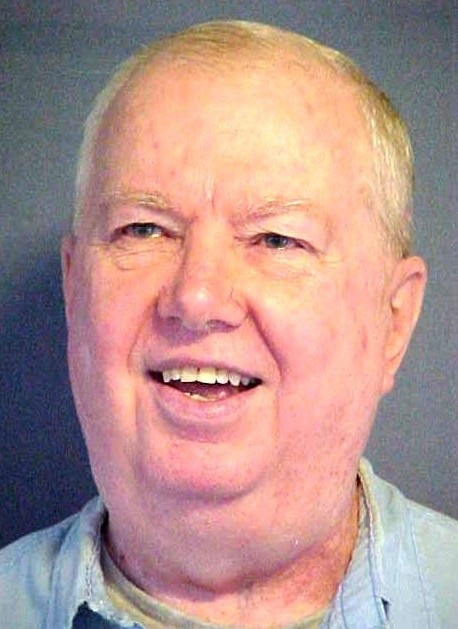 John Albert Boltz
Murderer · USA · 1984
Name: John Albert Boltz · Status/Outcome: Executed by lethal injection in Oklah…
1 victim
John Albert Boltz
Murderer · USA · 1984
Name: John Albert Boltz · Status/Outcome: Executed by lethal injection in Oklah…
1 victim
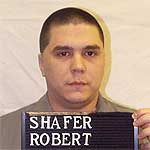 Robert Andrew Shafer
Murderer · USA · 1990
Robert Andrew Shafer was sentenced to death on January 6, 1993. His conviction…
2 victims
Robert Andrew Shafer
Murderer · USA · 1990
Robert Andrew Shafer was sentenced to death on January 6, 1993. His conviction…
2 victims
- Gender
- male
- Country
- USA
- Location
- Leon County, Texas, USA
- Date of birth
- September 9, 1963
- Age at first offence
- 22
- Characteristics
- robbery, drugs
- Victim profile
- Herbert Elvin Megason, 56, and his son Gary Lynn Megason, 21
- Method of murder
- Shooting - St abbing with knife
- Date(s) of murder
- September 15, 1985
- Years active
- 1985
- Date of arrest
- —
- Status
-
Executed
Executed by lethal injection in Texas on May 28, 1997
Offender
- Robert Anthony Madden (born Sept. 9, 1963); executed as Robert Madden #822 at age 33.
- Madden was described as the Founder of a drug rehabilitation center.
- Madden spent years in and out of trouble with the law and had a long history of drugs, including time in and out of prison and parole.
The offence
Madden was convicted of the murder of Herbert Megason and the sentencing record included special issues put to the jury.
Victims and injuries
- Herbert Megason (age 56) was found with two gunshot-chest wounds.
- Gary Lynn Megason (age 21) was found with a cut to the throat and numerous gun and knife wounds.
- The bodies were hidden in a creek on the victims’ weekend place; both men’s feet were bound, as were Gary’s hands.
- The elder Megason’s body was hidden with the younger Megason’s body, which had been shot in the back with a shotgun and had been slashed; both bodies were covered with logs and brush.
Weapons and evidentiary items
- Herbert Megason had been shot with a .22 caliber pistol.
- Gary Lynn Megason had been shot with a shotgun, with his throat slashed and defense wounds from a knife on his hands and forearm.
- Evidence included Madden’s possession of murder weapons: a .22 pistol, a .22 Winchester rifle, and a bloodstained knife.
- Madden attempted to sell the murder weapons to a new acquaintance, Donald Jeffries.
Robbery and related theft
Before killing the Megasons, Madden robbed a nearby home. After the killings, Madden took the elder Megason’s pick-up truck, guns, and credit cards.
Madden was apprehended after signing his own name to the victims’ Texaco credit card.
Madden also admitted to Donald Jeffries that he had stolen the Megasons’ truck and had in his possession various items belonging to Megason, including a tool box and a watch.
Madden’s behavior during the retreat included using Megason’s Exxon and Texaco cards multiple times; it was stated that during Madden’s retreat to New Mexico, he used the cards many times, and he signed his own name to the receipts. He told police he signed his own name because he did not want to be charged with forgery.
Investigation
- Officer Gerry Rosier, then deputy sheriff, said that during Madden’s retreat to New Mexico, Madden used Megason’s Exxon and Texaco cards many times.
- David Barron, assistant district attorney at the time, said: “This became the most substantial evidence to convict Madden.”
- Madden showed police where and how the incident occurred on Oct. 14, 1985.
- It was stated that the confession was not written nor recorded, so the evidence would not be permissible in court.
Arrest and pretrial events
- Madden was arrested in Angel Fire, New Mexico on Oct. 7, 1985.
- Madden was indicted on Oct. 18, 1985.
- William F. Carter was the court-appointed defense attorney and tried to plea bargain.
- Pamela Megason-Calhoun said: “Basically the grounds were because it would cost the city, county, state, whatever, too much money.”
- Pamela Megason-Calhoun also said: “It’s a small town.”
Trial
Jury special issues and verdict
At the punishment phase, the judge submitted two special issues to the jury:
- “was the conduct of the defendant that caused the death of the deceased committed deliberately and with the reasonable expectation that the death of the deceased would result?”
- “is there a probability that the defendant would commit criminal acts of violence that would constitute a continuing threat to society?”
The jury answered both questions in the affirmative; accordingly, the judge sentenced Madden to death.
Appellate review of verdict and sentence
- Madden’s conviction was appealed automatically to the Texas Court of Criminal Appeals, which affirmed both the verdict and the sentence.
- After this affirmance and denial of certiorari by the U.S. Supreme Court, Madden sought a writ of habeas corpus.
Trial demeanor and prosecutor comments
During the trial Madden was described as passive:
- Latham Boone, district attorney, said: “He was attentive. He smiled a lot, which seemed to be inappropriate.”
It was also stated that Madden’s uncle preached a sermon on mercy at Boone’s church after the conviction.
Prosecutor’s statements and failure to testify issue
During the guilt-innocence phase, the appellate decision quoted the prosecutor’s statement:
Then, also, the defense will argue that why in the world would someone who killed, murdered two people and stole this credit card sign their own name to the Texaco card? I don't know that; you don't know why. There's only one person here that knows why, and there's only one person here that knows the answer to all of these questions.
The Texas Court of Criminal Appeals held that the passage represented an impermissible reference to Madden’s failure to testify, but concluded that the reference was harmless beyond a reasonable doubt. The federal appellate court agreed the statement was an impermissible comment on Madden’s failure to testify and held the error was harmless beyond a reasonable doubt because of other evidence, including possession of all three murder weapons, and because the statement was in anticipation of the defense argument about signing his own name.
Sentencing
- Madden was sentenced to death on Feb. 26, 1986.
- Following sentencing, it was stated there was only one stay of execution and that Madden went through seven years of appeals.
Last meal request and denial
On May 28, 1997, it was stated that Madden asked that his last meal be provided to a homeless person, but this was denied by state officials.
Appeals
Federal habeas corpus petition (Fifth Circuit)
The case was described in a U.S. Court of Appeals decision:
- Robert MADDEN, Petitioner-Appellant, v. James A. COLLINS, Director, Texas Department of Criminal Justice, Institutional Division, Respondent-Appellee.
- No. 92-8575
- United States Court of Appeals, Fifth Circuit
- March 29, 1994. Rehearing Denied April 28, 1994.
- Appeal from the United States District Court for the Western District of Texas.
- The appellate panel included JONES, DUHE, and WIENER, Circuit Judges, with WIENER, Circuit Judge writing.
Outcome of the habeas appeal:
- “We conclude that Madden's evidence does not fall within the ambit of Penry and thus he was not entitled to additional jury instructions.”
- “Similarly, we find no merit in Madden's contentions that various comments by the prosecutor deprived him of a fair trial.”
- “Accordingly, we affirm the denial of his habeas petition.”
Penry claim details
Madden challenged the constitutionality of the Texas special issues as applied to him, including claims that the questions failed to give effect to mitigating evidence of:
- mental illness
- dyslexia
- substance abuse
The federal decision addressed:
Personality disorder
- At the punishment phase, clinical psychologist Dr. Jim Whitley testified that Madden suffers from a personality avoidance disorder described as a “clinical mental illness” that impairs Madden’s ability “to think and react in a logical manner.”
- The testimony described the personality disorder as impairing Madden’s ability to interact with others and form relationships, causing him to run from conflict.
- The decision quoted that testimony established that a person with a personality avoidance disorder was generally not violent.
- The decision stated the disorder did not prevent Madden from understanding the wrongfulness of his actions.
- The decision stated Dr. Whitley concluded that the combined effects of the personality disorder and long term drug abuse had caused Madden to suffer diminished capacity, described as “a deterioration or distortion of one's ability to make logical and rational decisions.”
- The federal decision concluded: “we conclude that there is insubstantial evidence that Madden's criminal actions are attributable to his anti-social personality. Thus, the state court did not err by refusing to give additional instructions.”
Learning disability
- The federal decision stated: “Madden's learning disability does not fall within the ambit of Penry.”
- It included discussion that dyslexia was not “uniquely severe” enough to rise to the level of a Penry claim.
Troubled childhood
- The federal decision included details that Madden presented evidence of a troubled childhood, including abuse while an infant.
- It stated: Madden’s father left his mother when Madden was two and subsequently remarried; Madden’s step-father adopted him when the boy was five; there was no allegation that the adoptive father abused Madden; and there was evidence the adoptive father was a very concerned parent.
- The federal decision stated Dr. Whitley linked Madden’s personality disorder to childhood but that the personality disorder was not causally linked to the criminal act; it concluded Madden failed to produce substantial evidence that his childhood abuse had psychological effects attributable to the criminal act.
- The federal decision concluded Madden’s reliance on his personality disorder, learning disability, and troubled childhood as mitigation was misplaced.
Prosecutor statements related to mitigating evidence
- Madden argued the jury could not consider mitigating evidence due to failure to define “deliberately” and due to prosecutor suggestion about not determining whether Madden lived or died.
- The federal decision stated these arguments were moot because it found the mitigating evidence irrelevant.
- The federal decision also stated the word “deliberately” is clear to the average juror and needs no additional definition.
Failure to testify issue
- The federal decision agreed the prosecutor’s statement was an impermissible comment on Madden’s failure to testify.
- It also held the error was harmless beyond a reasonable doubt.
Parole instruction and equal protection arguments
Madden challenged:
- the court’s failure to instruct the jury as to parole consequences after the possibility of parole was raised by the prosecutor
- the trial court’s instructions that the jury was not to consider or discuss possibility of parole or the length of time required for life imprisonment
- an equal protection argument comparing capital and non-capital cases regarding parole instruction
The federal decision quoted the prosecutor’s statement about future dangerousness:
[The second special issue] talks of acts of violence, not murder. They can be assaults; they can be anything, but he is a ticking timebomb. And if we don't take him off the streets permanently by answering these questions yes, who will be next in that path? ... And what we must do here is protect ourselves and our families from people like Robert Madden.
The federal decision stated it could not agree that the statements or instructions created a special hazard and declined to interpret “off the streets permanently” as a veiled reference to parole release.
Aftermath
Robert Madden’s last statement and death
- Madden asked for his last meal to be provided to a homeless person, but officials denied the request on May 28, 1997.
- Madden’s last statement included:
I apologize for your loss and your pain, but I didn’t kill those people. Hopefully we will all learn something about ourselves and about each other and we will learn enough to stop the cycle of hate and vengeance and come to value what is really going on in this world. We can’t look back. I forgive everyone for this process, which seems to be wrong. We all end up doing experiences which we create. That is all I have to say about that. ( There were some unintelligible sentences.)
- It was stated he was pronounced dead at 6:42 p.m. in Huntsville, Texas.
- “Sixteen minutes after leaving the holding cell” Madden was pronounced dead.
Additional statements by named individuals
- Robert Madden was reported to have told Barron after the trial: “Thank you David and shook my hand,” and Barron said: “Robert’s mind was pretty messed up from a long history of drugs.”
Timeline
- Aug. 1985 — Bearden hired Madden at his printing company in Killeen, Texas.
- Sept. 12, 1985 — Madden stole the company car, drove to Marquez, Texas, and left the vehicle in a dry creek bed on the lease due to a flat tire.
- Sept. 15, 1985 — Madden encountered Herbert Elvin Megason (56) and Gary Lynn Megason (21) at their weekend home.
- Oct. 7, 1985 — Madden was arrested in Angel Fire, New Mexico.
- Oct. 14, 1985 — Madden showed police where and how the incident occurred.
- Oct. 18, 1985 — Madden was indicted.
- Feb. 26, 1986 — Madden was sentenced to death.
- March 29, 1994 — Fifth Circuit decision dated.
- April 28, 1994 — Rehearing denied.
- May 28, 1997 — Madden was executed by lethal injection in Texas; he asked that his last meal be provided to a homeless person, but it was denied; he was pronounced dead at 6:42 p.m. in Huntsville, Texas.
Other details
People connected to Madden
- Bob Bearden became Madden’s counselor at a third treatment center; Bearden was described as hiring Madden after trusting his recovery.
- Bearden characterized Madden: “He was kind of like a scared animal.” and “He was a disturbed person.”
- Bearden said no weapons were allowed at the center, but Madden carried a hunting knife:
- “He always had a knife,”
- “Just like Davy Crocket.”
- Bearden said Madden used the knife to skin animals he caught and that Madden was a loner:
- “He was quite a loner; however, Madden never committed any crimes at Christian Farms,”
- David Barron was an assistant district attorney at the time and was quoted on the substantial evidence:
- “This became the most substantial evidence to convict Madden,”
- “Madden said, Thank you David and shook my hand,”
- and Barron said: “Robert’s mind was pretty messed up from a long history of drugs.”
- Donald Jeffries was described as a new acquaintance to whom Madden attempted to sell the murder weapons.
- Pamela Megason-Calhoun was described as the daughter and sister of the victims, and she provided quotes about plea bargaining and sentencing concerns:
- “Basically the grounds were because it would cost the city, county, state, whatever, too much money,”
- “It’s a small town.”
- and: “We felt pretty confident the whole way. We were more concerned whether or not Madden would be sentenced to death because there had not been a capital murder case since the ‘30s in Leon County,” Megason-Calhoun said.
- Latham Boone provided quotes about Madden’s demeanor and referenced the prosecutor’s statements:
- “He was attentive.
- William F. Carter attempted to plea bargain.
- Dr. Jim Whitley examined Madden twice and testified about personality avoidance disorder and diminished capacity.
- James A. Collins was the respondent-appellee in the federal habeas case.
Prison, parole, and treatment background
- Madden began attending two different drug treatment centers at age 15.
- He spent years in prison and time on parole.
- He was sent by the state to his third treatment center, where Bearden became his counselor.
- No weapons were allowed at the center, but Madden carried a hunting knife and used it to skin animals he caught.
- It was described that Bob Bearden became confident Madden had been fully recovered until Madden went back to his old ways only months after completing his program.
- After trial, Madden spoke to Barron as described in the section above, and it was stated that Madden’s mind was affected by his drug history.
Data points mentioned in the federal decision
- The federal decision included citations and discussion of:
- Penry v. Lynaugh
- “individualized sentencing determination”
- juror consideration of mitigating factors through Texas special issues
- standards of review in federal habeas corpus proceedings, including de novo review for issues of law
- harmless error standards under Chapman v. California
- It concluded: “For the foregoing reasons, the district court's denial of the petition for writ of habeas corpus is AFFIRMED.”
Spotted an error, or have more information about this case?