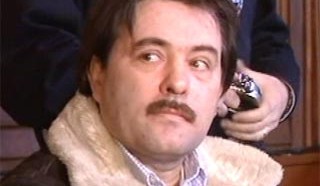
Jean-Pierre Roux-Durrafourt
Mass murderer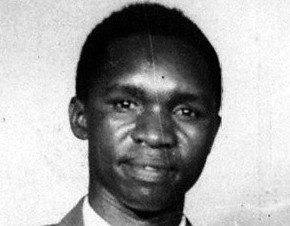 Joseph Kibweteere
Mass murderer · Uganda · 2000
Joseph Kibweteere led a breakaway sect known as the Movement for the Restoratio…
1000 victims
Joseph Kibweteere
Mass murderer · Uganda · 2000
Joseph Kibweteere led a breakaway sect known as the Movement for the Restoratio…
1000 victims
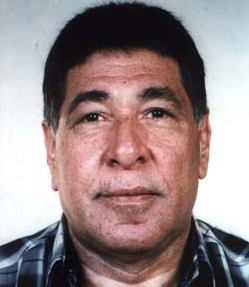 Gameel Al-Batouti
Mass murderer · USA · 1999
Gameel Al-Batouti (also rendered “Gamil ElBatouty” or “El Batouty” in U.S. offi…
216 victims
Gameel Al-Batouti
Mass murderer · USA · 1999
Gameel Al-Batouti (also rendered “Gamil ElBatouty” or “El Batouty” in U.S. offi…
216 victims
 Kim Dae-Han
Mass murderer · South Korea · 2003
Name: Kim Dae-Han · Age: 56 · Occupation/background: He was an unemployed forme…
198 victims
Kim Dae-Han
Mass murderer · South Korea · 2003
Name: Kim Dae-Han · Age: 56 · Occupation/background: He was an unemployed forme…
198 victims
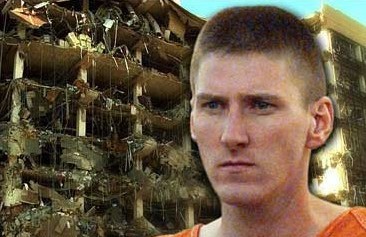 Timothy McVeigh
Mass murderer · USA · 1995
Timothy James McVeigh (April 23, 1968 – June 11, 2001) was a United States Army…
168 victims
Timothy McVeigh
Mass murderer · USA · 1995
Timothy James McVeigh (April 23, 1968 – June 11, 2001) was a United States Army…
168 victims
 Zhang Pilin
Mass murderer · China · 2002
Zhang Pilin (张丕林) died in the plane crash of China Northern Airlines Flight 613…
111 victims
Zhang Pilin
Mass murderer · China · 2002
Zhang Pilin (张丕林) died in the plane crash of China Northern Airlines Flight 613…
111 victims
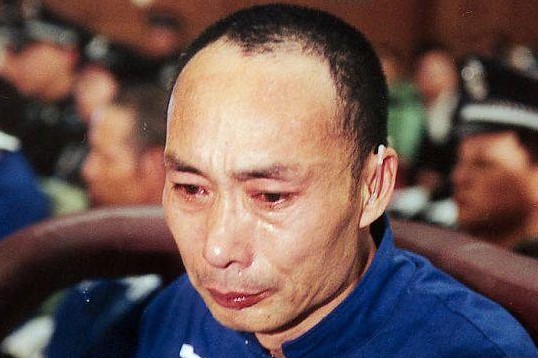 Jin Ruchao
Mass murderer · China · 2001
Jin Ruchao was blamed and arrested for planning and carrying out the Shijiazhua…
108 victims
Jin Ruchao
Mass murderer · China · 2001
Jin Ruchao was blamed and arrested for planning and carrying out the Shijiazhua…
108 victims
 Ramon Mercader
Murderer · Mexico · 1940
Ramon Mercader was a Spanish Communist who later worked as a Soviet agent. He m…
1 victim
Ramon Mercader
Murderer · Mexico · 1940
Ramon Mercader was a Spanish Communist who later worked as a Soviet agent. He m…
1 victim
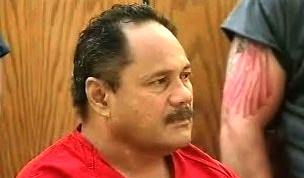 Alofa Time
Murderer · USA · 2006
Alofa Time was from Boise, Idaho. His wife was Theresa Lee Time, and his estran…
3 victims
Alofa Time
Murderer · USA · 2006
Alofa Time was from Boise, Idaho. His wife was Theresa Lee Time, and his estran…
3 victims
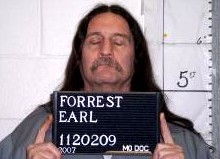 Earl Mitchell Forrest
Murderer · USA · 2002
Earl M. Forrest was drinking in December 2002 when he went to Harriet Smith's h…
3 victims
Earl Mitchell Forrest
Murderer · USA · 2002
Earl M. Forrest was drinking in December 2002 when he went to Harriet Smith's h…
3 victims
 Jacob Lee Davis
Murderer · USA · 1998
Jacob Lee Davis · May 19, 1998 — Robert "Nick" Creson was shot in a parking lot…
1 victim
Jacob Lee Davis
Murderer · USA · 1998
Jacob Lee Davis · May 19, 1998 — Robert "Nick" Creson was shot in a parking lot…
1 victim
- Gender
- male
- Country
- Franc e
- Location
- Tours, Franc e
- Date of birth
- 1957
- Age at first offence
- 44
- Characteristics
- disputes, alcohol, history of mental illness, motive unknown, fugitive
- Victim profile
- Henri Gasq, 48 / Cherif Tili, 59 / Gilles Lambert, 66 / Thierry Enguerand, 33
- Method of murder
- Shooting (.22 rifle)
- Date(s) of murder
- October 29, 2001
- Years active
- 2001
- Date of arrest
- Same day (wounded by police)
- Status
-
Life imprisonment
Sentenced to life in prison on March 29, 2005
Background
Jean-Pierre Roux-Durrafourt was a former soldier and had been in trouble several times during his military career. Dominique Schmitt, prefect of the department of Indre-et-Loire, said: “We've been faced with an act of madness.” Roux-Durrafourt was described as “a depressive, a very fragile individual” by Schmitt. Some reports said Roux-Durrafourt had a grudge against his employer, the state railway SNCF.
The offence
On October 30, 2001, Roux-Durrafourt drove into the centre of Tours in mid-morning. He parked his old Peugeot car, cocked a .22 rifle and opened fire at passers-by and shoppers around the main square. Witnesses described him as pacing up and down and aiming at people. Stéphane Bocquet said: “We saw him pacing up and down and aiming at people.” Another witness said he seemed absolutely deranged.
The shooting began in one of the main shopping streets. Firing indiscriminately, Roux-Durrafourt shot dead two men aged 66 and 60. He took the time to reload before killing two more men, aged 45 and 34. Bystanders dived to the ground as he turned his gun on passing traffic, creating panic and wounding a car passenger. He walked about 200 yards to the town hall, where he shot and wounded two policemen and a gendarme who were on duty.
Roux-Durrafourt was described as getting out of his Peugeot 505 car in the centre of Tours, putting on a balaclava, and firing at passers-by with a .22 rifle. He was wearing a brown jacket and jeans and was carrying a rucksack. He had a moustache and goatee beard. Witnesses described him as silent and determined.
Alain Lévey, who was in a café in the Jean-Jaurès square in the city centre, said: “He just kept firing and then recharging his gun and firing again. Then he walked up to the town hall, stopped and started firing once more. He didn’t hestitate, he was determined. He shot at anyone he saw. We hid in the café because he took aim at us. He didn’t say anything. He’d look at people and, as soon as they got close to him, he’d fire at them.”
A young woman who witnessed the shooting said: “I was parking my car when I saw this man get out of his car and put on a balaclava. He took aim and shot a man standing next to him, and then pointed his gun at me. I just had time to hide behind my car. I heard the bullet whistle over my head. The man then walked off firing at everything he came across — pedestrians, car drivers, everything.”
Stéphane Bouquet, a town hall security guard, said: “We saw him marching up and down and taking aim at people. He seemed completely crazy, so we hid in the council building.”
In one account of the events, three police officers were slightly injured in a running battle through deserted streets, before Roux-Durrafourt fled into a car park. A witness said: “He was next to the town hall, he stopped, he looked at the people, he reloaded his gun and he started to fire on cars and on people walking by.”
Roux-Durrafourt allegedly tried to blast his way out of an underground car park and was injured with a bullet in the chest. Doctors said that his life was not in danger. Roux-Durrafourt was able to tell detectives about repeated warnings he had been “on the point of ‘losing his marbles’” because he was being hassled at work, and he said he had an accomplice and that he had placed bombs in his car and the car park where he had taken refuge.
The motive for the killings was presented as unclear or unknown in the narrative accounts, and terrorism was ruled out.
Investigation
Dominique Schmitt said: “We are manifestly looking at an act of folly.” She ruled out a link with terrorism and said: “It’s a madman who fired at targets that were not in any way pre- determined. We know that he had a difficult time in the army and that he caused a certain number of incidents there. He was depressive and quite a fragile person.”
Police questioned Roux-Durrafourt in hospital and said he could give no coherent explanation for the onslaught. Officers said it was almost certain that he had acted alone, but they were checking the city centre for explosive devices. Officials also said that, despite his bullet wound, he was able to tell detectives that he had given repeated warnings he was on the point of “losing his marbles” because he was being hassled at work.
Lionel Jospin, the French Prime Minister, was asked whether the incident should be regarded as a breach of tight security after the 11 September terrorist attacks in the United States. Jospin replied: “The person who opened fire does not appear to have any criminal record. It seems to be someone working in the public sector who went crazy. When someone, if this is the case, is seized by an act of murderous madness, that's not a matter of ordinary security. I don't think the two should be mixed up.”
Arrest
After police cordoned off the city centre, Roux-Durrafourt fled to a car park below a conference centre. An hour later, he was led away bleeding from a chest wound after police cornered him on one of the ramps.
In another account, after about 30 minutes, Roux-Durrafourt was confronted by armed police and took refuge in an underground car park. As police marksmen took up positions around the car park, he tried to blast his way out and was injured with a bullet in the chest. He was taken to hospital, where he was arrested.
A special police assault team surrounded the building and Roux-Durrafourt surrendered after two hours without further violence, though he had warned officers he would throw a grenade.
Roux-Durrafourt was described as manacled with blood-covered hands when he was led away.
Trial
Roux-Durrafourt was sentenced to life in prison on March 29, 2005.
Outcome
Aftermath
Dominique Schmitt said: “We've been faced with an act of madness.” Another statement attributed to Schmitt was: “We are manifestly looking at an act of folly.”
An account noted that, despite officials’ statements, no coherent explanation was provided by Roux-Durrafourt at the time of questioning.
A police union called for new legislation to control fire-arms, saying the shootings in Tours demonstrated the inadequacy of French gun laws and called for a national register of gun-owners.
The narrative also compared the Tours killings to other incidents: in January, an insurance salesman murdered four people in Narbonne, southern France; and in August, an unemployed youth fired at police and shot dead a council official in Beziérs, also in southern France.
Spotted an error, or have more information about this case?