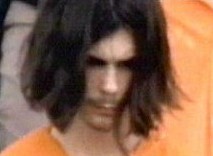
James Ellison Rouse
Homicide Jack Kevorkian
Homicide · USA · 1990
Jack Kevorkian (born May 26, 1928) was a controversial American pathologist. He…
130 victims
Jack Kevorkian
Homicide · USA · 1990
Jack Kevorkian (born May 26, 1928) was a controversial American pathologist. He…
130 victims
 David Koresh
Homicide · USA · 1993
David Koresh (born Vernon Wayne Howell; August 17, 1959 – April 19, 1993) led t…
79 victims
David Koresh
Homicide · USA · 1993
David Koresh (born Vernon Wayne Howell; August 17, 1959 – April 19, 1993) led t…
79 victims
 Todd Hall
Homicide · USA · 1996
Todd Hall was described by neighbors as "mentally slow" and was said to have su…
9 victims
Todd Hall
Homicide · USA · 1996
Todd Hall was described by neighbors as "mentally slow" and was said to have su…
9 victims
 Clinton Bankston
Homicide · USA · 1987
15 August 1987 — Ann Morris (63), her sister Sally Nicholson (59), and Sally’s…
5 victims
Clinton Bankston
Homicide · USA · 1987
15 August 1987 — Ann Morris (63), her sister Sally Nicholson (59), and Sally’s…
5 victims
 Joshua Jenkins
Homicide · USA · 1996
Joshua Jenkins was a 15-year-old American killer who killed five members of his…
5 victims
Joshua Jenkins
Homicide · USA · 1996
Joshua Jenkins was a 15-year-old American killer who killed five members of his…
5 victims
 Leo Held
Mass murderer · followed by more bullets. This continued until he was finally hit in the head. He stopped firing then. He died later in the Lock Haven Hospital unable to answer any of the questions that police had. home last updates contact · 1967
Leo Held was a 39-year-old laboratory technician who was described as a quiet,…
6 victims
Leo Held
Mass murderer · followed by more bullets. This continued until he was finally hit in the head. He stopped firing then. He died later in the Lock Haven Hospital unable to answer any of the questions that police had. home last updates contact · 1967
Leo Held was a 39-year-old laboratory technician who was described as a quiet,…
6 victims
 Allen Holman
Murderer · USA · 1997
Allen R. Holman, Sr. (born March 29, 1959) was sentenced to death for the first…
1 victim
Allen Holman
Murderer · USA · 1997
Allen R. Holman, Sr. (born March 29, 1959) was sentenced to death for the first…
1 victim
 Nicholas Ncama
Serial killer · South Africa
Nicholas Lungisa Ncama was a South African serial killer who was convicted in 1…
Nicholas Ncama
Serial killer · South Africa
Nicholas Lungisa Ncama was a South African serial killer who was convicted in 1…
 William Horncy
Mass murderer · United Kingdom · 2003
William Horncy (born 1954) was a British murderer. He was convicted of murderin…
5 victims
William Horncy
Mass murderer · United Kingdom · 2003
William Horncy (born 1954) was a British murderer. He was convicted of murderin…
5 victims
 Walter Leroy Moody
Murderer · USA · 1989
Walter Leroy Moody was sentenced to death in Alabama in 1997. Walter Leroy Mood…
2 victims
Walter Leroy Moody
Murderer · USA · 1989
Walter Leroy Moody was sentenced to death in Alabama in 1997. Walter Leroy Mood…
2 victims
- Gender
- male
- Country
- USA
- Location
- Lynnville, Tennessee, USA
- Date of birth
- 1978
- Age at first offence
- 17
- Characteristics
- juvenile, school shooting
- Victim profile
- Carolyn Foster , 58 (teacher) and Diane Collins, 14 (student)
- Method of murder
- Shooting (.22-calibre rifle)
- Date(s) of murder
- November 15, 1995
- Years active
- 1995
- Date of arrest
- Same day
- Status
-
Life imprisonment
Sentenced to life in prison without the possibility of parole in 1997
Timeline
- November 15, 1995 — Jamie Rouse, a 17-year-old student at Richland High School, carried out a shooting spree at Richland High School in Lynnville, Tennessee, in Giles County.
- November 19, 1997 — Jamie Rouse was found guilty of two counts of murder and two counts of attempted murder in the 1995 rampage at Richland High School.
- 1996 — Rouse’s 16-year-old brother, Jeremy, was convicted of solicitation to commit murder after trying to persuade classmates to “finish the job” his brother started.
- August 1 (year not stated) — Steven Abbott was convicted of criminal responsibility in the slayings and received 40 years in prison.
- 1997 (sentencing year) — Jamie Rouse was sentenced to life in prison without the possibility of parole.
- April 14, 2004 — CBS News publication included an interview in which Jamie Rouse described his actions.
Background
James Ellison Rouse, known as Jamie Rouse, was a Tennessee high school senior. At the time of the shooting, he was 17. His lawyers claimed he was a paranoid schizophrenic and was not in control of his actions. Defense attorney Dan Runde argued that Rouse was hearing voices and thought he was on a mission from God when he opened fire. Rouse’s lawyers said he was not in control of his actions, while prosecution witnesses disputed that.
Rouse’s mother, Cheryl Rouse, said:
“This can’t be my son that did this. Why didn’t I know? Why couldn’t I see how much pain he was in,” she says.
“He was the good kid. He was the one that always did what he was told. You could depend on him.”
Rouse’s father, Elison, was a truck driver who admitted he was part of the problem in his son’s life. He said:
“To this day, I still believe if I’d been home that day, I’d been the one that died and – and the teachers wouldn’t have … I believed he’d kill me … I was the cause of most of his problems, I felt like.”
Rouse described his childhood and home life:
“One of the earliest memories I have was sitting on my mother’s lap. And she was crying. And I can remember my dad punching holes in the door and walls because he was drunk,” says Rouse.
“I knew that he was capable of actual violence.”
“I knew what happened if I cried around my dad. So I just stuffed it in. I didn’t expose that,” says Rouse.
“As time went on, Rouse’s reactions became more destructive – and more dangerous.”
Rouse said he learned “how not to cry” because of fear and that problems “snowballs until eventually something gives.” He said his brother had pulled a gun on another sibling and their father took the gun away for a couple of months, and he described the effect:
“Right there ,that sent the signal that, you know, that I wasn't gonna get help from him. Because to me that's a pretty big deal when a sibling pulls a gun on another one,” says Rouse.
“They didn’t think that anything, I guess, was severely wrong.”
Cheryl Rouse said her son kept emotions inside:
“If he let off steam, it wasn’t around us. When he was around us, he was just a perfect teenager.”
Rouse said he had been bullied as a child and was ostracized in high school by kids who thought he worshipped the devil. He said:
“People were scared of me. I was a normal kid. And I didn't want people to be scared of me. I wanted to be just, like, you know, everyone else,” says Rouse
“I was under a lot of stress.”
“I guess I blamed school ... and the teachers,” adds Rouse.
“And I was so filled with, you know, hate and anger and this evil that, you know, I guess in a way I felt that, you know, they should be punished, too.”
Rouse said he went to school that Wednesday morning prepared to hunt down teachers and that someone else got in the way—his best friend’s sister, Diane Collins.
The offence
The Richland High School shooting occurred on Wednesday, November 15, 1995, in Lynnville, Tennessee, a small town located in Giles County.
Jamie Rouse was a student at the school. He used a .22-calibre Remington Viper semi-automatic rifle. He hid the rifle behind bushes before driving to pick up his friend Steven Abbott. Rouse drove to pick up his friend Steven Abbott; Abbott drove Jamie the rest of the way to Richland High School. Abbott parked the car outside the school. Rouse entered through the north entrance hallway.
Inside the hallway, he confronted teachers Carolyn Yancey and Carolyn Foster. He shot both teachers in the head. He then aimed his rifle at a football coach but missed and fatally shot freshman Diane Collins in the throat. Rouse was wrestled by the coach and escorted to the administration office.
The victims were:
- Carolyn Foster — killed by a gunshot wound to the head.
- Carolyn Yancey — survived in serious condition.
- Diane Collins — 14-year-old student; died from a gunshot wound to the throat.
Rouse described the state of mind during the attack:
“I didn’t feel anything. I was empty,” says Rouse.
“When you're in that state of mind where you're gonna kill someone, nothing matters,” says Rouse.
“I wasn't expecting to, you know, come back alive.”
“Of all the people I could have shot. I keep asking myself, ‘Why her?’”
Rouse said he was empty and that the killing stopped only after he was wrestled to the ground:
“The killing stopped only after Rouse was wrestled to the ground.”
Rouse also said:
“I used violence as a way out. And because of that, I’m in prison for the rest of my life and two people are dead. What I did didn’t have to happen.”
He said:
“I was hearing voices and thought he was on a mission from God when he opened fire.”
Investigation
Defense and prosecution positions were disputed. Rouse’s lawyers claimed he was a paranoid schizophrenic and was not in control of his actions. Prosecution witnesses disputed that.
Arrest
No arrest event was provided as a dated fact.
Trial
On November 19, 1997, Jamie Rouse was found guilty of two counts of murder and two counts of attempted murder in the 1995 rampage at Richland High School. The narrative described Rouse as an angry teenager over poor grades.
Rouse was convicted as an adult of:
- one count of first-degree murder
- one count of second-degree murder
- one count of first-degree attempted murder
Rouse’s defense included claims of mental illness. In closing arguments, defense attorney Dan Runde said:
“Rouse was hearing voices and thought he was on a mission from God when he opened fire.”
Co-defendant: Steven Abbott
Steven Abbott was convicted of criminal responsibility in the slayings. He was convicted on August 1 (year not stated). He received 40 years in prison.
Abbott drove Rouse to school on the day of the rampage and knew Rouse was carrying a rifle and 400 rounds of ammunition. Abbott testified that he didn’t believe Rouse when he said he planned to shoot people.
Rouse’s brother: Jeremy Rouse
Rouse’s 16-year-old brother, Jeremy, was convicted in 1996 of solicitation to commit murder after trying to persuade classmates to “finish the job” his brother started.
Sentencing
Jamie Rouse was sentenced to life in prison without the possibility of parole. The sentencing year stated was 1997.
Steven Abbott was sentenced to 40 years in prison for driving Rouse to school with ammunition and knowing his intentions to shoot instructors at his school.
Appeals
No appeal events were provided as dated facts.
Outcome
Jamie Rouse’s conviction resulted in a life sentence without the possibility of parole. Two teachers and a 14-year-old student were shot during the Richland High School rampage. Carolyn Foster and Diane Collins died; Carolyn Yancey survived in serious condition.
Aftermath
Rouse said he tried to reach kids who might be as unhappy and desperate as he once was. He said:
“When I was 17 years old, I walked into Richland High School and shot two teachers and a student,” says Rouse.
Rouse described his state after the attack:
“It’s the most horrible feeling you can have.”
Rouse said:
Rouse and an inmate, Jacob Davis, were described as sitting together during a prison field trip. Jacob Davis was 24. The narrative said Jacob Davis was a senior at Lincoln County High School in Fayetteville, Tennessee in 1998, and that days before graduation he shot and killed his girlfriend’s ex-boyfriend in a jealous rage.
A research psychologist with the United States Secret Service, Marisa Reddy, was quoted about the absence of a common profile and behaviors:
“There is no mold. These were people who looked more mainstream than you would think,” says Marisa Reddy.
“The fact of the matter is, it would be a lot easier for all of us if there were a profile. But there isn’t.”
Reddy was quoted on common behaviors in school shooter cases:
“They had done something to seriously concern at least one adult in their life,” says Reddy.
“And actually the majority had concerned at least three adults. These were kids on someone’s radar screen.”
Reddy was quoted on depression and bullying/persecution:
“Researchers discovered most of the shooters were overwhelmed by feelings of depression, and in more than two-thirds of all these cases, the attackers felt bullied or persecuted.”
“Not every child who's bullied in school is at risk for doing something violent or harmful, let alone engaging in a school shooting,” says Reddy.
“But we heard from some of these kids of situations that went on for years at a time. That I would almost characterize as torment.”
Reddy was quoted on planning:
“But one of the biggest surprises may be that these shooters rarely just snap.”
“These attacks were typically thought out in advance. They were typically planned in advance,” says Reddy.
“And, before most of them, other kids knew these attacks were going to occur.”
Rouse told friends about his intentions and described a friend’s comment:
“We know that some people, if they’ve threatened and there’s no response, they may take that as permission to move forward with a plan,” says Reddy.
Rouse recalled one of the comments:
“He saw that I had the gun,” recalls Rouse. “I remember him making some, a comment like, ‘So, you’re really going to do it, aren’t you?’ I guess I wanted someone to stop me.”
Davis told the children on the field trip:
“All of you guys, remember me,” Davis tells the kids on their fieldtrip to the prison.
“You know, tell somebody. Go tell somebody.”
Davis said:
“My life’s pretty much over with. I’ve got a life sentence, and there’s a young man that’s dead.”
Rouse said:
“It wasn’t like the movies, you know, where you shoot someone, and then, you know, go about your life. And you know, I hurt real people,” adds Rouse.
The narrative also quoted Rouse on music and violence shaping his feelings:
“It made killing look easy and fun,” says Rouse. “I mean, it fascinated me.”
“I guess for so long I’d felt helpless and weak, and with violence, you know, you have control,” says Rouse
“I’m not saying that it’s music made me did what I did, because ultimately, it was my choice. But it helped shape who I was.”
Other details
The shooting involved teachers Carolyn Foster and Carolyn Yancey and student Diane Collins. The narrative described Ralph Johnson as being in his classroom at Richland High School when the student began shooting from the north entrance. Science teacher Ralph Johnson was mentioned in connection with being in his classroom during the shooting.
Cheryl Rouse said:
Cheryl Rouse said she was stunned and described not seeing alarms:
“He was stunned. ‘This can’t be my son that did this. Why didn’t I know? Why couldn’t I see how much pain he was in,’ she says.”
She also said:
“The fact that her son was dressed all in black, listened to loud music and loved violent movies didn’t set off any alarms at the time.”
“To me, that was just typical teenager. You know,” says Cheryl Rouse.
“One minute they're mad, and the next minute, they're OK.”
Rouse said he started drinking and doing drugs in high school and listened to death metal music, and it had songs about killing and dying. Rouse said the film “Natural Born Killers” made a big impression on him and that it made killing seem easy and fun.
Spotted an error, or have more information about this case?