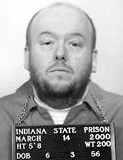
Bill Benefiel
Murderer Brian Kevin Rosenfeld
Murderer · USA · 1985
Brian Kevin Rosenfeld Brian Kevin Rosenfeld was sentenced to three concurrent l…
23 victims
Brian Kevin Rosenfeld
Murderer · USA · 1985
Brian Kevin Rosenfeld Brian Kevin Rosenfeld was sentenced to three concurrent l…
23 victims
 Yahweh ben Yahweh
Murderer · USA · 1980
Yahweh ben Yahweh was born and legally named Hulon Mitchell Jr. (October 27, 19…
23 victims
Yahweh ben Yahweh
Murderer · USA · 1980
Yahweh ben Yahweh was born and legally named Hulon Mitchell Jr. (October 27, 19…
23 victims
 Russell Ellwood
Murderer · USA · 1991
Russell Ellwood was a former taxi driver. Authorities suspected him of killing…
20 victims
Russell Ellwood
Murderer · USA · 1991
Russell Ellwood was a former taxi driver. Authorities suspected him of killing…
20 victims
 Samuel Manzie
Homicide · USA · 1997
Samuel Manzie was a 15-year-old charged as an adult in New Jersey for the killi…
1 victim
Samuel Manzie
Homicide · USA · 1997
Samuel Manzie was a 15-year-old charged as an adult in New Jersey for the killi…
1 victim
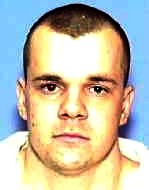 Jeffery Lee Wood
Murderer? · USA · 1996
Jeffery Lee Wood (TDCJ Number 999256) was born on 08/19/73 and was 24 when he w…
1 victim
Jeffery Lee Wood
Murderer? · USA · 1996
Jeffery Lee Wood (TDCJ Number 999256) was born on 08/19/73 and was 24 when he w…
1 victim
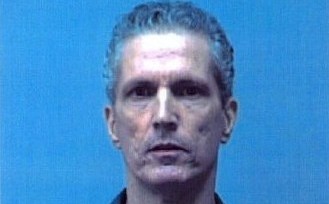 Ralph Dale Armstrong
Murderer · USA · 1980
Ralph Dale Armstrong was a UW-Madison graduate student who was on parole from N…
1 victim
Ralph Dale Armstrong
Murderer · USA · 1980
Ralph Dale Armstrong was a UW-Madison graduate student who was on parole from N…
1 victim
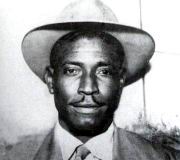 Louis Till
Murderer · Italy · 1945
Louis Till was executed by hanging by the U.S. Army on July 2, 1945. Louis Till…
1 victim
Louis Till
Murderer · Italy · 1945
Louis Till was executed by hanging by the U.S. Army on July 2, 1945. Louis Till…
1 victim
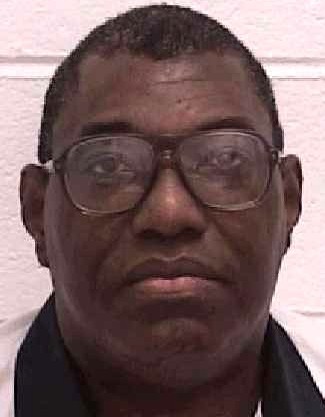 Robert Lewis Collier
Murderer · USA · 1978
Robert Lewis Collier was sentenced to death in August 1978. His death sentence…
1 victim
Robert Lewis Collier
Murderer · USA · 1978
Robert Lewis Collier was sentenced to death in August 1978. His death sentence…
1 victim
 Pierre Lebrun
Mass murderer · Canada · 1999
Pierre Lebrun committed suicide by shooting himself on April 6 1999, after carr…
4 victims
Pierre Lebrun
Mass murderer · Canada · 1999
Pierre Lebrun committed suicide by shooting himself on April 6 1999, after carr…
4 victims
- Gender
- male
- Country
- USA
- Location
- Vigo County, Indiana, USA
- Date of birth
- J une 3, 1956
- Age at first offence
- 31
- Characteristics
- kidnapping, rape, torture
- Victim profile
- Delores Wells W/F/19
- Method of murder
- Asphyxia
- Date(s) of murder
- February 7, 1987
- Years active
- 1987
- Date of arrest
- —
- Status
-
Executed
Executed by lethal injection in Indiana on April 21, 2005
Case summary
Bill Benefiel was convicted of criminal confinement, rape, criminal deviate conduct, and murder, and he was sentenced to death. He kidnapped Delores Wells and held her captive for 12 days, sexually abusing her before killing her. He also held Alicia Elmore captive for four months, repeatedly raping her before he was arrested.
Timeline
- October 10, 1986 (about 7:30 p.m.) — Seventeen-year-old Alicia Elmore walked to a gas station two blocks from her home in Terre Haute, Indiana to purchase soft drinks for her mother and brother; a masked man carrying a gun accosted her, pushed her into a garage, stripped her, covered her head, and bound her with her own clothes and electrical wire.
- October 11, 1986 — Alicia Elmore was reported missing.
- October 12, 1986 — Sexual intercourse occurred with Alicia Elmore “twice in the same manner as before.”
- October 13, 1986 — Alicia Elmore had not slept “up to October 13.”
- October 30, 1986 — The assailant told Alicia Elmore they were going to have a Halloween party.
- December 9, 1986 — Alicia Elmore was taken to a hospital in Vincennes, Indiana because she was bleeding vaginally.
- December 10, 1986 — Sexual intercourse occurred with Alicia Elmore despite a doctor’s recommendation.
- January 16, 1987 — A confidential informant provided information regarding Alicia Elmore’s location and Benefiel’s access to houses in the 300 block of South 13 1/2 Street in Terre Haute, Indiana.
- January 26, 1987 — Delores Wells disappeared; Alicia Elmore thought someone else was in the house after hearing noises in the basement.
- January 27, 1987 (evening) — Alicia Elmore saw Delores Wells, whom she knew.
- February 4, 1987 — Benefiel told Alicia Elmore to come into Delores Wells’ room; Alicia watched Benefiel beat Delores with his fists and an electrical cord.
- February 7, 1987 — Benefiel left the house for approximately two hours, returned muddy from the waist down with blisters on his palms, and made Alicia watch as he put super glue in Delores Wells’ nose and pinched it shut; later he killed Delores Wells by tying her arms and legs to separate trees and wrapping duct tape around her head, then “popped” her neck and buried her.
- February 11, 1987 (morning) — Benefiel told Alicia Elmore that the police were coming, pushed her into a crawl space in the ceiling, and warned her not to make a sound; police arrived with a search warrant and removed her from the ceiling.
- February 17, 1987 — Benefiel killed Delores Wells; prosecutors described it as the Feb. 17, 1987 murder of 18-year-old Delores Wells in Terre Haute.
- February 22, 1987 — Volunteers searching for Delores Wells found her body under a freshly disturbed plot of ground.
- February 22, 1987 (after body discovery) — An autopsy revealed internal and external injuries to the anus and injuries to the vagina indicating a violent rape; the pathologist stated Delores Wells was raped before her death, injuries were fresh, and she died as the result of asphyxia.
- May 23, 1988 — A competency hearing found Benefiel to be competent to stand trial.
- September 1988 — Benefiel said, “I'm very happy 'cause I got what I wanted,” when he was smiling as he was sentenced to death.
- November 3, 1988 — Benefiel was sentenced to death.
- 1988 (penalty phase sentencing remarks) — Judge Michael H. Eldred stated:
“The brutality, the inhumane, criminal, barbaric acts that this defendant committed constituted an aggravating circumstance that far outweighed any mitigating circumstances,”
and later found none of the statutory mitigating factors applied; the judge compared aggravation to mitigation as “like as the old axiom goes, comparing a mountain to a molehill.” - 1991 — Indiana Supreme Court decision in Benefiel v. State, 578 N.E.2d 338 (Ind. 1991) affirmed the convictions and death sentence; it held, among other issues, that certain prior attacks were sufficiently similar for admissibility, and that irresistible impulse did not excuse independent of insanity; it also addressed exclusionary rule issues and competency.
- 1991 — Supreme Court of Indiana stated that Benefiel’s “impairment suffered as a result of mental disease is entitled to substantial mitigating weight.”
- 1999 — Indiana Supreme Court decision in Benefiel v. State, 716 N.E.2d 906 (Ind. 1999) affirmed denial of post-conviction relief.
- 2004 — U.S. Court of Appeals for the Seventh Circuit rejected an appeal and stated the facts “curl the stomach and numb the mind.”
- April 21, 2005 — The U.S. Supreme Court denied a request for a stay of execution; Benefiel was executed by lethal injection in Indiana; his death was pronounced at 12:35 a.m. (shortly after midnight) at the Indiana State Prison in Michigan City.
Background
Bill Benefiel was convicted in 1987 for murdering and raping 18-year-old Delores Wells of Terre Haute. Prosecutors alleged he held Wells captive in a vacant house for 12 days, sexually abusing her before killing her. Prosecutors also alleged that Benefiel held Alicia Elmore captive for four months in the same house, and Elmore survived and testified against him.
The offence
Criminal confinement, rape, and sexual violence against Alicia Elmore
On October 10, 1986 at approximately 7:30 p.m., seventeen-year-old Alicia Elmore walked two blocks away from her home in Terre Haute, Indiana to run an errand for her mother and brother who were ill. As she returned, a man wearing a mask and carrying a gun grabbed her, pushed her into a garage, stripped her, covered her head, and bound her with her own clothes and electrical wire. The man instructed her not to make any noise or he would shoot her, placed her on the floor, began taking off her clothes, and tied her up with some of her clothes and wire from a lamp.
The assailant later took photographs of Alicia Elmore and raped her, keeping a gun against her head and warning her not to scream. He placed a chain around her neck and fastened it to the bed, handcuffed her wrists to the side railing, and tied her feet together with rope. He gagged her and put duct tape over her eyes and a large wad of toilet paper in her mouth and taped her mouth shut. He forced oral sex the next day, and forced intercourse multiple times during her captivity.
When Alicia tried to escape by scooting the bed frame toward the doorway, the assailant threw a blanket over her head and, after warning her not to try to escape again, slapped her, took out a knife and cut her on her back, cut off one of her fingernails, and cut off a portion of her hair. The assailant told Alicia the hair was for a scrapbook with samples from other women he had raped.
Alicia testified that during four months of captivity she counted being raped a minimum of 64 times and stopped counting because she was confused about the number of days and the number of times she had been raped. During the first part of captivity, her eyes were glued together and taped; for early periods she was not allowed to go to the bathroom when she needed to and was fed only a baked potato and a glass of water during that time, with additional limitations on bathing.
During the first two months of captivity, the assailant made her hold bullets to the gun and told her that one of the bullets had her name on it. He used a mask to prevent her from seeing his face when she was made to allow him to see her eyes. At one point, the assailant showed her the gun to prevent her from screaming while traveling to a hospital.
Alicia described being taken to a hospital in Vincennes, Indiana on December 9, 1986 because she was bleeding vaginally. During the examination, the assailant was only a few feet away. The doctor informed Alicia she was pregnant and not to have sexual intercourse for three weeks. Alicia later recognized the address and testified about the locations of the houses where she was held, including addresses on South 13 1/2 Street.
Alicia saw Delores Wells in the house and testified that Wells was naked, gagged, with wrists and ankles handcuffed, and Wells’ eyes were taped shut. Alicia testified she watched the beatings, welts, black bruises, and that Delores had hair cut off on an occasion. Alicia testified that she was chained to the bed and that she was threatened throughout.
Murder of Delores Wells
Delores Wells disappeared on Jan. 26, 1987. Benefiel kidnapped Wells in January 1987 and held her captive for 12 days. He took her into the woods outside Terre Haute and killed her and buried her. The cause of Wells’ death was listed as asphyxia.
Alicia Elmore testified that on February 4, 1987, Benefiel beat Delores with his fists and then with an electrical cord. Alicia also testified that on another occasion Benefiel cut off all of Delores’ hair and cut into her finger.
Alicia testified that on February 7, 1987, Benefiel left the house for approximately two hours, returned muddy from the waist down with blisters on his palms, told Alicia he had been digging a grave big enough for two people, and then made her watch as he put super glue in Delores’ nose and pinched it shut. He then put toilet paper in her mouth and taped it shut so she could not breathe. Alicia testified that when Benefiel returned, he told Alicia he had killed Delores and described tying Delores’ arms and legs to separate trees and wrapping duct tape around her head until Delores died, then “popped” her neck to make sure she was dead, after which he buried her.
Police search and discovery
Alicia testified that on the morning of February 11, 1987, Benefiel told her that the police were coming and pushed her into a crawl space of the suspended ceiling while instructing her not to make a sound. The police arrived with a search warrant. Alicia testified that police removed her from the ceiling, and later she told police what had happened, including in Benefiel’s presence.
On the same day that Alicia was discovered, a search of Benefiel’s van revealed items including a mask, a post-hole digger, a rake, a shovel, a pocket knife, .22 caliber rifle shells, and rope. Evidence found in the trash at one of Benefiel’s homes included a piece of duct tape with hairs on it similar to Delores Wells’ head, eyebrow, and eyelash hairs, and other hair particles similar to Wells’ hairs as well as to appellant’s own hairs.
On February 22, 1987, volunteers discovered a freshly disturbed area where Delores Wells’ body was found. An autopsy found injuries to the anus and injuries to the vagina indicating a violent rape. The pathologist stated Delores Wells was raped before her death, injuries were fresh, and she died as the result of asphyxia.
Investigation
Sergeant Joe Newport presented Judge Michael Eldred four affidavits of probable cause on February 10, 1987, to search four buildings located on South 13 1/2 Street in the city of Terre Haute, Indiana. The affidavits were identical and in substance stated that affiants had learned through reports from the Terre Haute Police Department that a person identified as Alicia Elmore was reported missing on October 11, 1986, that on January 16, 1987 the affiant was informed by a confidential informant known to be reliable and credible in the past that the Elmore girl was in the company of Bill Benefiel, and that Benefiel had access to four different houses in the 300 block of South 13 1/2 Street in Terre Haute, Indiana. The affidavits also stated he was seen driving a blue van to pick up or drop off Elmore and that the informant believed he had two girls being held against their will.
Arrest
Police raided Benefiel’s home in February 1987, and Alicia Elmore was discovered in a crawl space in the ceiling during the search. A search revealed various items including a mask and tools.
Trial
Charges and verdict
A jury trial resulted in conviction of:
- Count I, Criminal Confinement, a Class B felony
- Count II, Rape, a Class B felony
- Count III, Criminal Deviate Conduct, a Class B felony
- Count IV, Murder, a felony
Following the guilty verdict on all counts, the jury recommended the death penalty and Benefiel was sentenced to death.
Evidence at trial
The State’s case was established largely on the testimony of Alicia Elmore, a surviving victim. The trial court proceedings included testimony about Alicia Elmore’s captivity, rape, and injuries to Delores Wells, and the introduction of evidence tied to searches authorized by affidavits.
Prior attacks used as aggravation
At trial, the State presented testimony of two women who claimed that Benefiel had kidnapped and raped them six and eight years earlier before the murder of Delores Wells. The Supreme Court later held the prior attacks were sufficiently similar and not too remote to be admissible.
Competency to stand trial
A competency hearing conducted on May 23, 1988 resulted in findings that Benefiel was competent to stand trial, with Dr. Crane and Dr. Murphy finding him competent. The issue arose again during Benefiel’s testimony near the end of the guilt phase. During testimony about his childhood and then about Alicia Elmore, Benefiel refused to resume the stand after a recess. A further hearing was held during which Dr. Stephen Stewart testified that Benefiel was not competent to continue; the Indiana Supreme Court later held the trial judge’s decision that Benefiel was competent was supported by the record, including the judge’s observations and the earlier competency hearings.
Sentencing
The trial court sentenced Benefiel to death following the jury’s recommendation. During sentencing, Judge Michael H. Eldred found that none of the statutory mitigating factors applied. The sentencing decision referenced Benefiel’s mistreatment while he was young and his background, and the judge concluded: “no excuse or justification to explain or mitigate against these incomprehensible acts ....” The judge also stated the aggravating factor outweighed any possible mitigating factors, comparing it to “a mountain to a molehill.”
Appeals
Direct appeal: Benefiel v. State, 578 N.E.2d 338 (Ind. 1991)
The Indiana Supreme Court affirmed. It held:
- the exclusionary rule did not apply to testimony of a victim who had been missing and held against her will for several months and who was found pursuant to search warrants based on affidavits containing secondhand hearsay;
- prior attacks on women six and eight years earlier were sufficiently similar and not too remote to be admissible;
- Benefiel was not mentally ill; and
- irresistible impulse was not an excuse independent of insanity.
Post-conviction appeal: Benefiel v. State, 716 N.E.2d 906 (Ind. 1999)
The Indiana Supreme Court affirmed the denial of post-conviction relief. It held that:
- restatement of claims of error with assertions that failure to raise issues on direct appeal had amounted to ineffective assistance of counsel was insufficient to avoid waiver;
- Benefiel received effective assistance of trial counsel;
- prosecutor’s reference to defense expert as “hired gun” did not improperly denigrate defense;
- trial court statements to the jury were proper characterizations of the jury’s role in capital murder prosecution; and
- the trial court was not required to hold a second full competency hearing to determine competence to waive the right to be present in the courtroom.
Seventh Circuit appeal and Supreme Court stay request
In 2004, the U.S. Court of Appeals for the Seventh Circuit rejected an appeal and stated the facts “curl the stomach and numb the mind.” The U.S. Supreme Court denied a request for a stay of execution filed by Benefiel’s attorneys, which argued the trial judge improperly limited mitigating factors the jury could consider during sentencing.
A separate described motion practice included an appeals panel statement:
“He also asked us to (a) recall our mandate and reopen our original decision and (b) issue a stay of execution. We shall do neither. Instead, we summarily affirm the district court's decision,”
Outcome
Bill Benefiel was executed by lethal injection in Indiana on April 21, 2005. He died quietly at 12:35 a.m. shortly after midnight in the death chamber of the Indiana State Prison in Michigan City. Prison officials stated he complied with staff and did not physically resist the process.
Benefiel provided a final statement when asked if he had any last words, reportedly saying: “Let’s get this over with. Let's do it.”
Aftermath
Wells’ mother, Marge Hagan, was relieved after the execution and said, “Tonight was for Delores. She's the one who paid the price, not us.” Hagan drove from Terre Haute to Michigan City and waited on the prison grounds during the execution; she was not permitted to witness the execution. Prison spokesman Barry Nothstine stated that Indiana law allowed the condemned inmate to pick up to 10 witnesses and that no others, except for members of the execution team, were allowed to view the proceedings.
Benefiel’s body was cremated, and an urn of his ashes was given to his family.
Demonstrations outside the prison occurred, with protesters holding candles and signs and using drum beats as symbolic protest against executions. Father Tom Mischler led a group of protesters and said the execution represented a culture of vengeance.
Diane Brentlinger attended a prayer vigil before the execution at the Church of the Immaculate Conception conducted by the Sisters of Providence. Sister Charles Van Hoy said:
“We want to assure Alicia and the families of Delores and Alicia that we will continue our spiritual support of them. The traumas they have experienced will never be erased from their memories. We gather this evening to pray for peace and comfort for them and all victims of violence as well as for an end to the death penalty.”
Sister Rita Clare Gerardot said it was a custom that whenever there is a state or federal execution in Indiana, the Sisters of Providence conduct a prayer service on the eve of the execution. Sister Rita Clare Gerardot also stated:
“We pray for not only the person being executed, but for his victims and for their families and friends. We also pray for an end to violence. And we pray for an end to the death penalty because we as the Sisters of Providence are opposed to the death penalty,”
Sister Rita Clare Gerardot added:
“This gives the person charged a chance to turn his life around,”
“It is a violent act. How does killing a person tell people that killing is wrong? It doesn't make good sense,”
Sister Jeanne Knoerle said during the service:
“Give them peace,”
A book filled with prayer requests was left near a painting of Mother Theodore, and one prayer request stated: “For Bill Benefiel.”
Other details
Clemency and waiver of clemency hearing
The Indiana Civil Liberties Union asked Gov. Mitch Daniels to grant clemency, stating Benefiel’s long-standing mental illness was not taken into account as a mitigating factor during the 1988 sentencing. The letter stated that Vigo County Superior Court Judge Michael H. Eldred did not allow evidence of Benefiel’s “long-standing mental illness” to be considered as mitigation.
Benefiel waived his right to seek a clemency hearing from the Indiana Parole Board on March 7. The waiver did not prevent Benefiel from requesting clemency from the governor.
Benefiel declined an offer of religious consolation.
Legal citations and described constitutional questions
In the direct appeal narrative, Benefiel v. State , 578 N.E.2d 338 (Ind. 1991) described that the jury trial resulted in conviction and that after the guilty verdict the jury recommended death and appellant was sentenced to death. The analysis described refusal to suppress evidence based on affidavits containing secondhand hearsay, and addressed competency and sanity issues.
In post-conviction narrative, Benefiel v. State , 716 N.E.2d 906 (Ind. 1999) described that a jury found Benefiel guilty and he was sentenced to death, and that the Indiana Supreme Court had previously affirmed on direct appeal.
In federal habeas narrative, Benefiel v. Davis , 357 F.3d 655 (7th Cir. 2004) described the habeas appeal and holdings including competency and ineffective assistance of counsel issues, and it stated that the district court denied relief and the court of appeals affirmed.
In federal habeas narrative, the U.S. Court of Appeals for the Seventh Circuit described as a quotation that the facts “curl the stomach and numb the mind.”
Witnesses and family members named
Wells’ mother: Marge Hagan. Wells’ stepsister: Jackie Hollinger. Wells’ stepfather: Al Hagan. Children named as part of Hagan’s travel and presence: John Alkire, Anita Holland, Laurie Kindred, and Jackie Hollinger. Alicia Elmore’s testimony was described as key testimony at Benefiel’s trial. One witness invited by Benefiel observed the execution; Indiana State Prison officials declined to name the witness.
Diagnoses and mental health statements included in the narratives
Benefiel was described as diagnosed with a schizotypal personality disorder, and he presented a plea of insanity at trial. A described legal evaluation stated the trial court ruled Benefiel was not mentally ill because he showed the ability to monitor police, commit numerous burglaries, conceal and destroy evidence, and his manner of carrying out various crimes.
In another narrative, it was described that court-appointed experts testified during the guilt phase that Benefiel suffered from schizophrenic personality disorder, and from a mental disease or defect, and that the Supreme Court of Indiana stated his impairment was entitled to substantial mitigating weight while maintaining mitigation was diminished based on non-violent periods and control shown and the way the crimes were carried out.

Spotted an error, or have more information about this case?