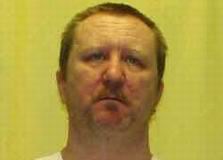
Michael Benge
Murderer Brian Kevin Rosenfeld
Murderer · USA · 1985
Brian Kevin Rosenfeld Brian Kevin Rosenfeld was sentenced to three concurrent l…
23 victims
Brian Kevin Rosenfeld
Murderer · USA · 1985
Brian Kevin Rosenfeld Brian Kevin Rosenfeld was sentenced to three concurrent l…
23 victims
 Russell Ellwood
Murderer · USA · 1991
Russell Ellwood was a former taxi driver. Authorities suspected him of killing…
20 victims
Russell Ellwood
Murderer · USA · 1991
Russell Ellwood was a former taxi driver. Authorities suspected him of killing…
20 victims
 Robert Martines Perez
Murderer · USA · 1994
Name: Robert Martines Perez · Other name used in proceedings: Robert Martinez P…
15 victims
Robert Martines Perez
Murderer · USA · 1994
Name: Robert Martines Perez · Other name used in proceedings: Robert Martinez P…
15 victims
 Billy Frank Vickers
Murderer · USA · 1993
Billy Frank Vickers Vickers was executed by lethal injection in Texas on Januar…
14 victims
Billy Frank Vickers
Murderer · USA · 1993
Billy Frank Vickers Vickers was executed by lethal injection in Texas on Januar…
14 victims
 Stephen Grant
Murderer · USA · 2007
February 14, 2007 — Stephen Grant contacted the Macomb County sheriff's departm…
1 victim
Stephen Grant
Murderer · USA · 2007
February 14, 2007 — Stephen Grant contacted the Macomb County sheriff's departm…
1 victim
 Vlado Taneski
Serial killer · Macedonia · 2005
Vlado Taneski (1952 - June 23, 2008) was a Macedonian crime reporter turned ser…
3 victims
Vlado Taneski
Serial killer · Macedonia · 2005
Vlado Taneski (1952 - June 23, 2008) was a Macedonian crime reporter turned ser…
3 victims
 Ambrose Sykes
Murderer · USA · 2004
Ambrose Sykes was sentenced to death on September 20, 2006. He was convicted of…
1 victim
Ambrose Sykes
Murderer · USA · 2004
Ambrose Sykes was sentenced to death on September 20, 2006. He was convicted of…
1 victim
 John Frank Hickey
Serial killer · USA · 1883
John Frank Hickey, “The Postcard Killer,” was one of the first known and captur…
3 victims
John Frank Hickey
Serial killer · USA · 1883
John Frank Hickey, “The Postcard Killer,” was one of the first known and captur…
3 victims
 Connie Williams
Murderer · USA · 1974
Connie Williams murdered and dismembered his wife, Francesca. The Supreme Court…
2 victims
Connie Williams
Murderer · USA · 1974
Connie Williams murdered and dismembered his wife, Francesca. The Supreme Court…
2 victims
- Gender
- male
- Country
- USA
- Location
- Butler County, Ohio, USA
- Date of birth
- August 7, 1961
- Age at first offence
- 32
- Characteristics
- crack addict, robbery
- Victim profile
- Judith Gabbard, 38 (his girlfriend)
- Method of murder
- Beating with a tire iron
- Date(s) of murder
- January 31, 1993
- Years active
- 1993
- Date of arrest
- 2 days after
- Status
-
Executed
Executed by lethal injection on October 6, 2010
Case details
Michael Benge (male, white) was convicted in Butler County of aggravated murder, aggravated robbery, and gross abuse of a corpse. He was sentenced to death and was executed by lethal injection on October 6, 2010.
Victim
The victim was Judith Gabbard, 38. She was Michael Benge’s live-in girlfriend.
Timeline
- February 1, 1993 — A car belonging to Judith Gabbard was found abandoned on the west side of the Miami River in Hamilton, Ohio; Judith Gabbard’s body was discovered in the Miami River.
- February 2, 1993 — Police apprehended Michael Benge the next day; when detectives approached him on the street, they observed him drop Judith Gabbard’s ATM card to the ground and arrested him.
- January 31, 1993 — The murder happened.
- June 14, 1993 — Michael Benge was sentenced.
- October 6, 2010 — Michael Benge was executed by lethal injection at the Southern Ohio Correctional Facility near Lucasville; the execution occurred at 10:34 a.m.
Background
Michael Benge was a crack addict who argued with his girlfriend, Judith Gabbard, in her car near the Miami River.
In seeking mercy, Benge’s lawyers said he began drinking alcohol when he was 11 and later moved on to marijuana and cocaine. They also said Benge was physically abused by a stepfather and stepbrother and that he had a brain impairment as a result. Benge’s family said he was not a violent man and that drugs changed that.
Benge’s relationship with Gabbard soured when he began smoking crack cocaine. He stole Gabbard’s jewelry and other things to pawn to get money to feed his drug habit. The aftermath of the beatings was described as obvious, and she skipped family gatherings at the holidays in 1992 to avoid embarrassment.
Benge’s lawyers described Benge as having begun drinking alcohol at age 11 and later abusing marijuana and cocaine.
The offence
In the early morning hours of February 1, 1993, a car belonging to Judith Gabbard was found abandoned on the west side of the Miami River in Hamilton, Ohio. The vehicle was found near the river with the front passenger-side tire stuck in a gully. After the vehicle was towed to the impound lot, a tow-truck operator observed blood on the front bumper and passenger side of the car and notified the police. The police returned and discovered the body of Judith Gabbard in the Miami River.
Judith Gabbard’s body was weighed down with a thirty-five pound piece of concrete placed upon her head and chest. One of the pockets on the jacket Judith was wearing was empty and turned inside out. She still had in her possession her checkbook, cash and jewelry.
Police retrieved a tire iron, or lug wrench, from the river approximately twelve to fifteen feet from where Judith’s body was found. A jack and spare tire were found in Judith’s trunk, but no lug wrench was discovered. Police removed lug nuts from the vehicle, sent them to a laboratory, and compared them with the lug wrench. Although no positive match was made, the lug nuts bore markings similar to the lug wrench.
Other physical evidence was gathered and tested by a forensic laboratory. Strands of hair and type A blood (both Judith and Benge had) were found on the driver’s side front tire. Smears of blood were found above the passenger-side headlight and on the fender. Police found a pool of blood with a tire track through it and blood contained in the tire treads. An investigative detective said the evidence indicated the car had been driven through the blood and through the hair of the victim.
An autopsy revealed that Judith Gabbard suffered a number of blows to the head with a long blunt object producing pattern abrasions and multiple skull fractures, including one circular in nature. The coroner said the victim died of brain injuries secondary to multiple skull fractures inflicted with a blunt object.
The state presented that after disposing of the body, Benge swam across the river and hooked up with friends. The state also presented that they used Gabbard’s ATM card to drain $400 from Gabbard’s bank account.
Prosecutors said Benge intended to frame two black men by giving Gabbard’s ATM card to two black men and urging them to use it.
Investigation
Scene evidence and forensic testing
Police found a tire iron, or lug wrench, approximately twelve to fifteen feet from where Judith’s body was found. Police removed lug nuts from the vehicle and compared them with the lug wrench; no positive match was made, but the lug nuts bore similar markings.
Police found hair strands and type A blood on the driver’s side front tire, blood smears above the passenger-side headlight and on the fender, and a pool of blood with a tire track through it as well as blood in the tire treads.
Apprehension and arrest
Police apprehended Benge the next day, February 2, 1993. When detectives approached him on the street, they observed him drop Judith Gabbard’s ATM card to the ground. They picked up the card, arrested him, and took him into the station for questioning.
Statements to police
After being read Miranda warnings, Benge agreed to talk.
Benge told police that two black men in a Bronco chased him and Judith to the river and that their car got stuck. Benge claimed one man injured Judith and took her ATM card while the other held him at gunpoint, demanding the ATM code word. When Benge refused to tell him, the man returned the ATM card. Benge said he escaped by jumping into the river and that as he swam away he heard Judith screaming as the men beat her. The detectives told Benge they did not believe his story, and Benge said he thought he should talk to a lawyer; questioning ceased at that point.
After a short time, Benge said he was willing to talk. He signed a Miranda warning card indicating he waived his Miranda rights. Benge then gave a tape-recorded statement recounting a different version.
In the tape-recorded statement, Benge said he drove to the riverbank with Judith so they could talk. He said they argued over the fact that he was addicted to crack cocaine, and Judith accused him of being unfaithful. He said he got out of the vehicle to urinate. He said Judith tried to run him down, but the car got stuck in mud. Benge said he became enraged, pulled Judith out of the car, and began beating her with a metal pipe he found lying on the ground. He said he threw her body into the river face down, disposed of the weapon, and swam across the river. He said he did not recall whether he put rocks or cement on her body.
Benge went to the home of his friend, John Fuller, to get dry clothes, and Fuller's fiancee, Awantha Shields, provided them. During the second interrogation, Benge was questioned about the ATM card, why he dropped it when he saw police, and whether he had used it after killing Judith. Benge said he threw down the card because he was scared and he knew he would not need it anymore. He said he had not used the card since he killed Judith, though he allowed a man named Baron Carr to use the card once to get money to purchase crack cocaine.
Benge claimed the reason he had the card in his possession was that he and Judith had used it on January 31, 1993 before they went out that evening. Police discovered that no transaction took place on January 31, 1993 and that two transactions were made after Judith’s death: on February 1, 1993 at 2:45 a.m. a $200 withdrawal was made, and on February 2, 1993 at 12:01 a.m. another $200 withdrawal was made.
Arrest
Police apprehended Michael Benge on February 2, 1993. Detectives saw him drop Judith Gabbard’s ATM card to the ground, arrested him, and took him into the station for questioning.
Trial
Charges and plea
Benge was indicted on one count of aggravated murder with death penalty specifications under R.C. 2929.04(A)(3) and R.C. 2929.04(A)(7), as well as aggravated robbery and gross abuse of a corpse.
Benge pleaded no contest to gross abuse of a corpse. The case proceeded to trial on the other charges.
Witness testimony
Awantha Shields testified that in the early morning hours of February 1, 1993, Benge arrived at the house she shared with John Fuller, wearing wet clothes and asking for John. Shields said Benge asked whether she had ever killed anyone. She said Benge told her that he and his girlfriend had “got into it” earlier, that it blew over, and that they went to the river bank. Shields testified Benge told her they started fighting; that Benge hit her in the head no more than ten times with a crowbar; that he put rocks over her head and pushed her in the river.
Shields testified that Benge told her he had killed his girlfriend to get her “Jeanie” card. Shields testified Benge also said that if police questioned him he would lie and say that a couple of black guys jumped him and his girlfriend and beat his girlfriend up. Shields testified Benge said he had given her ATM card to a guy named Baron to get $200 to buy crack cocaine but that he never saw the money.
Larry Carter testified that he and Baron Carr ran into Benge in the early morning of February 1, 1993. Carter said Benge’s clothes were wet and that Benge asked him to excuse how he smelled because he had just swum in the river. Carter said he thought Benge was kidding. Carter testified Benge said he gave John $20 to buy crack cocaine for him and that he could get more money. Carter said he drove Benge and Carr to a Society Bank where Benge withdrew $200 from an ATM; Carter then bought crack cocaine for Benge. Carter said he later drove Benge to Fuller’s house.
Carter testified that later that next night he and Baron Carr withdrew another $200 from Judith’s account using her ATM card to buy drugs for Benge. Carter testified that to avoid giving Benge drugs or money, the men conjured up a story and told Benge that his girlfriend had closed the account, and that Benge insisted that she had not.
Benge took the stand and reiterated what he told police during his second interrogation. He said Judith tried to run him down and he was in a rage when he killed her. Benge also claimed he had permission to use Judith’s ATM card and did not rob her.
On cross-examination, Benge admitted losing his job in January 1993 due to his crack cocaine habit and that he had no income at the time he killed Judith.
Verdict
Benge was convicted of all counts and specifications. The jury recommended that he be sentenced to death, and the trial court accepted the recommendation.
Sentencing
The court of appeals affirmed Benge’s convictions and death sentence. The sentencing included the jury’s death recommendation being accepted by the trial court.
On appeal, the Ohio Supreme Court affirmed the convictions and death penalty sentence.
Appeals
Ohio Supreme Court (direct appeal)
Benge appealed his convictions for aggravated murder and aggravated robbery, and the imposition of the death penalty sentence.
The Ohio Supreme Court stated it affirmed the convictions and the death penalty sentence. It held that:
- the trial court error in failing to instruct properly regarding voluntary manslaughter was harmless,
- the determination that Benge committed the underlying felony of aggravated robbery was supported by evidence, and
- the death penalty was appropriate and proportionate compared with similar capital cases.
Federal habeas appeal
Benge later sought federal habeas relief, raising sixteen alleged errors in the state-court proceedings.
The Court of Appeals for the Sixth Circuit affirmed the district court’s denial of the habeas petition, and the court used the district court’s reasoning for issues (3), (5), (6), and (7) without further comment, and provided additional analysis on issues (1), (2), and (4).
- The court held that the withheld evidence claim failed because Fuller’s statement and grand jury testimony were not exculpatory evidence subject to Brady disclosure.
- The court held that the conflict of interest claim failed because the alleged conflict did not involve joint representation at trial.
- The court held that the jury instruction claim did not warrant habeas relief because Benge failed to show actual prejudice necessary to excuse procedural default.
A dissenting opinion stated that the jury instruction error regarding voluntary manslaughter and the failure to object constituted ineffective assistance of counsel under Strickland, and the dissent would have granted habeas relief on that ground.
Other details
Prosecutor and defense parties named
For the appellee: John F. Holcomb, Butler County Prosecuting Attorney, Daniel G. Eichel, and Robert N. Piper III, Assistant Prosecuting Attorneys. For the appellant: David H. Bodiker, Ohio Public Defender, J. Joseph Bodine, Jr., and Stephen A. Ferrell, Assistant Public Defenders.
Jury instructions and “voluntary manslaughter”
The trial court’s instruction included the following quoted language:
“If you find that the State proved beyond a reasonable doubt all of the essential elements of aggravated murder, your verdict must be guilty of that offense and in that event you will not consider any lesser charge.”
The trial court instructed on voluntary manslaughter and stated:
“If you find that the State proved beyond a reasonable doubt that the Defendant purposely caused the death of Judith Gabbard but you also find the Defendant proved by a preponderance of the evidence that he acted while under the influence of sudden passion or in a sudden fit of rage either which was brought on by serious provocation occasioned by the victim that was reasonably sufficient to incite the Defendant into using deadly force, then you must find the Defendant guilty of voluntary manslaughter.”
The trial court also stated:
“[i]f the evidence warrants it, you may find the Defendant guilty of an offense lesser than that charged in the indictment. “
and:
“However, notwithstanding this right it is your duty to accept the law as given to you by the Court, and if the facts and the law warrant a conviction of the offense charged in the indictment, namely aggravated murder, then it is your duty to make such a finding uninfluenced by your power to find a lesser offense.”
The trial court’s instructions on verdict forms included:
“If your verdict is guilty [on the charge of aggravated murder], proceed to Specification One and Two and do not consider lesser included charges. “If your verdict is not guilty or if you are unable to reach a unanimous verdict, proceed to the lesser included charge of murder or voluntary manslaughter.”
Last statement and remarks by victim’s family
Before execution, Benge’s last words were:
“I can never apologize enough. ... I hope my death gives you closure. That's all I can ask. Praise God and thanks.”
Kathy Johnson, sister of the victim, said:
"It makes us feel there was justice for my sister. That's what this was all about."
Kathy Johnson also said:
"I don't feel like Mike Binge was remorseful. He has blamed everyone else but himself."
After the execution, Kathy Johnson said:
"During the whole 17 years, he has blamed everyone but himself," she said. "He's blamed his family, he's blamed my sister, he's blamed my family. He has never taken responsibility for his own actions."
She also said:
at least now her sister, the oldest girl among nine siblings, could rest in peace.
Hearing clemency decision
Benge’s last chance to dodge execution evaporated when Gov. Ted Strickland agreed with the Ohio Parole Board’s unanimous recommendation against using executive clemency to spare his life.
Last meal
For his last meal, Benge ordered:
- a large chef salad with ham, turkey and bacon bits, bleu cheese and ranch dressing,
- barbecue baby back ribs,
- two cans of cashews,
- and two bottles of iced tea.
Execution procedure and witnesses
The execution was at the Southern Ohio Correctional Facility near Lucasville, and Benge died at 10:34 a.m. Benge’s execution is described as Ohio’s eighth lethal injection in 2010 and Ohio’s eighth lethal injection in that year. Benge turned toward the victim’s family when he spoke.
Benge’s family members of the victim watched. Gabbard’s daughter, son and brother watched the execution. Neither Benge’s two children nor his mother witnessed his death; they and other family members spoke with him by phone on Tuesday and visited him Wednesday ahead of the 10 a.m. procedure. He chose to have his attorney, Randall Porter, as a witness, and Benge and Randall Porter exchanged a nod before the lethal dose of thiopental sodium began to flow. Benge continued to talk to officials in the room until he closed his eyes several minutes after his last statement.
Spotted an error, or have more information about this case?