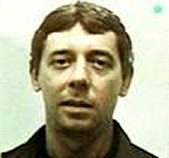
Pierre Lebrun
Mass murderer Marc Lepine
Mass murderer · Canada · 1989
Marc Lépine committed a shooting at the École Polytechnique engineering school…
14 victims
Marc Lepine
Mass murderer · Canada · 1989
Marc Lépine committed a shooting at the École Polytechnique engineering school…
14 victims
 Roger Warren
Mass murderer · Canada · 1992
Roger Warren was convicted of 9 counts of second-degree murder in connection to…
9 victims
Roger Warren
Mass murderer · Canada · 1992
Roger Warren was convicted of 9 counts of second-degree murder in connection to…
9 victims
 Valery Fabrikant
Mass murderer · Canada · 1992
Valery Fabrikant was a former associate professor of mechanical engineering at…
4 victims
Valery Fabrikant
Mass murderer · Canada · 1992
Valery Fabrikant was a former associate professor of mechanical engineering at…
4 victims
 Victor Ernest Hoffman
Mass murderer · Canada · 1967
Victor Ernest Hoffman (born 1946; died May 21, 2004) was found not guilty by re…
9 victims
Victor Ernest Hoffman
Mass murderer · Canada · 1967
Victor Ernest Hoffman (born 1946; died May 21, 2004) was found not guilty by re…
9 victims
 Paul Jaworski
Murderer · USA · 1926
Paul Jaworski was born in Poland as Paul Poluszynski in 1900. He later immigrat…
20 victims
Paul Jaworski
Murderer · USA · 1926
Paul Jaworski was born in Poland as Paul Poluszynski in 1900. He later immigrat…
20 victims
 John Martin Scripps
Murderer · Singapore / Thailand · 1995
John Martin Scripps was executed by hanging in Singapore on April 19, 1996. · 8…
3 victims
John Martin Scripps
Murderer · Singapore / Thailand · 1995
John Martin Scripps was executed by hanging in Singapore on April 19, 1996. · 8…
3 victims
 Robert John Bardo
Murderer · USA · 1989
Robert John Bardo (born January 2, 1970) was an American man who was convicted…
1 victim
Robert John Bardo
Murderer · USA · 1989
Robert John Bardo (born January 2, 1970) was an American man who was convicted…
1 victim
 Charles Guiteau
Murderer · USA · 1881
Charles Julius Guiteau (September 8, 1841 – June 30, 1882) was an American lawy…
1 victim
Charles Guiteau
Murderer · USA · 1881
Charles Julius Guiteau (September 8, 1841 – June 30, 1882) was an American lawy…
1 victim
 Nicole Diar
Murderer · USA · 2003
Nicole Diar was convicted of aggravated murder of her 4-year-old son, Jacob Dia…
1 victim
Nicole Diar
Murderer · USA · 2003
Nicole Diar was convicted of aggravated murder of her 4-year-old son, Jacob Dia…
1 victim
- Gender
- male
- Country
- Canada
- Location
- Ottawa, Ontario, Canada
- Date of birth
- 1959
- Age at first offence
- 40
- Characteristics
- revenge, former mental patient, domestic violence
- Victim profile
- Brian Guay, 56; Clare Davidson, 52; Harry Schoenmakers, 44; and David Lemay, 45 (ex-coworkers)
- Method of murder
- Shooting (.306-caliber rifle)
- Date(s) of murder
- April 7, 1999
- Years active
- 1999
- Date of arrest
- —
- Status
-
Died in custody
Committed suicide by shooting himself the same day April 6 1999; deadly rampage at Ottawa’s main bus garage in which he killed four employees and himself
Overview
Pierre Lebrun committed suicide by shooting himself on April 6 1999, after carrying out a deadly rampage at Ottawa’s main bus garage. During the rampage, he shot and killed four OC Transpo employees and injured additional workers.
Timeline
- April 6 1999 — Pierre Lebrun carried out a shooting rampage at OC Transpo’s main bus garage at 1500 St. Laurent Boulevard and then shot himself.
- April 7, 1999 — Pierre Lebrun arrived at OC Transpo at 2:30 p.m. in a black, 1997 Pontiac Sunfire.
- April 7, 1999 — Police entered the shooting scene at 3:47 p.m. and found the gunman dead.
Background
Pierre Lebrun had been a former OC Transpo employee and an avid hunting enthusiast. He was described as a tall, lanky 40-year-old bachelor with a stutter. He had chronic mental problems, and the Amalgamated Transit Union described him as “a very sick” man with chronic mental problems. The company spent money trying to help him. Union representatives described him as having a long history of mental illness.
Lebrun’s problems began about two years before his rampage when it was noticed he had difficulty working with others. He had altercations with co-workers and was fired in August 1997. The union intervened because it felt the punishment did not fit the crime; after mediation, Lebrun was reinstated a month later. The union president said the company spent a lot of money trying to help him and that he had been off on sick leave and back and forth.
Garage supervisor Robert Manion recalled a fistfight that got Lebrun fired and said:
"He had a bit of a speech impediment and he was teased a little bit. It got to him because he had sensitive feelings about it. But maybe they just got him at a bad time when maybe there was other stuff going on in his life at the same time."
Lebrun complained about co-workers and said some people were making fun of his stutter. Ozzie Morin described Lebrun as someone who ate lunch and took breaks with him, and said Lebrun seemed to be “a pretty peaceful lad,” while also remaining bitter over disputes on the job. Morin said:
"But we all get moody," he said. "I didn't think he was ill. I can't really say anything today that would say he was whacko, you know." Morin said he had an inexplicable gut feeling who the shooter was when he heard radio news, and that: "The only name I could come up with was Pierre Lebrun."
Union and company representatives said Lebrun was given every break possible, including sick leave, medical help and transfers that ultimately led to what Paul Macdonell said was “quite honestly, the least stressful job in the entire company” — a non-union job as an audit clerk, where Lebrun worked alone with minimal contact with others. Lebrun resigned on Jan. 23. After that, he moved out to Logan Lake, B.C.
At some point after his resignation, Lebrun moved to Las Vegas as a last chance at success. When his luck ran out at the gaming tables, Lebrun drove back to Ottawa virtually non-stop through the northern U.S. His last known whereabouts before the bus depot rampage included a gas station in Idaho on April 4.
Lebrun also argued with a co-worker over gun control, reciting the gun-lovers’ adage “Guns don't kill people, people kill people.” The adage was included in a report as part of this background.
A distant family member who spoke to a reporter but refused to be identified said Lebrun “was whacko.” Lebrun’s sister Francine Mahabir said, “I have no comment now,” and said the family may release a statement.
The offence
On April 6 1999, Pierre Lebrun carried out a shooting rampage at OC Transpo’s main bus garage at 1500 St. Laurent Boulevard.
At 2:30 p.m. on April 7, 1999, Lebrun arrived at OC Transpo in his black, 1997 Pontiac Sunfire, pulled out a high-powered Remington 760, pump-action rifle, and headed into the garage. He began firing at his ex-work colleagues. A public-address microphone was used to warn employees to run and call police.
As employees scrambled for their lives, Lebrun proceeded into a small office not far from a supervisor’s office where he cornered two victims and killed them instantly with two blasts from his gun. He then moved down a hallway and made an inept attempt at setting a fire with oil cans. The fire barely ignited before petering out.
Lebrun then headed up stairs to the mezzanine level, walked back near the midpoint of the garage, and continued shooting. He had 36 rounds of ammunition left. He ultimately ended his life by turning the rifle on himself.
Police described the attack as premeditated. Police said Lebrun left a suicide note at his home listing seven colleagues: four whom he had problems with and three that he liked. Police said none of the victims’ names were on the list. Inspector Ian Davidson said it was “very curious” why Lebrun selected certain individuals to kill and permitted certain people to live, and that Lebrun could have killed many more people.
Inspector Ian Davidson also said:
"His intentions were very clear. From that letter, one could surmise that he was intending to cause very serious harm or death. It is our view that he had intentions to shoot far more people than he had the opportunity to do," and also: "Clearly he was a troubled individual that had some difficulties in the workplace," and: "His motivation was based on some disagreement he perceived that he had with individuals that he worked with. As a result of that perception, his action was to exact revenge."
Two workers were injured during the rampage and were treated in hospital; injuries were described as not life-threatening.
Police said Lebrun acted alone and they did not treat the incident as a hostage-taking.
Investigation
Police sifted through information to figure out what prompted Lebrun. Transit users filed onto buses the following week and offered drivers their condolences, and others left flowers outside OC Transpo’s headquarters.
Police said the company received no warning that such an attack might be likely. Inspector Ian Davidson said police were unsure whether the victims had been selected as targets or whether it had been a random shooting attack, and police later said random acts of violence were unusual in Canada.
About 50 witnesses were interviewed, and police planned more interviews.
Police found a note at Pierre Lebrun’s home outlining his plans for the assault and identifying employees he liked and those against whom he bore grudges. Police said Lebrun fired a high-powered rifle nine times. Police later reported police found 36 rounds on him when they discovered his lifeless body.
Ottawa-area residents and employees described a sense of disbelief during the event. The building’s fire alarm rang for hours after the building had been cleared.
A union spokesperson and police officials commented on Lebrun’s mental state and motivation. The union president Paul MacDonell described Lebrun as “a very sick” individual with chronic mental problems and said he had a long history of mental illness. Inspector Ian Davidson described him as troubled and said police could not conclude whether it represented mental illness.
Inspector Ian Davidson said:
"Notwithstanding such a serious, horrific incident which one may conclude represented mental illness, I'm not in a position to indicate that was the case,"
Inspector Ian Davidson said in charge of the investigation:
"He was just walking and shooting and making comments to people in the area that had witnessed the shootings,"
An investigator also indicated that the letter could be read as a suicide note, and that it had not yet been released.
Arrest / Custody
There was no arrest reported. Pierre Lebrun was found dead at the scene.
Death
Police entered the shooting scene at 3:47 p.m. and found Pierre Lebrun dead. He had shot himself.
His mother offered an explanation that taunts by co-workers prompted him, among other things by her son's stutter, to seek revenge.
Lebrun’s suicide note was discovered by his parents in their home in Orléans, an eastern suburb of Ottawa, around the time police called them.
Victims
Pierre Lebrun killed four OC Transpo employees. The victims were long-serving OC Transpo employees.
- Brian Guay, 56 — shipper-receiver; 23 years’ service
- Clare Davidson, 52 — stores clerk; 18 years’ service
- Harry Schoenmakers, 44 — mechanic; 25 years’ service
- David Lemay, 45 — mechanic; 18 years’ service
Another employee who was shot in the side was released from hospital the following Wednesday.
A report also described the injured as two men treated in hospital for injuries described as not life-threatening.
Other details
Workplace history and related events
Pierre Lebrun was hired in 1986 by OC Transpo and briefly worked as a bus driver. By choice he took a job in the garage. He moved to a job as a garage attendant, where he worked from July 1991 to 1992, and later worked as a stores counter person from 1992-1997. He later worked in a non-union job as an audit clerk and resigned on Jan. 23.
After he was fired in August 1997 for an assault incident, the union intervened. One report stated Lebrun was fired in 1997 in connection with an assault incident described as “swatting a guy in the head” during an argument with another employee. Another report said he was fired after a fistfight in which his stutter and teasing were involved.
Lebrun had been referred to a doctor and urged to take an anger management course after his temper led him to smack a co-worker in August 1997. A doctor cleared him to return to work, and the company agreed. Lebrun signed a “last chance” agreement that put him on notice that no other aberrant behaviour would be tolerated.
A doctor consulted cleared Lebrun to return to work, and the company agreed. A forensic psychiatrist, Dr. John Bradford, tried to help police piece together a profile of Lebrun.
Macdonell said:
"We're going to look for causes but really, I don't think we're really going to find a cause," and: "This individual was just sick."
Time and location details from accounts
A gas station in Idaho was named as Lebrun’s last known whereabouts before the rampage on April 4. Lebrun arrived at OC Transpo at 2:30 p.m. in his black, 1997 Pontiac Sunfire.
Police described the main bus garage as housing about 500 buses. Reports said about 100 workers were in the immediate area of the shooting and there was panic to get out when orders were issued to leave the building. School buses were brought in to move workers who took cover behind a nearby restaurant. Others were taken to a nearby fire hall to wait. The shutdown of the bus garage caused transit delays in parts of the city and affected about 500 routes.
Comments from specific individuals
Ozzie Morin, a veteran employee on disability leave, said:
"Nobody hated those guys. That's why I can't understand why this happened."
Ottawa-Carleton regional police Inspector Ian Davidson said Lebrun could have killed many more people and that selection of targets was “very curious.” Inspector Ian Davidson also said:
"He could easily have killed many more people."
The president of the transit workers union Paul Macdonnell described Lebrun as “very sick” and said:
"He had a long history of mental illness. The company spent a lot of money trying to help him out," and also: "He's been off on sick leave and back and forth... This is just a very sick individual."
A garage attendant, Marcel Gleason, said:
"They told us to walk out and everybody was running out," and: "Everybody was scared. We heard the shots,"
Mechanic Sylvain Couture described a jammed rifle as preventing more deaths and said:
"There was one guy right there trying to get some parts out of the stockroom and a guy got shot right beside him," and: "There was one guy down so he grabbed him by the arm and tried to run. It's a good thing that the gun jammed, because otherwise there would have been more dead than this, probably."
Bus driver Pierre Servant said he heard at least two gunshots and a message on the intercom urging employees to leave the building. As he was fleeing, he saw one of the victims staggering and calling out:
"I got shot!" He also said he clearly saw blood and bullet holes on the victim’s shirt and back.
OC Transpo’s general manager Mike Sheflin said:
"The very people who are traumatized are the ones who have to work through the night [to get the system up and running]," and: "Even with a heavy, heavy heart, we will do our best to offer services [today]."
Al Loney, chairman of the Ottawa-Carleton transit-services committee, said:
"people should not forget that Ottawa is still Ottawa, and that now is not the time to adopt a fortress mentality."
Spotted an error, or have more information about this case?