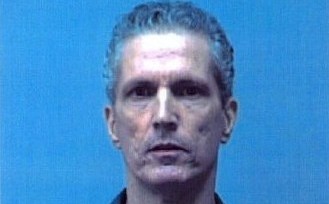
Ralph Dale Armstrong
Murderer Ervil LeBaron
Murderer · USA · 1972
Ervil Morrell LeBaron (1925 to August 16, 1981) was the leader of a polygamous…
35 victims
Ervil LeBaron
Murderer · USA · 1972
Ervil Morrell LeBaron (1925 to August 16, 1981) was the leader of a polygamous…
35 victims
 Brian Kevin Rosenfeld
Murderer · USA · 1985
Brian Kevin Rosenfeld Brian Kevin Rosenfeld was sentenced to three concurrent l…
23 victims
Brian Kevin Rosenfeld
Murderer · USA · 1985
Brian Kevin Rosenfeld Brian Kevin Rosenfeld was sentenced to three concurrent l…
23 victims
 Marvin Gray
Murderer · USA · 1975
Marvin Gray was convicted killer who claimed responsibility for 23 slayings and…
23 victims
Marvin Gray
Murderer · USA · 1975
Marvin Gray was convicted killer who claimed responsibility for 23 slayings and…
23 victims
 Yahweh ben Yahweh
Murderer · USA · 1980
Yahweh ben Yahweh was born and legally named Hulon Mitchell Jr. (October 27, 19…
23 victims
Yahweh ben Yahweh
Murderer · USA · 1980
Yahweh ben Yahweh was born and legally named Hulon Mitchell Jr. (October 27, 19…
23 victims
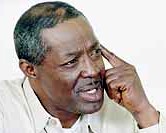 Robert E. Williams
Murderer · USA · 1977
Robert E. Williams was executed by electrocution in Nebraska on December 2, 199…
3 victims
Robert E. Williams
Murderer · USA · 1977
Robert E. Williams was executed by electrocution in Nebraska on December 2, 199…
3 victims
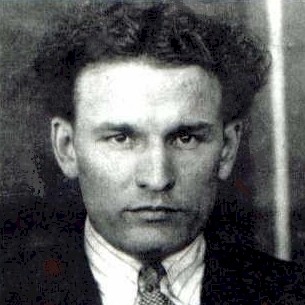 William Kenneth Wagner
Murderer · USA · 1924
William Kenneth (Kinnie) Wagner (born February 18, 1903 in Scott County, VA) wa…
6 victims
William Kenneth Wagner
Murderer · USA · 1924
William Kenneth (Kinnie) Wagner (born February 18, 1903 in Scott County, VA) wa…
6 victims
 Martsay Bolder
Murderer · USA · 1973
Martsay Bolder was executed by lethal injection in Missouri on January 27, 1993…
2 victims
Martsay Bolder
Murderer · USA · 1973
Martsay Bolder was executed by lethal injection in Missouri on January 27, 1993…
2 victims
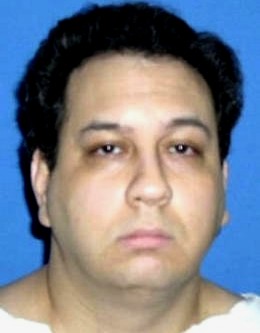 Virgil Martinez
Mass murderer · USA · 1996
Virgil Martinez was executed by lethal injection in Texas on January 29, 2009.…
4 victims
Virgil Martinez
Mass murderer · USA · 1996
Virgil Martinez was executed by lethal injection in Texas on January 29, 2009.…
4 victims
 Travis Baumgartner
Murderer · Canada · 2012
Sentenced to life in prison with no chance of parole for 40 years on September…
3 victims
Travis Baumgartner
Murderer · Canada · 2012
Sentenced to life in prison with no chance of parole for 40 years on September…
3 victims
- Gender
- male
- Country
- USA
- Location
- Madison, Wisconsin, USA
- Date of birth
- 1952
- Age at first offence
- 28
- Characteristics
- convicted rapist, rape
- Victim profile
- Charise Kamps, 19
- Method of murder
- Strangulation
- Date(s) of murder
- June 23, 1980
- Years active
- 1980
- Date of arrest
- —
- Status
-
Sentenced to life imprisonment in 1981; conviction overturned by the Wisconsin Supreme Court and a new trial ordered in 2005
Background
Ralph Dale Armstrong was a UW-Madison graduate student who was on parole from New Mexico after serving time for a sodomy conviction and four rape convictions. He was convicted in 1981 of killing 19-year-old Charise Kamps in a downtown Madison apartment, and he maintained his innocence.
The offence
Charise Kamps’s battered and bloody body was found nude with a bathrobe tie draped across her back in her apartment. A pathologist testified that it was likely she died from strangulation and was beaten with a blunt object.
Charise had been in the company of Armstrong, his brother Steve, Armstrong’s fiance Jane May, and others the evening of June 23, 1980. The account included:
- A party at May’s and dinner at a Madison restaurant.
- Armstrong, Kamps, and May going to a friend’s house and then back to May’s to watch television.
While at the party, several witnesses would testify that Charise and Armstrong were “flirting.” The recollections were described as “contradictory about who was flirting with whom,” with the narrative attributing the lack of clarity to conditions at the party.
According to trial testimony, shortly thereafter Armstrong and Charise went to her apartment, where they had a drink and listened to records while waiting to complete a cocaine deal. They then went out, purchased cocaine and then returned to May’s house.
At approximately 10:45 p.m., according to the trial testimony of both Armstrong and May, Charise left May’s to return to her apartment. The latest time Charise was known to be alive was between 11 and 11:30 p.m., when she called a friend in Prairie du Chien. Dr. Robert Huntington, a pathologist, placed the time of the victim’s death at between midnight and 3:30 a.m.
Charise’s body was found when her boyfriend Brian Dillman tried calling her from Iowa early in the morning of June 24, 1980, but the phone line was busy. After repeated unsuccessful attempts, he called Jane May and asked her to check on Charise, at which time the woman’s body was found (about 12:40 p.m. on June 24, 1980). May then went to the shop she managed and notified the police of the murder. She also called Armstrong, told him what happened and asked him to come to Charise’s apartment, which he did.
Armstrong testified that he left May’s flat for his apartment ten to twenty minutes later but ultimately returned to May’s by 1 a.m. on June 24, 1980. May testified Armstrong could have arrived back at her place as late as 3:30 a.m. but also admitted she had told friends that he had not returned all night. She later explained that this was a false statement, in her words, a “flip remark.”
Investigation
A forensic scientist testified at trial that there are 60 to 70 characteristics she compares between hairs to determine whether two are “similar” or “consistent,” and that a majority is needed to determine two hairs are “consistent.”
Armstrong voluntarily submitted to a test that revealed traces of blood under his fingernails, toenails and watch band. He told authorities that the blood came from a cut on his knee. He also stated that he had engaged in sexual relations with his girlfriend during her menstrual period.
Dillman testified that he loaned Armstrong $500 for the purchase of a car (similar to the one described by Riccie Orebia). Dillman stated that while speaking with Charise at the party, he overheard Armstrong giving Charise money and indicating that it was $400 in partial repayment for the loan. May testified that both Charise and Armstrong had told her about the $400 repayment. When police searched the apartment, no money was found.
One officer testified that he and another officer looked in “just about any conceivable place we figured there would be money hidden. Drawers, dressers, cabinets, anything,” including clothing, in Kamps’ apartment without finding the $400.
Arrest
Armstrong was not cooperative at the line up and had to be dragged to the scene, and he was described as setting himself apart from the other men.
Trial
At his trial, prosecutors presented evidence including:
- Testimony from witnesses that Charise and Armstrong were “flirting.”
- Trial testimony from Armstrong and Jane May that Charise left May’s at about 10:45 p.m. to return to her apartment.
- Dispute over Armstrong’s return to May’s by 1 a.m. on June 24, 1980.
Witness testimony and alibi dispute
The Wisconsin Supreme Court majority described a witness who was on the sidewalk near a front apartment door during a specific time period: “Terry Fink testified that the musician Jackson Browne was making a promotional film on State Street, including filming outside the Pipefitter. Fink stated that from five or ten minutes before 1:00 a.m. until 1:45 a.m., she was on the sidewalk within ten feet of the front apartment door, observing the film crew and chatting with friends. Fink testified that she never saw Armstrong in the area or enter the apartments during that time.”
Another witness described hearing entrances and exits: “Jeff Zuba was the resident manager for the apartments directly above the Pipefitter. … Zuba testified that his apartment door was opposite the door at the top of the front staircase and that he could hear anyone entering or leaving the building. … He did not see or hear Armstrong leave or return to the building.”
The state also presented two witnesses to support its theory that Armstrong went to Charise’s apartment after midnight rather than before 10:00 p.m. as Armstrong asserted.
Laura Chafee lived directly below Charise’s apartment and heard music “starting at about 12:05 a.m.” Detectives had her sit in her apartment and listen to music (Grand Funk Railroad) played in Charise’s apartment, and Chafee testified the sound was similar.
Josef Rut, a Madison Police Officer, testified that he removed a Grand Funk album from Charise’s stereo. Dillman testified that Armstrong had once played Grand Funk Survival for him, and Dillman stated that a copy of the album was on Charise’s turntable when he accompanied investigators on a walk-through of her apartment several days after her murder. Another witness who worked at the Pipefitter and was at May’s party on June 23 testified that Armstrong had once told her that Grand Funk Survival was among his favorites and that he played the album for her.
Hypnotically enhanced testimony
The second witness relied upon was Riccie Orebia, described in the proceedings as a transvestite living across the street from Charise Kamps. Orebia spent the night of June 23 sitting on his/her porch watching the world go by between 10:30 p.m. and 4 a.m. The courts disagreed on the correct pronoun to use for Riccie.
Orebia did not have a watch. Orebia had asked a passer-by what time it was and was told 11:45 p.m. Orebia estimated that at about 12:30 p.m., he/she saw a white car with a black top pass on West Gorham and described the driver as having dark, shoulder-length hair. Orebia saw the car pass a second time and park out of view across the street.
Orebia testified that about five or ten minutes later, he/she saw a person described as “lean and very muscular” walk from the direction of the parking lot, cross the street, and enter Charise’s apartment building. About five to ten minutes after that, the same man left the building and headed back toward the direction he had come. Orebia testified that another five minutes passed, and the same person crossed the street, entered the building a second time, and then, after staying inside another five minutes, left again, this time without wearing a shirt.
Orebia stated that five more minutes passed, and the same person ran across the street to the building a third time, stayed for about 20 minutes, and then left running very fast, “shining” as if he were oily. Orebia observed the black-over-white car speeding away from the parking lot.
The narrative described that the witness’s description—shoulder-length hair, lean and muscular, and later “shining”—was brought out through hypnosis, described as a recognized, but very delicate method of interrogating witnesses. It stated: “The hypnotist must be very careful not to ‘plant’ information or encourage ‘confabulation,’ defined as the construction of false memories.”
It stated that information may have been tainted, though the hypnotist who conducted the interrogation denied this. The Wisconsin Supreme Court opinion included: “During his testimony, Kihlstrom presented excerpts from the videotaped session between McKinley and Orebia. Kihlstrom noted that Lombardo was in the room during the session, and that Orebia initially described the suspect as being five-feet, three inches to five-feet five-inches tall, but McKinley suggestively inquired about a height of six feet tall until Orebia agreed with that height,” the Supreme Court Opinion states. “Armstrong’s attorney stated that Armstrong is six-feet, two inches tall.”
Orebia identified Armstrong in a line-up conducted at the scene of the crime, but Armstrong was not cooperative.
Riccie Orebia later gave two statements to Armstrong’s attorneys attesting that Armstrong was not the man he/she saw at the crime scene. The Wisconsin Supreme Court majority wrote: “However, at trial Orebia recanted his recantation and stated that he was positive that Armstrong was the person he saw enter and leave Kamps’ apartment building three times on the night of June 24, 1980,” the Supreme Court majority wrote. “Orebia testified that the statements he gave on November 5 and 10, 1980, were purposely untruthful, told as deliberate lies to undermine his credibility as a witness and to hopefully result in his withdrawal as a witness.”
Physical and forensic evidence
Armstrong’s defense contested identity and timing. The narrative described the role of semen and hair evidence.
It stated that the trace evidence—semen from a “secretor” found at the scene—was central to the State’s case. It also described pubic hair consistent with Armstrong’s.
A forensic scientist testified about hair comparisons, and it described that a majority is needed to determine hair consistency. It also referenced that the State argued that hair “head hairs found on a bathrobe belt draped over Kamps’ mutilated body … were similar to Armstrong’s.”
The narrative also included that the State theorized Armstrong stole the $400 from Kamps after Armstrong murdered her, and that: “In the early afternoon of June 24, 1980, the State established that Armstrong deposited $315 in cash into his bank account. In both the opening and closing statements, the State emphasized the $400 missing from Kamps’ apartment and Armstrong’s $ 315 cash deposit the following afternoon, asserting that both instances together were an indication of Armstrong’s guilt.”
The narrative also described Armstrong’s defense regarding the $315 deposition: he testified that his brother Steve gave him $300 in repayment for clothes Armstrong bought him and for Steve’s summer rent.
Sentencing
Armstrong was sentenced to life imprisonment in 1981.
Appeals
Wisconsin Court of Appeals
The Wisconsin Court of Appeals concluded: “despite the closeness of this case, Armstrong has not persuaded us that the newly discovered evidence would reasonably cause a new jury to discredit the incriminating circumstantial evidence.”
It further stated: “Although “a new jury could reach a different verdict,… Armstrong has not shown that the newly discovered evidence clearly and convincingly creates a reasonable probability that the outcome would be different on retrial.”
Wisconsin Supreme Court (new trial ordered)
After DNA tests eliminated Armstrong as a source of semen found at the scene, the Wisconsin Supreme Court overturned the conviction and sentence of life plus 16 years in favor of a new trial.
The dissent included a critique of the majority’s approach: “ The majority opinion is able to side-step our well-established jurisprudence for newly discovered evidence and conclude that Armstrong is entitled to a new trial only by avoiding the crucial analysis of whether this DNA evidence creates a reasonable probability that a different result would be reached at a new trial,” wrote Justice Patience Drake Roggensack in dissent. “Because I conclude that this evidence does not create a reasonable probability that a different result would be reached at a new trial and because I conclude that the real controversy, whether Armstrong raped and murdered Charise Kamps, was fully tried in 1981, I respectfully dissent from the majority opinion.”
The majority, written by Justice Louis B. Butler Jr., found the DNA results were relevant to identity: “Justice Louis B. Butler Jr., writing for the majority, found that the DNA results were “relevant to the critical issue of identity” facing jurors, since Armstrong had argued he was somewhere else when the murder occurred. “This is not evidence that tends to ‘chip away’ at the accumulation of (prosecutors’) evidence. The DNA evidence discredits one of the pivotal pieces of proof forming the very foundation” of the case against Armstrong.”
Outcome
The Wisconsin Supreme Court ordered a new trial.
Aftermath
In the mid-1990s, Steve Armstrong allegedly confessed to the 1980 murder of Charise Kamps in a filing with a state appeals court.
A brief filed on April 17 by Armstrong’s defense attorneys Jerome Buting and Barry Scheck alleged: “[T]he state deliberately suppressed and withheld, for approximately the last thirteen years, information that a known third party confessed to the rape and murder of the victim in this case,”
It stated the confession was “exculpatory evidence supporting the claim of Ralph Armstrong that he is innocent of this crime.”
The filing alleged that former Dane County assistant district attorney John Norsetter was personally contacted by one of the individuals to whom Steve Armstrong confessed, but Norsetter allegedly failed to investigate or notify Armstrong’s defense attorneys and allegedly ordered a test that destroyed evidence that could have established Steve Armstrong’s guilt. It included: “To even attempt such a test without telling the court or the defense about the third party’s confession was at best reckless, at worst, a deliberate attempt to manipulate the truth and frame an innocent man,” the filing states.
Ralph Armstrong was described as now 55 at the time of the June 2005-era reporting referenced in the narrative and as having always maintained his innocence. It stated that in 2005 the Wisconsin Supreme Court overturned his conviction after tests excluded him as the source of crime-scene DNA, and that the Dane County District Attorney’s Office was preparing to retry the case.
The brief included affidavits from Texas residents Fawn Elaine Cave and Debbie Holsomback describing an encounter with Steve Armstrong in the summer of either 1994 or 1995. Holsomback recalled 1995; Cave recalled it was either 1994 or 1995.
The affidavits described the women meeting Steve Armstrong during a visit to Cave’s mother in Roswell, Texas. They stated that Steve Armstrong said he knew Ralph was not guilty and was worried what Ralph might do to him when he got out of prison, and that Steve Armstrong said: “Ralph didn’t do it. I did it.”
The affidavit stated that Steve Armstrong proceeded to relate graphic details of the murder, “including that he used a broom on the victim with a sharp object attached.” The filing stated those details were “consistent with both the publicly known and unknown facts of the Kamps homicide.”
The affidavits described that Steve Armstrong was in Madison at the time, visiting his brother. Both men were initially detained by police. Ralph was subsequently charged with the crime. Steve was released and returned to Texas. The narrative stated that Steve died in Tennessee in July 2005.
The narrative stated that Cave contacted the FBI and possibly police in Roswell. Holsomback said she called the Dane County District Attorney’s Office and spoke with a man named “John,” who identified himself as Ralph Armstrong’s prosecutor; the filing identified him as John Norsetter. It stated that both women said their reports were not taken seriously and that Norsetter purportedly told Holsomback that he had no doubt he had convicted the right man.
The filing said that neither Norsetter nor anyone else from the Dane County District Attorney’s Office called their attention to the information after 2005 and argued the office had a duty to provide the information. It cited a case known as Brady and described alleged conduct in 2006 involving a Y-STR test: “In 2006, he violated a court order in ordering a DNA test on a remaining sample of crime scene DNA that effectively destroyed the sample. Moreover, the type of test ordered, a Y-STR test, looked at only a part of the DNA profile that for paternally related individuals would have been the same.”
It also quoted the brief: “Mr. Norsetter’s decision to conduct DNA tests that he knew would not be able to distinguish brothers from each other, when he knew that Armstrong’s brother had confessed to the crime, without telling the court or the defense about the confession, was nothing less than reckless and outrageous conduct,”
and: “In the process of using this deceptive ploy, he destroyed [the] semen stain which contained the more discriminating nuclear DNA that could have distinguished Ralph from his brother…”
The brief asked for further proceedings and included: “In addition,” they say, “because of the legally and ethically serious nature of this evidence, the Court should take immediate custody of the DA’s trial and post-conviction file in this case, copy it and seal it for safekeeping until further independent review can determine the true extent of this or any other Brady , due process or ethical violations. It also asks for all documents regarding Steve Armstrong to be “promptly disclosed to the defense.”
A call left at John Norsetter’s Madison home was not immediately returned.
The narrative included that Dane County DA Brian Blanchard said he could not comment, as he had not yet spoken with Norsetter about the matter and had no information beyond what was provided in the filing.
On April 24, the state responded opposing the motion. It stated that Assistant Attorney General Sally Wellman’s response brief asserted that: “The affidavits from Cave and Holsomback do not establish that Norsetter deliberately withheld evidence or even that Norsetter was contacted by Holsomback. It called the affidavits “mere allegations of facts, allegations which are unconfirmed and unproven.”
It further stated the allegations in Armstrong’s motion “have absolutely no relevance” to his pending case, and said it would be “wholly improper” to allow the record to be supplemented with this new information, while conceding it was within the court’s power to send the case back to circuit court for an evidentiary hearing. It also stated Armstrong could not be granted any additional relief beyond a new trial already ordered, and it opposed securing the case file, saying no due process or ethical violations had been established.
Spotted an error, or have more information about this case?