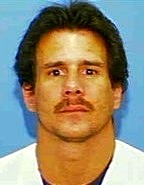
Glenn Benner
Murderer Brian Kevin Rosenfeld
Murderer · USA · 1985
Brian Kevin Rosenfeld Brian Kevin Rosenfeld was sentenced to three concurrent l…
23 victims
Brian Kevin Rosenfeld
Murderer · USA · 1985
Brian Kevin Rosenfeld Brian Kevin Rosenfeld was sentenced to three concurrent l…
23 victims
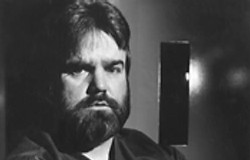 Marvin Gray
Murderer · USA · 1975
Marvin Gray was convicted killer who claimed responsibility for 23 slayings and…
23 victims
Marvin Gray
Murderer · USA · 1975
Marvin Gray was convicted killer who claimed responsibility for 23 slayings and…
23 victims
 Yahweh ben Yahweh
Murderer · USA · 1980
Yahweh ben Yahweh was born and legally named Hulon Mitchell Jr. (October 27, 19…
23 victims
Yahweh ben Yahweh
Murderer · USA · 1980
Yahweh ben Yahweh was born and legally named Hulon Mitchell Jr. (October 27, 19…
23 victims
 Russell Ellwood
Murderer · USA · 1991
Russell Ellwood was a former taxi driver. Authorities suspected him of killing…
20 victims
Russell Ellwood
Murderer · USA · 1991
Russell Ellwood was a former taxi driver. Authorities suspected him of killing…
20 victims
 Magnus Gäfgen
Murderer · Germany · 2002
Magnus Gäfgen (born April 11, 1975 in Frankfurt am Main) was a German child mur…
1 victim
Magnus Gäfgen
Murderer · Germany · 2002
Magnus Gäfgen (born April 11, 1975 in Frankfurt am Main) was a German child mur…
1 victim
 Kevin Cobb
Homicide · 1996
Kevin Cobb, a male nurse, was convicted of manslaughter for the death of nursin…
1 victim
Kevin Cobb
Homicide · 1996
Kevin Cobb, a male nurse, was convicted of manslaughter for the death of nursin…
1 victim
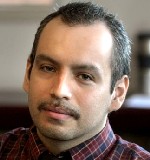 Ramon Torres Hernandez
Murderer · USA · 1994
Ramon Torres Hernandez was convicted in Bexar County, Texas, and sentenced to d…
3 victims
Ramon Torres Hernandez
Murderer · USA · 1994
Ramon Torres Hernandez was convicted in Bexar County, Texas, and sentenced to d…
3 victims
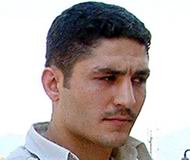 Ali Kaya
Serial killer · Turkey · 1997
Ali Kaya was a Turkish serial killer. He was nicknamed "The Babyface Killer" (T…
10 victims
Ali Kaya
Serial killer · Turkey · 1997
Ali Kaya was a Turkish serial killer. He was nicknamed "The Babyface Killer" (T…
10 victims
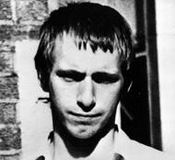 Bruce Lee
Serial killer · United Kingdom · 1973
Bruce Lee was born Peter George Dinsdale in 1960. He later changed his name to…
26 victims
Bruce Lee
Serial killer · United Kingdom · 1973
Bruce Lee was born Peter George Dinsdale in 1960. He later changed his name to…
26 victims
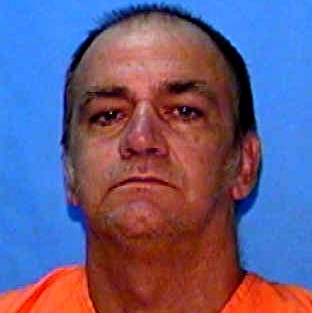 Gary Lawrence
Murderer · USA · 1994
Gary Lawrence (DOB: 06/29/57) was tried in the First Judicial Circuit, Santa Ro…
1 victim
Gary Lawrence
Murderer · USA · 1994
Gary Lawrence (DOB: 06/29/57) was tried in the First Judicial Circuit, Santa Ro…
1 victim
- Gender
- male
- Country
- USA
- Location
- Summit County, Ohio, USA
- Date of birth
- —
- Characteristics
- serial rapist, rape
- Victim profile
- Cynthia Sedgwick, 26 / Trina Bowser, 21
- Method of murder
- Strangulation
- Date(s) of murder
- August 6, 1985 / January 1, 1986
- Years active
- 1985–1986
- Date of arrest
- January 10, 1986
- Status
-
Executed
Executed by lethal injection in Ohio on February 7, 2006
Case overview
Glenn Benner II was convicted of aggravated murder for the murders of Cynthia Sedgwick and Trina Bowser. He was also convicted for crimes against other women, including rape, attempted rape, kidnapping, and aggravated burglary. He was sentenced to death by a three-judge panel, and he was executed by lethal injection in Ohio on February 7, 2006.
Victims
- Cynthia Sedgwick, 26: killed after attending a George Thorogood concert at Blossom Music Center; decomposed body and her purse were found in the woods.
- Trina Bowser, 21: disappeared after visiting a friend; her car was found burning on the side of the expressway in Akron; her body was found in the trunk of her burning car.
- Nancy Hale: raped in her home.
- Shelli Powell: kidnapped and attacked while jogging; tape used to cover her eyes; attempted rape and attempted aggravated murder.
- A bicyclist and a jogger: attacked, abducted, and attempted to rape in Akron.
- Three other women: Benner was convicted of attacking three other women; details are described through Nancy Hale and Shelli Powell and an additional attempted-rape victim described as a bicyclist and a jogger.
Timeline
- August 6, 1985 — Cynthia Sedgwick and three friends attended a rock concert at the Blossom Music Center; Sedgwick was “tipsy” and wandered away from her companions several times.
- August 12, 1985 — Cynthia’s nude and partially decomposed body was discovered by a parking attendant in the woods adjacent to the parking lot.
- August 29, 1985 (approximately 7:50 p.m.) — A call was received to investigate a possible abduction and attempted rape; the victim reported being pulled from her bike, dragged into a cornfield, and fought until a passing motorist scared the suspect off; Benner was arrested shortly afterward and was positively identified.
- September 26, 1985 — Benner and Robert Tyson entered Nancy Hale’s home; Benner grabbed her, raped her orally, anally and vaginally, and began choking her; Tyson somehow got Benner to let go; Benner confessed to the rape upon his arrest.
- November 19, 1985 (evening) — Shelli Powell was jogging along Howe Road in Tallmadge; she was tackled, told to “shut up,” had tape wrapped around her head and eyes, was dragged into the woods, had her shirt and brassiere removed, and was choked until she lost consciousness; she later ran naked to a house and received help from occupants who called police.
- December 28, 2005 — Glenn L. Benner II wrote to an assistant attorney general that he would not seek or participate in a clemency hearing.
- January 1, 1986 — Trina Bowser left her friend’s home at approximately 9:45 p.m. and stated she wanted to go home because she was tired.
- January 2, 1986 (12:15 a.m.) — An A.T. & T. employee coming home from work spotted Trina’s car burning on Interstate 76; the men put out the fire; Trina’s parents opened the trunk and found her lifeless body.
- January 10, 1986 — Benner and Tyson were taken into custody by Akron police; Benner confessed to the rape of Nancy Hale.
- January 12 and January 14, 1986 — Police executed warrants to search Glenn L. Benner’s residence on Broadview Road, his new home on Butterbridge Road, and his truck.
- February 6, 2006 — Gov. Bob Taft issued a statement concerning Glenn L. Benner II’s clemency.
- February 7, 2006 — Glenn L. Benner II was executed by lethal injection at 10:15 a.m. at the Southern Ohio Correctional Facility near Lucasville.
The offences
Cynthia Sedgwick
Cynthia Sedgwick, 26, attended a George Thorogood concert at Blossom Music Center in Summit County on August 6, 1985. While she was described as “tipsy,” she wandered away from her companions several times, and at the end of the concert she was nowhere to be found. Benner attended the same concert with a group of friends and co-workers from his employer, Michael’s Construction Company.
A group member testified that he saw Benner talking with a girl who was “fairly drunk or high.” Another co-worker confirmed the observation and testified that he saw Benner carry Sedgwick into the woods adjacent to the parking lot. Benner’s party was unable to find him and left the music center without him.
On August 12, 1985, Cynthia’s nude and partially decomposed body was discovered in the woods adjacent to the parking lot. A Summit County deputy sheriff testified that a partial pack of Winston Cigarettes was found near the body. Other testimony indicated that neither Cynthia nor anyone in her group smoked Winston cigarettes, while Robert Tyson testified that Benner smoked Winstons. Testimony also indicated that a knotted brassiere, a pair of socks tied together, and a tooth were found around Cynthia’s body. After Cynthia’s body was found, her purse was also found in the woods surrounding Blossom Music Center.
The Summit County coroner testified regarding the cause of death. The coroner, Dr. William A. Cox, testified that he could eliminate all possible causes of death except death by asphyxiation through strangulation; the inference was based on severe decomposition and maggot infestation in certain body areas, and on information gained subsequent to the autopsy from Robert Tyson. The court of appeals later held that the coroner’s testimony was admissible and that it “did not say that Tyson’s testimony regarding the cause of death was credible, but merely that it was consistent with his own conclusions.”
Trina Bowser
Trina Bowser, 21, who had known Benner since they were kids and lived in the same neighborhood, disappeared after visiting her friend. Trina left her friend’s home at approximately 9:45 p.m. She did not return from visiting a girlfriend.
On January 2, 1986 at approximately 12:15 a.m., an A.T. & T. employee coming home from work spotted Trina’s car burning on Interstate 76. The employee flagged down a trucker for help and requested a fire extinguisher; both men put out the fire. The trunk of the car was later opened by Trina’s parents, and her lifeless body was found in the trunk.
Her body was described as having ankles bound with curtain tiebacks resembling those from Benner’s new home on Butterbridge Road in Canal Fulton. Her underpants and brassiere were tied around her neck, and her jeans were wrapped around her head. A single set of footprints in the snow was found going away from Trina’s car to a point on Southwest Avenue, just north of Newton Street. An auto shop owner at that location testified that he saw a pickup truck with a broken grille in his parking lot at midnight on January 2 and that at 1:20 a.m. he noticed the truck was gone. Benner’s truck was later identified by that owner as the truck he had seen that night.
Tests indicated the presence of spermatozoa in Trina’s anus and vagina. A criminalist testified that Benner could have been the source of the sperm, and DNA tests in 2003 confirmed that it was Benner’s. Fibers and a green paint chip were found on Trina’s coat, and fibers were also found on and around her corpse. Fibers and a green paint chip were later tied to items seized from Benner’s residence searches, including clothing, dryer lint, and vacuum sweepings.
Nancy Hale
Nancy Hale was raped in her Goodyear Heights home on the evening of September 26, 1985. Without warning, she was grabbed from behind, slapped repeatedly, and thrown to the floor. Her clothes were stripped from her body. She was orally, anally and vaginally raped. During the rape, a second individual kept asking Nancy where her money was; this second subject pulled the rapist off of her. After raping her, the assailant placed his hands around her throat and began choking her.
Benner and Tyson left Hale’s home after the attack. Hale told law authorities that her life had flashed before her eyes. After his apprehension by Akron police, Benner confessed to raping her.
Shelli Powell
Shelli Powell, a 19-year-old college student, was jogging along Howe Road in Tallmadge on the evening of November 19, 1985. She was tackled and ended up lying face down on an embankment parallel to the sidewalk. She testified that her attacker told her to “shut up,” not say anything, and not look. He wrapped masking tape around her head and covered her eyes. Shelli testified that she could see her attacker’s profile for around five seconds before he taped her eyes shut. She was then dragged into the woods, her shirt and brassiere removed, and she was fondled. When she tried to run away, the attacker pounced on her from behind and began to choke her with his hands. She became dizzy and lost consciousness.
When she regained consciousness, Shelli was lying naked in mud and noticed something tied tightly around her neck and mouth impeding her breathing. She ran naked to a house nearby for help. The occupants admitted her, called Tallmadge Police, and the officer responding untied the knotted brassiere wound tightly around her neck. Shelli was taken to a hospital and later released, and she identified Benner as her attacker at trial and in an array of photographs.
Robert Tyson testified that after hearing a radio report about a “Tallmadge jogger was attacked and raped,” he discussed the attack with Benner. Tyson testified that Benner admitted he was the attacker but denied he raped her “because he ran into complications.”
Investigation
Early indications and identification in the Cynthia Sedgwick murder
A packing attendant found Cynthia’s body in the woods adjacent to the parking lot on August 12, 1985. A partial pack of Winston Cigarettes was found near the body. Other evidence around the body included a knotted brassiere, a pair of socks tied together, and a tooth.
Witnesses described Benner being seen with Sedgwick at the concert, including testimony that he carried her into the woods adjacent to the parking lot.
Investigation into the attempted rape and arrest
The Portage County Sheriff’s Office received a call on August 29, 1985, at approximately 7:50 p.m., to investigate a possible abduction and attempted rape. The victim reported that she was riding her bike on Ranfield Road, saw the suspect standing along the road, and was pulled from her bike. She alleged that the suspect covered her mouth and dragged her across a ditch into a cornfield. She continued to fight the suspect until he was scared off by a passing motorist. After a search, Benner was arrested a short time later and was positively identified by the victim.
Investigation into the Trina Bowser murder
Following Trina Bowser’s murder, Robert Tyson phoned Tallmadge police and stated he knew the perpetrator of the murders of Cynthia Sedgwick and Trina Bowser and also the attack on Powell. Tyson later met with the coroner and several detectives and informed them of Benner’s confession to the Hale rape.
Trina’s case involved physical evidence including bound restraints, footprints leading to Southwest Avenue, and forensic testing for spermatozoa. Fibers and a green paint chip on Trina’s coat were consistent with items found in Benner’s home, and DNA tests confirmed the sperm source in 2003.
Searches and seized items
On January 12 and 14, 1986, police executed warrants to search Benner’s residence on Broadview Road, his new home on Butterbridge Road, and his truck. Officers seized clothing, vacuum sweepings, dryer lint, carpet fiber samples, and two chips of green paint. Blue bilobal acrylic fibers and green trilobal nylon fibers were found in the clothing, dryer lint, and vacuum bag with the same characteristics as those fibers found on Bowser’s body and coat. White modacrylic fibers with the same characteristics as those fibers in Bowser’s fake fur coat were found in some clothing. A woman’s pierced earrings, fibers and hair and other trace evidence for comparison, cement/mud type substance for comparison, lavender or purple erasure type substance for comparison, white decorative rope for comparison, a blue sweatshirt, and a ladies grey Nelsonic digital watch were also described among the items authorized for seizure under the search warrants.
The court of appeals addressed Benner’s challenges to the search warrants and the evidence seized pursuant to them.
Arrest and custody
After Cynthia’s and Trina’s murders, Benner was later identified through investigation and testimony. Benner and Tyson were arrested by Akron police on January 10, 1986. The attempted rape arrest occurred shortly after the August 29, 1985 call, following a search and positive identification.
Confessions and statements
- Nancy Hale rape confession: Benner confessed to the rape of Nancy Hale after his arrest by Akron police on January 10, 1986, and the court described that he confessed that day to the rape of Nancy Hale.
- Sedgwick and Powell crimes confession to Tyson: The narrative stated that shortly after the murder of Trina Bowser, Robert Tyson phoned Tallmadge police and stated he knew the identity of the perpetrator. Tyson and Benner’s involvement was described through Tyson’s testimony, including that Tyson testified Benner confessed to him regarding the Sedgwick murder and also the Powell crimes.
- Benner’s statement about Cynthia and choking: Benner told Robert L. Tyson that “he killed a girl at Blossom last night. He said he raped her and then choked her to death.”
- Shelli Powell alleged admission with denial of rape: Tyson testified Benner admitted he was the attacker but denied he raped her “because he ran into complications.”
- Benner’s statement at clemency process refusal letter: In a letter to an assistant attorney general dated December 28, 2005, Benner wrote about not seeking or participating in clemency and quoted: “I know that I have changed, and I am now a new person, but sadly I am unable to change the past, so there does not seem to be (sic) a point in participating in such a hearing.”
Trial
Charges and panel
Glenn Benner was indicted in a twenty-three count indictment returned by the grand jury on January 21, 1986. The indictment included aggravated murders of Cynthia Sedgwick and Trina Bowser, with each count containing death penalty specifications. Benner elected to proceed with a three-judge panel instead of a jury. The state presented testimony of thirty witnesses and admitted over one hundred exhibits. Benner was convicted of twenty counts, including three counts of aggravated murder—one count for the killing of Cynthia Sedgwick and two counts for the killing of Trina Bowser.
The appeals material also lists offense descriptions attributed to Benner including “ATTEMPTED AGG MURDER, ATTEMPTED RAPE, KIDNAPPING, AGG BURGLARY, GSI, RAPE (3 Counts), KIDNAPPING (2 Counts), RAPE (5 Counts), ABDUCTION, AGG MURDER (2 Counts).”
Evidence used
Two of the victims testified in detail about the crimes against them. Benner confessed to the rape of Nancy Hale. The state’s witness Robert Tyson supplied incriminating evidence concerning the Sedgwick murder. The evidence concerning the murder of Trina Bowser was described as circumstantial but understood as not requiring special training.
Identification procedure for Shelli Powell
Benner challenged the identification by Shelli Powell. The court of appeals described the photographic array as consisting of eight photographs with five individuals portrayed, and all appeared to be white males and in their twenties. Shelli identified Benner as her attacker. The court held that the photographic identification procedure was not impermissibly suggestive and that even if suggestive, the identification included sufficient indicia of reliability.
Shelli’s testimony included that after identifying Benner she became “visibly shaken” and “nauseated,” and that her certainty rating was seven and a half on a one to ten scale. The court of appeals reviewed factors including opportunity to view the attacker, degree of attention, accuracy of description, certainty, and the time between the crime and the confrontation.
Coroner testimony about cause of death
Benner challenged testimony by Summit County Coroner Dr. William A. Cox. The court of appeals held that the coroner’s testimony was admissible expert opinion and that it did not say Tyson’s testimony was credible, only consistent with the coroner’s own conclusions about the cause of death by strangulation.
Motions and rulings
Benner made two related motions concerning severance based on improper joinder and requesting separate trials; both were denied. Benner renewed the motions at the close of the State’s case, at the close of all the evidence, and the denials were addressed.
Benner also challenged the denial of his motion in limine. The appeals court concluded the majority of the panel could overrule his motion in limine and noted statutory language that the judges or a majority may decide questions of fact and law arising upon trial.
Benner sought a change of venue due to adverse and copious pre-trial publicity; the appeals court held there was no denial of his right to an impartial jury and overruled the venue challenge.
Sentencing
The three-judge panel conducted a sentencing proceeding (penalty phase) under R.C. 2929.03. Benner presented testimony of licensed psychologist Dr. James W. Sidall, family members, and friends. Benner also testified, and a reported detail stated that he was not cross-examined. After examining all the evidence, the panel unanimously concluded that aggravating circumstances outweighed mitigating factors and imposed the penalty of death.
A sentencing determination referenced consideration of the testimony and evidence relating to the brutal and depraved manner in which Benner strangled or attempted to strangle his victims, the frequency of attacks, and an indifference and lack of remorse described in the panel’s language, as well as the purpose described in the excerpt.
Appeals
Benner appealed his convictions and the death sentence. The appeals court decision reviewed and overruled multiple assigned errors, and it affirmed the conviction and sentence.
Among the grounds addressed were:
- Denial of severance motions related to joinder of offenses.
- Admission of the coroner’s testimony.
- Denial of the motion in limine with respect to the presiding judge/panel.
- Denial of a change of venue.
- Admissibility of Benner’s statements and confessions.
- Admission of evidence seized under search warrants.
- Constitutional challenges to Ohio’s death penalty statutes and alleged vague or unconstitutional aggravating circumstances.
- Alleged improper consideration by the three-judge panel outside the scope of aggravating circumstances.
The appeals decision concluded that “We affirm.” It also stated that there were reasonable grounds for the appeal and ordered a special mandate directing the County of Summit Common Pleas Court to carry the judgment into execution, with costs taxed to appellant.
Clemency, final meal, and final words
Clemency refusal letter
On December 28, 2005, Glenn L. Benner II wrote to Michael L. Collyer, Assistant Attorney General. Benner wrote:
Dear Mr. Collyer, It is with respect that I wish to elaborate on my decision not to seek or participate in a clemency hearing. I originally thought that clemency was a way of administering Justice with Mercy, as per Christian teachings, but I have seen in recent rulings that the decisions of the Parole Board and the Governor not to grant clemency seem to have been based on the nature of the crime which was committed, not on whether or not the person facing execution has changed enough to deserve a sentence other than that of death. I know that I have changed, and I am now a new person, but sadly I am unable to change the past, so there does not seem to be point in participating in such a hearing. Also I feel that my participation in a clemency hearing would add further stress to those already suffering because of my actions, and I do not want to do this to anyone. I do of course understand that the Bowser and Sedgwick families may wish to participate in a hearing in order to express how they feel, and that is their prerogative, and I will respect that. I just want them to know that I will do nothing personally to add to their pain. Sincerely Glenn L. Benner II, #A190-672 Ohio State Penitentiary 878 Coitsville-Hubbard Road Youngstown, Ohio 44505 National Coalition to Abolish the Death Penalty
Gov. Taft clemency statement
Gov. Bob Taft issued a statement that recited the crimes and described the clemency review. In the statement, Taft wrote:
On August 6, 1985, Mr. Benner kidnapped Cynthia Sedgwick from an outdoor music concert and raped and strangled her to death in a nearby wooded area. On January 1, 1986, Mr. Benner kidnapped, raped, and strangled to death Trina Bowser, whose body was discovered in the trunk of her burning car. During the trial for the aggravated murders of Ms. Sedgwick and Ms. Bowser, Mr. Benner was also tried for crimes against two other women. On September 26, 1985, Mr. Benner raped and strangled Nancy Hale in her home. Mr. Benner kidnapped Shelli Powell while she was jogging near her home on November 19, 1985 and attempted to rape and strangle her to death.
“Mr. Benner was convicted of numerous crimes, including the aggravated murders of Ms. Sedgwick and Ms. Bowser, and he was sentenced to death.
“Mr. Benner did not request executive clemency, did not participate in the clemency process, and his attorney did not attend the clemency hearing. After a careful review of Mr. Benner's case, the Ohio Parole Board unanimously recommended (8-0) that clemency be denied.
“Following a thorough review of the judicial opinions, the report and recommendation of the Ohio Parole Board, recommendations from the Ohio Attorney General's Office and the Summit County Prosecutor's Office, and other relevant materials, I can find no compelling reason to grant clemency.
“For these reasons, I concur with the unanimous decision of the Parole Board and deny clemency for Glenn L. Benner, II.
“May God bless the families and friends of Cynthia Sedgwick and Trina Bowser.”
Final meal
Benner’s final meal included:
- Four bacon cheeseburgers on toasted buns, with green peppers, tomatoes, pickles, ketchup, mustard and mayonnaise
- A baked potato with butter and sour cream
- French fries
- Onion rings
- Macaroni and cheese
- Chef salad with creamy Italian dressing
- Blueberry pie with chocolate ice cream
- Iced tea
- A Coke
Execution
Benner was described as having been executed by lethal injection at 10:15 a.m. at the Southern Ohio Correctional Facility near Lucasville on February 7, 2006. The record described that prison officials allowed a face-to-face meeting in the Death House between Benner and Rodney Bowser, a brother of Trina Bowser, about two hours before the execution. The meeting lasted about 15 minutes and was described as calm, with Benner answering questions.
In remarks while strapped to the lethal injection table, Benner addressed the victims’ families. Benner said:
I just need you to give me two seconds. I have been going over and over in my head trying to think of the words I can say to you that would ease the unimaginable pain that you have been going through for 20 years because of my actions. I'm sorry. Trina and Cynthia were beautiful girls who dind't deserve what I did to them. They are in a better place. Words seem so futile. All I can say is I'm sorry. May God give you peace.
After Benner’s remarks, Timothy Bowser said:
That won't get you into heaven, ace.
Other details
People connected to the case
- Robert Tyson: co-worker at the construction company who phoned Tallmadge police and was a star witness against Benner at trial; later pleaded guilty and was sentenced to 5-25 years imprisonment and was paroled after serving 5 years.
- Lynn Slaby: prosecuting attorney for plaintiff (as listed in the appeal decision).
- Lawrence J. Whitney and Robert Baker: for defendant (as listed in the appeal decision).
- Judge Bayer: held his ruling on Benner’s motion in abeyance pending an attempt to impanel an impartial jury.
- CACIOPPO, Judge: the appellate decision’s author.
- QUILLIN, P.J., and MAHONEY, J.: concurred.
- Andrea Dean: prison spokeswoman describing the cell-front meeting.
- Phil Bogdanoff: assistant Summit County prosecutor who made statements at clemency.
- Phil Bogdanoff: described Benner as a serial rapist and killer at a clemency hearing.
- James Siddall: psychologist who evaluated Benner two weeks after his conviction; provided opinions included below average intelligence, major depression, and impulsive behavior with lack of anger control.
- Dr. James W. Sidall: licensed psychologist who testified at the penalty phase.
- Hilary Hughes: a pen pal of Benner while he was in prison; traveled from Dublin, Ireland, to watch the execution with Benner’s aunt.
- Mary Lou Silvers: Benner’s aunt, listed among witnesses.
- Bradley Bowser: one of Trina Bowser’s three brothers who witnessed the execution.
- Rodney Bowser: Trina Bowser’s brother who met Benner in the Death House and later described the meeting.
- Scott Bowser: Trina Bowser’s nephew who read a statement at the execution; also asked for certain witnesses at the prison.
- Timothy Bowser: a brother of a victim and a witness at the execution.
- James and Barbara Sedgwick: Cynthia’s father and mother; Cynthia’s brother was James Sedgwick Jr.
- Trixie Irene Dick: wrote on January 2, 1986 on a Bible: “Today, Jan. 2, 1986, was the worst day of my life. Some wicked angel of Satan killed my dear and loving Granddaughter Trina.”
- Cheryl Leek: friend of Trina Bowser at whose home Trina visited.
- Cheryl Leek: described as Trina’s friend; Trina left at approximately 9:45 p.m.
Custody and prison-related facts
- Benner’s inmate number was 190672 and he was located in Ohio prison facilities including Mansfield Correctional Institution; he was executed at the Southern Ohio Correctional Facility near Lucasville.
- Date of admission: 5/14/86
- Date of birth: 09/24/62
- Final words were delivered shortly before lethal injection.
Numbers and counts
- The indictment returned on January 21, 1986 was a twenty-three count indictment.
- Benner was convicted of twenty counts, including three counts of aggravated murder.
- Five aggravating circumstances were proven beyond a reasonable doubt.
- The sentencing panel unanimously imposed the penalty of death.
Letters and quotes about clemency
Benner stated in a later report that he refused to ask for his life to be spared because he said the process does not consider whether a person changes in prison. In the December 28, 2005 letter, he stated: “I know that I have changed, and I am now a new person, but sadly I am unable to change the past, so there does not seem to be point in participating in such a hearing.”
Trial court record details
The appeals record included the use of a three-judge panel, detailed discussion of joinder under Crim.R. 8(A) and Crim.R. 14, and detailed discussion of the admissibility of statements elicited in interrogation sessions and the suppression motion denial.
Disposition of appeals
The appellate court decision overruled assignments of error and affirmed the conviction and death sentence, ordering that judgment be carried into execution.
Spotted an error, or have more information about this case?