
John Frank Hickey
Serial killer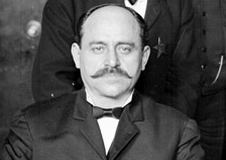 Johann Otto Hoch
Serial killer · USA · 1890
Johann Otto Hoch (1855 - 1906) was the most famous and last-used alias of a Ger…
15 victims
Johann Otto Hoch
Serial killer · USA · 1890
Johann Otto Hoch (1855 - 1906) was the most famous and last-used alias of a Ger…
15 victims
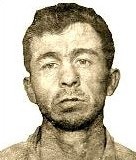 Donald Henry Gaskins
Serial killer · USA · 1969
Donald Henry Gaskins, also known as Donald “Pee Wee” Gaskins, was a serial kill…
200 victims
Donald Henry Gaskins
Serial killer · USA · 1969
Donald Henry Gaskins, also known as Donald “Pee Wee” Gaskins, was a serial kill…
200 victims
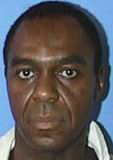 Carl Eugene Watts
Serial killer · USA · 1974
Carl Eugene Watts (born November 7, 1953; died September 21, 2007), also known…
100 victims
Carl Eugene Watts
Serial killer · USA · 1974
Carl Eugene Watts (born November 7, 1953; died September 21, 2007), also known…
100 victims
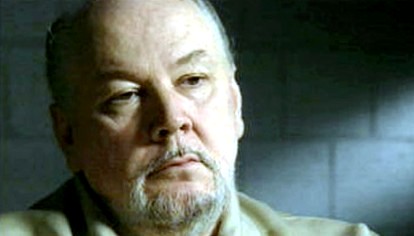 Richard Kuklinski
Serial killer · USA · 1949
Richard “Iceman” Kuklinski was sentenced to life in prison in 1988. He died in…
100 victims
Richard Kuklinski
Serial killer · USA · 1949
Richard “Iceman” Kuklinski was sentenced to life in prison in 1988. He died in…
100 victims
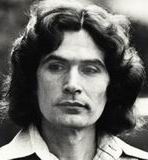 Rodney Alcala
Serial killer · USA · 1977
Rodney James Alcala (born August 23, 1943) was also known as Rodrigo Jacques Al…
100 victims
Rodney Alcala
Serial killer · USA · 1977
Rodney James Alcala (born August 23, 1943) was also known as Rodrigo Jacques Al…
100 victims
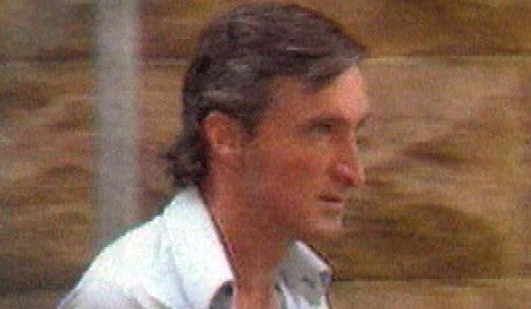 David Birnie
Serial killer · Australia · 1986
David John Birnie (16 February 1951 – 7 October 2005) was an Australian serial…
4 victims
David Birnie
Serial killer · Australia · 1986
David John Birnie (16 February 1951 – 7 October 2005) was an Australian serial…
4 victims
 Andrea Hicks Jackson
Murderer · USA · 1983
Andrea Hicks Jackson (also known as Felice) was convicted of murdering a black…
1 victim
Andrea Hicks Jackson
Murderer · USA · 1983
Andrea Hicks Jackson (also known as Felice) was convicted of murdering a black…
1 victim
 James Adolph Campbell
Murderer · USA · 1992
James Adolph Campbell was convicted by a North Carolina jury of first-degree mu…
1 victim
James Adolph Campbell
Murderer · USA · 1992
James Adolph Campbell was convicted by a North Carolina jury of first-degree mu…
1 victim
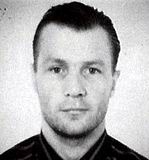 Alexander Solonik
Murderer · Russia · 1990
In February 1997, Greek newspapers published articles that claimed a Russian mo…
10 victims
Alexander Solonik
Murderer · Russia · 1990
In February 1997, Greek newspapers published articles that claimed a Russian mo…
10 victims
 Silvo Plut
Serial killer · Slovenia / Serbia · 1990
Silvo Plut was a Slovenian serial killer. He was born 29 May 1968 in Novo mesto…
3 victims
Silvo Plut
Serial killer · Slovenia / Serbia · 1990
Silvo Plut was a Slovenian serial killer. He was born 29 May 1968 in Novo mesto…
3 victims
- Gender
- male
- Country
- USA
- Location
- Massachusetts/New York, USA
- Date of birth
- October 29, 1865
- Age at first offence
- 18
- Characteristics
- child molester, alcoholic
- Victim profile
- Edwin W. Morey, 34 (co-worker) / Michael Kruck, 10 / Joey Joseph, 7
- Method of murder
- Poisoning - Strangulation
- Date(s) of murder
- 1883 / 1902 / 1912
- Years active
- 1883–1912
- Date of arrest
- November 18, 1912
- Status
-
Died in custody
Sentenced to life in prison on November 29, 1912; died in prison on May 8, 1922
Case record: John Frank Hickey
John Frank Hickey, “The Postcard Killer,” was one of the first known and captured serial killers.
Background
Hickey was described as a hopeless alcoholic. He was “something of a dandy while sober, but when drunk he confided to detectives that he harbored a secret sexual attraction for children.” His assaults were described as spontaneous: “when he was tipping the demon rum, he claimed that he couldn’t control himself.”
Hickey began a long series of correspondence about his crimes in the form of postcards. He enjoyed knowing that they could be read by anybody while they were en route. The postcards eventually formed the net that snared him.
A young psychiatrist named Nelson “Kid” Wilson published a detailed description of what the killer might be like. His “profile” was so close to the truth that the prosecution team later hired him.
The offence
On October 11, 1911, seven-year-old Joey Joseph disappeared from the streets of Lackawanna, New York. After his father, an immigrant laborer, reported his son missing, police launched a full-scale search. Joey Joseph seemed to have vanished into thin air.
The case involved attacks on young newsboys who wandered the urban streets alone. From his first murder at eighteen until his capture and conviction nearly three decades later, Hickey traveled and worked at anonymous clerical or engineering jobs while he committed murders. The murders were described as sometimes attacking in open view, and his need for public attention drove him to taunt his victims’ families and mock the police.
Along with Joey Joseph, ten-year-old newsboy Michael Kruck and 34-year-old Edwin W. Morey were also victims of the killer.
Hickey confessed after his arrest to three murders and numerous sexual assaults of children. He was also suspected of at least twelve other murders. During the two decades he roamed New England, dozens of children went missing or were found murdered.
Investigation
With no real leads, police decided to publish copies of the postcards in a local newspaper. Almost immediately, several people contacted authorities to say they recognized the handwriting as that of an eccentric drunkard and prolific correspondent named J. Frank Hickey.
In some messages, the killer described the heinous crime, while others expressed an obviously false remorse. Finally, in one letter, the writer gave police directions to the body. The next day, authorities dug up the skeletal remains from the pit of a communal outhouse near Joey’s home.
As the case was sensationalized by the media, Nelson “Kid” Wilson published a detailed description of what the killer might be like.
Arrest and confession
After his arrest, Hickey confessed to three murders and numerous sexual assaults of children.
He was suspected of at least twelve other murders.
Trial
Hickey escaped the electric chair.
Hickey was convicted of second-degree murder and sent to Auburn prison.
When jurors were interviewed as to their curious verdict, one said, “Would you shoot a dog because he acts this way?” The jury thought he was insane.
Sentencing
Hickey was sentenced to life in prison on November 29, 1912.
Appeals
No appeals were described.
Outcome
Hickey died in prison on May 8, 1922.
Other details
The book The Postcard Killer: The True Story of J. Frank Hickey by Vance McLaughlin, Ph.D. April 24, 2008 discussed the case. Robert A. Waters - kidnappingmurderandmayhem.blogspot.com appeared as a site name at the end of the provided text.
Vance McLaughlin’s statement about how he decided to write the book was quoted verbatim:
“As usually happens, I [was] researching some other topic and [stumbled] on to something else. I was collecting a great deal of data on homicides in Buffalo. While looking through old newspapers, I kept stumbling into Hickey. So I decided to write a book.”
A description of the jury’s reasoning that kept Hickey locked up was stated as: Hickey was too dangerous to be placed in a mental institution where he might escape or be released, and the second-degree murder conviction effectively kept him locked up until he died.
The provided text also mentioned that at least two other serial murderers, Albert Fish and Peter Kudzinowski, were also active in the general area at the same time.
Spotted an error, or have more information about this case?