Roger James Berget
Murderer Brian Kevin Rosenfeld
Murderer · USA · 1985
Brian Kevin Rosenfeld Brian Kevin Rosenfeld was sentenced to three concurrent l…
23 victims
Brian Kevin Rosenfeld
Murderer · USA · 1985
Brian Kevin Rosenfeld Brian Kevin Rosenfeld was sentenced to three concurrent l…
23 victims
 Marvin Gray
Murderer · USA · 1975
Marvin Gray was convicted killer who claimed responsibility for 23 slayings and…
23 victims
Marvin Gray
Murderer · USA · 1975
Marvin Gray was convicted killer who claimed responsibility for 23 slayings and…
23 victims
 Yahweh ben Yahweh
Murderer · USA · 1980
Yahweh ben Yahweh was born and legally named Hulon Mitchell Jr. (October 27, 19…
23 victims
Yahweh ben Yahweh
Murderer · USA · 1980
Yahweh ben Yahweh was born and legally named Hulon Mitchell Jr. (October 27, 19…
23 victims
 Russell Ellwood
Murderer · USA · 1991
Russell Ellwood was a former taxi driver. Authorities suspected him of killing…
20 victims
Russell Ellwood
Murderer · USA · 1991
Russell Ellwood was a former taxi driver. Authorities suspected him of killing…
20 victims
 Tanya Nelson
Murderer · USA · 2005
Tanya Jaime Nelson (46) — defendant; of Roanoke Rapids, North Carolina; sentenc…
2 victims
Tanya Nelson
Murderer · USA · 2005
Tanya Jaime Nelson (46) — defendant; of Roanoke Rapids, North Carolina; sentenc…
2 victims
 Vladimir Mirgorod
Serial killer · Russia · 2002
Vladimir Mirgorod was sentenced to life in prison for killing at least sixteen…
16 victims
Vladimir Mirgorod
Serial killer · Russia · 2002
Vladimir Mirgorod was sentenced to life in prison for killing at least sixteen…
16 victims
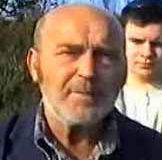 Vladmir Romanov
Serial killer · 1991
Vladimir Romanov was a resident of the Russian exclave in the Baltic Region and…
11 victims
Vladmir Romanov
Serial killer · 1991
Vladimir Romanov was a resident of the Russian exclave in the Baltic Region and…
11 victims
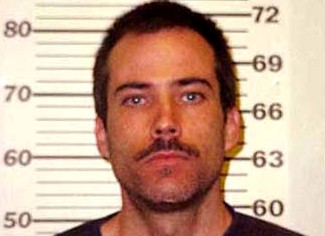 Eric Rudolph
Murderer · USA · 1996
Eric Robert Rudolph (born September 19, 1966), also known as the “Olympic Park…
2 victims
Eric Rudolph
Murderer · USA · 1996
Eric Robert Rudolph (born September 19, 1966), also known as the “Olympic Park…
2 victims
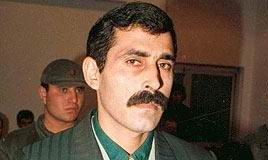 Adnan Çolak
Serial killer · Turkey · 1992
Adnan Çolak was born in 1952 and was known as the "Artvin Monster". He was a Tu…
11 victims
Adnan Çolak
Serial killer · Turkey · 1992
Adnan Çolak was born in 1952 and was known as the "Artvin Monster". He was a Tu…
11 victims
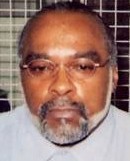 Stanley Williams
Murderer · USA · 1979
Stanley Williams was convicted and sentenced to death for murders committed dur…
4 victims
Stanley Williams
Murderer · USA · 1979
Stanley Williams was convicted and sentenced to death for murders committed dur…
4 victims
- Gender
- male
- Country
- USA
- Location
- Oklahoma, USA
- Date of birth
- November 20, 1960
- Age at first offence
- 25
- Characteristics
- abduction, kidnapping, robbery, alcohol, drug addict
- Victim profile
- Rick Lee Patterson, 33 / James Meadows
- Method of murder
- Shooting
- Date(s) of murder
- 1985
- Years active
- 1985
- Date of arrest
- August 1986
- Status
-
Executed
Executed by lethal injection in Oklahoma on June 8, 2000
Case record (Roger James Berget)
Roger James Berget was executed by lethal injection in Oklahoma on June 8, 2000.
Background
On October 20, 1985, Rick Lee Patterson was abducted in a grocery store parking lot. Patterson was 33 years old and was described as a math teacher.
On October 21, 1985, two hunters discovered Patterson’s body in a wooded area near Interstate 40 and Rockwell. Patterson had been killed by a shotgun blast.
Patterson’s car was found burned in a field in north Tulsa on October 24.
Nearly one year later, in August 1986, Berget and Scott M. Thornton were arrested by Del City and Midwest City police on complaints of robbery and burglary. At the time of arrest, Thornton was 22 and Berget was 25.
Mikel Patrick Smith was also charged with the murder. Smith was 21 and was serving a prison sentence for a forgery conviction.
Investigation and admissions
In August 1986, Berget was charged with the shotgun murder of Patterson.
According to police, on August 13, 1986, Berget admitted that he helped Smith abduct Patterson and took part in his murder.
An Oklahoma City police detective, Bill Citty, testified about Berget’s and Smith’s actions leading to Patterson’s killing. According to testimony, Berget and Smith drove Patterson to a wooded area, where Smith shot Patterson twice with a shotgun.
According to prosecutors, Patterson had been abducted by Berget and Smith because they wanted to steal his car.
Thornton also testified against Berget. Thornton agreed to be a witness for the prosecution in exchange for the promise of a 25-year prison sentence outside of Oklahoma.
Another witness, Donald Gene Wheeler, said Smith claimed to have shot Patterson first and that Berget fired the second shot so that Smith and Berget would not be able to snitch against each other.
The offence
During the late night hours of October 19, 1985, Berget and a companion, Mikell Smith, decided to steal a car so that they could go riding around.
They went to an Oklahoma City supermarket where they saw Rick Patterson walking toward a car. When Patterson opened the car, Berget forced him, at gunpoint, to slide over to the passenger’s side. Smith got into the back seat behind Patterson.
Berget drove the car to a deserted area of town, where Patterson’s hands and mouth were tied or taped, and Patterson was put into the trunk of the car.
Berget drove east on I-40 to another isolated place. When Berget and Smith opened the trunk, they found that Patterson had freed his hands. Patterson’s hands were tied behind his back. Patterson was forced to stand up next to a tree and then was shot. Fearing Patterson was still alive and could crawl away, another shot was fired.
Plea
Berget pleaded guilty to first-degree murder.
On January 23, 1987, Berget pleaded guilty to first-degree murder.
As part of the plea process, Berget also entered guilty pleas to four counts of first-degree burglary in specified case numbers and to possession of a firearm after former conviction of a felony in another case number. The case number for the first-degree murder plea was CRF-86-4533 in Oklahoma County District Court before Honorable John M. Amick.
Berget sought to withdraw his guilty plea after being sentenced. Amick turned down the request. Berget moved to withdraw his plea within ten days of the pronouncement of sentence; the request was denied.
Berget also recanted his confession to the extent of blaming his accomplice for actually killing Patterson. After Berget encountered Smith in the jail, Berget changed his mind and decided to testify on behalf of Smith. Berget later testified in Smith’s trial and denied that Smith was even present when the murder occurred. The jurors found Smith guilty of first-degree murder and sentenced Smith to death.
In the plea process, Berget asserted that he took Patterson out of the front seat of the car, wrapped a chain around his wrist and tape around his wrist, threw him in the trunk, pushed Patterson out of the car, and ended up shooting him in the neck twice.
Sentencing
Oklahoma County Judge John Amick sentenced Berget to death on March 12.
At sentencing, evidence was presented as to aggravating and mitigating circumstances. The sentencing court found four aggravating circumstances:
- that the crime was committed for the purpose of avoiding lawful arrest and prosecution;
- that the defendant had previously been convicted of felonies involving the use or threat of violence to the person;
- that there exists a probability the defendant would commit criminal acts of violence which would constitute a continuing threat to society; and
- that the murder was especially heinous, atrocious or cruel.
The court found that mitigating evidence did not outweigh the aggravating factors and sentenced Berget to death for the murder of Patterson.
In addition to the death sentence, Berget was sentenced to life imprisonment for each count of burglary and to ten (10) years for possessing a firearm. Judgments and sentences were entered accordingly.
Berget was denied clemency.
Additional admissions involving another killing
Berget confessed to killing James Meadows in Hughes County near Holdenville.
At the sentencing hearing and in related proceedings, the state introduced evidence concerning prior convictions and burglaries, and evidence that Berget had bragged of the murder on several occasions.
Appeals and review
Appeal of the plea and death sentence (Oklahoma Court of Criminal Appeals)
Judgment and sentence were affirmed on appeal.
The Oklahoma Court of Criminal Appeals considered arguments about the validity of the guilty plea, the factual basis for the plea, competency inquiry, the adequacy of the court’s inquiry into competency, and the adequacy of the court’s explanation of murder elements. The court also considered whether testimony from Mikell Smith’s trial was properly admitted, and whether the trial court properly found and used aggravating circumstances.
Verbatim testimony and statements
Berget’s trial testimony included:
I took him out of the front seat of the car and went ahead and wrapped a chain around his wrist, tape around his wrist, and threw him in the trunk. * * * * * * [I] drove the car around and turned around and I pushed Patterson out of the car. We had some words and some different things were exchanged, different motions, so I ended up shooting him in the neck twice. Smith Testimony Transcript, pp. 3-4. 4
Citty and Berget had the following exchange:
CITTY : What did you and MIKE SMITH talk about while he was in the trunk of the car? BERGET : About him seeing our faces and identifying us and MIKE was saying how he wanted to prove himself to me cause he knew I was out from the joint and I'm all different now, uh, so he's . . . so he decided to just go ahead and kill him. CITTY : Both of you decided to? BERGET : Yea. State's Exhibit One, p. 4.
The trial court’s sentencing remark was quoted:
I find I can reach no other conclusion but that the aggravating circumstance outweigh the mitigating circumstances in this case.
The Oklahoma Court of Criminal Appeals also considered quoted discussion during the Smith trial transcript’s admission:
THE COURT : Well, Judge Said requested his court reporter to prepare a transcript of the statement of the (sic) Defendant Roger James Berget made in the case of State of Oklahoma versus Michael Patrick Smith. I have that statement here before me.
MR. ROWAN : Your Honor, I have no objection to the statement being admitted that you have before you, but I think it's improper for this witness to testify what someone else testified to last week.
THE COURT : Well, I'm inclined to agree with you there, what do you have to say about that Mr. Elliot? * * * * * *
MR. ELLIOT : Your Honor, with defense counsels' no objection to entering the transcript, then at this point I would like to mark it State's Exhibit 2 and ask that it be introduced into evidence.
THE COURT : All right, it's a Court's exhibit. . . . MR. ELLIOT : If I understand the Court, it will be introduced as Court's Exhibit 1 then?
THE COURT : Yes. MR. ELLIOT : With no objection from defense counsel? MR. ROWAN : No objection.
The court’s inquiry into medication and treatment for mental illness included:
THE COURT : Are you taking any medication of any kind?
THE DEFENDANT : No. Sir.
THE COURT : Have you ever been treated by a doctor or confined in a hospital for a mental illness?
THE DEFENDANT : No.
THE COURT : Mr. Rowan and Mr. Wilson, do either of you have any reason to believe that Roger James Berget . . . is not fully mentally competent and able to understand the nature, purpose and consequences of this proceeding and to assist you in presenting any defense he may have to the charge?
MR. ROWAN : No, Your Honor.
MR. WILSON : No, Your Honor.
THE COURT : Do either of you, Mr. Rowan or Mr. Wilson, have any reason to believe that Roger James Berget was not fully mentally competent and able to appreciate and understand the nature, purpose and consequences of his acts on the date these crimes are alleged to have been committed?
MR. WILSON : No, Your Honor. Sen. Tr. pp. 2-3.
The Oklahoma Court of Criminal Appeals affirmed the judgment and sentence and denied the writ of certiorari.
Post-conviction relief (Oklahoma Court of Criminal Appeals)
A first application for post-conviction relief was denied by Honorable Richard W. Freeman. On appeal, the Oklahoma Court of Criminal Appeals affirmed the denial of post-conviction relief.
The post-conviction decision addressed waiver and res judicata rules, including issues that were not raised on direct appeal and issues previously decided.
Clemency hearing
A clemency hearing occurred at 2:00pm on Tuesday, May 30. Attorney Steve Presson represented Berget at the clemency hearing.
Presson stated in the hearing that clemency in Oklahoma seems impossible to obtain, and cited previous clemency hearings where evidence of innocence, mental retardation, remorse, true rehabilitation, federal court recommendations, and even pleadings of prison guards had failed to persuade the Board to vote for clemency.
Presson mentioned an article that appeared in the May 29 edition of the Daily Oklahoman about Oklahoma’s clemency process, stating:
"the outcome holds as much suspense as a Harlem Globetrotters game or an episode of 'The Lone Ranger.'"
The Board never voted in favor of clemency. Board member Flint Breckinridge stated:
that all of the Board members approached each clemency hearing with an open mind.
Presson stated that the only time Berget claimed responsibility for the murder of Patterson was after he was confronted in jail by Smith.
Presson stated that while in prison Smith had killed another inmate, stabbed a guard and stabbed an inmate.
Presson stated that while Berget had been on death row he had not received a single write-up.
Presson argued it was unfair that Berget faced death while Smith had been given a life sentence.
Presson gave details of Berget’s childhood, including an account that at the age of nine or ten, Berget’s father kicked him out of their house, Berget lived in an abandoned house where his mother would take him meals, Berget’s father beat the child and his mother, and then burned down the abandoned house.
Defense attorney Jim Rowan asked the Board to vote in favor of clemency for Berget, stating:
"We all want justice for somebody else, and mercy for ourselves."
A pen pal of Berget’s from the Netherlands testified at the hearing. Several members of Rick Patterson’s family, including his father, brother, and sister, also spoke, describing the pain of loss suffered due to the murder.
Towards the end of the hearing, Berget was led into the room in chains, sat down beside Presson, and whispered briefly. Presson then announced that Berget had changed his mind and no longer wished to make a presentation to the Board.
Board members Flint Breckinridge, Currie Ballard, and Stephanie Chappelle voted against recommending clemency. Chairperson Susan Bussey voted in favor of clemency, resulting in clemency being denied 3-1. At that point, only Governor Keating could grant a stay of execution.
Execution
Roger James Berget was executed by injection in Oklahoma on June 8, 2000, and was pronounced dead at 12:12am.
At 12:08am, the curtain went up on the execution chamber.
Berget was asked if he had a final statement and answered “no, sir.”
Other details and persons mentioned
Patterson’s family travelled from Ponca City to the Oklahoma State Penitentiary to witness Berget’s execution. Diane Newlin, Patterson’s sister, attended and planned to witness the execution. Patterson’s father, Raymond Patterson; brother, Lloyd Patterson; sister-in-law; and two nephews were also mentioned.
Moore Central Mid-High colleagues and administrators mentioned included:
- Lois Evans, assistant principal at the mid-high when the murder occurred, and
- Gene Burr, Moore High School principal at that time.
Witnesses and officials included:
- Detective Bill Citty,
- prosecutor Ray Elliot,
- defense attorney Jim Rowan,
- attorney Steve Presson,
- board members Flint Breckinridge, Currie Ballard, Stephanie Chappelle, and chairperson Susan Bussey,
- Governor Frank Keating,
- Oklahoma Attorney General Drew Edmondson.
Berget requested the following for his last meal: two bacon cheeseburgers, a large order of onion rings, extra large root beer, and a pint of plain chocolate ice cream.
No family witnessed Berget’s execution. Two attorneys for Berget, a legal adviser, investigator, and spiritual adviser were to be in attendance.
Sentencing co-defendant outcome
Mikell Smith received a death sentence, but Smith was successful on appeal in 1992 and his sentence was reduced to life in prison without parole when he agreed to plead guilty before retrial.
Smith was also later said to have killed another inmate, stabbed a guard, and stabbed an inmate.
Spotted an error, or have more information about this case?