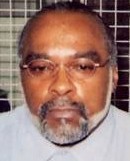
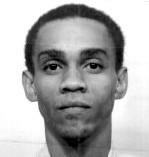
Stanley Williams
Murderer Ervil LeBaron
Murderer · USA · 1972
Ervil Morrell LeBaron (1925 to August 16, 1981) was the leader of a polygamous…
35 victims
Ervil LeBaron
Murderer · USA · 1972
Ervil Morrell LeBaron (1925 to August 16, 1981) was the leader of a polygamous…
35 victims
 Brian Kevin Rosenfeld
Murderer · USA · 1985
Brian Kevin Rosenfeld Brian Kevin Rosenfeld was sentenced to three concurrent l…
23 victims
Brian Kevin Rosenfeld
Murderer · USA · 1985
Brian Kevin Rosenfeld Brian Kevin Rosenfeld was sentenced to three concurrent l…
23 victims
 Marvin Gray
Murderer · USA · 1975
Marvin Gray was convicted killer who claimed responsibility for 23 slayings and…
23 victims
Marvin Gray
Murderer · USA · 1975
Marvin Gray was convicted killer who claimed responsibility for 23 slayings and…
23 victims
 Yahweh ben Yahweh
Murderer · USA · 1980
Yahweh ben Yahweh was born and legally named Hulon Mitchell Jr. (October 27, 19…
23 victims
Yahweh ben Yahweh
Murderer · USA · 1980
Yahweh ben Yahweh was born and legally named Hulon Mitchell Jr. (October 27, 19…
23 victims
 Anibal Canales
Murderer · USA · 1997
Anibal Canales, Jr. was convicted in Texas of capital murder and was sentenced…
1 victim
Anibal Canales
Murderer · USA · 1997
Anibal Canales, Jr. was convicted in Texas of capital murder and was sentenced…
1 victim
 Marion Wilson
Murderer · USA · 1996
Marion Wilson Jr. was convicted of malice murder, felony murder, armed robbery,…
1 victim
Marion Wilson
Murderer · USA · 1996
Marion Wilson Jr. was convicted of malice murder, felony murder, armed robbery,…
1 victim
 Russell Lee Smith
Murderer · USA · 1975
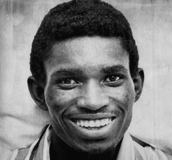
February 6, 1947 — Russell Lee Smith was born in Bessemer, Alabama, United Stat…
2 victims
Russell Lee Smith
Murderer · USA · 1975
February 6, 1947 — Russell Lee Smith was born in Bessemer, Alabama, United Stat…
2 victims
 Frank Pedrini
Murderer · USA · 1953
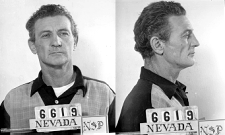
July 15, 1954 — Frank A. Pedrini and Leroy L. Linden were executed together at…
1 victim
Frank Pedrini
Murderer · USA · 1953
July 15, 1954 — Frank A. Pedrini and Leroy L. Linden were executed together at…
1 victim
 Christine Paolilla
Homicide · USA · 2003
Christine Marie Paolilla was an American woman born on Long Island, New York on…
4 victims
Christine Paolilla
Homicide · USA · 2003
Christine Marie Paolilla was an American woman born on Long Island, New York on…
4 victims
 Robert Brice Morrow
Murderer · USA · 1996
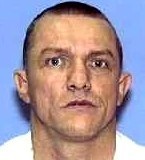
April 3, 1996 — Lisa Allison left her parents’ home to take her father’s car to…
1 victim
Robert Brice Morrow
Murderer · USA · 1996
April 3, 1996 — Lisa Allison left her parents’ home to take her father’s car to…
1 victim
- Gender
- male
- Country
- USA
- Location
- Los Angeles County, California, USA
- Date of birth
- December 29, 1953
- Age at first offence
- 26
- Characteristics
- robbery
- Victim profile
- Albert Lewis Owens, 26 (store clerk) / Yen-I Yang, 76, and Tsai-Shai Yang, 63 , owners of the Brookhaven Motel, and their daughter, Yee-Chen Lin, 43
- Method of murder
- Shooting
- Date(s) of murder
- February /March 1979
- Years active
- 1979
- Date of arrest
- —
- Status
-
Executed
Executed by lethal injection in California on December 13, 2005
Case overview
Stanley Williams was convicted and sentenced to death for murders committed during two robberies in 1979 in Los Angeles County. He was executed by lethal injection in California on December 13, 2005.
Timeline
- April 20, 1981 — Sentenced to death; received a death sentence for four counts of first-degree murder with special circumstances.
- February 28, 1979 — Williams and three friends rode in two cars and carried out two unsuccessful restaurant and liquor store robbery attempts before going to a 7-Eleven store; Albert Lewis Owens was shot twice in the back with a shotgun.
- March 11, 1979 — Williams and another man broke down the door and entered the Brookhaven Motel at 10411 South Vermont Avenue; Tsai Shai Young, his wife Yen-I Yang, and their daughter Ye Chen Lin were shot to death.
- December 13, 2005 — Williams was executed by lethal injection in California.
The offence
7-Eleven murder and robbery
Alfred Coward testified that, at approximately 10:30 p.m. on February 27, 1979, Williams came to Coward’s house and then went to James Garrett’s house, where Williams was staying. Coward said that Williams returned with a sawed-off shotgun and was accompanied by a man named Darryl. The group made several stops, including one to obtain “Sherms” cigarettes containing phencyclidene (PCP), and shared a Sherm cigarette. They later picked up Tony Simms, who was dressed in a green jogging suit and a cap. Coward testified that, taking two cars, they made two unsuccessful restaurant and liquor store robbery attempts and eventually went to a 7-Eleven store where Owens was sweeping the parking lot. Coward testified that Simms and Darryl went into the store followed by Owens, Williams, and Coward. Coward said Williams approached Owens, ordered him to “keep walking,” and told him to lie down. Coward testified that Coward heard a gun being loaded, heard a shot and glass breaking, followed by two more shots. The group returned to Simms’s house and the money was divided.
Coward testified that when Simms asked why Williams shot Owens, Williams said he did not want to leave any witnesses, and that the shotgun shells could not be traced and that he had retrieved a few of them. Coward testified that Coward later saw Williams at the home of Williams’s brother and that Williams told his brother: “You should have heard the way he sounded when I shot him.” Coward also testified that Williams made a growling noise and laughed hysterically for a number of minutes.
The 7-Eleven owner testified that $120 was missing from the cash register.
Williams ordered Owens to get on his knees and then shot him twice in the back with the shotgun. Williams said later that he did so to eliminate witnesses.
Brookhaven Motel murders and robbery
Robert Yang testified that he and his family lived in and owned the Brookhaven Motel on South Vermont Street in Los Angeles. At about 5 a.m. on March 11, 1979, Yang heard a woman’s screams and three or four shots. Yang then saw that the door separating the motel office from the living quarters was ajar and appeared forced open from the outside. Yang discovered that his father, mother, and sister had all been fatally wounded by shotgun fire. The cash drawer was open and empty. Police found two shotgun shell casings at the scene. A firearms expert testified that one of the shells could have been fired only from a weapon identified as having been purchased by Williams in 1974.
Williams was linked to the Brookhaven incident through multiple witnesses who provided testimony about Williams’s admissions. James Garrett testified that early on March 13, 1979, Williams told Garrett and his wife that he had heard that Chinese people had been killed on Vermont Street and that he thought killers were professionals because no shells or witnesses had been left. Garrett testified that Williams stated that killings had occurred at 5 o’clock in the morning and that two men had knocked down the door and taken $600. Garrett testified that Williams later spoke again about how the people were killed and that Williams told him: “[A]fter the big guy knocked the door down, he went in the motel, and there was a guy laying on the couch, and he blew him away.” Garrett testified that Williams said the man on the couch and a woman at the cash register were shot twice and that another woman was also shot.
Esther Garrett testified that Williams told her that the killers were using the money to buy “juice” (PCP) and that the killers had picked up the shotgun shells so there would be no evidence for the police. Esther Garrett also testified that Williams told them he committed the murders with his brother-in-law.
Another witness, George Oglesby (“Gunner”), testified that Williams admitted robbing a motel and shooting a man, a woman, and a child during the robbery. Oglesby also testified about Williams’s plan to escape from jail. Oglesby testified that Williams outlined a plan involving escaping while being transferred from jail to court, including disarming the officer driving the bus and killing a person on the bus who was to testify against Williams, as well as two officers accompanying the bus. Oglesby testified that Williams later modified the plan to include blowing up the bus to prevent authorities from quickly determining who had escaped. Oglesby testified that Williams received or sent notes relating to arrangements, weapons, and timing for the escape plan. Oglesby testified that Williams suggested “Blackie” was a heartbeat away from death and asked if Oglesby’s wife had made arrangements to get weapons, including a plan for a meeting with a woman named “Lynn” to help with the escape.
Investigation
A firearms expert testified that one of the shell casings found at the Brookhaven Motel scene could have been fired only from a weapon identified as having been purchased by Williams in 1974.
Trial
Charges and verdict
Williams was convicted by a jury of murders of Alvin Owens, Thsai-Shai Yang, Yen-I Yang, and Yee Chen Lin, with special circumstances as to each count of felony murder (robbery) and multiple murder. The jury also convicted him of robbing each of these victims and found that he personally used a firearm during the commission of each crime. The jury returned a verdict of death.
Penalty phase
After the penalty phase, in which neither the prosecution nor the defense put on any evidence, the jury returned a death sentence. The trial court imposed a judgment of death on April 15, 1981.
Inmate informant evidence and escape planning evidence
At trial, the prosecution offered testimony from an inmate informant, George Oglesby, about Williams’s admissions and escape plans, including notes and drawings described in testimony.
Sentencing
Williams was sentenced to death. The record identifies his sentence as four counts of first-degree murder with special circumstances. The date of sentence is April 20, 1981.
Appeals
California Supreme Court (direct appeal and state habeas)
- The California Supreme Court affirmed the judgment of guilt, the finding of special circumstances, and the judgment of death.
- In re Williams (7 Cal.4th 572, 29 Cal.Rptr.2d 64) denied a petition for writ of habeas corpus.
- People v. Williams (44 Cal.3d 1127, 245 Cal.Rptr. 635) affirmed on direct appeal.
Federal habeas
Williams v. Woodford (384 F.3d 567) addressed federal habeas claims. The U.S. Court of Appeals affirmed in part and vacated in part regarding procedural rulings, and it affirmed the denial of the habeas corpus petition.
Execution
Williams was executed by lethal injection in California on December 13, 2005.
Time, procedure, and witnesses
His death was announced at 12:35 a.m. During the execution, witnesses and prison officials stated that insertion of the intravenous line required multiple attempts and took longer than usual. One report described difficulties in finding a vein in Williams’s muscular left arm.
Witnesses stated that Williams appeared frustrated during preparation and at least once appeared to ask: “Still can’t find it?” Statements made during the procedure included, in unison: “The state of California just killed an innocent man!”
Supporters mouthed “God bless you” and “We love you” and blew kisses during the execution.
Other details
Background and gang co-founding
Williams co-founded the violent Crips street gang with Raymond Washington in 1971.
Books and public attention while incarcerated
While incarcerated on death row, Williams gained notoriety by authoring children’s books with an anti-gang message and promoting peace. He was nominated for the Nobel Prize in Literature and for Peace.
Victims and family members mentioned
Victims included Albert Lewis Owens; Tsai Shai Young; Yen-I Yang; Ye Chen Lin. Lora Owens was identified as the stepmother of Albert Owens and appeared shaken and embraced by another woman after the outburst by supporters. The record also references family and supporters at the prison and outside the gates.
Spotted an error, or have more information about this case?