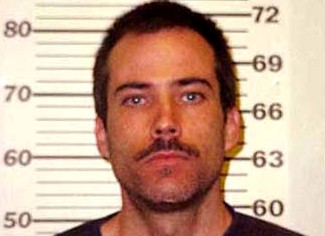
Eric Rudolph
Murderer Russell Ellwood
Murderer · USA · 1991
Russell Ellwood was a former taxi driver. Authorities suspected him of killing…
20 victims
Russell Ellwood
Murderer · USA · 1991
Russell Ellwood was a former taxi driver. Authorities suspected him of killing…
20 victims
 Robert Martines Perez
Murderer · USA · 1994
Name: Robert Martines Perez · Other name used in proceedings: Robert Martinez P…
15 victims
Robert Martines Perez
Murderer · USA · 1994
Name: Robert Martines Perez · Other name used in proceedings: Robert Martinez P…
15 victims
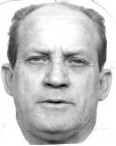 Billy Frank Vickers
Murderer · USA · 1993
Billy Frank Vickers Vickers was executed by lethal injection in Texas on Januar…
14 victims
Billy Frank Vickers
Murderer · USA · 1993
Billy Frank Vickers Vickers was executed by lethal injection in Texas on Januar…
14 victims
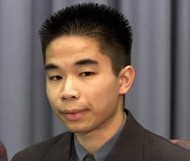 Sef Gonzales
Murderer · Australia · 2001
Sef Gonzales (born September 16, 1980) was an Australian man who was convicted…
3 victims
Sef Gonzales
Murderer · Australia · 2001
Sef Gonzales (born September 16, 1980) was an Australian man who was convicted…
3 victims
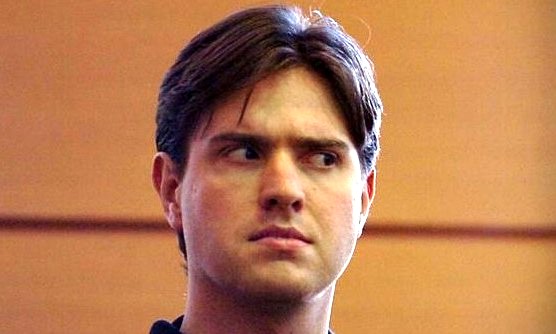 Neil Entwistle
Murderer · USA · 2006
Neil Entwistle (born September 18, 1978) was sentenced to life in prison withou…
2 victims
Neil Entwistle
Murderer · USA · 2006
Neil Entwistle (born September 18, 1978) was sentenced to life in prison withou…
2 victims
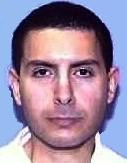 James Edward Martinez
Murderer · USA · 2000
James Edward Martinez was a Hispanic male. He was 34 at the time of execution.…
2 victims
James Edward Martinez
Murderer · USA · 2000
James Edward Martinez was a Hispanic male. He was 34 at the time of execution.…
2 victims
 Lavell Frierson
Homicide - Murderer · USA · 1972
Lavell Frierson was sentenced to death on November 19, 1986. The death sentence…
2 victims
Lavell Frierson
Homicide - Murderer · USA · 1972
Lavell Frierson was sentenced to death on November 19, 1986. The death sentence…
2 victims
- Gender
- male
- Country
- USA
- Location
- Georgia/Alabama, USA
- Date of birth
- September 19, 1966
- Age at first offence
- 30
- Characteristics
- fugitive, white supremacist, arsonist
- Victim profile
- Off-duty police officer Robert Sanderson / Alice Hawthorne, 44
- Method of murder
- Bombs made of dynamite surrounded by nails which acted as shrapnel
- Date(s) of murder
- July 27, 1996 / January 29, 1998
- Years active
- 1996–1998
- Date of arrest
- May 30, 2003
- Status
-
Life imprisonment
Sentenced to life in prison without parole; four consecutive life sentences plus 120 years; sentenced on August 24, 2005
Case record: Eric Rudolph
Eric Robert Rudolph (born September 19, 1966), also known as the “Olympic Park Bomber,” was an American terrorist responsible for a series of bombings across the southern United States between 1996 and 1998. The Federal Bureau of Investigation considered him a terrorist.
STATUS / sentence outcome
Rudolph was sentenced to life in prison without parole—four consecutive life sentences plus 120 years—on August 24, 2005. The sentence included $2.3 million in restitution for a series of bombings across the South, including the Olympics blast and two other bombings in the Atlanta area. He was later described as serving his sentence at the maximum security federal prison in Florence, Colo.
Before the August 24, 2005 sentence was handed down, Rudolph apologized to victims of the 1996 Olympics blast in Atlanta. He said: “I would do anything to take that night back.” He also apologized to the victims, stating:
“I can’t begin to truly understand the pain that I have inflicted on these innocent people,”
“To those victims, I apologize.”
A 10-minute video tribute to Alice Hawthorne, the woman killed in the Olympics blast, also was shown.
The judge’s sentencing remarks included:
“I do take some professional satisfaction of being part of a process that prevents you from killing or hurting anybody else,”
U.S. District Judge Charles A. Pannell told Rudolph as he announced the sentence.
Timeline
- August 24, 2005 — Rudolph received a sentence of life in prison without parole: four consecutive life sentences plus 120 years, and $2.3 million in restitution for bombings across the South, including the Olympics blast and two other Atlanta-area bombings.
- August 22, 2005 — Rudolph was sent to the ADX Florence supermax federal prison; he was identified as Inmate # 18282-058 within the U.S. federal prison system.
- August 22, 2005 — Rudolph was sentenced for his various bombings in Atlanta, receiving three consecutive life terms.
- July 18, 2005 — Rudolph was officially sentenced to two consecutive life terms without parole for the 1998 murder of a police officer.
- April 13, 2005 — Rudolph made pleas in person in courts in Birmingham and Atlanta; he also released a statement explaining his actions and rationalized them as serving anti-abortion and anti-gay activism.
- April 8, 2005 — The U.S. Justice Department announced Rudolph had agreed to plead guilty in all the attacks he was accused of executing, avoiding the death penalty.
- May 31, 2003 — Rudolph was arrested in Murphy, North Carolina, while scavenging for food in a garbage can behind a Sav-A-Lot store.
- May 5, 1998 — Rudolph was placed on the FBI’s Ten Most Wanted list, becoming the 454th fugitive listed.
- October 14, 1998 — Federal authorities charged Rudolph with the fatal bombing at Atlanta’s Centennial Olympic Park and the 1997 bombings at a health clinic and a nightclub; an arrest warrant was issued.
- February 14, 1998 — Rudolph was first identified as a suspect in the Alabama bombing by the Department of Justice.
- January 29, 1998 — A bombing in Birmingham, Alabama killed officer Robert Sanderson and critically injured nurse Emily Lyons.
- February 21, 1997 — Bombing at a gay and lesbian nightclub, the Otherside Lounge, injured 11.
- January 16, 1997 — Bombing at a women’s clinic in the Atlanta suburb of Sandy Springs killed a police officer and injured others (as referenced in the case summary); later details in the charged incidents included shrapnel injuring four people and more than 50 suffering blast effects.
- July 27, 1996 — Centennial Olympic Park bombing in Atlanta during the 1996 Summer Olympics.
- September 19, 1966 — Eric Robert Rudolph was born.
Background
Rudolph was taken by his mother to a Church of Israel compound in 1984; the compound was connected to the Christian Identity movement.
Rudolph denied that his crimes were religiously or racially motivated and called himself a Roman Catholic in what he described as “the war to end this holocaust” (in reference to abortion). He also stated, in a prison-related quotation provided in the case material: “I really prefer Nietzsche to the Bible.”
Rudolph spent years on the FBI Ten Most Wanted Fugitives until he was caught in 2003. The Federal Bureau of Investigation considered him armed and extremely dangerous, offering a $1,000,000 reward for information leading directly to his arrest.
Rudolph entered a plea bargain in 2005 in which he pled guilty to numerous federal and state homicide charges and accepted five consecutive life sentences in exchange for avoiding a trial and a potential death sentence.
Early life and personal history
Rudolph was born on September 19, 1966, in Merritt Island, Florida. His father Robert died in 1981. When Rudolph was 15 years old, he moved with his mother and siblings to Nantahala, Macon County, in southwestern North Carolina.
He attended ninth grade at the Nantahala School but dropped out after that year and worked as a carpenter with his older brother Daniel. After Rudolph received his GED, he attended Western Carolina University in Cullowhee for two semesters in 1985 and 1986.
In August 1987, Rudolph enlisted in the U.S. Army, undergoing basic training at Fort Benning in Georgia. He was discharged in January 1989 while serving with the 101st Airborne Division at Fort Campbell in Kentucky, reportedly for smoking marijuana. In 1988, the year before his discharge, Rudolph had attended the Air Assault School at Fort Campbell. He never rose above the rank of Private E-1.
The offences (bombings)
Rudolph confessed to bombings of an abortion clinic in the Atlanta suburb of Sandy Springs on January 16, 1997, and to a gay and lesbian nightclub, the Otherside Lounge, in Atlanta on February 21, 1997, injuring five in one account and injured 11 in another. He also confessed to an abortion clinic in Birmingham, Alabama on January 29, 1998, killing officer Robert Sanderson and critically injuring nurse Emily Lyons.
Centennial Olympic Park bombing (Atlanta)
The most notorious bombing was the Centennial Olympic Park bombing in Atlanta on July 27, 1996, during the 1996 Summer Olympics.
The blast killed spectator Alice Hawthorne and wounded 111 others. Alice Hawthorne was described as having attended the Olympics with her daughter because she wanted to watch the American basketball team. A Turkish cameraman, Melih Uzunyol, died of a heart attack responding to the blast.
In Rudolph’s statement, he described the motivation for the attack on July 27 as political, stating:
“In the summer of 1996, the world converged upon Atlanta for the Olympic Games. Under the protection and auspices of the regime in Washington millions of people came to celebrate the ideals of global socialism. Multinational corporations spent billions of dollars, and Washington organized an army of security to protect these best of all games. Even though the conception and purpose of the so-called Olympic movement is to promote the values of global socialism, as perfectly expressed in the song "Imagine" by John Lennon, which was the theme of the 1996 Games even though the purpose of the Olympics is to promote these despicable ideals, the purpose of the attack on July 27 was to confound, anger and embarrass the Washington government in the eyes of the world for its abominable sanctioning of abortion on demand. The plan was to force the cancellation of the Games, or at least create a state of insecurity to empty the streets around the venues and thereby eat into the vast amounts of money invested. His plan was unsuccessful. The Olympic organizers did not even cancel the day's events.”
Weapon and targeting claims described
Rudolph’s bombs were described as being made of dynamite surrounded by nails acting as shrapnel. The case material stated that it was alleged he targeted health clinics and office buildings because abortions were performed there and targeted the Otherside Lounge because it was a predominantly lesbian nightclub.
Investigation and fugitive period
Rudolph was identified after the Birmingham blast and spent the next five years hiding out in the mountains of western North Carolina.
Federal and amateur search teams scoured the area without success. It was thought that Rudolph had the assistance of sympathizers while evading capture, including local support reflected in country music songs written about him and a top-selling T-shirt reading “Run Rudolph Run.”
The identification and pursuit of Rudolph included the following incidents:
- The Justice Department was forced to apologize to Richard Jewell, who had been hailed as a hero in the Olympic bombing and later falsely identified as a suspect.
- On March 7, 1998, Daniel Rudolph (Rudolph’s older brother) videotaped himself cutting off one of his own hands with an electric saw to “send a message to the FBI and the media.” The hand successfully was reattached.
Rudolph was believed to be hiding in the Appalachian wilderness, including the Nantahala National Forest.
The FBI considered him armed and extremely dangerous and offered a $1,000,000 reward for information leading directly to his arrest. The Justice Department authorized a reward of up to $1 million for information leading to Rudolph’s arrest. There was also described as a reward of up to $500,000 for information leading to a conviction in the case, and he was placed on the FBI’s Ten Most Wanted list.
Arrest and discovery of explosives
Rudolph was arrested in Murphy, North Carolina, on May 31, 2003. He was captured while scavenging for food in a garbage can behind a Sav-A-Lot store. A rookie police officer made the arrest “by chance.” He was unarmed and did not resist arrest. When arrested, he was clean shaven with a trimmed mustache and wearing new sneakers.
After the Birmingham blast and during the charging process, authorities sought him in relation to multiple bombings, including:
- The bombing at the New Woman All Women Health Care Clinic in Birmingham, Alabama on January 29 (charged later in the case material).
- The double bombing at the Sandy Springs Professional Building in January 1997.
- The double bombing at The Otherside Lounge in February 1997.
- The Centennial Olympic Park bombing on July 27, 1996.
In 2005, prosecutors and Rudolph struck a deal under which they would not seek the death penalty and he would tell them where to find more than 250 pounds of stolen dynamite he had buried.
Guilty plea and statement
On April 8, 2005, the U.S. Justice Department announced that Rudolph had agreed to plead guilty in all the attacks he was accused of executing, thus avoiding the death penalty.
The deal involved sentencing to four consecutive life terms (as described in the case material) and was confirmed after the FBI found 250 pounds (113 kg) of dynamite hidden in the forests of North Carolina. Rudolph’s revelation of the dynamite was a condition of his plea agreement. He made his pleas in person in Birmingham and Atlanta on April 13.
Rudolph released a statement explaining his actions and rationalized them as serving the cause of anti-abortion and anti-gay activism. He claimed:
“deprived the government of its goal of sentencing me to death,”
and also stated:
“the fact that I have entered an agreement with the government is purely a tactical choice on my part and in no way legitimates the moral authority of the government to judge this matter or impute my guilt.”
He used a written statement to explain his motivation and political framing for the Olympics attack, including the quoted passage included in this record.
Court proceedings and victim impact statements (August 24, 2005)
Victims of Rudolph’s bombs confronted him in court, describing him as a small man who fled amid his carnage.
Rudolph addressed the court after 14 victims and relatives told of the horror he caused and their wishes that he suffer for the rest of his days.
A 10-minute video tribute to Alice Hawthorne was shown. Monday would have been the 18th wedding anniversary for John and Alice Hawthorne. Hawthorne told Rudolph:
“Every anniversary has been filled with anger, weeping and sorrow, but this anniversary brings to an end a very painful and emotional chapter in this family,”
“This is the day Alice can rest, for justice is finally being served.”
Rudolph will serve his sentence at the maximum security federal prison in Florence, Colo. The prison described as being about 90 miles southeast of Denver also was noted as home to Theodore Kaczynski, the Unabomber; Richard Reid, who tried to ignite a shoe bomb; and Terry Nichols, who helped carry out the Oklahoma City bombing.
Some injured at Olympic Park chose not to attend because Rudolph turned an earlier sentencing in Alabama into a forum for his anti-abortion and anti-gay views, and because they believed it was time to move on. Calvin Thorbourne of Austell, whose legs were hit by shrapnel, was quoted:
“I don’t need to be there. I can hear about it,”
“It’s always going to be part of my life, but I’ve always felt justice would be served.”
Hawthorne called Rudolph a coward for trying to kill others in the name of the anti-abortion movement. She said:
“You are a very small man, and like other men (of small stature), you have a Napoleonic complex and a need to compensate for what you lack,”
“Small man, big bomb.”
During Monday’s testimony by some of the victims, it was stated that Rudolph smirked and rolled his eyes at least in response to some victims’ testimony, and he laughed under his breath when one of the victims said it was appropriate that when authorities found Rudolph he was scavenging for food from a trash container.
Sentencing details and prison placement
Rudolph received the following sentencing components as described:
- He was officially sentenced July 18, 2005, to two consecutive life terms without parole for the 1998 murder of a police officer.
- He was sentenced for his various bombings in Atlanta on August 22, 2005, receiving three consecutive life terms.
- He was sentenced to life in prison without parole on August 24, 2005, with the final described total of four consecutive life sentences plus 120 years, and $2.3 million in restitution.
On August 22, 2005, he was sent to ADX Florence, described as a supermax federal prison. He was identified as Inmate # 18282-058. The case material stated that he spent 22½ hours per day in his 80 ft 2 (7.4 m 2) concrete cell.
Trial preparation and charging (as described in the case material)
Federal authorities charged Rudolph for bombings that included the Centennial Olympic Park incident and the 1997 bombings at a women’s clinic and a nightclub. The case material described the criminal complaint as charging him with five counts of malicious use of an explosive in violation of federal law.
The case material included statements from U.S. officials and law enforcement officials during the charging announcement:
- Attorney General Janet Reno said: “We are going to keep searching until we find him.”
- FBI Director Louis Freeh said:
“The fatal bombing in Atlanta was a terrorist attack aimed at thousands of innocent persons gathered at the Olympic Park,”
“Within the FBI’s Domestic Terrorism Program, there is no higher priority than the capture of Eric Robert Rudolph.” - ATF Director John W. Magaw said:
“This bomber placed secondary bombs designed to kill and maim rescuers, paramedics, firefighters and police officers who rushed to the scene to help,”
“He didn’t care who they were.” - Georgia Bureau of Investigation Director Milton E. Nix, Jr. said:
“The action today has special meaning to the citizens of Georgia,”
“Since minutes after the first bomb detonated in Centennial Olympic Park, our State has expended significant resources in this investigation. Georgians have not lost sight of the fact that as a result of the Atlanta bombings an innocent mother was murdered, a Turkish visitor died and numerous others were injured, including public safety personnel who risked their lives to save hundreds of others from more serious injuries.” - Treasury Under Secretary for Enforcement James E. Johnson said:
“The partnership between the many law enforcement personnel and prosecutors working on this case has been a tremendous model of cooperation,”
People involved (victims and other named individuals)
- Alice Hawthorne — victim killed in the Centennial Olympic Park bombing; described as 44 years old; her death was linked to the July 27, 1996 Olympics blast; a 10-minute video tribute was shown at the August 24, 2005 sentencing.
- John Hawthorne — her husband; noted in relation to an 18th wedding anniversary.
- Melih Uzunyol — Turkish cameraman who died of a heart attack responding to the blast.
- Victims injured at Olympic Park — it was stated that 111 others were injured by the July 27, 1996 blast, and the case material referenced at least one person, Calvin Thorbourne, whose legs were hit by shrapnel.
- Robert Sanderson — Birmingham police officer killed in the bombing on January 29, 1998.
- Emily Lyons — clinic head nurse critically injured in the bombing on January 29, 1998.
- Other identified injured counts — the case material referenced:
- Olympics bombing: 111 injured.
- Sandy Springs bombing described in the charging announcement: shrapnel injured four people and more than 50 others suffered blast effects.
- Otherside Lounge bombing: five people injured and a second explosive device discovered (with additional injuries referenced elsewhere as 11 injured).
- Richard Jewell — named as a person whom the Justice Department wrongly identified as a suspect after the Olympic bombing; the Justice Department later was forced to apologize.
- Daniel Rudolph — Rudolph’s older brother who videotaped himself cutting off one of his own hands on March 7, 1998; the hand successfully was reattached.
- Richard S. Jaffe — Jewish attorney who defended Rudolph; the case material said he knew about Rudolph’s supposed beliefs but stated Rudolph did not have a problem with Jewish faith.
- Charles A. Pannell — U.S. District Judge who announced the sentence on August 24, 2005.
- Janet Reno — Attorney General quoted during the October 14, 1998 charging announcement.
- Louis Freeh — FBI Director quoted during the October 14, 1998 charging announcement.
- John W. Magaw — ATF Director quoted during the October 14, 1998 charging announcement.
- Milton E. Nix, Jr. — Director of the Georgia Bureau of Investigation quoted during the October 14, 1998 charging announcement.
- James E. Johnson — Treasury Under Secretary for Enforcement quoted during the October 14, 1998 charging announcement.
- Alice Martin — described as United States Attorney for the Northern District of Alabama at the time of Rudolph’s prosecution for the Alabama bombing; she was quoted about speech and prison restrictions.
Other details
Prison communications and publications described
The case material described Bureau of Prisons regulations on correspondence, including restrictions for “the protection of the public, or if it might facilitate criminal activity,” and included discussion about essays condoning violence and militant action being published via an anti-abortion activist’s internet postings.
The case material included a quote from Alice Martin stating:
“An inmate does not lose his freedom of speech,”
and added that the Justice Department in 2006 criticized the same prison for not properly screening mail of three inmates convicted in the World Trade Center bombings after determining the men sent letters from the prison to suspected terrorists overseas.
Christian Identity and alleged motivations (as stated in the case material)
The FBI was described as considering Rudolph to have had a long association with the radical Christian Identity movement, described as asserting that North European whites are direct descendants of the lost tribes of Israel, God’s chosen people. The case material also described Christian Identity as a white supremacist sect that holds that those who are not white Christians will be condemned to Hell.
The case material further stated that some FBI investigators believed Rudolph “may have written letters that claimed responsibility for the nightclub and abortion clinic bombings on behalf of the Army of God, a violent offshoot of Christian Identity.”
Rudolph denied being a supporter of the Christian Identity movement, stating that his involvement amounted to a brief association with the daughter of a Christian Identity adherent, later identified as Pastor Daniel Gayman.
When asked about his religion, Rudolph said:
“I was born a Catholic, and with forgiveness I hope to die one.”
Placement details and notoriety associations
The record noted that ADX Florence was home to Theodore Kaczynski, Richard Reid, and Terry Nichols.
Letters describing declarations (verbatim fragment included in the case material)
The case material included a verbatim fragment of letters sent to authorities after the nightclub bombing and the Birmingham clinic attack claiming responsibility in the name of the “Army of God.” The letters were described as including the following text:
“We declare and will wage total war on the ungodly communist regime in New York and your legaslative bureaucratic lackey’s in Washington. It is you who are responsible and preside over the murder of children and issue the policy of ungodly preversion thats destroying our people.”
Charged incidents in the October 14, 1998 complaint (details)
The charging announcement included these incident descriptions:
- At Centennial Olympic Park, the bomb placed near the main stage injured more than 100 people and killed Alice Hawthorne.
- At the Sandy Springs Professional Building, the first bomb exploded at the back of the building; the second exploded in the parking lot about one hour later as medical personnel, firefighters, police and other law enforcement officers worked to secure the scene and evacuate people.
- At the Otherside Lounge, five people were injured when a bomb exploded behind the nightclub, and a second explosive device was discovered and the area was cleared before it exploded; the second device was placed where medical personnel, firefighters, police and law enforcement agents would respond.
Spotted an error, or have more information about this case?