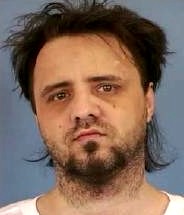
Dale Leo Bishop
Murderer Russell Ellwood
Murderer · USA · 1991
Russell Ellwood was a former taxi driver. Authorities suspected him of killing…
20 victims
Russell Ellwood
Murderer · USA · 1991
Russell Ellwood was a former taxi driver. Authorities suspected him of killing…
20 victims
 Robert Martines Perez
Murderer · USA · 1994
Name: Robert Martines Perez · Other name used in proceedings: Robert Martinez P…
15 victims
Robert Martines Perez
Murderer · USA · 1994
Name: Robert Martines Perez · Other name used in proceedings: Robert Martinez P…
15 victims
 Billy Frank Vickers
Murderer · USA · 1993
Billy Frank Vickers Vickers was executed by lethal injection in Texas on Januar…
14 victims
Billy Frank Vickers
Murderer · USA · 1993
Billy Frank Vickers Vickers was executed by lethal injection in Texas on Januar…
14 victims
 Tang Yongming
Murderer · China · 2008
Tang Yongming (47) attacked three people at the 13th-century Drum Tower in Beij…
1 victim
Tang Yongming
Murderer · China · 2008
Tang Yongming (47) attacked three people at the 13th-century Drum Tower in Beij…
1 victim
 Johnnie Bernal
Homicide · USA · 1994
Aug. 19, 1994 — Johnnie Bernal spent the evening cruising Northwest Houston wit…
1 victim
Johnnie Bernal
Homicide · USA · 1994
Aug. 19, 1994 — Johnnie Bernal spent the evening cruising Northwest Houston wit…
1 victim
 John Richard Marek
Murderer · USA · 1983
Name: John Richard Marek · DC Number: #094417 · Race: WHITE · Sex: MALE · Hair…
1 victim
John Richard Marek
Murderer · USA · 1983
Name: John Richard Marek · DC Number: #094417 · Race: WHITE · Sex: MALE · Hair…
1 victim
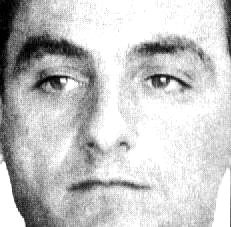 Carl Coppolino
Murderer · USA · 1965
Carl Anthony Coppolino was a retired physician and an anesthesiologist. · July…
1 victim
Carl Coppolino
Murderer · USA · 1965
Carl Anthony Coppolino was a retired physician and an anesthesiologist. · July…
1 victim
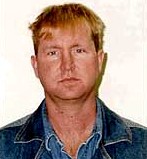 Martin Allen Johnson
Murderer · USA · 1998
Martin Allen Johnson (defendant) · Heather Fay Fraser, 15 (victim) · 1997 — Pol…
1 victim
Martin Allen Johnson
Murderer · USA · 1998
Martin Allen Johnson (defendant) · Heather Fay Fraser, 15 (victim) · 1997 — Pol…
1 victim
- Gender
- male
- Country
- USA
- Location
- Lee County, Mississippi, USA
- Date of birth
- May 5, 1959
- Age at first offence
- 39
- Characteristics
- revenge, domestic violence, drugs
- Victim profile
- Marcus Gentry, 22
- Method of murder
- Beating with a claw hammer
- Date(s) of murder
- December 10, 1998
- Years active
- 1998
- Date of arrest
- 3 days after
- Status
-
Executed
Executed by lethal injection in Mississippi on July 23, 2008
Case details
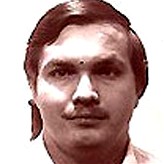
Dale Leo Bishop was a death row inmate in Mississippi. He was convicted in 2000 of participating in the murder of Marcus Gentry and later sentenced to death. The execution was carried out by lethal injection on July 23, 2008.
Victim
Marcus Gentry was 22 years old. His body was found along a logging road near Saltillo. The murder occurred on the night of December 10, 1998, on a dirt road in Lee County, Mississippi, not far from the town of Saltillo. The underlying felony for the capital murder conviction was kidnapping.
Other people
- Jessie Johnson was a co-defendant who was tried separately. He struck the lethal blows. He was serving life sentence without parole.
- Ricky Myhand was present during the attack and was a key witness for the state. Myhand led investigators to the body. Myhand was asked to hold Gentry while Bishop retrieved beers for himself and Jessie, and Myhand begged Jessie to stop.
- Rachel Dobbs was present at Ricky Myhand and Rachel Dobbs’s apartment in Saltillo.
- Cory Johnson was named as a participant at the apartment. Cory was one of Jessie Johnson’s brothers.
- Charlie Rakestraw was named as a participant at the apartment.
- Daryl Neely, policy adviser for Gov. Haley Barbour, was quoted about Bishop’s statements.
- Chris Epps, Mississippi Department of Corrections Commissioner, was quoted about Bishop and comments made during the day.
- Gov. Haley Barbour denied clemency.
- Jim Craig was Bishop’s attorney in federal court.
- Stacy Ferraro was an attorney listed among those for the condemned.
- Edges and institutional participants included W. Allen Pepper, U.S. District Judge, and judges Edith Clement and Emilio Garza on the 5th U.S. Circuit Court of Appeals. Carolyn King dissented.
- Bob Ryan was described as the former director of the Mississippi Office of Post Conviction Counsel.
- Glenn Swartzfager was described as the new director of the office and was said to have accused Ryan of suppressing evidence.
- Rizwana Mahood, a law student, was quoted during an anti-death-penalty protest.
- Father Greg Plata was quoted during the protest.
Timeline
- December 10, 1998 — Dale Leo Bishop, Marcus Gentry, Jessie Johnson, Cory Johnson, and Charlie Rakestraw went to Ricky Myhand and Rachel Dobbs’s apartment in Saltillo; after the store closed, the group traveled back toward Myhand’s apartment and an argument began involving “narced” or “ratted on.”
- December 13, 1998 — Bishop and Jessie Johnson were apprehended after hiding in the woods.
- December 13, 1998 — Bishop gave a detailed statement to police that was admitted into evidence at trial.
- February 2000 — Bishop was convicted and sentenced to death for the kidnapping and slaying of 22-year-old Marcus Gentry of Fulton.
- 2002 — The Mississippi Supreme Court affirmed Bishop’s death sentence.
- May 21, 2008 — Earl Wesley Berry was executed in Mississippi.
- July 22, 2008 — The 5th U.S. Circuit Court of Appeals denied Bishop’s emergency appeal for a stay challenging Mississippi’s lethal injection method; Bishop was described as seeking clemency.
- July 23, 2008 — Bishop was pronounced dead by lethal injection at 6:14 p.m. after efforts to delay execution were denied.
The offence
Bishop participated in the killing of Marcus Gentry. Gentry drove a vehicle to Ricky Myhand and Rachel Dobbs’s apartment in Saltillo and later drove Jessie Johnson, Bishop, and Ricky Myhand to a store. When they discovered the store was closed, Gentry turned around and headed back toward Myhand’s apartment.
On the way back, Jessie Johnson, who was seated in the front passenger seat, asked Gentry why he “narced” or “ratted on” his little brother. Gentry denied doing so. Jessie Johnson said, “Yeah, you did,” reached down to the floorboard, grabbed a hammer, and hit Gentry between the eyes. Gentry begged Jessie Johnson not to hit him again.
Bishop, who was seated behind Gentry, grabbed Gentry in a headlock and hit him while Jessie struck him again with the hammer. Bishop and Jessie Johnson made Gentry move into the front passenger seat, and Jessie Johnson began driving. Jessie Johnson turned off the road and went down a little field road. When Jessie Johnson stopped the vehicle, Gentry jumped out of the car and ran. Jessie Johnson told Bishop to catch him. Bishop caught Gentry, and Bishop and Jessie Johnson then dragged Gentry into the bushes after Gentry was kicked and struck numerous times with the hammer.
In Bishop’s statement given to the police, Bishop described that Jessie Johnson was upset at Gentry for “ratting on” his brothers and that, as a result of the “ratting,” Bishop believed that Jessie's little brothers were charged with some serious crimes, including that “Mark [Gentry] had instigated his brothers' getting about 9 or 10 counts of grand larceny and burglary.”
Bishop acknowledged participating in the attack. Another man, Jessie Johnson, admitted striking the lethal blows. Prosecutors said Gentry was hit 23 times before the hammer lodged in his throat. Court records described that when Gentry tried to run, Bishop chased him down, holding Gentry while Johnson bludgeoned him.
Bishop and Jessie Johnson discussed finding a shovel with which to bury Gentry. At Myhand’s apartment, Jessie Johnson and Bishop washed off and changed into clean clothes given to them by Myhand. After they left the apartment, Myhand and Dobbs called the police. Myhand took the officers to the site of the murder; Gentry’s body was recovered and Gentry’s car and a shovel were found nearby. Bishop and Jessie Johnson apparently fled when the police car pulled up and hid out in the woods until they were apprehended on December 13, 1998.
Forensic evidence
Steven Hayne, M.D., a forensic pathologist who conducted the autopsy on Gentry’s body, testified that there were 23 injuries to the head, neck and hand produced either by a blunt object with enough force to break or tear the skin, or with a sharp object such as the edge of a claw hammer. The injuries did not include bruises or scrapes that could have been produced from being kicked. Injuries to the hands, forearms and fingers were consistent with defensive posturing by Gentry.
Dr. Hayne testified: “Mr. Gentry died from cranial cerebral trauma, secondary to blunt force trauma to the head, and he also died from lacerations, tears of the voice box, with aspiration of blood.”
Investigation and arrest
After Myhand and Dobbs called the police, Myhand took officers to the site of the murder, where Gentry’s body was recovered. Bishop and Jessie Johnson were apprehended on December 13, 1998, after they hid out in the woods.
In Bishop’s statement to police admitted into evidence at trial, Bishop described the hammer. He stated that carpenter’s hammers normally used in Mississippi weighed 20 to 22 ounces and that: “[The hammer owned by Bishop and used to hit Gentry] is a 28 ounce Vaughn [? ? ? not sure if Vaughn is correct] [sic] California framing straight claw.” He indicated his hammer was not available for purchase in Mississippi.
When asked about how he came about bringing a hammer when he went riding with Gentry, Bishop admitted using a false pretense: BISHOP: Well, when the trip originally began, the excuse was that I was going to go work on my truck and I use the hammer to work on my truck. BY THE POLICE: Is that true? BISHOP: That's just how we got the usage of the car to begin with.
In his statement, Bishop indicated that Jessie initially “decked Gentry with his hands,” and that Bishop grabbed Gentry and Jessie hit him “probably just twice” with the hammer. Bishop stated that after about five minutes he came back with Gentry and forced him to get on his knees in front of the car, and then Bishop and Jessie Johnson began kicking Gentry. Jessie Johnson struck Gentry numerous times with the hammer. At one point Myhand was asked to hold Gentry while Bishop retrieved beers for himself and Jessie, and Myhand begged Jessie to stop. When they finished, Bishop had to dislodge the hammer from Gentry’s throat and then Bishop and Jessie Johnson drug Gentry into the bushes. While returning to Myhand’s apartment, Jessie Johnson and Bishop discussed finding a shovel to bury Gentry.
Trial
Bishop did not testify at trial. He gave a detailed statement to the police on December 13, 1998, which was admitted into evidence. Bishop’s case was tried in the Lee County Circuit Court. Bishop’s defense lawyers did not seek a change of venue away from Lee County despite potentially prejudicial pre-trial publicity.
A jury found Bishop guilty of capital murder, with the underlying felony being kidnaping. Bishop and the state waived a jury trial as to sentencing.
Sentencing
Bishop waived his right to a jury sentencing and instructed his lawyer not to present any mitigating evidence. At sentencing, the circuit judge found beyond a reasonable doubt that Bishop contemplated that lethal force would be used and that the especially heinous, atrocious or cruel aggravating circumstance was proven, and sentenced Bishop to death.
Bishop addressed Gentry’s family after permission to speak:
“I just wanted to say…I’m sorry for what happened to Mark. Mark was my friend. You know, I – I thought Mark needed his ass kicked. I did. I didn’t know Jessie was gonna go all out like that. Mark was a good man… Mark’s in heaven right now… I ain’t going to heaven; I won’t allow it. For what I did, I deserve to die. I ain’t gonna ask this Court to spare my life”.
He then addressed the judge: “These people here, some of them would like to kill me. They can’t. They don’t have that authority… But you do. You’ve got that authority. I mean, look at them. They would like to see, you know – their son was killed, you know. I played a part in that… So I’m asking you to do what they can’t do, kill me for what I done. I deserve it. I know it, I want you to sentence me to death.”
The judge responded:
“Mr Bishop, I’m gonna grant your wish”.
Judge recusal issue
Bishop argued that Circuit Judge Barry Ford should have recused himself. Bishop alleged that he had gotten into an altercation with Judge Ford during an earlier representation and that this caused bias against Bishop. At the hearing on the motion to recuse, Bishop testified that the prior representation was in 1989 when he was charged with kidnaping, aggravated assault and grand larceny. The charges were ultimately referred to the youth court and Bishop was sentenced to training school. Judge Ford stipulated to these facts. Judge Ford denied the motion for recusal, stating he had no recollection of representing Bishop, that the prior representation was remote in time, and that the motion for recusal was made the day before trial.
After pre-trial motions were handled, Circuit Judge Frank Russell opened court and proceeded with the trial.
Appeals
Direct appeal
In 2002, the Mississippi Supreme Court rejected Bishop’s claim that he should not have been eligible for the death penalty because he had not planned or deliberated the murder. The court found that Bishop’s involvement was sufficient for execution even if the actual killer did not receive the death sentence, referencing Enmund v. Florida.
Bishop v. State , 812 So.2d 934 (Miss. 2002) (Direct Appeal) affirmed the death sentence. The opinion included holdings that the failure to hold an omnibus hearing three days prior to trial as required by rule was not reversible error; Bishop was not entitled to funds to hire a psychological expert; the circuit court judge did not abuse discretion in denying a motion for recusal; Bishop was not convicted upon a factual basis which modified an essential element of offense; an erroneous aiding and abetting instruction was harmless; Bishop waived his right to a jury during sentencing phase; evidence supported finding that Bishop contemplated lethal force would be used; and the death sentence was not disproportionate.
Post-conviction relief
Bishop filed a motion for leave to proceed in trial court with a petition for post-conviction relief. Bishop v. State , 882 So.2d 135 (Miss. 2004) (PCR) denied the motion. The Supreme Court held that Bishop did not receive ineffective assistance of counsel; the death sentence for murder committed in course of kidnapping was not unconstitutionally excessive; res judicata barred consideration of post-conviction claims raised and addressed on direct appeal; Bishop’s waiver of the right to have jury determine sentence for capital murder was knowing, voluntary, and intelligent; Bishop failed to make a prima facie showing that he was mentally retarded for purposes of capital sentencing; he was not entitled to relief on claims challenging admission of 911 tape; he was not entitled to consideration of post-conviction claims of ineffective assistance of counsel raised for the first time in reply brief; and exhibits and appendices attached to Bishop’s reply brief could not be used to support claims raised in the original petition.
Federal habeas and COA
Bishop sought habeas corpus relief. Bishop v. Epps , 265 Fed.Appx. 285 (5th Cir. 2008) (Habeas). The United States District Court for the Northern District of Mississippi, 2007 WL 2363465, denied the petition and denied a certificate of appealability (COA). The Court of Appeals held that: Bishop did not have a constitutional right to counsel in post-conviction proceedings; trial counsel was not ineffective for failing to investigate and present mitigating evidence regarding Bishop’s mental health; Bishop was not entitled to habeas relief based on a claim that trial counsel was ineffective for allegedly failing to present adequate defense; Bishop was procedurally barred from pursuing a habeas challenge to aiding and abetting instruction; and Bishop’s claim that he was not allowed to waive right to jury trial at sentencing was not cognizable on federal habeas corpus review. The COA was denied.
Lethal injection stay and Supreme Court petitions
Bishop’s emergency appeal was denied by the 5th U.S. Circuit Court of Appeals in a 2-1 decision that denied a stay challenging Mississippi’s method of lethal injection. The dissent was by Judge Carolyn King. Bishop’s attorney, Jim Craig, said an appeal would be made to the U.S. Supreme Court and that two other federal appeals were pending.
Bishop’s request for clemency to Gov. Haley Barbour and last-ditch appeals to the U.S. Supreme Court were denied on the execution day.
Sentencing and execution procedures
The execution was mandated by the Mississippi Department of Corrections. The Mississippi Department of Corrections briefed members of the news media of Bishop’s death row activities from 2:00 p.m. to approximately 4:45 p.m., including telephone calls and visits.
Bishop’s collect telephone calls:
- Tuesday, July 22, 2008: no phone calls.
- Wednesday, July 23, 2008: no phone calls.
Bishop’s last meal was described as:
- 3 pieces of pizza
- one 20 oz. root beer
- 8 oz. cherry ice cream He chose not to take a shower and had not requested a sedative. Officers observed Bishop as still being talkative and noted he remained under observation.
Visits and witnesses
During the afternoon update to inmate visits on July 23, 2008, visitors left Unit 17 at 3:00 p.m.:
- Timothy Bishop (Brother)
- Roy Bishop (Father)
- Brenda Bishop (Mother)
- Tonya Cunningham (Ex-wife)
- David Wolf (Nephew)
- Stacy Ferraro (Attorney)
- James W. Craig (Attorney)
Bishop was visiting with MSP Staff Chaplain James L. Whisnant.
Bishop requested that his nephew and ex-wife witness:
- David Wolf (Nephew)
- Tonya Cunningham (Ex-wife)
Attorneys for the condemned were:
- Stacy Ferraro
- James W. Craig
Members of the victim’s family included:
- Kathy Gentry (Mother of Marcus James Gentry)
- Gerald Gentry (Uncle of Marcus James Gentry)
Execution witnesses included:
- Chief Deputy Sheriff John Hall (Sheriff or Designee)
- Governor’s Witness C. Daryl Neely, Policy Advisor
- 8 Members of the Media: Joey Barnes, WCBI-TV; Randy Bell, Clear Channel Radio; William Browning, The Greenwood Commonwealth; Robert Byers, WTVA-TV; Jimmie Gates, Clarion-Ledger; Stephen Koranda, Mississippi Public Broadcasting; Holbrook Mohr, Associated Press; Scott Phillips, Mississippi News Network
- Spiritual Advisor for the condemned MSP Staff Chaplain James L. Whisnant The activity list also included a change of law enforcement witness from Lee County S/O.
Statements, regret, and clemency
Bishop apologized to the family of his victim before his execution. Mississippi Department of Corrections Commissioner Chris Epps said Bishop stated it was “a senseless act.” Epps also stated Bishop showed regret for the murder he participated in and for asking for a death sentence.
Epps said Bishop indicated he wanted to live and that when Bishop asked to be sentenced to death he was at a low point in his life, including that he was being separated and his wife was taking their three kids. Epps also said he discussed Jessie Johnson’s role with Bishop before the execution and that Bishop thought Johnson should be where he was on death row.
Daryl Neely said Bishop wrote in his cell and quoted what Bishop wrote:
“A man who takes no action has no regret,” and Neely said Bishop admitted there were some things in his life he regretted.
Epps described Bishop’s last hours as “doing a lot of political talk” and discussing intelligence levels of other death row inmates.
Bishop made a final statement while strapped to the execution gurney:
“To Mark's family, I would like to express my sincerest apologies. It was a senseless act. It was a needless act. The world is worse off without him,” “To my family, I love you. It's going to be all good.” He finished with: “For those who oppose the death penalty and want to see it end, our best bet is to vote for Barack Obama because his supporters have been working behind the scenes to end this practice,” “God bless America; it's been great living here. That's all.”
Aftermath
Kathy Gentry, Bishop’s victim’s mother, and Gerald Gentry, the victim’s uncle, witnessed the execution. A written statement from the victim’s family was read by a victim’s advocate. The statement included:
“We had to relive all the memories and emotions from that December,” and: “The pain and loss that this man helped put on us will never be forgotten. We lost Mark not by chance but by the choice of two ungodly men.”
After the execution, anti-death-penalty protesters had rallied outside the Mississippi Delta prison and the Parchman visitor center. Rizwana Mahood said:
“I'm very much against the death penalty because I think it is unjust, cruel and fundamentally wrong,” “There are so many flaws in the system to have a perfect punishment.” Father Greg Plata said: “This decision of the governor's not granting pardon from the death penalty just continues to make Mississippi look bad,” and also: “They both should be given a life sentence,”
The Mississippi Department of Corrections said that in the close of the Dale Leo Bishop case, justice was carried out with dignity and decorum and that the family of Marcus James Gentry may begin the process of healing.
Spotted an error, or have more information about this case?