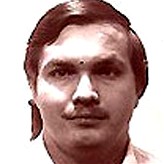
Arthur Gary Bishop
Serial killer Donald Henry Gaskins
Serial killer · USA · 1969
Donald Henry Gaskins, also known as Donald “Pee Wee” Gaskins, was a serial kill…
200 victims
Donald Henry Gaskins
Serial killer · USA · 1969
Donald Henry Gaskins, also known as Donald “Pee Wee” Gaskins, was a serial kill…
200 victims
 Carl Eugene Watts
Serial killer · USA · 1974
Carl Eugene Watts (born November 7, 1953; died September 21, 2007), also known…
100 victims
Carl Eugene Watts
Serial killer · USA · 1974
Carl Eugene Watts (born November 7, 1953; died September 21, 2007), also known…
100 victims
 Rodney Alcala
Serial killer · USA · 1977
Rodney James Alcala (born August 23, 1943) was also known as Rodrigo Jacques Al…
100 victims
Rodney Alcala
Serial killer · USA · 1977
Rodney James Alcala (born August 23, 1943) was also known as Rodrigo Jacques Al…
100 victims
 Donald Harvey
Serial killer · USA · 1970
Donald Harvey was known as an American serial killer and a self-professed “Ange…
87 victims
Donald Harvey
Serial killer · USA · 1970
Donald Harvey was known as an American serial killer and a self-professed “Ange…
87 victims
 Donald Leroy Evans
Serial killer · USA · 1975
Donald Leroy Evans (born July 5, 1957) was an American serial killer who murder…
60 victims
Donald Leroy Evans
Serial killer · USA · 1975
Donald Leroy Evans (born July 5, 1957) was an American serial killer who murder…
60 victims
 Michael Swango
Serial killer · USA · 1981
Michael Swango (Joseph Michael Swango) was a physician and American serial kill…
60 victims
Michael Swango
Serial killer · USA · 1981
Michael Swango (Joseph Michael Swango) was a physician and American serial kill…
60 victims
 Anthony Barbaro
Homicide · USA · 1974
December 30, 1974 — Anthony F. Barbaro left his house with his mother's car, we…
3 victims
Anthony Barbaro
Homicide · USA · 1974
December 30, 1974 — Anthony F. Barbaro left his house with his mother's car, we…
3 victims
 Lorenzo Fayne
Serial killer · USA · 1989
Lorenzo Fayne grew up in Milwaukee and lived in the 2400 block of W. Lloyd St.…
6 victims
Lorenzo Fayne
Serial killer · USA · 1989
Lorenzo Fayne grew up in Milwaukee and lived in the 2400 block of W. Lloyd St.…
6 victims
 Jeremiah Berry
Murderer · USA · 2008
Jeremiah Berry was convicted after pleading guilty to the second-degree murder…
1 victim
Jeremiah Berry
Murderer · USA · 2008
Jeremiah Berry was convicted after pleading guilty to the second-degree murder…
1 victim
 Dedrick Owens
Homicide · USA · 2000
Perpetrator: Dedrick Owens (born in 1993), a 6-year-old first grader. · Victim:…
1 victim
Dedrick Owens
Homicide · USA · 2000
Perpetrator: Dedrick Owens (born in 1993), a 6-year-old first grader. · Victim:…
1 victim
 Michael Lynn Riley
Murderer · USA · 1986
Michael Lynn Riley was convicted of capital murder and sentenced to death for t…
1 victim
Michael Lynn Riley
Murderer · USA · 1986
Michael Lynn Riley was convicted of capital murder and sentenced to death for t…
1 victim
- Gender
- male
- Country
- USA
- Location
- Salt Lake C ounty , Utah , USA
- Date of birth
- 1951
- Age at first offence
- 28
- Characteristics
- child molester, kidnapping, sexual abuse, rape
- Victim profile
- Children between 4 and 13 years
- Method of murder
- Beating with hammer / Drowning
- Date(s) of murder
- 1979 - 1983
- Years active
- 1979–1983
- Date of arrest
- J uly 1983
- Status
-
Executed
Executed by lethal injection on June 9, 1988
Case record: Arthur Gary Bishop
Background
Arthur Gary Bishop was raised by devout Mormon parents in Salt Lake City, Utah. He was an Eagle Scout and an honor student in high school. Afterward, he served his church as a missionary in the Philippines. On his return to Utah, he graduated with honors from Steven Henager College with a major in accounting.
Friends and family were stunned by his February 1978 conviction for embezzling $8,714 from a used car dealership. Bishop pleaded guilty, and he received a five-year suspended sentence on his promise of restitution. He did not pay the money back; he dropped from sight and a warrant was issued for his arrest. When Bishop refused to surrender, he was formally excommunicated from the Mormon church.
By October 1978, he was living in Salt Lake City under the alias “Roger Downs.” He signed up with the Big Brother program to spend time with disadvantaged youth. Wherever Bishop settled, his charisma lured children into spending time around his home or joining him on camping expeditions.
The offence
Bishop abducted children and molested them. Over time, his activity led five victims to their deaths. He later confessed to five counts of murder.
Five victims were identified as:
- Alonzo Daniels, age 4
- Kim Peterson, age 11
- Danny Davis, age 4
- Troy Ward, age 6
- Graeme Cunningham, age 13
After Bishop’s arrest and confession, investigations also revealed that he had molested “scores of other children” through the years, sparing their lives for reasons known only to himself.
A search of Bishop’s home uncovered evidence including:
- a revolver
- a bloody hammer
- snapshots of one victim taken after his abduction
- various other photographs of nude boys focused on their torsos to prevent identification
In court, jurors listened to Bishop’s taped confession, including his admission of fondling victims after death. He giggled at some points and mimicked a boy’s final words in a high, falsetto voice. The clincher was Bishop’s statement that, "I'm glad they caught me, because I'd do it again."
Bishop also told investigators that he considered freeing at least one victim alive, but a last-minute threat to report the assault changed his mind. In addition, he later described that he offered children anything so they would go with him.
Investigation
The first disappearance did not yield leads. Detectives had no leads, no body, and no suspect in the case.
As additional disappearances occurred, “Roger Downs” was routinely questioned by authorities because of his proximity to the disappearances, but police made no connection with previous cases and did not consider him a suspect at that time.
After questioning “Downs” in connection with Graeme Cunningham’s disappearance, police checked his background and discovered that he was wanted under the alias of “Lynn Jones” for embezzling $10,000 from a recent employer. Police learned that he had also stolen his own personnel file from the office before he disappeared.
After Bishop was brought in and confessed, he led authorities to locations where the remains were recovered:
- Next morning, he led authorities to the Cedar Fort section of Utah County, pointing out graves where the remains of victims Daniels, Peterson, and Davis were recovered.
- A drive to Big Cottonwood Creek, 65 miles further south, turned up the bodies of Troy Ward and Graeme Cunningham.
After Bishop’s arrest, police retrieved a .38-caliber revolver, a bloodstained mallet and hammer, plus dozens of photos depicting nude boys, including photographs framed to exclude faces.
Arthur Bishop was charged with five counts of capital murder, five counts of kidnapping, two counts of forcible sexual assault, and one count of sexually abusing a minor.
Deputy County Attorney Robert Stott described Bishop as a ruthless killer and sexual deviant possessed of “a scheming, calculating, cunning mind.”
Detective Bell later recalled that Bishop told him, “You can offer [children] anything and they’ll go with you.”
Arrest
Bishop was taken into custody after “Downs” accepted an invitation to police headquarters in connection with the disappearance of Graeme Cunningham. In custody, Bishop quickly admitted his true identity and confessed to five counts of murder.
Victims and disappearances
Alonzo Daniels (age 4)
Alonzo Daniels, age 4, was reported missing from his Salt Lake City apartment complex on October 14, 1979. “Roger Downs” lived just across the hall and was questioned by police, but it was described as routine. Detectives had no leads, no body, and no suspect.
Kim Peterson (age 11)
On November 9, 1980, 11-year-old Kim Peterson disappeared in Salt Lake City, last seen when he left home to sell a pair of skates. The buyer was alleged to be a male adult, but neither of Kim’s parents had seen the man, and they had no clue to his identity.
Danny Davis (age 4)
On October 20, 1981, four-year-old Danny Davis disappeared from his grandfather’s side while shopping at a busy supermarket in southern Salt Lake County. “Roger Downs,” residing half a block from the store, was routinely questioned by authorities, but police made no connection with previous cases and did not consider him a suspect.
Troy Ward (age 6)
Bishop abducted Troy Ward on June 22, 1983, described as Ward’s sixth birthday.
At home, Bishop repeated a ritual of fondling and molestation. He later told Detective Bell (quoted in the Deseret News) that he considered freeing Troy alive, but a last-minute threat to report the assault changed his mind.
Afterward, he drove east and buried Troy near Big Cottonwood Creek, in the Twin Peaks Wilderness Area. Police later recovered Ward’s body at Big Cottonwood Creek.
Graeme Cunningham (age 13)
On July 14, 13-year-old Graeme Cunningham vanished from home. His disappearance occurred two days before he was scheduled to go on a camping trip with a classmate and their adult chaperone, 32-year-old “Roger Downs.”
After questioning “Downs,” police began quietly checking his background, discovering his fondness for neighborhood children. They learned he was wanted under the alias “Lynn Jones” for embezzling $10,000 from a recent employer and stealing his own personnel file from the office before he disappeared.
Police later recovered Cunningham’s body at Big Cottonwood Creek.
Trial
Jurors listened to Bishop’s taped confession during the trial, including his admission of fondling victims after death. Bishop also mimicked a boy’s final words in a high, falsetto voice at some points.
Bishop’s defense team was led by attorney Jo Carol Nesset-Sale. The defense argued for mitigation, angling for a conviction on manslaughter charges rather than first-degree murder, based on emotional and psychological “deficits.”
Nesset-Sale told the court, quoted by Cliff Linedecker in Thrill Killers: “Art became, for some reason, stuck or fixated with a sexual attraction to little boys. He never outgrew those erotic feelings. He was a lonely, frightened child.”
The defense called an expert witness, Dr. Victor Cline, who testified that pornography warped Bishop’s mind to the extent that he could not resist attraction to children or the killing urges that followed.
During the trial, Bishop recalled: “During my trial,” Bishop recalled in that interview, “Dr. Victor Cline testified about the adverse effects of pornography. As I listened to his explanations, I could discern how my own life desires escalated. These normal feelings [sic] become desensitized, and they tend to act out what they have seen. So it was with me. I am a homosexual pedophile convicted of murder, and pornography was a determining factor in my downfall. Somehow I became sexually attracted to young boys, and I would fantasize about them naked....I would need pictures that were more explicit and shortly the images became commonplace and acceptable. Finding and procuring sexually arousing materials became an obsession. For me, seeing pornography was like lighting a fuse on a stick of dynamite. I became stimulated and had to gratify my urges and explode....If pornographic material would have been unavailable to me in my early stages, it is most probable that my sexual activities would not have escalated to the degree they did.”
The jury convicted Bishop on five counts of capital murder, five counts of aggravated kidnapping, and one count of sexually abusing a minor.
The panel recommended execution. Judge Jay Banks made it official, condemning Bishop from the bench. State law gave Bishop the choice between execution by firing squad or lethal injection, and he chose lethal injection.
Sentencing
Bishop was sentenced to die.
Bishop later waived all appeals and resigned himself to death after the Utah Supreme Court rejected a bid for a new trial.
The Utah Supreme Court rejected the bid on February 3, 1988. Bishop filed a motion to dismiss his lawyers and replace them with counsel willing to abandon any further appeals on February 29. The trial court held a second competency hearing, and it determined that he knew what he was doing.
On May 2, 1988, the Utah Supreme Court lifted an indefinite stay of execution and ordered the trial court to set an execution date. On May 5, Bishop appeared before Judge Frank Noel, handcuffed and shackled, to read a brief handwritten statement.
Bishop said (quoted by AP reporter Robert Mims): “In reflecting back on my life,” he said (quoted by AP reporter Robert Mims), “I remember a lot of good things, but these are overshadowed by the things I have done. I wish I could make restitution somehow, but I don’t see how I can. I wish I could go back and change what happened, or that by giving my life these five innocent lives could be restored. Again, I say that I am truly sorry for all the anguish.”
Judge Noel signed the official death warrant and scheduled Bishop’s execution for June 10, 1988.
Prison psychologist Al Carlisle told reporters that Bishop seemed to be a new man and had read the Book of Mormon 10 times from cover-to-cover during his four years in prison, while using TV headphones to shield himself from the profanity of fellow inmates. Carlisle said Bishop feared that “his old impulses would come back” if he were someday freed. Carlisle said: “I’ve seen remorse in him from the beginning,” and: “He believes he will be going into the spirit world, that it will be more peaceful than here. He doesn’t believe he’s been forgiven. He believes he can continue to work on the other side on these problems.”
Carlisle further said Bishop told his keepers that he was “ready and anxious to die.”
Bishop met with his parents for the last time on June 8, 1988. Mormon bishop Heber Geurts told newsman Robert Mims: “It’s unbelievable how calm and cool he is,” and: “Even the guards can’t understand it. I’ve dealt with thousands of inmates in 33 years, and he’s the most sorrowful and repentant and remorseful man I’ve ever seen.”
Bishop kept his date with lethal injection on June 10, 1988.
Appeals
Bishop waived all appeals.
The Utah Supreme Court rejected a bid for a new trial on February 3, 1988. After that, Bishop resigned himself to death. On February 29, he filed a motion to dismiss his lawyers and replace them with counsel willing to abandon any further appeals. The Utah Supreme Court lifted an indefinite stay of execution on May 2, 1988 and ordered the trial court to set an execution date.
Outcome
Bishop was executed by lethal injection.
He was executed on June 9, 1988 in the case status field. The narrative also states he was executed on June 10, 1988 by lethal injection.
Aftermath
After Bishop’s sentencing, a rumor circulated that persons unknown offered a $5,000 bounty for his murder, and that another $5,000 was offered for Douglas Bishop’s head. Captain Craig Rasmussen told reporters, quoted by Cliff Linedecker in Thrill Killers: “These kinds of rumors occur with a high degree of regularity, but we are taking this Bishop case seriously because of the catastrophic results should he actually be attacked after we had been given public warning.”
No attempts on the life of either Bishop brother were described.
Immediately after Bishop’s arrest and confession, police were swamped with calls from parents accusing Bishop of molesting their children, or the children of acquaintances, over the past decade. Detective Captain Jon Pollei told the Salt Lake Tribune: “What I’d like to know,” Detective Captain Jon Pollei told the Salt Lake Tribune , “is where were those people two and three years ago, when we had nothing.”
Following Bishop’s execution, state officials cited statistics to “prove” that his death reduced Utah’s murder rate, describing 26 murders in the six months before his execution and 21 from July through December, a “19 percent difference.”
Prison employees who took part in the execution were afterward given “thank-you” lapel pins to commemorate their service above and beyond the call of duty.
Bishop’s last recorded statement included religious language about regret: “With great sadness and remorse, I realize that I allowed myself to be misled by Satan.”
Spotted an error, or have more information about this case?