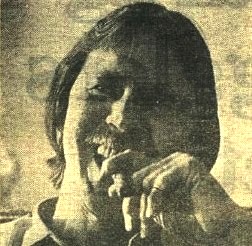
Jesse Walter Bishop
Murderer Ervil LeBaron
Murderer · USA · 1972
Ervil Morrell LeBaron (1925 to August 16, 1981) was the leader of a polygamous…
35 victims
Ervil LeBaron
Murderer · USA · 1972
Ervil Morrell LeBaron (1925 to August 16, 1981) was the leader of a polygamous…
35 victims
 Brian Kevin Rosenfeld
Murderer · USA · 1985
Brian Kevin Rosenfeld Brian Kevin Rosenfeld was sentenced to three concurrent l…
23 victims
Brian Kevin Rosenfeld
Murderer · USA · 1985
Brian Kevin Rosenfeld Brian Kevin Rosenfeld was sentenced to three concurrent l…
23 victims
 Marvin Gray
Murderer · USA · 1975
Marvin Gray was convicted killer who claimed responsibility for 23 slayings and…
23 victims
Marvin Gray
Murderer · USA · 1975
Marvin Gray was convicted killer who claimed responsibility for 23 slayings and…
23 victims
 Yahweh ben Yahweh
Murderer · USA · 1980
Yahweh ben Yahweh was born and legally named Hulon Mitchell Jr. (October 27, 19…
23 victims
Yahweh ben Yahweh
Murderer · USA · 1980
Yahweh ben Yahweh was born and legally named Hulon Mitchell Jr. (October 27, 19…
23 victims
 Jessel Turner
Murderer · USA · 1986
Jessel Turner was executed by lethal injection in Texas on September 22, 1997.…
1 victim
Jessel Turner
Murderer · USA · 1986
Jessel Turner was executed by lethal injection in Texas on September 22, 1997.…
1 victim
 Andre Bland
Murderer · USA · 1992
Andre S. Bland was convicted in the shooting death of Ontrain Sanders in the pa…
1 victim
Andre Bland
Murderer · USA · 1992
Andre S. Bland was convicted in the shooting death of Ontrain Sanders in the pa…
1 victim
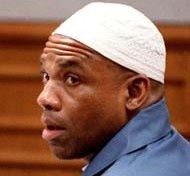 Leo Alexander Jones
Murderer · USA · 1981
Leo Alexander Jones (April 13, 1950 – March 24, 1998) was sentenced to death an…
1 victim
Leo Alexander Jones
Murderer · USA · 1981
Leo Alexander Jones (April 13, 1950 – March 24, 1998) was sentenced to death an…
1 victim
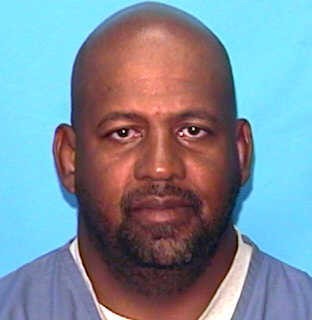 Michael Tyrone Crump
Murderer · USA · 1985
Defendant (Appellant): Michael Tyrone Crump · Plaintiff/Respondent (Appellee):…
2 victims
Michael Tyrone Crump
Murderer · USA · 1985
Defendant (Appellant): Michael Tyrone Crump · Plaintiff/Respondent (Appellee):…
2 victims
 Ronnie Joe Neal
Murderer · USA · 2004
Ronnie Joe Neal had prior prison sentences in Texas. TDCJ-ID #525256 reflected…
1 victim
Ronnie Joe Neal
Murderer · USA · 2004
Ronnie Joe Neal had prior prison sentences in Texas. TDCJ-ID #525256 reflected…
1 victim
 Jack Dale Walker
Murderer · USA · 1988
Jack Dale Walker was executed by lethal injection in Oklahoma on August 28, 200…
2 victims
Jack Dale Walker
Murderer · USA · 1988
Jack Dale Walker was executed by lethal injection in Oklahoma on August 28, 200…
2 victims
- Gender
- male
- Country
- USA
- Location
- Clark County, Nevada, USA
- Date of birth
- March 1, 1933
- Age at first offence
- 44
- Characteristics
- heroin addict
- Victim profile
- Baltimore newlywed David Ballard, 22
- Method of murder
- Shooting
- Date(s) of murder
- December 1977
- Years active
- 1977
- Date of arrest
- —
- Status
-
Executed
Executed by asphyxiation-gas in Nevada on October 22, 1979
Case overview
Jesse Walter Bishop (March 1, 1933 – October 22, 1979) was convicted of the murder of David Ballard, a 22-year-old newlywed. The killing occurred during a robbery of the El Morocco Casino on the Strip in Las Vegas, Nevada. Bishop was sentenced to death and was executed by asphyxiation-gas in Nevada on October 22, 1979.
Background
Bishop had served in the Korean War and had won a Purple Heart while serving as a paratrooper. He became “hooked on heroin only after being administered morphine by medics for a battle injury.”
Bishop was described as a professional gunman and as a heroin addict and career criminal. One account described him as having committed his first armed robbery at age 15 and having passed 22 of his last 27 years behind bars.
A last meal was described as steak, and he sent his compliments to the cook. He refused to pick up the telephone provided so that he could make a last-minute appeal.
The offence
Bishop was convicted of killing David Ballard during a Las Vegas casino robbery at the El Morocco Casino on the Strip.
A casino shift manager who survived after Bishop shot him in the stomach testified that Bishop shot Ballard “like a dog.”
After the robbery and killing, the bridegroom left his celebration champagne to try to stop Bishop robbing a Las Vegas casino.
Investigation
A link between Bishop’s planned legal actions and the execution proceedings was described in federal court material concerning a stay of execution. The legal material discussed that on August 25, 1979, a Circuit Justice temporarily enjoined respondents from executing Jesse Bishop.
Arrest
No arrest facts were provided.
Trial
Bishop waived his right to a jury trial and immediately pleaded guilty to the killing of David Ballard.
When Bishop’s public defenders attempted to argue that their client did not deserve a death sentence because of “mitigating circumstances,” Bishop fired them. The “mitigating circumstances” referenced included that Bishop won a Purple Heart while serving as a paratrooper during the Korean War and became hooked on heroin only after being administered morphine by medics for a battle injury.
Sentencing
Bishop was sentenced to death for killing David Ballard in the El Morocco casino in Las Vegas in December 1977.
The Supreme Court of Nevada expressly upheld the constitutionality of the Nevada capital punishment statute. The court reasoned:
“The Nevada statutes authorizing the imposition of the death penalty are similar to the Florida statutes which were found to be constitutional in Proffitt v. Florida, 428 U.S. 242 [] (1976). The Nevada statutes provide for a consideration of any mitigating factor the defendant may want to present. NRS 200.035(7). Cf. Lockett v. Ohio, [ 438 U.S. 586 , 98 S. Ct. 2954 (1978)]. The imposition of the death penalty in this case offends neither the United States Constitution nor the Nevada Constitution.”
Nevada District Judge Paul Goldman was described as having spoken to Bishop in August, and Bishop told him he had been involved in 18 contract killings, apparently involving drugs.
Appeals
U.S. Supreme Court stay application
The legal material included a U.S. Supreme Court proceeding styled: Kirk B. LENHARD and George E. Franzen, Clark County Deputy Public Defenders, Individually and as next friends acting on behalf of Jesse Walter Bishop, Applicants, v. Charles WOLFF, Warden, Nevada State Prison System, et al. No. A-172.
A Circuit Justice stated:
“On August 25, 1979, I temporarily enjoined respondents from executing Jesse Bishop, upon whom a death sentence was imposed by the State District Court for Clark County, Nev., and affirmed by the Supreme Court of Nevada in July 1979. I issued the injunction so that I would be able to consider the response of Nevada officials and additional information of record which I requested from each of the parties.”
The Circuit Justice continued the stay while awaiting consideration by the full Court:
“I have determined that it is appropriate to continue the stay of execution pending consideration by the full Court.”
The Circuit Justice discussed that Bishop had “concededly disclaimed any effort either by himself or by others on his behalf to prevent his execution” and that the defendant under sentence of death had “wholly disclaimed any effort to seek a stay from this Court or to seek review of the decision of the Supreme Court of Nevada by means of certiorari in this Court.”
The Circuit Justice compared the situation to Gilmore v. Utah and Evans v. Bennett and discussed different levels of appellate review, including that:
- “Bishop has obtained full review by the Supreme Court of Nevada”
- “Evans additionally unsuccessfully sought a writ of certiorari from this Court” and that writ “was denied on February 21, 1979. 440 U.S. 930.”
- In Gilmore, “no state or federal court had reviewed the constitutionality of the Utah statute.”
The Circuit Justice stated that Bishop was “found competent to plead guilty and represent himself after an evidentiary hearing at which three examining psychiatrists reported that Bishop was competent,” and described later findings and medical examinations, including that a state-appointed psychiatrist (the only psychiatrist Bishop would consent to see) concluded Bishop was competent to waive further review.
The Circuit Justice set out a position regarding what vote would be taken on the stay, concluding:
“If I were casting my vote on the application for a stay as a Member of the full Court, I would vote to deny the stay.”
The Circuit Justice also agreed with the per curiam opinion of Judges Wright, Sneed, and Hug of the U.S. Court of Appeals for the Ninth Circuit and agreed with observations in a concurring opinion by Judge Sneed.
Execution timing and voting on commutation request
A Pardons Board vote was described as rejecting a request to commute his sentence. The Pardons Board was headed by then-Gov. Bob List, and it voted 5-2 to reject the request. Bishop was executed two months later.
Outcome
Jesse Walter Bishop was executed by asphyxiation-gas in Nevada on October 22, 1979. He was the last person to be executed in Nevada by the gas chamber in 1979, and subsequent executions were carried out by lethal injection.
A described final statement attributed to Bishop was:
“This is one more step down the road of life that I've been heading for all my life. Let's go.”
Another set of “final words” attributed to Bishop and directed to Mr Wolff was:
“This is one more step down the road of life that I've been heading for all my life.”
Aftermath
Outside the prison, about 75 opponents of the death penalty held a candlelight vigil and recited the Lord’s prayer when they learned Bishop was dead.
A legal discussion in the material stated that the ACLU intervened, and that the Pardons Board rejected a commutation request. It also described that Bishop wanted to be executed, and that he waived efforts to stay his execution, refusing to authorize an appeal minutes before entering the gas chamber.
The material stated that Bishop was the first man executed in Nevada following the reinstatement of capital punishment by the Nevada Legislature in 1977. It also stated that he was the third person to be executed in the United States since 1976, after Gary Gilmore and John Arthur Spenkelink.
The material also stated that Bishop was “the last person in Nevada to be executed by the gas chamber.”
Other details
Execution procedure details
Bishop was strapped into the chair, with a stethoscope taped to his chest. The stethoscope was attached to a long tube extending from the gas chamber so a doctor could tell when he was dead. A metal door to the death chamber closed, and volunteer guards flicked switches that activated a device to drop dozens of cyanide tablets into a black vat beneath Bishop’s chair filled with diluted sulphuric acid.
During the execution, his body twitched, his head rose and fell several times to his chest, his eyes closed, and his mouth fell open. After several minutes his body was motionless except for an occasional shudder.
One account stated that he took nine minutes to die. It included a description that his death was “like an iceman” and “as tough as nails to the end,” attributed to prison director Charles Wolff.
Another account described that:
- At 12:14 a.m., “a capsule of cyanide gas tumbled down a tube and plopped into a dish of acid.”
- He sniffed the air expectantly and shrugged.
- Seconds later he grimaced and began breathing deeply.
- At 12:21 a.m., “the doctor pronounced the man dead.”
Clothing and demeanor descriptions
One account described Bishop entering the gas chamber near Carson City in a crisp white shirt and pressed Levis, walking “purposefully” into the chamber.
Another account described him as dressed in denim trousers, white shirt and white socks.
Witness and prison director references
The TIME witness Guy Shipler was described as one of 14 official witnesses.
Prison director Charles Wolff was cited regarding Bishop’s manner of death.
Legal quotations and constitutional discussion
The material included discussion of the Eighth Amendment and death penalty review, including the Circuit Justice’s description of views attributed to Justices BRENNAN and MARSHALL and others. It also included a statement attributed to Judge Sneed regarding “next friends” running the risk of making the actual defendant a pawn.
Former U.S. Attorney General Ramsey Clark was quoted twice:
“Each execution makes it easier to kill the next time,” says former U.S. Attorney General Ramsey Clark, who tried several times to dissuade Bishop from his course of action.
Clark added:
“I don't think he's right.”
Parties and roles in the legal proceeding
Applicants in the Lenhard case were Kirk B. Lenhard and George E. Franzen, identified as Clark County Deputy Public Defenders, individually and as next friends acting on behalf of Jesse Walter Bishop. The respondent included Charles Wolff, Warden, Nevada State Prison System. The proceeding referenced a Circuit Justice.
Meal and phone
Bishop’s described last meal was steak. He sent compliments to the cook and refused to pick up the telephone provided for a last-minute appeal.
Spotted an error, or have more information about this case?