Julius Lee Neuschafer
Murderer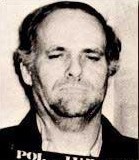 Ervil LeBaron
Murderer · USA · 1972
Ervil Morrell LeBaron (1925 to August 16, 1981) was the leader of a polygamous…
35 victims
Ervil LeBaron
Murderer · USA · 1972
Ervil Morrell LeBaron (1925 to August 16, 1981) was the leader of a polygamous…
35 victims
 Marvin Gray
Murderer · USA · 1975
Marvin Gray was convicted killer who claimed responsibility for 23 slayings and…
23 victims
Marvin Gray
Murderer · USA · 1975
Marvin Gray was convicted killer who claimed responsibility for 23 slayings and…
23 victims
 Yahweh ben Yahweh
Murderer · USA · 1980
Yahweh ben Yahweh was born and legally named Hulon Mitchell Jr. (October 27, 19…
23 victims
Yahweh ben Yahweh
Murderer · USA · 1980
Yahweh ben Yahweh was born and legally named Hulon Mitchell Jr. (October 27, 19…
23 victims
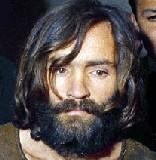 Charles Manson
Murderer · USA · 1969
Charles Milles Manson (born November 12, 1934) was an American criminal and mus…
9 victims
Charles Manson
Murderer · USA · 1969
Charles Milles Manson (born November 12, 1934) was an American criminal and mus…
9 victims
 Viktor Sayenko
Serial killer · Ukraine · 2007
The case was associated with “The Dnepropetrovsk Maniacs,” a media epithet for…
18 victims
Viktor Sayenko
Serial killer · Ukraine · 2007
The case was associated with “The Dnepropetrovsk Maniacs,” a media epithet for…
18 victims
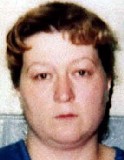 Gina Spann
Murderer · USA · 1997
Gina Spann pleaded guilty and was sentenced to life in prison without parole on…
1 victim
Gina Spann
Murderer · USA · 1997
Gina Spann pleaded guilty and was sentenced to life in prison without parole on…
1 victim
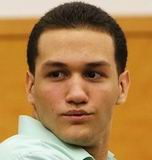 John Katehis
Homicide · USA · 2009
John Katehis was a 16-year-old and was tried for the fatal stabbing of radio jo…
1 victim
John Katehis
Homicide · USA · 2009
John Katehis was a 16-year-old and was tried for the fatal stabbing of radio jo…
1 victim
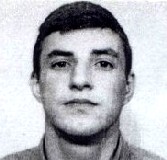 Alexander Greb
Spree killer · Russia · 2004
Alexander Greb was arrested by law enforcement officers of the Rakitinsky depar…
4 victims
Alexander Greb
Spree killer · Russia · 2004
Alexander Greb was arrested by law enforcement officers of the Rakitinsky depar…
4 victims
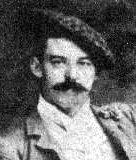 John Reginald Birchall
Murderer · 1890
John Reginald Birchall was born 25 May 1866 in Accrington, England. He was the…
1 victim
John Reginald Birchall
Murderer · 1890
John Reginald Birchall was born 25 May 1866 in Accrington, England. He was the…
1 victim
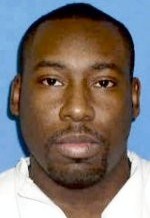 Frederick Patrick McWilliams
Murderer · USA · 1996
Frederick Patrick McWilliams McWilliams was executed by lethal injection in Tex…
1 victim
Frederick Patrick McWilliams
Murderer · USA · 1996
Frederick Patrick McWilliams McWilliams was executed by lethal injection in Tex…
1 victim
- Gender
- male
- Country
- USA
- Location
- Carson City, Nevada, USA
- Date of birth
- March 17, 1953
- Age at first offence
- 21
- Characteristics
- rape
- Victim profile
- Shawn Hofer, 15, and Lorie Woodruff, 13 / Johnnie Johnson (inmate)
- Method of murder
- Shooting / Strangulation
- Date(s) of murder
- 1974 / 1981
- Years active
- 1974–1981
- Date of arrest
- —
- Status
-
Died in custody
Sentenced to death; died in prison July 26, 1998
Case identification
Julius Lee Neuschafer, also known as Julius “Jimmy” Lee Neuschafer, was sentenced to death. He died in prison on July 26, 1998.
Timeline
- August 18, 1981 — Officers Ricards and Forrest questioned Neuschafer in a maximum security unit of the prison; despite his request for an attorney, officers continued the interview until they elicited an incriminating statement that was not admitted in evidence.
- August 20, 1981 — Neuschafer handed a note to correctional officer Stahl, and it was then examined by correctional officer Glen Blomgren; the prison daily log recorded receipt of the note in the max unit, and the note was sent to the Investigation Division and then to the Carson City Sheriff’s office.
- August 21, 1981 — Neuschafer was taken from Max Unit to an interview with Detective Michael Efford, with officers Ricards and Ed Forrest present; Efford read Neuschafer his Miranda rights, Neuschafer indicated he understood his rights and did not request an attorney, and he gave another incriminating statement admitted at trial over objection.
- May 11, 1987 — The United States Court of Appeals for the Ninth Circuit affirmed denial of Neuschafer’s petition for writ of habeas corpus.
- July 26, 1998 — Neuschafer died in prison.
- July 27, 1998 — A Nevada death row inmate dies of natural causes at age of 45 was reported; Neuschafer was pronounced dead at 12:41 p.m.
Background
Neuschafer was on Nevada death row and died of natural causes at age 45.
Department of Prison spokesman Glen Whorton said Neuschafer died Sunday of natural causes and was pronounced dead at 12:41 p.m. at the Regional Medical Facility at the Northern Nevada Correctional Center in Carson City.
Whorton said the cause of death was obvious, while details were being withheld pending notification of relatives.
Neuschafer had been transferred to the Regional Medical Facility about a month earlier from the state prison in Ely, where death row inmates are housed.
The offence
Neuschafer was sentenced to two life prison terms without parole for raping and killing two Carson City teen-agers.
Shawn Hofer, 15, and Lorie Woodruff, 13, were shot in the head in 1974.
The narrative stated that the killings occurred during a time when Nevada did not have the death penalty.
Neuschafer later was convicted and sentenced to die for strangling another inmate, Johnnie Johnson, also known as Willard Taylor, in August 1981.
The Ninth Circuit opinion stated that Neuschafer killed a prison inmate and was convicted of first degree murder with aggravating circumstances as defined by Nevada law, and he received the death sentence.
The Ninth Circuit opinion also stated that Neuschafer committed the crime while he was serving two life sentences for the rape and first degree murder of two young women.
Investigation
The district court findings described the handling of a note that was received around 8:15 p.m. on August 20, 1981.
The preponderance of the evidence in the Ninth Circuit opinion was that the note was sent directly to the Investigation Division of the Prison and then on to the Carson City Sheriff’s office, with the assistance of the Investigation Division investigating major crimes at the prison at that time.
Sometime after the note reached the Carson City Sheriff, officer Ricards of the Investigation Division arranged for an interview between Neuschafer and Detective Michael Efford of the Sheriff’s office.
Ricards had been told Neuschafer wanted to talk to the police, and Ricards told Efford Neuschafer asked to talk to Efford; Efford was not told that Neuschafer had previously been interviewed and requested an attorney.
Arrest
The provided material did not describe an arrest.
Trial
The Ninth Circuit opinion described admissions and confessions introduced at trial.
It stated that the issue involved Neuschafer’s statement on August 21, 1981, which was the third of three confessions or admissions introduced in evidence.
The opinion stated that before the August 21 statement, Neuschafer wrote two incriminating notes that were admitted at trial and could be characterized as confessions.
It further stated that another statement made after the notes were written but before the August 21 statement was obtained in violation of Miranda rights and was not admitted in evidence.
The Ninth Circuit opinion described the August 18 interview: despite Neuschafer’s request for an attorney, officers did not provide counsel and continued the interview until they elicited an incriminating statement, which was not admitted in evidence.
The Ninth Circuit opinion described the August 21 interview: at approximately 2:30 p.m. on August 21, 1981, Neuschafer was taken from Max Unit to another area for an interview with Efford, Ricards, and Ed Forrest; Efford read Neuschafer his Miranda rights; Neuschafer indicated he understood his rights and did not request an attorney; Neuschafer proceeded to give another incriminating statement that was read into the record at trial over objection of defense counsel.
The opinion stated Neuschafer’s claim that he did not initiate the interview was refuted in the record by documentary evidence, by testimony of officers Smith and Blomgren, and by inconsistent statements of Neuschafer in the remand hearing and at the criminal trial.
The trial judge said Neuschafer’s testimony was discredited by his demeanor.
Sentencing
The jury found aggravating factors including that the murder involved torture, depravity of mind, or the mutilation of the victim, citing Nev. Rev. Stat. Sec. 200.033(8).
The opinion stated the jury found additional and specific aggravating factors that justified imposition of the capital sentence under Nevada law and constitutional principles.
The jury found, beyond a reasonable doubt, that the murder had been committed by a person under sentence of imprisonment and by a person previously convicted of another murder, which the opinion described as aggravating circumstances under Nev. Rev. Stat. Sec. 200.033(1), (2).
The jury found no mitigating factors.
The opinion stated that in the absence of mitigating factors, the presence of either aggravating circumstance standing alone would have permitted the jury to impose the death sentence under Nevada law, citing Nev. Rev. Stat. Sec. 200.030(4)(a).
The opinion stated that the presence of one valid aggravating circumstance sufficed to support a sentence of death against a contention that another aggravating circumstance was insufficient standing alone.
The opinion addressed Neuschafer’s argument that his sentence was disproportionate and stated that constitutional principles did not require comparative proportionality review where Nevada’s capital sentencing process contained checks on arbitrariness such as mitigating and aggravating circumstances.
Appeals
Neuschafer sought a writ of habeas corpus after the Nevada judicial system reviewed and affirmed his conviction and sentence.
The material included the case citation and procedural details: 816 F.2d 1390, “Jimmy Neuschafer, Petitioner-appellant, v. Harol Whitley, Warden, Nevada State Prison, and Brian Mckay, Attorney General of the State of Nevada, respondents-appellees,” United States Court of Appeals, Ninth Circuit.
The material stated: Argued and Submitted April 14, 1987; Decided May 11, 1987.
The opinion stated that the appellant sought federal habeas relief after Nevada judicial review.
The opinion stated that in the first opinion, Neuschafer v. State, 101 Nev. 331, 705 P.2d 609 (1985), Nevada had reviewed and affirmed his conviction and sentence; the district court had denied the petition; and after oral argument on appeal from that decision, the Ninth Circuit issued an order of limited remand to the district court for further findings.
The opinion stated that Neuschafer v. McKay, 807 F.2d 839 (9th Cir.1987), involved an issue that the prosecution used a confession obtained in violation of Edwards v. Arizona, 451 U.S. 477 (1981).
The opinion stated that Edwards barred use of any confession obtained after the suspect requested a lawyer unless the suspect initiated the interview leading to his confession and knowingly and intelligently waived the right to counsel before confessing.
The opinion described the district court’s findings on remand as fully supported by evidence: it found the August 21 interview was initiated by Neuschafer and that the confession was made after a waiver of the right to counsel.
The opinion stated the Ninth Circuit rejected Neuschafer’s constitutional arguments and affirmed denial of the writ.
It stated: “The jury found that one of the aggravating factors of the crime was that it was a murder which "involved torture, depravity of mind or the mutilation of the victim." Nev.Rev.Stat. Sec. 200.033(8). Neuschafer contends this is an arbitrary standard, both as a general matter and in the particular circumstances of his case.”
The opinion also stated that it was unnecessary to address that contention because it would be of no avail to the petitioner given other jury findings.
The opinion ended with: “AFFIRMED.”
Quoted remarks attributed to Neuschafer and others
Neuschafer made remarks reported during his execution scheduling:
“I just want it over with as soon as possible,” he said at the time.
“I think it would be a nice Christmas present for the city of Carson City. ”
“I have no desire for any further appeals nor do I have any desire to remain in prison,” he said.
“I'm not going to play any more games with you.”
The reported material also included a remark about preferred execution method: Neuschafer once told a reporter during a 1985 prison interview that he would prefer to be executed by firing squad or guillotine, saying death by lethal injection is "the way they kill mad dogs."
The reported material also included a remark to District Judge Mike Fondi: Neuschafer’s last execution was scheduled for December 1990, when he told District Judge Mike Fondi his death would be a nice Christmas gift.
Department of Prison spokesman Glen Whorton made statements reported about death and withheld details: Whorton said Neuschafer was pronounced dead at 12:41 p.m.
Whorton said the cause of death was obvious, but details were being withheld pending notification of relatives.
The reported material also described quotes attributed to Neuschafer about his decision to challenge his conviction: But six hours before he was to die by lethal injection, he decided to challenge his conviction, arguing errors by his defense attorney kept him from getting a fair trial.
The reported material also stated that Neuschafer came within hours of execution multiple times and used last-minute challenges.
The case record included a note requesting an inmate “position of authority” and attention; the Ninth Circuit included a statement of content attributed to the note: Officer Richards of the Investigation Division of NSP recalls the note as saying that Petitioner “wished somebody to clear up his trouble.”
The Ninth Circuit further stated: There was also a parenthetical: “This statement referred to a telephone call that had been arranged for another inmate, Hartman, by the chaplain and Lt. Smith. Exhibit E also mentions this telephone call.”
Federal court contentions and constitutional issues
The Ninth Circuit opinion described Neuschafer’s first argument on remand as violation of Edwards v. Arizona related to the August 21 statement.
The opinion recounted that on August 18, Neuschafer requested an attorney and officers did not provide counsel, but that statement was not admitted.
The opinion stated that the district court found the Edwards rule conditions satisfied and that the August 21 confession was admissible.
The opinion stated it was unnecessary to consider harmless error, and it also referenced a dissent in the previous disposition.
It then addressed other contentions including aggravating factors, proportionality, and constitutional objections.
Other details
Neuschafer’s death warrant scheduling included multiple cancellations within hours of execution: The narrative stated Neuschafer had his date with the death needle canceled within hours of his execution three times.
It stated that on three occasions he came within hours of being executed.
It stated he twice said he didn’t want to continue with appeals, only to change his mind at the last minute.
It stated that in 1987, he was placed in the “last night cell” and ordered steak and lobster as his final meal, then called his attorney to get a stay of execution.
It stated that in 1990, he used the same gambit, eating a final meal of fried chicken, chocolate chip ice cream and chocolate milkshakes, and then having his attorney launch a new appeal.
The narrative stated that the warden vowed Neuschafer would not get a third last meal, but Neuschafer died in prison before he could be executed.
The narrative stated that his last execution was scheduled for December 1990 and he told District Judge Mike Fondi his death would be a nice Christmas gift.
The narrative stated that six hours before he was to die by lethal injection, he decided to challenge his conviction, arguing errors by his defense attorney kept him from getting a fair trial.
The narrative stated that Neuschafer came within four hours of execution in 1987 and 11 hours in 1985 when he won federal court stays.
The narrative also stated that he once told a reporter during a 1985 prison interview that he would prefer to be executed by firing squad or guillotine, and that death by lethal injection is "the way they kill mad dogs."
The reported material also included mention of “Jimmy Neuschafer Las Vegas Sun On Nevada's Death Row,” and described him as “the master of delays - and gastronomical gamesmanship.”
The Ninth Circuit opinion included detailed district court findings about Neuschafer’s note: Blomgren cannot recall verbatim the specific contents of the note, but he remembered that the note indicated Petitioner's great desire to see somebody in a “position of authority” to talk about why he was in the Max Unit.
The opinion stated the note indicated an intimate knowledge of the murder weapon used, describing the material of which it was made and the way it was knotted.
The opinion stated to Blomgren the note was “confessionary” and involved an inmate murder.
The Ninth Circuit opinion also described Lt. Francis Smith documenting receipt in a daily log; it included the handwritten entry: “8:15 P M Phone call complete in Max unit. 3 Also c/o Blomgren received a note from Inmate Neushafer (sic) which is being sent to investigations.”
The Ninth Circuit opinion included additional footnote-like content: 2 Officer Richards of the Investigation Division of NSP recalls the note as saying that Petitioner “wished somebody to clear up his trouble.”
3 There was “no credible evidence to support Petitioner's present contention that the note sought an attorney to represent Petitioner.”
The Ninth Circuit opinion described the trial judge’s demeanor assessment and stated that evidence supported findings.
Outcome
The United States Court of Appeals for the Ninth Circuit rejected Neuschafer’s constitutional arguments and affirmed denial of the writ of habeas corpus, stating: “AFFIRMED.”
Neuschafer later died in prison on July 26, 1998.
Spotted an error, or have more information about this case?