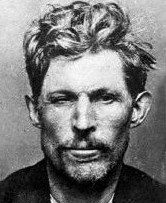
Guillaume Seznec
Murderer?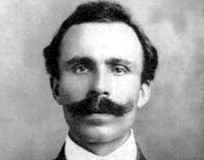 Bartolomeo Vanzetti
Murderer? · USA · 1920
Bartolomeo Vanzetti (June 11, 1888–August 23, 1927) was an anarchist who was co…
2 victims
Bartolomeo Vanzetti
Murderer? · USA · 1920
Bartolomeo Vanzetti (June 11, 1888–August 23, 1927) was an anarchist who was co…
2 victims
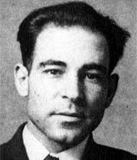 Nicola Sacco
Murderer? · USA · 1920
Nicola Sacco Nicola Sacco and Bartolomeo Vanzetti were convicted of murdering t…
2 victims
Nicola Sacco
Murderer? · USA · 1920
Nicola Sacco Nicola Sacco and Bartolomeo Vanzetti were convicted of murdering t…
2 victims
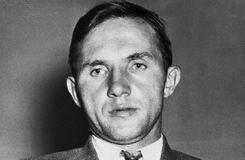 Bruno Hauptmann
Murderer? · USA · 1932
Bruno Hauptmann was a German carpenter and former criminal. He was sentenced to…
1 victim
Bruno Hauptmann
Murderer? · USA · 1932
Bruno Hauptmann was a German carpenter and former criminal. He was sentenced to…
1 victim
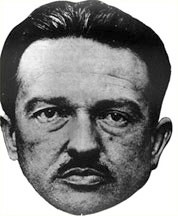 Dr. Pierre Marie Bougrat
Murderer? · France · 1925
Dr. Pierre Marie Bougrat was a doctor in France. He had been awarded the Milita…
1 victim
Dr. Pierre Marie Bougrat
Murderer? · France · 1925
Dr. Pierre Marie Bougrat was a doctor in France. He had been awarded the Milita…
1 victim
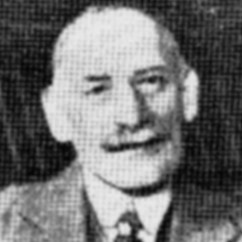 Harold Greenwood
Murderer? · United Kingdom · 1919
Harold Greenwood (1874 – 17 January 1929) was an English solicitor who was accu…
1 victim
Harold Greenwood
Murderer? · United Kingdom · 1919
Harold Greenwood (1874 – 17 January 1929) was an English solicitor who was accu…
1 victim
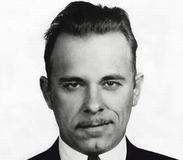 John Dillinger
Murderer? · USA · 1933
John Dillinger (John Herbert Dillinger, Jr.; June 22, 1903 – July 22, 1934) · J…
1 victim
John Dillinger
Murderer? · USA · 1933
John Dillinger (John Herbert Dillinger, Jr.; June 22, 1903 – July 22, 1934) · J…
1 victim
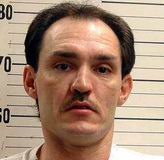 Hubert Glenn Sexton
Murderer · USA · 2000
Hubert Glenn Sexton was convicted in Tennessee for first degree murder of Stanl…
2 victims
Hubert Glenn Sexton
Murderer · USA · 2000
Hubert Glenn Sexton was convicted in Tennessee for first degree murder of Stanl…
2 victims
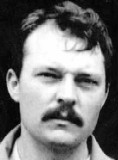 Claude Dallas
Murderer · USA · 1981
Claude Lafayette Dallas Jr. was born March 11, 1950. He was a self-styled mount…
2 victims
Claude Dallas
Murderer · USA · 1981
Claude Lafayette Dallas Jr. was born March 11, 1950. He was a self-styled mount…
2 victims
 Angela Camacho
Murderer · USA · 2003
Angela Camacho was convicted in a case involving the decapitation deaths of her…
3 victims
Angela Camacho
Murderer · USA · 2003
Angela Camacho was convicted in a case involving the decapitation deaths of her…
3 victims
 Anthony Grandison
Murderer · USA · 1983
Anthony Grandison was an American drug dealer and murderer. He was convicted of…
2 victims
Anthony Grandison
Murderer · USA · 1983
Anthony Grandison was an American drug dealer and murderer. He was convicted of…
2 victims
 James Tenner
Murderer · USA · 1987
James Tenner was convicted of the hanging and murders of Alvin Smith and Donna…
2 victims
James Tenner
Murderer · USA · 1987
James Tenner was convicted of the hanging and murders of Alvin Smith and Donna…
2 victims
 John Richard Baltazar
Murderer · USA · 1997
John Richard Baltazar was executed in Texas. · September 27, 1997 — John Baltaz…
1 victim
John Richard Baltazar
Murderer · USA · 1997
John Richard Baltazar was executed in Texas. · September 27, 1997 — John Baltaz…
1 victim
- Gender
- male
- Country
- France (during a business trip from Brittany to Paris)
- Location
- France (during a business trip from Brittany to Paris)
- Date of birth
- 1878
- Age at first offence
- 45
- Characteristics
- abduction, the bodies were never found, miscarriage of justice
- Victim profile
- Pierre Quéméneur , 46 (woodcutter and conseiller général of Finistère)
- Method of murder
- ???
- Date(s) of murder
- May 25, 1923
- Years active
- 1923
- Date of arrest
- June 14, 1923
- Status
-
Died in custody
Sentenced to hard labour in perpetuity on 4 November 1924; released in May 1947; died on 13 February 1954
Summary
Guillaume Seznec was a Breton sawmill owner who was convicted of the murder of wood merchant Pierre Quéméneur, conseiller général of Finistère, and of false promise. Pierre Quéméneur had disappeared during the night of 25/26 May 1923 while on a business trip from Brittany to Paris with Seznec. Despite the body never being recovered, the case proceeded on a murder hypothesis.
Seznec was the prime suspect because he was the last person to have seen Quéméneur alive. He was arrested, charged, and imprisoned. His trial heard nearly 120 witnesses and closed on 4 November 1924. He was found culpable, but because premeditation could not be proved, he was condemned to hard labour in perpetuity, while the avocat général had demanded the death penalty.
He was taken to the Transportation Camp at Saint-Laurent-du-Maroni in 1927 and was transferred to the prison of the Îles du Salut in French Guiana in 1928. He benefitted from a remission and was released in May 1947. He returned to Paris the following year.
In 1953, in Paris, Seznec was hit by a van driven off afterward. The driver, later questioned, claimed not to have seen anything. Seznec died of his injuries on 13 February 1954.
Throughout the trial and for the rest of his life, Seznec proclaimed his innocence. After his conviction, his descendents fought to have the case reopened and his name cleared, including his grandson Denis Le Her-Seznec. Their attempts (14 in total) failed, until a “commission de révision des condamnations pénales” accepted a reopening of Guillaume Seznec’s conviction for murder on 11 April 2005, which could open the way to an eventual annulling of his conviction in 1924. The criminal chamber of the Court of Cassation examined the case on 5 October 2006. On 14 December 2006, the Cour de révision refused to annul Seznec’s conviction, judging there was no new evidence to call doubt on Seznec’s guilt.
Timeline
- 25/26 May 1923 — Pierre Quéméneur disappeared during a trip from Brittany to Paris with Guillaume Seznec.
- 4 November 1924 — Seznec’s trial closed; he was sentenced to hard labour in perpetuity.
- 1927 — Seznec was taken to the Transportation Camp at Saint-Laurent-du-Maroni.
- 1928 — Seznec was transferred to the prison of the Îles du Salut in French Guiana.
- May 1947 — Seznec was released following a remission.
- 1953 — Seznec was reversed into by a van in Paris; the driver claimed not to have seen anything.
- 13 February 1954 — Seznec died of his injuries.
- 11 April 2005 — A “commission de révision des condamnations pénales” accepted a reopening of Guillaume Seznec’s conviction for murder.
- 5 October 2006 — The criminal chamber of the Court of Cassation examined the case.
- 14 December 2006 — The Cour de révision refused to annul Seznec’s conviction.
Background
Course Joseph Marie Guillaume Seznec was born in Plomodiern in Finistère in 1878. He was the head of a sawmill at Morlaix.
Pierre Quéméneur was a wood merchant and conseiller général of Finistère.
Quéméneur had disappeared on the night of 25/26 May 1923 during a business trip from Brittany to Paris with Seznec. The trip was linked, according to Seznec, to the sale of stocks of cars left behind in France after the First World War by the American army to the Soviet Union.
The offence
Seznec was found guilty of false promise and of the murder of Pierre Quéméneur.
A fake bill of sale, dated May 23, was found among Seznec’s belongings. During the trial, the prosecution argued that Seznec had done away with Quéméneur to get his hands on Quéméneur’s country estate and that Gherdi was “a figment of the accused’s imagination”.
Seznec insisted on his innocence.
Investigation
Seznec became the prime suspect as the last person to have seen Quéméneur alive.
The case explored multiple possibilities as to Quéméneur’s disappearance, and it remained the case that the body was never recovered.
During later proceedings, an alternative possibility of a police plot was raised, involving trainee inspector Pierre Bonny and his superior, commissaire Vidal. The possibility was raised because Pierre Bonny and commissaire Vidal were charged in the inquiry.
Experts solicited by the cour de cassation concluded that Guillaume Seznec really was the author of the false promise of sale of Quéméneur’s property seized at Plourivo.
Arrest
Seznec was arrested, charged, and imprisoned after becoming the prime suspect.
Trial
Seznec’s 8-hour trial heard nearly 120 witnesses and closed on 4 November 1924.
Seznec was found culpable, but premeditation could not be proved. He was condemned to hard labour in perpetuity; the avocat général had demanded the death penalty.
Sentencing
Seznec received a sentence of hard labour in perpetuity on 4 November 1924.
He was taken to the Transportation Camp at Saint-Laurent-du-Maroni in 1927.
He was transferred to the prison of the Îles du Salut in French Guiana in 1928.
He obtained a remission and was released in May 1947.
Appeals
His descendents continued attempts to reopen the case and clear his name, with 14 attempts in total failing until later proceedings.
A “commission de révision des condamnations pénales” accepted a reopening of Guillaume Seznec’s conviction for murder on 11 April 2005, which could open the way to an eventual annulling of his conviction in 1924.
At that point, Avocat général Jean-Yves Launay required the benefit of the doubt for Seznec, raising more particularly the possibility of a police plot and charging the trainee inspector Pierre Bonny and his superior, commissaire Vidal in the inquiry.
At his side, the conseiller rapporteur Jean-Louis Castagnède maintained the opposite opinion, deducing that any manipulation seemed improbable due to the few acts established by Bonny, and that experts solicited by the cour de cassation had established that Guillaume Seznec really was the author of the false promise of sale of Quéméneur’s property seized at Plourivo.
On 14 December 2006, the Cour de révision refused to annul Seznec’s conviction, judging there was no new evidence to call doubt on Seznec’s guilt, because the implication of inspector Bonny was not new.
Some accounts also described that the Seznec family intended at first to take the case to the European Court of Human Rights but gave up on their lawyers’ advice.
Outcome
The Cour de révision refused to annul Seznec’s conviction on 14 December 2006.
Seznec was sentenced to hard labour in perpetuity in 1924 and was released in May 1947.
Aftermath
In popular culture, Yves Boisset directed the film L'Affaire Seznec in 1992, starring Christophe Malavoy, with Nathalie Roussel, Jean Yanne and Bernard Bloch.
Denis Seznec made statements in court and afterward, including:
“It is shameful what you are doing!”
and:
“This case has ruined my life” “I don't regret it, but it has stopped me living. Now, for the first time, there may be light at the end of the tunnel”.
Judicial and legal commentary also included the following statements attributed to Denis Seznec in the context of the reopening:
“This is a historic day for our family,”
and:
“After a campaign that has lasted three generations, this is the first time that the French justice system has finally decided to drop its illusion of infallibility,”
People
- Guillaume Seznec — defendant; head of a sawmill at Morlaix; convicted of false promise and the murder of Pierre Quéméneur; maintained his innocence until his death.
- Pierre Quéméneur — victim; wood merchant and conseiller général of Finistère; disappeared on the night of 25/26 May 1923; body was never found.
- Denis Le Her-Seznec — grandson of Seznec; pursued efforts to reopen the case and clear Seznec’s name.
- Jean-Yves Launay — Avocat général at the 5 October 2006 examination; required the benefit of the doubt for Seznec.
- Jean-Louis Castagnède — conseiller rapporteur at the 5 October 2006 examination; maintained the opposite opinion.
- Pierre Bonny — trainee inspector involved in the police-plot possibility; later described as joining the French Gestapo during the occupation.
- commissaire Vidal — superior of Pierre Bonny; charged in the inquiry.
- Joseph Marie Guillaume Seznec — name used as “Course Joseph Marie Guillaume Seznec” in the case description.
Other details
Seznec was described as being born in 1878 in Plomodiern (Finistère) and dying on 13 February 1954 at age 75.
The van incident in 1953 occurred in Paris; the driver, later questioned, claimed not to have seen anything.
The case was described as a controversial French court case of 1923-1924.
A reopening decision dated 11 April 2005 was described as accepted by the “commission de révision des condamnations pénales”.
A Cour de Cassation reference was stated as:
- Arrêt n° 5813 of 14 December 2006.
Bibliography listed:
- Victor Hervé, Justice pour Seznec, Editions Hervé, 1933
- Claude Bal, Seznec était innocent, Éditions de Paris, 1955
- Yves Frédéric Jaffré, L'affaire Seznec, SEGEP, 1956
- Jean Rieux - Lice Nedelec, Seznec...innocent ou prestidigitateur criminel?, Jugant, Lorient, 1976
- Marcel Julian; L'affaire Seznec, Les grandes enquêtes d'Europe, 1979
- Denis Seznec, Nous les Seznec, Éditions Robert Laffont, Paris, 1992
- Denis Langlois, L'Affaire Seznec, Pocket, 1993
- Michel Keriel, Seznec. L'impossible réhabilitation, Éditions MEB, 1998 (reédition LE MANUSCRIT, 2006)
- Aurélien Le Blé (Préface de Denis Seznec), Moi, Pierre Quemeneur, Éditions Alain Bargain, Quimper
- Daniel Le Petitcorps, Seznec En quête de vérité, Éditions Le Télégramme, 2003, ISBN 2-84833-058-9
- Bernez Rouz, L'affaire Quéméneur Seznec - Enquête sur un mystère, Éditions Apogée, Rennes, 2005
- Pascal Bresson (préface de Denis Seznec), Guillaume Seznec, une vie retrouvée, Éditions Ouest-France, Rennes, 2006
- Guy Penaud, L'énigme Seznec, Éditions de La Lauze, Périgueux, 2006
A film entry was included:
- L'Affaire Seznec (directed by Yves Boisset in 1992)
Related press descriptions were also included, including the line:
“French murder verdict upheld - 82 years on Mystery lingers over killing with no corpse - Family fought for decades to try to clear man's name”
Spotted an error, or have more information about this case?