
James Duquette
Murderer Ervil LeBaron
Murderer · USA · 1972
Ervil Morrell LeBaron (1925 to August 16, 1981) was the leader of a polygamous…
35 victims
Ervil LeBaron
Murderer · USA · 1972
Ervil Morrell LeBaron (1925 to August 16, 1981) was the leader of a polygamous…
35 victims
 Brian Kevin Rosenfeld
Murderer · USA · 1985
Brian Kevin Rosenfeld Brian Kevin Rosenfeld was sentenced to three concurrent l…
23 victims
Brian Kevin Rosenfeld
Murderer · USA · 1985
Brian Kevin Rosenfeld Brian Kevin Rosenfeld was sentenced to three concurrent l…
23 victims
 Marvin Gray
Murderer · USA · 1975
Marvin Gray was convicted killer who claimed responsibility for 23 slayings and…
23 victims
Marvin Gray
Murderer · USA · 1975
Marvin Gray was convicted killer who claimed responsibility for 23 slayings and…
23 victims
 Yahweh ben Yahweh
Murderer · USA · 1980
Yahweh ben Yahweh was born and legally named Hulon Mitchell Jr. (October 27, 19…
23 victims
Yahweh ben Yahweh
Murderer · USA · 1980
Yahweh ben Yahweh was born and legally named Hulon Mitchell Jr. (October 27, 19…
23 victims
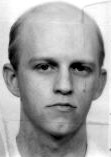 Richard Dinkins
Murderer · USA · 1990
Richard Dinkins was executed in Texas on January 29, 2003. He was convicted of…
2 victims
Richard Dinkins
Murderer · USA · 1990
Richard Dinkins was executed in Texas on January 29, 2003. He was convicted of…
2 victims
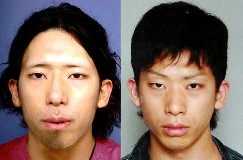 Tatsuya Ichihashi
Murderer · Japan · 2007
Defendant: Tatsuya Ichihashi · Date of death of victim: 24 March 2007 · Age of…
1 victim
Tatsuya Ichihashi
Murderer · Japan · 2007
Defendant: Tatsuya Ichihashi · Date of death of victim: 24 March 2007 · Age of…
1 victim
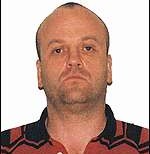 Allan Grimson
Serial killer · United Kingdom · 1986
December 1997 — Nicholas Wright met Allan Grimson, who had given him a telephon…
3 victims
Allan Grimson
Serial killer · United Kingdom · 1986
December 1997 — Nicholas Wright met Allan Grimson, who had given him a telephon…
3 victims
- Gender
- male
- Country
- USA
- Location
- Wisconsin, USA
- Date of birth
- 1959
- Age at first offence
- 21
- Characteristics
- rape, kidnapping
- Victim profile
- Anne Preimesberger, 18 / Tara Kassens, 14
- Method of murder
- Strangulation
- Date(s) of murder
- April 1980 / June 1987
- Years active
- 1980–1987
- Date of arrest
- June 11, 1988
- Status
-
At large
Sentenced to life in prison in two counts of murder in Wisconsin; also sentenced for kidnapping and raping a girl in Massachusetts; remains a person of interest in other unsolved cases
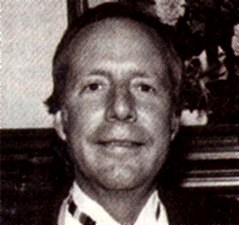
Case record: James Duquette
Status / legal outcome
James Duquette Jr. was convicted of murder and was also sentenced in connection with kidnapping and raping a girl in Massachusetts. He was sentenced to life in prison in two counts of murder in Wisconsin.
Duquette remained a person of interest in other cold cases discussed in the material, including the disappearance and death of Denise Laack and the unsolved murder of Dawn Schnetzer.
Background
James Duquette Jr. was an Appleton native.
The material discussed Duquette as a person of interest in connection with multiple cases. Police officials reviewed cold case files and considered whether Duquette should be interviewed.
The offence
Duquette was convicted in connection with:
- the April 1980 murder of 18-year-old Anne Preimesberger of Appleton
- the late June 1987 murder of 14-year-old Tara Kassens of Mequon
The material also stated that Duquette was convicted of kidnapping and raping a girl in Massachusetts.
Investigation
Denise Laack homicide
Denise Laack disappeared and was later identified through dental records. The material described the case as an unsolved cold case in police files in Illinois.
Investigators reviewed the case file and intended to check with Illinois State Police regarding whether state investigators ever pursued an interview with Duquette. Chad Haage, chief deputy sheriff for Putnam County in Hennepin, Ill., said: “It’s still open but idle.” Haage said Duquette was considered a person of interest in the case but that police had not found evidence that he and Laack knew each other. Haage said that from 1979 until about mid 1980, investigators interviewed dozens of people and there was no solid suspect in those interviews.
A handwritten note on yellow legal paper from December 1988 signed by former Sheriff Phil Hansen was included in the file. It indicated Duquette was in prison in Massachusetts and said Jeff Wittman, Duquette’s former roommate, had provided information “about Denise’s homicide” as part of a plea bargain. Haage said: “I cannot tell you if that was ever followed up on.” He added: “There was no report generated from this department; it was just a note.”
The material also stated that while both Preimesbeger and Kassens had been sexually assaulted and strangled by Duquette, Laack’s case differed because the autopsy report indicated she died of strangulation and showed no evidence of sexual assault, even though she was found nude, wearing only a ring.
The material said Laack had been seeking help for mental health issues that at one point led her to be a chronic caller to the Crisis Intervention help-line. She was described in interviews as “very committed” to “The Way,” a nondenominational ministry headquartered in rural Ohio. The material said she sometimes referred to herself as “a prophet” and had told others that “God had talked to her directly,” as Haage stated.
The material included an interview detail from an Appleton woman described by police as Laack’s “sometimes roommate.” The material said the woman told investigators: “Denise would witness (her beliefs) to anyone she met and sometimes she would accept rides from strangers and sometimes solicit rides in order to gain opportunities to witness.”
The latest information in the file came from 2007 when Appleton police Lt. Pat Geenen turned over to police dental records that were used to officially identify Laack. Geenen said: “Duquette over the years was a person of interest.” Geenen said: “I don’t believe he’s ever been ruled out, but simply because of the nature of the offense and some similarities how bodies were found, he was always a person we were interested in talking to.”
Appleton Deputy Police Chief Bob Kavanaugh said it had probably been a decade since the last Illinois detective investigated the case and called Duquette “still the prevailing theory, as far as I know.”
Dave Elmore, a retired Illinois Division of Criminal Investigation special agent, said he traveled to Appleton in 1986 just after Laack was identified. He said: “I don’t know why we didn’t connect on that.” He added: “I know we sent out message nationwide with her description."
The material said early interviews occurred after Laack’s body was discovered, including people at a Catholic religious retreat a mile and a half away. Elmore recalled that police “were on that part quickly” but found no significant leads.
Unsolved murder case mentioned alongside Duquette
The material also discussed an unsolved homicide in Calumet County, Wisconsin.
Dawn Schnetzer disappeared and was later found dead. The material said Sharon Nellis and Doris Williams were seeking resolution for different unsolved family cases, and both considered Duquette a likely suspect or capable of involvement.
Calumet County Investigator John Dedering took over the cold case murder probe in 2003 when veteran Investigator Jerry Pagel was elected sheriff. Dedering said there were “more than five” persons of interest named in the file and “they’ve all been interviewed at one point or another,” except Duquette, who had declined to speak with investigators.
Pagel said: “Mr. Duquette is a person of interest,” and said: “Hopefully technology is going to continue to improve, which is going to aid us in solving the case.”
Pagel said the case was not being handled with “tunnel vision.” Pagel said: “We know he was in the area at the time of Dawn's disappearance and murder, and the fact that he has murdered individuals in the past,” and Pagel said: “We're not funneling all of our energy towards James Duquette.” Pagel also said: “We would like to hear from them,” regarding people who might have knowledge of what happened, including possible accomplices or acquaintances.
Pagel said there was one person out there who knows what happened and added: “but there also might be accomplices or acquaintances of this individual who knows something that might assist our investigation.”
Dedering said: “My attitude is that as long as the case remains open in our agency or DCI (state Department of Justice), there's a chance the case will be solved,” and said: “We're always hopeful.”
Arrest
No arrest information was included in the material.
Trial
No trial details, court proceedings, or verdict wording were included in the material beyond sentencing outcomes.
Sentencing
The material stated Duquette was serving prison time in Massachusetts and would be returned to Wisconsin to serve life prison terms for two Wisconsin murders. The material stated:
- Duquette would be returned to Wisconsin to serve life prison terms for the murders of Anne Preimesberger (18, of Appleton) in 1980 and Tara Kassens (14, of Mequon) in 1987.
- The material stated Duquette had been sentenced for kidnapping and raping a girl in Massachusetts.
Appeals
No appeals were included in the material.
Outcome
Wisconsin murders
Duquette was sentenced to life in prison in two counts of murder in Wisconsin.
Massachusetts kidnapping and rape
Duquette was sentenced for kidnapping and raping a girl in Massachusetts.
Additional cold case consideration
The material stated that Duquette had been considered a person of interest in other cases and that investigators intended to follow up on whether Duquette had been interviewed.
Haage said: “There are no other leads concerning this case other than the Duquette one.” Haage said that if no contact was ever made with Duquette, they would ask state investigators to interview Duquette in hopes of “being able to ‘close it and figure out what happened. Basically if he’s interviewed and refuses to talk about it, we’re right back to where we were.’”
Other details
Denise Laack details
Denise Laack disappeared from Appleton. Three days later, on Nov. 18, 1979, the nude and battered body of 24-year-old Denise Laack was found in a wooded area in north central Illinois, described as a four-hour drive from Appleton.
The material said her murder remained an unsolved cold case in police files in Illinois because the killer’s trail was cold from the beginning due to an oversight by authorities.
The material said it was not until May 1986—6½ years later—that an Illinois State Police investigator matched up an Appleton Police Department’s missing persons report and the Putnam County (Ill.) Sheriff’s Department found body report to identify Laack, who had been given a pauper’s burial under a “Jane Doe” headstone a few months after she was found.
The material said Laack’s body was found on Spotted Dutchman Hill in a remote area two to three miles from Henry, Ill., and about 18 miles west of Interstate 39, described as running due north to Madison.
The material identified Sharon Nellis as Laack’s older sister and only surviving relative. It said their mother Arlene died about four months after Denise disappeared, and their father Donald died about 10 years ago. Nellis said: “We didn’t (always) get along very well but we were family,” and said: “We were like four years apart and you don’t really have the same kind of interests.”
Nellis recalled memories about Denise swimming in the lake near where they lived in Burlington. Nellis said: “My folks packed up the lunch and we all went to the beach during the summer,” and said: “My sister had a good time. She wanted to go to the water.”
The material said Nellis was 18 and Denise 14 when they moved to Appleton. The material said Denise went to Appleton West High School.
Before she disappeared, the material said Denise had been living in an apartment near the Appleton YMCA. The material said she had reportedly just started a job selling Avon products.
Nellis said: “She was a good person but she had problems,” and said: “She was connected with this cult, whatever it was.”
The material said Nellis and her father tried to “talk her out of” her involvement with The Way. Nellis said her father told her: “We’ve got a nice church here.”
The material included comments from Sheriff Kevin Doyle about his inability to say what state police have or don’t have. Doyle said: “I can’t honestly tell you what state police have or don’t have.” Doyle said: “I’m not sure if investigators ever went to talk to James Duquette.” Doyle stated that all investigators previously involved had retired and some were deceased, and Doyle said he had been in office since 1998.
Dawn Schnetzer case details
The material stated that Dawn Schnetzer was last seen alive during the early morning hours of Sept. 15, 1978, in the 600 block of Broad Street in Menasha.
Nearly seven weeks later, on Nov. 4, 1978, her nude decomposed body was found in a wooded area between Sherwood and Hilbert in the Calumet County Town of Woodville.
The material described Doris Williams as Dawn Schnetzer’s mother. It stated that Doris Williams still longs for Dawn Schnetzer’s pretty smile and sense of humor. It also stated that the case remained unsolved.
The material included direct quotations from Doris Williams about the passage of time and the case’s lack of resolution:
- “It seems like yesterday,” Williams said Friday from her Weyauwega home.
- “I think of her every day. The years don't make a bit of difference because it's never been solved. I think she deserves better than that. "
- “I really have confidence in the new detective that's working on the case,” Williams said, and said she received a visit from Calumet County Investigator John Dedering this summer.
- Williams said: “I still think it's going to be solved.”
The material stated that Pagel remained hopeful that advances in DNA technology would help solve the case. Pagel said: “investigators are still working with the FBI” on possible DNA testing of hairs found on Schnetzer's body.
The material said Dedering said there were “more than five” persons of interest named in the file and that “they've all been interviewed at one point or another,” except Duquette, who had declined to speak with investigators.
The material stated that once Duquette finished serving his Massachusetts sentence, he would be returned to Wisconsin to serve life prison terms for the murders of Anne Preimesberger and Tara Kassens.
The material provided additional comments from Pagel and Dedering about investigation approach and the potential for closure.
Case attributes listed in the material
The material included attributes:
- SEX: M
- RACE: W
- TYPE: N
- MOTIVE: Sex.
- MO: Rape-slayer of teenage girls
- DISPOSITION: Multiple life terms in Wis. and Mass. (for rape)
Spotted an error, or have more information about this case?