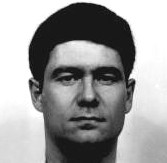
Ricky Don Blackmon
Murderer Brian Kevin Rosenfeld
Murderer · USA · 1985
Brian Kevin Rosenfeld Brian Kevin Rosenfeld was sentenced to three concurrent l…
23 victims
Brian Kevin Rosenfeld
Murderer · USA · 1985
Brian Kevin Rosenfeld Brian Kevin Rosenfeld was sentenced to three concurrent l…
23 victims
 Yahweh ben Yahweh
Murderer · USA · 1980
Yahweh ben Yahweh was born and legally named Hulon Mitchell Jr. (October 27, 19…
23 victims
Yahweh ben Yahweh
Murderer · USA · 1980
Yahweh ben Yahweh was born and legally named Hulon Mitchell Jr. (October 27, 19…
23 victims
 Russell Ellwood
Murderer · USA · 1991
Russell Ellwood was a former taxi driver. Authorities suspected him of killing…
20 victims
Russell Ellwood
Murderer · USA · 1991
Russell Ellwood was a former taxi driver. Authorities suspected him of killing…
20 victims
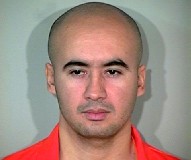 Martin Raul Soto-Fong
Homicide · USA · 1992
Martin Raul Soto-Fong was sentenced to death on February 3, 1994. Soto-Fong and…
3 victims
Martin Raul Soto-Fong
Homicide · USA · 1992
Martin Raul Soto-Fong was sentenced to death on February 3, 1994. Soto-Fong and…
3 victims
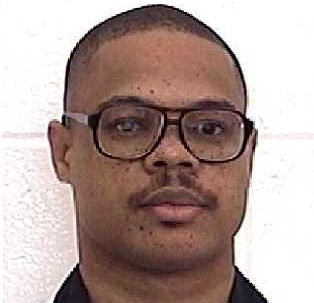 Kenneth Fults
Murderer · USA · 1996
Kenneth E. Fults was sentenced to death in Spalding County for killing a neighb…
1 victim
Kenneth Fults
Murderer · USA · 1996
Kenneth E. Fults was sentenced to death in Spalding County for killing a neighb…
1 victim
 James Emery Paster
Murderer · USA · 1980
James Emery Paster (#752) was convicted of capital murder and sentenced to deat…
3 victims
James Emery Paster
Murderer · USA · 1980
James Emery Paster (#752) was convicted of capital murder and sentenced to deat…
3 victims
 Earl Richmond
Murderer · USA · 1991
Earl Richmond was convicted of first-degree rape and three counts of first-degr…
4 victims
Earl Richmond
Murderer · USA · 1991
Earl Richmond was convicted of first-degree rape and three counts of first-degr…
4 victims
- Gender
- male
- Country
- USA
- Location
- Oklahoma/Texas, USA
- Date of birth
- November 21, 1957
- Age at first offence
- 30
- Characteristics
- robbery
- Victim profile
- ??? / Carl Joseph Rinkle, 26
- Method of murder
- St abbing with a sword or machete
- Date(s) of murder
- ??? / 1987
- Years active
- 1987
- Date of arrest
- April 10, 1987
- Status
-
Executed
Executed by lethal injection in Texas on August 4, 1999; conviction affirmed on direct appeal; United States Court of Appeals for the Fifth Circuit remanded the case for an evidentiary hearing following an earlier vacatur and later affirmed the denial of habeas corpus relief
Case overview
Ricky Don Blackmon was convicted of capital murder and sentenced to death by lethal injection for killing Carl J. Rinkle at Rinkle’s Shelby County home and taking more than $600 in cash, a small pistol, some jewelry, and cowboy boots. The murder weapon was a sawtooth-edge steel sword fashioned from a sawmill blade by Blackmon.
Blackmon later sought federal habeas corpus relief under 28 U.S.C. § 2254. The United States Court of Appeals for the Fifth Circuit vacated a summary judgment rejecting his petition and remanded for further proceedings consistent with its decision. After an evidentiary hearing on remand, the district court denied relief again, and the Fifth Circuit later affirmed the denial.
Timeline
- May 26, 1994 — Ricky Don Blackmon appealed an adverse summary judgment rejecting his 28 U.S.C. § 2254 petition for habeas corpus relief; the Fifth Circuit vacated the judgment and remanded for further proceedings.
- June 22, 1998 — The Fifth Circuit affirmed the denial of Blackmon’s habeas corpus petition.
- April 5 and 6, 1995 — An evidentiary hearing was conducted on remand.
- August 4, 1999 — Ricky Don Blackmon was executed by lethal injection in Texas.
The offence
Ricky Don Blackmon and his girlfriend, Donna Mae Rogers, were unemployed, impoverished, and living outside Dallas, Texas. Rogers told Blackmon she knew people in Joaquin, Texas who would be good targets for a robbery. She drove Blackmon to Joaquin, telling him she would lure Carl J. Rinkle to the Rinkle house where she would knock him unconscious and steal his cash, with Blackmon waiting outside the house.
Rogers entered the residence but returned to tell Blackmon she could not knock Rinkle out. After Rogers went back inside, Blackmon looked through a bedroom window and saw a nearly naked Rogers with a completely naked Rinkle on the bed. Blackmon contended that this enraged him and caused him to break into the house and murder Rinkle.
Blackmon took a large sword made from a sawmill blade from the trunk of his car and knocked on the front door. Rinkle answered unarmed. Blackmon killed Rinkle, slashing his body. Blackmon and Rogers looted the residence, including approximately $700 in cash and other items including a small pistol, some jewelry, and cowboy boots.
In the prosecution’s description of the murder, Rinkle’s skull and throat were slashed, and Rinkle was stabbed 21 times in the back with a large hunting knife.
Blackmon later blamed a girlfriend, jealousy, drugs, and a need for quick cash for the attack that left Rinkle butchered. Blackmon said, “I put myself here,” and “I, Ricky Blackmon, put myself on death row. I could have avoided it, but I was too much into the 'self' syndrome. ... I was more interested in myself.”
Rinkle’s mother, Thomasine Crow, described that “Nothing can ever ease that pain completely. This is what he (Blackmon) did and this is what needs to be done.”
Investigation and arrest
Several weeks later Blackmon was arrested just before midnight. He gave a taped statement and signed a written confession at 5:30 a.m. the next day.
In the interrogation referenced during habeas proceedings, Sheriff Paul Ross asked: “Did you ever tell her to go back and get in bed with Carl or did she do this on her own?” Blackmon answered: “I told her she could put the make on him like she was but I didn't actually tell her she had to.”
The murder weapon was a sawtooth-edge steel sword fashioned by Blackmon from an old saw blade.
Blackmon’s girlfriend, Donna Mae Rogers, was arrested and led police to Blackmon. Blackmon was arrested while working as a cook in a Dallas restaurant.
Blackmon claimed that he only intended to rob Rinkle but that when he looked in the window and saw Rogers naked in bed with Carl, he “snapped.”
Trial
Charges and indictment
Blackmon was charged in a two-count indictment with the capital murder of Rinkle during the course of committing and attempting to commit burglary of a habitation and robbery.
Trial commencement and evidence at sentencing
The trial began on October 19, 1987. The jury returned a verdict of guilty.
On October 23, the state notified Blackmon for the first time of its intent to use, during the sentencing phase, evidence of an uncharged Oklahoma double homicide.
During the sentencing phase, the state presented extensive evidence of uncharged crimes allegedly committed by Blackmon in Oklahoma. The state's witnesses included Terry Sittig, who had pleaded guilty to the Oklahoma murders, Raymond Smith, and Gary Keith Hall. Sittig was brought to Shelby County from an Oklahoma prison just prior to testifying.
The state did not call Rogers as a witness until the sentencing phase. Rogers gave a taped statement and signed confession, and copies of both were provided to Blackmon prior to his trial.
Blackmon had no prior criminal convictions.
Interview with Terry Sittig
Sittig asked to speak with Blackmon. Blackmon’s counsel simultaneously sought an interview. The state objected, arguing that defense counsel should not be allowed to speak with Sittig until after Sittig had testified.
The trial court ruled that Blackmon’s counsel was entitled to read Sittig’s written statement and would be given five minutes to ask Sittig whether the statement was true. The trial court instructed that a prosecutor was to be present during the defense counsel’s interview.
The interview was conducted in a police car in the presence of a prosecutor and several law enforcement officers.
Following the interview, Blackmon’s counsel objected on the basis of surprise and asked for a one-week continuance to investigate the uncharged allegations. This objection was overruled and the continuance was denied.
Witnesses Smith and Hall
On October 29, 1987, the state announced that two of Blackmon’s former cellmates in the Shelby County jail, Raymond Smith and Gary Keith Hall, would be called as witnesses. Warrants were issued to have them brought back to Shelby County.
Blackmon claimed that once Smith and Hall arrived at the Shelby County jail, they were instructed to remain hidden from Blackmon to prevent an investigation into the content of their testimony. Blackmon asserted that jail personnel misrepresented that they were not present when counsel repeatedly inquired to interview them, and that their presence was only made known late on the eve of their testimony by telephone after counsel had gone to sleep.
According to Blackmon, Smith and Hall faithfully followed instructions to remain out of his sight, including crawling on the floor in certain parts of the jail.
At the same time, Smith and then-jailor Phillip Lynch testified that both Smith and Hall were present in the Shelby County jail several days prior to trial, and that the state concealed their presence despite repeated inquiries from Blackmon’s counsel.
Special issues and sentence
At the conclusion of the punishment phase, the jury affirmatively answered the special issues. The trial court assessed punishment of death by lethal injection.
The special issues provided under Tex.Code Crim.Proc.Ann. art. 37.071(b) were:
- whether the conduct of the defendant that caused the death of the deceased was committed deliberately and with the reasonable expectation that death of the deceased or another would result;
- whether there is a probability that the defendant would commit criminal acts of violence that would constitute a continuing threat to society;
- if raised by the evidence, whether the conduct of the defendant in killing the deceased was unreasonable in response to the provocation, if any, by the deceased.
Sentencing
Blackmon was sentenced to death by lethal injection after the jury affirmatively answered the special issues during the sentencing phase.
Appeals
Direct appeal
Blackmon’s conviction and sentence were affirmed on direct appeal. Blackmon v. State, 775 S.W.2d 649 (Tex.Crim.App.1989) (unpublished). The United States Supreme Court denied Blackmon’s petition for writ of certiorari.
Federal habeas proceedings and evidentiary hearings
Blackmon filed a 28 U.S.C. § 2254 petition for habeas corpus relief. The district court granted the state’s motion for summary judgment rejecting Blackmon’s petition but granted a certificate of probable cause.
On appeal to the Fifth Circuit, the court addressed multiple claims including:
- concerns about specificity because only two of 31 claims were addressed in the district court’s order,
- claims regarding the state court’s factual findings being drafted by an assistant district attorney and provided ex parte,
- a provocation special issue claim,
- an unconstitutional-as-applied claim regarding mitigating evidence of jealous rage,
- a Brady claim regarding withholding Rogers’ statements and testimony until the sentencing phase,
- claims regarding promises, deals, and alleged perjured testimony by witnesses Smith, Hall, and Sittig,
- due process claims involving alleged concealment of witnesses Smith and Hall and inadequate access to Sittig,
- a sixth amendment Massiah claim.
The Fifth Circuit vacated the judgment and remanded for an evidentiary hearing to clarify conflicting evidence and make relevant fact-findings regarding promises and impeachment evidence allegedly associated with Smith, Hall, and Sittig, and to evaluate due process claims involving inadequate access and potential prejudice. The Fifth Circuit also remanded for an evidentiary hearing on the sixth amendment Massiah claim because the district court denied relief without an evidentiary hearing and because no state court findings had been entered on that issue.
After remand, the district court conducted an evidentiary hearing on April 5 and 6, 1995.
At the evidentiary hearing, on the second day of testimony, after witnesses entered the courtroom, Blackmon moved for sequestration. The court ordered the state to remove their witnesses from the courtroom after noting no earlier invocation of sequestration and after considering that a petitioner witness had been present on the prior day. The court did not order the witnesses sequestered at the start and later denied a renewal of the motion because the rule had not been invoked at the beginning of the proceedings. Blackmon moved to strike testimony of the state’s witnesses who had been present during other witnesses’ testimony, and the court denied that motion.
The district court again issued findings of fact and conclusions of law and entered final judgment denying the habeas corpus petition, granting a certificate of probable cause. The Fifth Circuit later affirmed that judgment.
Outcome
The Fifth Circuit affirmed the denial of Blackmon’s habeas corpus petition.
After the habeas litigation concluded, Blackmon remained under a death sentence and was executed by lethal injection in Texas on August 4, 1999.
Aftermath
Blackmon was executed Wednesday night by lethal injection, with a stated time of death as 6:22 p.m. CDT. The execution narrative included that Blackmon declined to make a last statement.
Blackmon had previously released a prepared statement: “Use this to teach others about what not to do and pray God receives the glory, not me.”
During administration of the drugs, Blackmon choked up, sobbed, closed his eyes, and gasped twice as a muscle in his neck began twitching. The narrative also described that “a tear still running from his right eye, he was pronounced dead at 6:22 p.m. CDT.”
Thomasine Crow, the victim’s mother, said: “I wouldn't want to call it relief,” Thomasine Crow said of the execution. “I think there is justice that needs to be met and I think this is what needs to be done. Nothing can bring Carl back. Nothing can ever ease that pain completely. She met Blackmon recently and he apologized for killing her son, and she said: “I can hate Ricky Blackmon and be miserable and bitter the rest of my life or I can accept the apology and learn to be happy with that and go on,” she said. “And that is what I choose to do.” “I'm happy, honestly happy,” Blackmon said in a recent interview. “God has said to me: `Ricky, this is your ticket home.' And I'm going home.” John Walker, the former Shelby County district attorney who prosecuted Blackmon in 1987, said: “God's grace transcends all,” John Walker said when told Blackmon had embraced religion. “I hope he has made peace with God and has his soul secure. But he still has to pay the civil penalty. "The civil authority has authority," Walker added. "Grace and forgiveness is up to God and that's not my job as a prosecutor."
As part of the post-trial context in the execution narrative, another convicted killer, Charles Boyd, was set to die for strangling and drowning a woman who lived across from him at a Dallas apartment complex, and the narrative stated it was one of three women Boyd confessed to killing.
Other details
Defendant’s age and description
Ricky Blackmon was 41 at execution and was described as from Mount Pleasant. In one account, he was 29 years old when he stabbed Carl Rinkle to death on March 28, 1987.
Accomplice
Donna Mae Rogers was arrested and led police to Blackmon. She was described as seen with the victim earlier in the evening and as having wound up with a life prison term.
Oklahoma murders evidence referenced in habeas litigation
During sentencing in Blackmon’s Texas trial, the state introduced evidence of an uncharged Oklahoma double homicide allegedly committed by Blackmon. In the habeas proceedings, the state court findings and the Fifth Circuit’s remand were based on whether witness promises and concealment affected fairness and materiality, including conflicting evidence about whether promises were made to Terry Sittig, Raymond Smith, and Gary Keith Hall.
At the evidentiary hearing, Raymond Smith’s affidavit stated: “After that, Keith and I kept our ears open around Ricky. But he didn't say much at all. Finally, Keith got him to talking....” Hall’s testimony included: “He [Blackmon] said that--well, I asked him--we asked him why did he kill them....”
Audio statement at evidentiary hearing excerpt (verbatim)
During the evidentiary hearing record, an excerpt included: “Q. And, of course, you're not getting anything--any consideration for coming up here and testifying, you're just doing it because you're a good buy [sic]? A. No, sir. I just--I just came tell [sic] what I heard, that's all. Q. Did you ever tell anybody before last Friday anything about this? A. No, sir. Q. When you were bench warranted up here, you thought it was the right thing to do, is that right? A. Yes, sir. Q. Just to get your conscience clear? A. I guess so. Q. Not getting anything out of this are you? A. No, sir. Q. No consideration, nobody is going to write anything for you to the Parole Board? A. Well, I was told that if I told the truth that it would help me out on parole.”
Witness sequestration dispute (verbatim rule citation)
Federal Rule of Evidence 615 was quoted in the Fifth Circuit decision: “[a]t the request of a party the court shall order witnesses excluded so that they cannot hear the testimony of other witnesses....”
References to other legal procedural citations
The Fifth Circuit decisions cited prior cases including Brady v. Maryland, Giglio v. United States, Napue v. Illinois, Massiah v. United States, and Townsend v. Sain.

Spotted an error, or have more information about this case?