
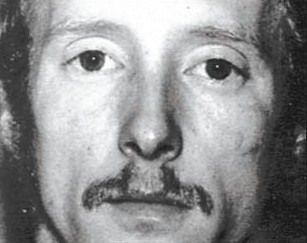
Martsay Bolder
Murderer Ervil LeBaron
Murderer · USA · 1972
Ervil Morrell LeBaron (1925 to August 16, 1981) was the leader of a polygamous…
35 victims
Ervil LeBaron
Murderer · USA · 1972
Ervil Morrell LeBaron (1925 to August 16, 1981) was the leader of a polygamous…
35 victims
 Marvin Gray
Murderer · USA · 1975
Marvin Gray was convicted killer who claimed responsibility for 23 slayings and…
23 victims
Marvin Gray
Murderer · USA · 1975
Marvin Gray was convicted killer who claimed responsibility for 23 slayings and…
23 victims
 Yahweh ben Yahweh
Murderer · USA · 1980
Yahweh ben Yahweh was born and legally named Hulon Mitchell Jr. (October 27, 19…
23 victims
Yahweh ben Yahweh
Murderer · USA · 1980
Yahweh ben Yahweh was born and legally named Hulon Mitchell Jr. (October 27, 19…
23 victims
 Charles Manson
Murderer · USA · 1969
Charles Milles Manson (born November 12, 1934) was an American criminal and mus…
9 victims
Charles Manson
Murderer · USA · 1969
Charles Milles Manson (born November 12, 1934) was an American criminal and mus…
9 victims
 Marcus Marymont
Murderer · United Kingdom · 1958
Marcus Marymont was the husband of Mary Helen Marymont. He served as a Master S…
1 victim
Marcus Marymont
Murderer · United Kingdom · 1958
Marcus Marymont was the husband of Mary Helen Marymont. He served as a Master S…
1 victim
 Ivo Colon
Murderer · USA · 1998
Ivo Colon was convicted of capital felony murder and murder in connection with…
1 victim
Ivo Colon
Murderer · USA · 1998
Ivo Colon was convicted of capital felony murder and murder in connection with…
1 victim
 Daniel Luff
Homicide · New Zealand · 2002
Daniel Luff was 17 years old and had dated Stephanie Cocker for several months.…
1 victim
Daniel Luff
Homicide · New Zealand · 2002
Daniel Luff was 17 years old and had dated Stephanie Cocker for several months.…
1 victim
 António Luís Costa
Serial killer · Portugal · 2005
24 June 2006 — António Luís Costa was arrested by the Polícia Judiciária. · 4 J…
3 victims
António Luís Costa
Serial killer · Portugal · 2005
24 June 2006 — António Luís Costa was arrested by the Polícia Judiciária. · 4 J…
3 victims
 Michael J. Griffin
Murderer · USA · 1995
Michael J. Griffin was sentenced to death for the first-degree murders of Tom M…
2 victims
Michael J. Griffin
Murderer · USA · 1995
Michael J. Griffin was sentenced to death for the first-degree murders of Tom M…
2 victims
 Woo Bun-Kon
Spree killer · South Korea · 1982
Woo Bun-Kon carried out a spree killing in Sang-Namdo, South Korea, and killed…
57 victims
Woo Bun-Kon
Spree killer · South Korea · 1982
Woo Bun-Kon carried out a spree killing in Sang-Namdo, South Korea, and killed…
57 victims
- Gender
- male
- Country
- USA
- Location
- M issouri, USA
- Date of birth
- October 6, 1957
- Age at first offence
- 16
- Characteristics
- abuse
- Victim profile
- ??? / Theron King (fellow inmate)
- Method of murder
- St abbing with knife
- Date(s) of murder
- 1973 / 1979
- Years active
- 1973–1979
- Date of arrest
- —
- Status
-
Executed
Executed by lethal injection in Missouri on January 27, 1993
Case Overview
Martsay Bolder was executed by lethal injection in Missouri on January 27, 1993. He was the eighth person executed in Missouri since the state resumed capital punishment in 1980 and the 191st person executed in the nation since the Supreme Court permitted the resumption of capital punishment in 1976.
Timeline
- March 14, 1979 — Vocational teachers Kenneth Giboney and Arthur Luecke returned by truck from Lincoln University, observed what appeared to be two inmates fighting, and later saw Theron King lying against a wall while Bolder made striking or stabbing motions toward King’s stomach.
- 1973 — Bolder committed a slaying for which he was later serving a life sentence at the time of the March 14, 1979 stabbing of Theron King.
- January 27, 1993 — Bolder was executed by injection at the Potosi Correctional Center; he was pronounced dead at 12:09 that morning.
- January 28, 1993 — A report stated Bolder was executed by injection early the previous day and reiterated the status of litigation and execution timing.
- December 12, 1990 — The United States Court of Appeals for the Eighth Circuit decided 921 F.2d 1359 in the case of Martsay Bolder, Appellee/Cross-Appellant, v. Bill Armontrout, Appellant/Cross-Appellee, reversing the district court’s grant of a writ of habeas corpus and reinstating Bolder’s death sentence.
- March 21, 1991 — The Eighth Circuit issued an order denying a petition for rehearing and suggestion for rehearing en banc in the matter referenced as 928 F.2d 806.
- January 19, 1993 — The Eighth Circuit decided 983 F.2d 98 on the denial of Bolder’s Fed.R.Civ.P. 60(b)(6) motion, treated as the equivalent of a second petition for a writ of habeas corpus, and affirmed the denial.
- January 26, 1993 — The Eighth Circuit decided 985 F.2d 941, denying the panel’s requested relief on Bolder’s third petition and affirming denial of an emergency stay of execution and discovery; the panel also overruled a separate emergency motion for stay of execution presented to the court.
The Offence
The incident occurred in the Missouri State Penitentiary in Jefferson City. Bolder was convicted in the 1979 death of Theron King, a fellow inmate of the Missouri State Penitentiary in Jefferson City.
On March 14, 1979 at approximately 3:15 pm, Kenneth Giboney and Arthur Luecke returned by truck from Lincoln University. As they came around the building identified as 5A & B and headed toward the maintenance and machine shop, Giboney observed what appeared to be two inmates fighting and told Luecke to stop the truck. They then saw an inmate later identified as Theron King lying against a wall in a partially sitting position. A second inmate, identified as Bolder, was standing over King and making striking or stabbing motions toward King’s stomach.
Bolder’s intentions behind the stabbing were revealed after Bolder confessed to the murder.
Background and Motive
The incident was described as having its background in events four to six months earlier, when King was Bolder’s cell mate. Bolder said King knew who murdered Bolder’s brother but would not tell him. After King moved out, Frank Lindsey became Bolder’s cell mate. King began harassing Bolder and telling others that Bolder and Lindsey were engaging in homosexual activities. Bolder said he got tired of such accusations.
On March 14, Bolder was walking to a building when he saw King and another inmate sitting on the ledge. They called Bolder names as he walked by and an argument followed. Bolder said he did not like being called names. Bolder said he got a knife, put it in a plastic bag, and returned to where King was. Bolder asked King what he had said earlier, and King called him "a pussy-assed-nigger." Bolder then pulled out the knife and stabbed King.
Confession and Evidence at Trial
Bolder orally confessed to stabbing Theron King, and his confession was introduced at his trial.
Bolder later asserted that his confession was coerced by the promise of lenient treatment, and thus was involuntary. In the federal habeas proceedings, Bolder asserted that an officer at the Missouri State Penitentiary stated that Bolder "would get it some other way" if he did not tell the truth and that telling the truth "would be better for him."
The district court found that no promise of leniency was made and that the totality of the circumstances revealed the confession was voluntary, and the Court of Appeals agreed that the statement, taken in context, did not constitute implied or express promises of leniency. The confession was treated as voluntary.
Investigation and Witnesses
Kenneth Giboney and Arthur Luecke observed the fighting and the subsequent stabbing motions. They saw Theron King lying against a wall and Bolder standing over King making striking or stabbing motions toward King’s stomach. No other investigation details were provided beyond those observations.
Trial and Sentence
Bolder was indicted for and convicted of the murder of Theron King, a fellow inmate in the Missouri State Penitentiary. His trial counsel was Julian Ossman.
The trial was described as bifurcated. During the penalty phase, Ossman presented no mitigating evidence because he believed none existed and relied on argument to convince the jury that the death penalty was not appropriate. The jury disagreed with Ossman and sentenced Bolder to death.
The Missouri Supreme Court affirmed the judgment and sentence on direct appeal: State v. Bolder, 635 S.W.2d 673 (Mo.1982) (en banc).
The federal litigation described Bolder as being under a sentence of death for the murder of an inmate at the Missouri State Penitentiary.
Post-Conviction Proceedings in Missouri
Bolder twice sought to have his death sentence vacated in post-conviction actions in state courts under Missouri Supreme Court Rule 27.26.
First Rule 27.26 petition
The first petition was denied following an evidentiary hearing, and the denial was affirmed by the Missouri Court of Appeals: Bolder v. State, 712 S.W.2d 692 (Mo.Ct.App.1986) (Bolder II).
In the first petition, Bolder asserted his right to effective assistance of counsel had been violated, and he alleged Ossman failed to investigate for mitigating sentencing evidence. He also alleged Ossman failed to interview four potential inmate witnesses, failed to call them at trial, and failed to present mitigating evidence during the sentencing phase, including evidence of his borderline intelligence and his tender age at the time of the murder.
At the evidentiary hearing, Bolder testified and called four other witnesses—his sister and three individuals who were inmates at the Missouri State Penitentiary at the time of the murder.
The Missouri circuit court found that Bolder had instructed Ossman not to contact Bolder’s family and had not suggested any witnesses, character or otherwise, to Ossman. The court found Ossman interviewed the four inmates and, after consulting with Bolder, decided not to call them as witnesses. The court also found, based on the report of a psychiatrist, that Bolder was not suffering from a mental disease or defect and was able to conform his actions to the law. The circuit court concluded that Bolder’s counsel provided constitutionally adequate assistance and denied post-conviction relief.
The Missouri Court of Appeals affirmed. It held Ossman made a reasonable decision after talking with each potential inmate witness and with Bolder not to call the inmates. It held that because Bolder’s age was apparent to the jury, Bolder was not prejudiced by Ossman’s failure to present age as a mitigating factor, and it held Bolder failed to indicate how his borderline intelligence constituted a mitigating factor. The appellate court also held Ossman’s failure to present mitigating evidence was due to a lack of such information rather than deficient performance.
Second Rule 27.26 petition
Bolder’s second petition was denied as a successive petition without an evidentiary hearing. This denial was affirmed by the Missouri Supreme Court: Bolder v. State, 769 S.W.2d 84 (Mo.1989) (en banc) (Bolder III).
The Missouri Supreme Court held that the allegations in the second 27.26 petition were insufficient as a matter of law. Bolder had listed nine witnesses whom he alleged Ossman should have contacted and called as character witnesses during his trial, but the petition failed to allege the nature of the evidence those witnesses could provide and failed to allege that Ossman knew or could have discovered that these witnesses existed. The court also held Bolder failed to establish that these allegations could not have been raised in his first petition.
Federal Habeas Corpus Proceedings
After unsuccessful attempts in state court, Bolder filed a petition for writ of habeas corpus in federal district court under 28 U.S.C. Sec. 2254 (1988), raising some issues addressed in state courts and some issues not properly presented to state courts.
District court proceedings and findings
The district court granted an evidentiary hearing, and Bolder called several witnesses including his childhood minister, Y-pal, and a family friend. The district court found Bolder’s ineffective assistance claim focused on Ossman’s failure to find and call specific background witnesses who testified that Bolder had a troubled childhood.
The district court found that cause and prejudice excused Bolder’s improper presentation in state court. It further found Ossman’s failure to find and call these witnesses rendered his performance constitutionally inadequate, vacated his death sentence, and granted the writ of habeas corpus.
Eighth Circuit merits and procedural disposition (921 F.2d 1359)
The Eighth Circuit, in 921 F.2d 1359 (8th Cir. Dec. 12, 1990), described the district court’s vacatur as based on finding trial counsel’s performance constitutionally ineffective during the sentencing phase of Bolder’s capital murder trial in Missouri state court.
The Eighth Circuit reversed the district court. It held several claims were procedurally barred and that Bolder’s cross-appeal was without merit, reinstating the death sentence.
Ineffective assistance of counsel: failure to investigate
The Eighth Circuit discussed Strickland v. Washington and described the requirements for ineffective assistance claims. It then addressed the procedural default framework.
The Eighth Circuit agreed that a procedural default occurred but held that the default actually happened at the 27.26 trial court hearing when Bolder failed to present evidence to support the claim later raised in federal court. It explained that, in state court, Bolder’s evidence consisted solely of his testimony and the testimony of three fellow inmates, and that the inmates did not testify to Bolder’s character or background. It also discussed that the state courts handling of the second petition concluded Bolder’s allegations were legally insufficient and successive.
The Eighth Circuit held that ineffective assistance of post-conviction counsel could potentially excuse a procedural default but determined that Bolder failed to establish cause because he failed to establish that his post-conviction counsel was inadequate. It stated that post-conviction counsel’s ineffectiveness claim failed due to lack of support and that federal review of the claim was barred unless cause and prejudice were shown.
The Eighth Circuit also addressed age as a mitigating factor. It stated that the issue was properly raised throughout the state proceedings and was not procedurally barred. It discussed that Bolder’s statutory age mitigation at the time of sentencing included Bolder being twenty-one at the time of the offense and serving a sentence for a murder committed at a younger age. It concluded it could not say a reasonable probability existed that the jury would have sentenced Bolder to life imprisonment if evidence of age had been presented and a proper instruction given.
Voluntariness of confession
The Eighth Circuit discussed that Bolder orally confessed to stabbing Theron King and asserted the confession was involuntary due to a promise of lenient treatment. It discussed the officer’s statement and agreed with the district court that it did not constitute implied or express promises of leniency and that the confession was voluntary.
Jury instructions at sentencing
The Eighth Circuit discussed Bolder’s arguments that erroneous jury instructions at sentencing violated due process. It considered some issues on the merits and declined to review other alleged errors on procedural grounds.
The Eighth Circuit addressed Bolder’s contention that the jury instructions required him to prove mitigating factors outweighed aggravating factors. It explained the instruction structure, including Instruction Eighteen, Instruction Nineteen, Instruction Twenty, and Instruction Twenty-one. It concluded the instructions did not shift the burden of proof to Bolder, that the state had to establish aggravating circumstances before the jury could consider the death penalty, and that the instructions did not require Bolder to present mitigating evidence to avoid the death penalty. It further discussed that the jury’s ability to consider all evidence relating to the murder did not invalidate the sentence, and it referred to Supreme Court decisions upholding similar schemes.
The Eighth Circuit declined to review merits of other instruction challenges that were not properly presented to Missouri state courts, including a claim invoking Mills v. Maryland, and affirmed on procedural grounds.
Dissenting opinions within 921 F.2d 1359
Judge LAY dissented. The dissent asserted trial counsel’s failure to present age mitigation and to investigate Bolder’s background for mitigating evidence constituted constitutionally ineffective assistance. The dissent included discussion that Ossman’s failure to investigate and present mitigating evidence existed because trial counsel did not know he could present non-statutory mitigating evidence in Bolder’s defense. The dissent described findings that Bolder’s life hangs in the balance and that all available mitigating evidence should be presented for the jury to consider. The dissent would have affirmed the grant of habeas relief and vacated the death sentence.
Judge BEAM issued a response to the denial of rehearing en banc, discussing alleged inaccuracies in findings relating to trial counsel and mitigation investigation.
Orders Denying Rehearing and Rehearing En Banc
March 21, 1991 (928 F.2d 806)
The Eighth Circuit issued an order denying rehearing and suggestion for rehearing en banc. It stated that the suggestion was denied due to lack of majority of active judges voting to rehear the case en banc. It also stated that Chief Judge Lay and certain judges dissented from the denial of rehearing en banc.
It also noted that the present stay of execution would continue until the time expired for petitioner to seek certiorari review with the Supreme Court of the United States, and that if a timely petition for certiorari was filed, the stay would continue until the Supreme Court disposed of the case.
Special dissent with additional reasoning
A special dissent stated that rehearing en banc was warranted because the vote on denial of rehearing en banc was evenly divided (five to five). The special dissent asserted that if evenly divided vote had occurred when reviewing the merits of the district court’s grant of writ of habeas corpus, the granting of the writ would have been affirmed and Bolder’s life spared. The special dissent characterized the execution as a miscarriage of justice and reiterated the argument that trial counsel did not offer mitigating evidence because he did not know he could present non-statutory mitigating evidence, and that post-conviction review did not properly investigate or raise trial counsel’s failure to present mitigating evidence.
Additional Federal Habeas Appeals and Procedural Motions
983 F.2d 98 (Jan. 19, 1993)
The Eighth Circuit affirmed the district court’s denial of Bolder’s Fed.R.Civ.P. 60(b)(6) motion, treated as equivalent to a second petition for a writ of habeas corpus. The court found his claims without merit and barred as successive claims, abusive claims, or procedurally defaulted claims precluded by Murray v. Carrier.
Bolder contended that ineffective assistance by his Missouri post-conviction counsel excused a state procedural bar, that inadequate funding of post-conviction counsel’s public defender office was cause to excuse a state procedural bar, and that the funding claim was a new ground not subject to the state procedural bar. The Eighth Circuit found the claims barred as successive or abusive or procedurally defaulted and affirmed.
The court continued a stay of execution in order to allow Bolder to seek review of the ruling and a further stay in the Supreme Court if he wished.
A dissent requested granting a stay to explore the claims, asserting that exculpatory material had been withheld by the state and related to actual innocence of the death penalty itself.
985 F.2d 941 (Jan. 26, 1993)
The Eighth Circuit affirmed denial of Bolder’s third petition for writ of habeas corpus and denial of an emergency motion for stay of execution and for discovery. The court overruled a separate emergency motion for stay of execution presented to the appellate court.
The court addressed additional matters in the denial of relief. It discussed Bolder’s Brady claim that the prosecution failed to disclose medical records showing that Theron King died of medical malpractice rather than the stab wound. The court discussed Brady findings and held the first element failed because there was no indication of specific facts in the medical records purportedly suppressed, and no allegation that the prosecution knew of existence or state of mind about medical malpractice. The court also concluded materiality and the reasonable probability of different trial result were not shown, because medical practice now condemned was administered in treatment of severe stab wounds inflicted by Bolder and the medical records concerning treatment were before the jury.
The court discussed Bolder’s actual innocence claim and applied Herrera v. Collins, describing the gateway nature of actual innocence as a path to consider otherwise barred constitutional claims. The court also discussed skepticism toward late affidavits and referenced Justice O’Connor’s concurrence stating such affidavits issued late and with hearsay should be treated with a fair degree of skepticism. The court stated that with no satisfactory explanation for why a double-hearsay affidavit was presented late, credibility was stretched beyond reasonable limits. The court also discussed laches, characterizing the filing as an eleventh hour tactic.
The dissent in this matter stated a stay should be granted to allow fuller exploration of claims, asserting actual innocence related to the death penalty itself under Sawyer v. Whitley if the jury lacked knowledge that a prison doctor’s faulty surgical procedure caused the death.
Another dissent stated that after the district court denied the petition and issued a certificate of probable cause, and considering Barefoot v. Estelle, the petitioner should have had an opportunity to address merits, with issuance of Herrera occurring on January 25, 1993, and that an expedited rehearing en banc should have been granted.
January 26, 1993 order denying rehearing and stay of execution
The appellate panel’s petition for rehearing by the panel was denied. The appellant’s suggestion for rehearing en banc, supplemental suggestion, and emergency motion for stay of execution of a sentence of death were also denied.
Claimed New Evidence: Medical Care Versus Stabbing
In the days before the execution, Bolder’s lawyer, Gardiner Davis, said he had new evidence that Theron King died of poor medical care, not the stabbing. The Federal Court of Appeals for the Eighth Circuit in St. Louis ruled 7 to 4 against giving Bolder another hearing, and the Supreme Court, without dissent, refused to hear the case. Bolder was put to death at the same hour that Ramon Montoya was to be executed in Huntsville, Texas, but Montoya won a reprieve on Tuesday night from Justice Antonin Scalia.
The account also described Officer John Pasco and that Montoya was sentenced to die for fatally shooting John Pasco on Jan. 16, 1983, with Pasco shot in the head as he tried to disarm Montoya after a chase. The appeal for Montoya was described as involving a confession given as a result of police interrogation violating the right to have a lawyer present.
Execution
On January 27, 1993, Bolder was executed by injection at the Potosi Correctional Center and was pronounced dead at 12:09 that morning.
Other Named Individuals and Roles
- Kenneth Giboney — vocational teacher; observed the fighting and the stabbing motions.
- Arthur Luecke — vocational teacher; observed the fighting and the stabbing motions.
- Theron King — victim; fellow inmate; stabbed to death in the Missouri State Penitentiary in Jefferson City.
- Frank Lindsey — described as Bolder’s cell mate after King moved out.
- Gardiner Davis — Bolder’s lawyer; said he had new evidence that King died of poor medical care, not the stabbing.
- Julian Ossman — trial counsel.
- Y-pal — childhood minister mentioned as a witness at the federal court hearing.
- David M. Strauss — public defender appointed as post-conviction counsel in Bolder’s Rule 27.26 hearing; provided an affidavit dated February 8, 1991 regarding his knowledge and investigation regarding other witnesses.
- Ellen S. Roper — judge in Boone County Case # 09JUN83410853 referenced in the affidavit.
Addendum: Affidavit by Post-Conviction Counsel
An addendum contained an affidavit by David M. Strauss.
David M. Strauss stated that he was a licensed attorney who had resided and practiced law in the Republic of the Marshall Islands since September 1, 1985. He stated he had been the Public Defender for the 13th Judicial Circuit from October 1, 1977 until August 31, 1985, and that, in his capacity as Public Defender, he was appointed to and represented Martsay Bolder in the Rule 27.26 hearing in Boone County Case # 09JUN83410853 in front of Judge Ellen S. Roper. He stated the hearing occurred on August 12, 1983, February 17, 1984, and July 13, 1984, and that several witnesses were called to testify on behalf of Bolder.
Strauss stated he was informed that several other witnesses (a minister, family friend, family members, Y-Pal) testified on behalf of Bolder at a federal habeas hearing in 1988. He stated he was not aware of these witnesses and did not conduct an independent investigation to discover them because, based on the caseload and budget of the 13th Circuit Public Defender’s Office, he would have been unable to conduct a thorough investigation for these witnesses in the Kansas City area, and because it did not occur to him to inquire as to the existence of or subpoena witnesses other than those whose names were provided to him by Bolder.
The affidavit was subscribed and sworn to before a notary public in the Republic of the Marshall Islands on February 8, 1991, and included a signature line: /s/ David M. Strauss.

Spotted an error, or have more information about this case?