
Bernard Bolender
Murderer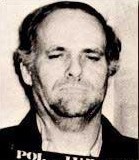 Ervil LeBaron
Murderer · USA · 1972
Ervil Morrell LeBaron (1925 to August 16, 1981) was the leader of a polygamous…
35 victims
Ervil LeBaron
Murderer · USA · 1972
Ervil Morrell LeBaron (1925 to August 16, 1981) was the leader of a polygamous…
35 victims
 Brian Kevin Rosenfeld
Murderer · USA · 1985
Brian Kevin Rosenfeld Brian Kevin Rosenfeld was sentenced to three concurrent l…
23 victims
Brian Kevin Rosenfeld
Murderer · USA · 1985
Brian Kevin Rosenfeld Brian Kevin Rosenfeld was sentenced to three concurrent l…
23 victims
 Marvin Gray
Murderer · USA · 1975
Marvin Gray was convicted killer who claimed responsibility for 23 slayings and…
23 victims
Marvin Gray
Murderer · USA · 1975
Marvin Gray was convicted killer who claimed responsibility for 23 slayings and…
23 victims
 Yahweh ben Yahweh
Murderer · USA · 1980
Yahweh ben Yahweh was born and legally named Hulon Mitchell Jr. (October 27, 19…
23 victims
Yahweh ben Yahweh
Murderer · USA · 1980
Yahweh ben Yahweh was born and legally named Hulon Mitchell Jr. (October 27, 19…
23 victims
 Robert Keith Woodall
Murderer · USA · 1997
Robert Keith Woodall (date of birth 3-19-74) was sentenced to death on Septembe…
1 victim
Robert Keith Woodall
Murderer · USA · 1997
Robert Keith Woodall (date of birth 3-19-74) was sentenced to death on Septembe…
1 victim
 Maria Barbella
Murderer · USA · 1895
Maria Barbella was a seamstress in Manhattan's Little Italy. She lived with her…
1 victim
Maria Barbella
Murderer · USA · 1895
Maria Barbella was a seamstress in Manhattan's Little Italy. She lived with her…
1 victim
 Lonnie Earl Johnson
Murderer · USA · 1990
Lonnie Earl Johnson was executed by lethal injection in Texas on July 24, 2007.…
2 victims
Lonnie Earl Johnson
Murderer · USA · 1990
Lonnie Earl Johnson was executed by lethal injection in Texas on July 24, 2007.…
2 victims
 Kenneth Baumruk
Murderer · USA · 1992
Kenneth Baumruk came to the St. Louis County courthouse for a hearing in his di…
1 victim
Kenneth Baumruk
Murderer · USA · 1992
Kenneth Baumruk came to the St. Louis County courthouse for a hearing in his di…
1 victim
 Darrel Pandeli
Murderer · USA · 1992
Darrel Pandeli was convicted of murder and sentenced to death, and his case ret…
2 victims
Darrel Pandeli
Murderer · USA · 1992
Darrel Pandeli was convicted of murder and sentenced to death, and his case ret…
2 victims
- Gender
- male
- Country
- USA
- Location
- Dade County, Florida, USA
- Date of birth
- 1953
- Age at first offence
- 27
- Characteristics
- robbery, drugs, torture, arson
- Victim profile
- 4 male ( alleged drug dealers)
- Method of murder
- Beating - St abbing with knife
- Date(s) of murder
- January 8, 1980
- Years active
- 1980
- Date of arrest
- 5 days after
- Status
-
Executed
Executed by electrocution in Florida on July 18, 1995
Timeline
- January 7, 1980 — Bernard Bolender and two codefendants, Paul Thompson and Joseph Macker, were at Macker's residence in Dade County, Florida, when John Merino and Rudy Ayan arrived to participate in a drug deal.
- January 8, 1980 — Bolender and Thompson left Macker's residence with the bodies at approximately 4:30 a.m.; they parked on the I-95 expressway, poured gasoline on the vehicle and surrounding grass, and set the grass on fire as they left; the car failed to burn because passing motorists put out the fire.
- January 13, 1980 — Bolender and Macker were arrested for the murders.
- January 18, 1980 — Macker gave a statement implicating himself, Bolender, and Thompson and revealed where he had disposed of evidence.
- April 1980 — A jury convicted Bolender on all counts after his alibi defense.
- January 1985 — After the Governor signed a death warrant, the trial court held an evidentiary hearing and vacated Bolender's death sentences for ineffective assistance of counsel at the sentencing hearing.
- January 1987 — A Florida Supreme Court decision is recorded in connection with Docket #68174; State of Florida, Appellant, vs. Bernard Bolender, Appellee; 503 So. 2d 1247.
- January 1990 — The Governor signed a second death warrant; execution was scheduled for March 7, 1990.
- March 5, 1990 — Bolender filed an application for a stay of execution and a petition for writ of habeas corpus in the Florida Supreme Court.
- October 1, 1990 — Bolender filed a petition for a writ of habeas corpus in the United States District Court for the Southern District of Florida.
- October 4, 1990 — Execution was scheduled for this date after a third death warrant was signed.
- March 11, 1994 — The United States Court of Appeals for the Eleventh Circuit issued its decision in Bernard Bolender v. Harry K. Singletary.
- May 17, 1990 — A Florida Supreme Court related docket is recorded in Docket #75631 / Docket #75665; 564 So. 2d 1057.
- July 11, 1995 — A docket is recorded in Docket #86020; 658 So. 2d 82.
- July 17, 1995 — A docket is recorded in Docket #86064; 661 So. 2d 278, and the United States Court of Appeals for the Eleventh Circuit issued an order concerning certificates and stay.
- July 18, 1995 — The execution date; the United States Court of Appeals denied a certificate and stayed execution until 10:00 a.m., and Bolender was executed by electrocution in Florida at 7 o'clock.
- July 18, 1995 — The United States Court of Appeals order recorded that execution was scheduled for 7 o'clock the next morning and later stayed execution until 10:00 a.m.
- May 7, 1980 — Written findings of fact and conclusions of law supporting the death sentence were entered by the trial court.
Case details
Parties
- Defendant: Bernard Bolender (also a/k/a Bernard Bolander)
- Codefendants: Paul Thompson; Joseph Macker
- Corrections official respondent: Harry K. Singletary, Secretary, Florida Department of Corrections
- Respondent (federal case): Harry K.
Charges and convictions
A jury convicted Bolender on:
- four counts of first degree murder
- four counts of kidnapping
- four counts of armed robbery
Victims
The murders involved four men in Dade County:
- John Merino
- Scott Bennett
- Rudolfo Ayan
- Nicomedes Hernandez
Background
Bolender raised an alibi defense, contending that he was at home in Fort Lauderdale with his girlfriend, Dawn Poulis, and Claudia, Merino's wife, at the time of the murders. Merino and his wife had been living in Bolender's house since December 24, 1979. Both Claudia Merino and Poulis testified that Bolender was at home during the early morning hours of January 8, 1980. The jury rejected Bolender's alibi claims and convicted him on all counts.
The offence
On the evening of January 7, 1980, Bolender and two codefendants, Paul Thompson and Joseph Macker, were at Macker's residence in Dade County, Florida, when John Merino and Rudy Ayan arrived to participate in a drug deal. A dispute erupted shortly thereafter, apparently concerning the whereabouts of the narcotics to be purchased. Bolender was armed with a gun and ordered Merino and Ayan to strip down to their shorts and lie down on the floor in one of the bedrooms. The defendants brought the final two victims into the house shortly after the conflict began.
Thompson went outside and returned holding Scott Bennett, whom he had discovered hiding in the bushes around the house, at gunpoint. Thompson confiscated one kilogram of cocaine and two guns after searching Bennett. Macker then took his gun and went outside to see if anyone else was lurking in the vicinity. Macker noticed an unfamiliar blue car driving back and forth in front of the house. Macker motioned for the driver to come inside, but the driver refused. Thompson ordered Merino to get dressed, and the two men lured the driver, Nicomedes Hernandez, into the house.
The defendants ordered Bennett, Hernandez, and Merino to strip and to join Ayan on the floor; they then robbed all four victims of their jewelry. Thompson also searched Hernandez' car and discovered approximately $3,000 in cash along with two more guns. Macker testified that the fate of the four victims was essentially sealed. Thompson told Macker that the men being held in the bedroom could never be allowed to leave.
Meanwhile, Bolender became increasingly agitated and threatened to kill all four men if they did not reveal the location of an additional twenty kilograms of cocaine that he believed the four men were concealing. The victims insisted they had only the one kilogram Bennett was carrying, but Bolender refused to believe them. The ensuing events culminated in the quadruple murder. The Florida Supreme Court found that during the ensuing hours the victims were tortured and terrorized in an attempt to obtain their cocaine.
Macker testified that Bolender, assisted by Thompson, taped the victims' hands and feet with duct tape. Bolender repeatedly beat the four men with a baseball bat to get them to talk. Hernandez was singled out: Bolender used a hot butcher knife to burn his back and later shot him in the leg. The victims continued to insist they had only the one kilogram of cocaine, and they pleaded with Bolender to listen to them. Macker admitted hitting Merino once with the baseball bat but claimed he did so only out of fear that Bolender and Thompson would turn on him if he did not demonstrate solidarity. Macker denied any further involvement in the actual killings and said that Bolender dominated him and Thompson throughout the enterprise.
The defendants gagged the victims and wrapped them in sheets, bedspreads, rugs, and the material from a beanbag chair. Bolender continued to beat and stab the four men, even as they were moved through the house and taken outside to the car Hernandez had been driving. Macker testified that all of the victims were alive when they were wrapped; by the time the bodies were loaded into the car, only Merino appeared to be breathing.
Bolender and Thompson placed Bennett and Ayan in the trunk of the car, Merino in the back seat, and Hernandez in the front. At approximately 4:30 a.m. on January 8, Bolender and Thompson left Macker's residence in two cars with the victims' bodies in Hernandez' vehicle. They drove onto the I-95 expressway and parked the car with the bodies on the side of the highway a short distance past the entrance ramp. Intending to destroy evidence by burning the car and the victims, they poured gasoline on the vehicle and surrounding grass and set the grass on fire as they left. The car failed to burn because passing motorists saw the fire and put it out before the vehicle was consumed. Bolender and Thompson returned to Macker's house in the other vehicle.
Later that morning, the defendants cleaned Macker's home, removing bloodied carpeting and other evidence of the murders. Macker disposed of the weapons used in the killings and the guns taken from the victims in a nearby canal. Authorities were nevertheless able to link Bolender and Macker to the crimes because the attempt to destroy the car and bodies failed.
Investigation and arrest
Bolender's fingerprints were found on the car. Several sheets and rugs found wrapped around the bodies were identified as having come from the Macker home. Based on this evidence and a search of the Macker residence, Bolender and Macker were arrested for the murders on January 13, 1980. Macker gave a statement to the authorities on January 18 implicating himself, Bolender, and Thompson in the murders and revealing where he had disposed of evidence.
Trial
In exchange for his cooperation, Macker received concurrent life sentences on all twelve counts, plus an additional fifteen-year term in prison for possession of cocaine. Thompson was adjudicated incompetent to stand trial, and Bolender was tried alone.
At trial in April 1980, Bolender raised an alibi defense claiming he was at home in Fort Lauderdale. Claudia Merino and Dawn Poulis testified for the defense that Bolender was at home during the early morning hours of January 8, 1980. The jury rejected the alibi and convicted Bolender on all counts.
At the penalty phase, which was held immediately following the return of the verdicts, neither the state nor Bolender presented any evidence. After hearing the arguments of counsel, the jury deliberated only twelve minutes before unanimously recommending a sentence of life imprisonment. Defense counsel declined to present additional evidence after being offered an opportunity to do so before the trial judge. Neither party objected to the immediate imposition of sentence. The trial judge overrode the jury's recommendation and imposed the death penalty after finding eight of the nine statutory aggravating factors then on the books to apply, and the judge found no evidence in mitigation.
A later portion of the record described the judge who sentenced Bolender as “a notorious hanging judge,” including that he had imposed a number of death sentences where a jury recommended life imprisonment; this description is attributed to Bolender's attorneys.
Sentencing
The trial court found aggravating circumstances present, as enumerated in Fla. Stat. Ann. § 921.141(5) (West 1985), including:
- the capital felony was committed by a person under sentence of imprisonment
- by a defendant who knowingly created a great risk of death to many persons
- during the perpetration of a robbery/kidnapping
- for pecuniary gain
- for the purpose of avoiding or preventing a lawful arrest
- to disrupt or hinder the lawful exercise of law enforcement
- in an especially heinous, atrocious, or cruel manner
- in a cold, calculated, and premeditated manner without any pretense of moral or legal justification
The ninth aggravating factor was not present because the defendant had not previously been convicted of another capital felony or of a felony involving the use or threat of violence to the person. The record noted that two additional aggravating circumstances were later added to the statute.
The judge later entered written findings and conclusions in support of the death sentence on May 7, 1980, after placing findings in the record at the time sentence was imposed from the bench.
Appeals
Florida Supreme Court and Rule 3.850 proceedings
On direct appeal, the Florida Supreme Court affirmed Bolender's convictions and sentences (Bolender I, 422 So. 2d at 838).
Bolender then moved for postconviction relief under Rule 3.850 alleging ineffective assistance of counsel at both the guilt and penalty phases. After the Governor signed a death warrant, the trial court held an evidentiary hearing in January 1985 and vacated Bolender's death sentences because trial counsel was ineffective for failing to present mitigating evidence at the sentencing hearing, despite the court acknowledging counsel's strategic decision to rely exclusively on a quick life recommendation.
The state appealed. The Florida Supreme Court reversed and directed reinstatement of the death sentences in State v. Bolender, 503 So. 2d 1247 (Bolender II), finding that the mitigating evidence presented at the evidentiary hearing was known and available to counsel at the time of sentencing but that counsel made a tactical decision not to present it.
In April 1989, after reinstatement, Bolender filed a second Rule 3.850 motion. A second death warrant was signed by the Governor in January 1990, and execution was scheduled for March 7, 1990. After oral argument, the trial court found the motion to be a successive Rule 3.850 petition and denied relief without an evidentiary hearing.
Bolender appealed and on March 5, 1990 filed an application for a stay of execution and a petition for a writ of habeas corpus in the Florida Supreme Court. The stay was granted to allow the trial court to hear additional arguments. After the trial court again denied relief, the Florida Supreme Court heard oral argument and denied relief as to all pending claims in Bolender v. Dugger, 564 So. 2d 1057 (Bolender III).
The Governor then signed a third death warrant; execution was scheduled for October 4, 1990.
Federal habeas corpus and certificate proceedings
Bolender entered the federal system by filing a petition for a writ of habeas corpus in the United States District Court for the Southern District of Florida on October 1, 1990. The district court granted a stay of execution and held two days of non-evidentiary hearings. It denied requests for an evidentiary hearing and denied relief. The district court granted a certificate of probable cause to appeal, and the appeal followed.
Bolender filed an application for a certificate of probable cause to appeal and a stay of execution to the United States Court of Appeals for the Eleventh Circuit. On July 17, 1995, the court denied the certificate and initially stayed execution until 10:00 a.m. on July 18, 1995 for the United States Supreme Court to consider a petition for certiorari; any stay beyond that was left for the Supreme Court.
Outcome
The judgment denying Bolender's petition for a writ of habeas corpus was affirmed in the federal appeal, and Bolender was executed by electrocution in Florida on July 18, 1995.
Other details
Codefendants and related proceedings
Macker pled guilty to reduced charges of second degree murder for the four homicides and became a witness for the state. Thompson was adjudicated incompetent to stand trial.
On January 25, 1990, after being found competent to stand trial, Thompson pled guilty to four counts of second degree murder for his role in the crimes at issue, avoiding the death penalty.
Evidence and alibi witness details
At trial in April 1980, both Claudia Merino and Poulis testified to Bolender's presence at home during the early morning hours of January 8, 1980.
The record included mention that during direct appeal issues involved the trial court's alleged abuses of discretion in refusing to permit a defense witness to be recalled to repeat her testimony through an interpreter.
Quotations
“a notorious hanging judge” — described by Bolender's attorneys in relation to the sentencing judge.
Additional people mentioned at the premises
Trial testimony revealed that several additional people were in other parts of the house that night but were neither victims of the crimes nor direct participants. These included Macker's pregnant wife, two friends of the Mackers, two unnamed women referred to as prostitutes, and Macker's bodyguard (or “houseman”) who had lived there for approximately three years. All were aware of the violence as it occurred but stayed out of the way.

Spotted an error, or have more information about this case?