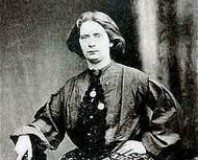
Maria Barbella
Murderer Sarah Whiteling
Murderer · USA · 1888
Sarah Jane Whiteling was a 41 year old white woman from Philadelphia, Pennsylva…
3 victims
Sarah Whiteling
Murderer · USA · 1888
Sarah Jane Whiteling was a 41 year old white woman from Philadelphia, Pennsylva…
3 victims
 Cordelia Botkin
Murderer · USA · 1898
Cordelia Botkin was a stocky woman of 44 who left her own husband and started a…
2 victims
Cordelia Botkin
Murderer · USA · 1898
Cordelia Botkin was a stocky woman of 44 who left her own husband and started a…
2 victims
 Alice Mitchell
Murderer · USA · 1892
Alice Mitchell was tried for murder and entered a plea of “present insanity,” m…
1 victim
Alice Mitchell
Murderer · USA · 1892
Alice Mitchell was tried for murder and entered a plea of “present insanity,” m…
1 victim
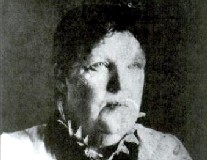 Elizabeth Potts
Murderer · USA · 1888
Elizabeth Potts (née Atherton) was convicted of murder in 1889 and was hanged t…
1 victim
Elizabeth Potts
Murderer · USA · 1888
Elizabeth Potts (née Atherton) was convicted of murder in 1889 and was hanged t…
1 victim
 Lulu Prince Kennedy
Murderer · USA · 1901
Lulu Prince Kennedy was 23 years old and lived in Kansas City, Missouri. She li…
1 victim
Lulu Prince Kennedy
Murderer · USA · 1901
Lulu Prince Kennedy was 23 years old and lived in Kansas City, Missouri. She li…
1 victim
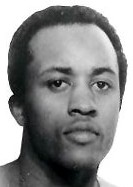 Alton Coleman
Serial Killer · USA · 1984
Alton Coleman was executed by the state of Ohio for crimes committed during a 1…
8 victims
Alton Coleman
Serial Killer · USA · 1984
Alton Coleman was executed by the state of Ohio for crimes committed during a 1…
8 victims
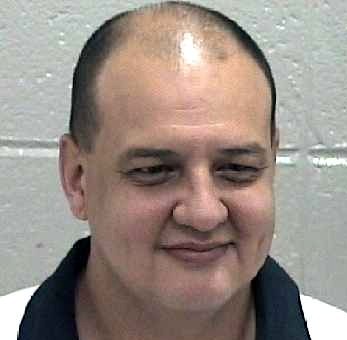 Michael Wayne Nance
Murderer · USA · 1993
Michael Wayne Nance was convicted in Gwinnett Superior Court of malice murder,…
1 victim
Michael Wayne Nance
Murderer · USA · 1993
Michael Wayne Nance was convicted in Gwinnett Superior Court of malice murder,…
1 victim
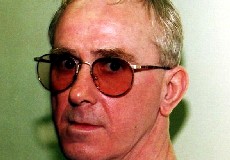 Robert Mone
Homicide · United Kingdom · 1967
Robert Francis Mone was born in 1948. He grew up with his parents and two siste…
4 victims
Robert Mone
Homicide · United Kingdom · 1967
Robert Francis Mone was born in 1948. He grew up with his parents and two siste…
4 victims
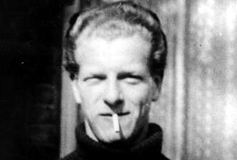 Derek Bentley
Murderer? · United Kingdom · 1952
Derek William Bentley (30 June 1933 – 28 January 1953) was a British teenager h…
1 victim
Derek Bentley
Murderer? · United Kingdom · 1952
Derek William Bentley (30 June 1933 – 28 January 1953) was a British teenager h…
1 victim
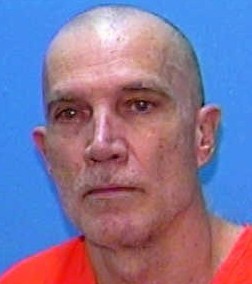 James Franklin Rose
Murderer · USA · 1976
James Franklin Rose was convicted of kidnapping (Count I) and first-degree murd…
1 victim
James Franklin Rose
Murderer · USA · 1976
James Franklin Rose was convicted of kidnapping (Count I) and first-degree murd…
1 victim
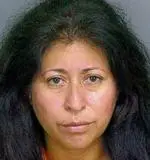 Carmen Montelongo
Murderer · USA · 2011
Carmen Montelongo was a Riverside woman who was convicted of first-degree murde…
1 victim
Carmen Montelongo
Murderer · USA · 2011
Carmen Montelongo was a Riverside woman who was convicted of first-degree murde…
1 victim
- Gender
- female
- Country
- USA
- Location
- New York City, New York, USA
- Date of birth
- October 24, 1868
- Age at first offence
- 27
- Characteristics
- rape?, to avoid arrest
- Victim profile
- Domenico Cataldo, 29 (her lover)
- Method of murder
- C utting his throat with a razor
- Date(s) of murder
- April 26, 1895
- Years active
- 1895
- Date of arrest
- Same day
- Status
-
Sentenced to death
Sentenced to death on July 18, 1895.
Background
Maria Barbella was a seamstress in Manhattan's Little Italy. She lived with her parents on Elizabeth St. near the Mulberry Bend slum. She had been in America only a year and they held fast to Old World etiquette.
Domenico Cataldo was an Italian immigrant and a bootblack in the neighborhood. He was 27.
Barbella developed a habit of dawdling as she passed a shoeshine booth at Canal and Lafayette Sts. in Manhattan's Little Italy. The bootblack Domenico Cataldo always paused to greet Barbella, and she blushed at his attention. During their second chat, Cataldo crowed about his bank balance: $923. He told her, in Italian, "If I find the right girl, I will marry her." She was overwhelmed with the idea that she might be that girl.
Cataldo began showing up at Barbella's clothing factory, Louis Graner & Co., on Broadway near Spring St., to walk her home. Barbella's parents forbade her to see him again unless he proposed marriage. She began taking a different route to work.
Barbella later confided that Cataldo liked to paw at her petticoats and that she felt sexual pressure.
The offence
Barbella found Cataldo standing outside her factory again in March 1895. When she brushed past him, he said, "I will marry you." She raced home to tell her parents.
On March 28, the couple stopped at a bar on Chrystie St. Cataldo fetched Barbella a soda and "the room began to spin when she drank it." In a haze, she was led upstairs. Later, she awoke in a bloody bed with Cataldo seated beside her. He congratulated her for her virgin purity. Barbella told him her reputation was ruined and she could not return to her parents. Cataldo promised to find them a place. She said, "Marry me first." He gritted his teeth.
They moved into a room on E. 13th St., where each day began and ended with an argument over marriage. Barbella insisted on legitimacy and Cataldo put her off. Finally, during another quarrel on April 20, he admitted that he would never marry her. She was crushed.
On April 26, Barbella and her mother confronted Cataldo at Mancuso's saloon on E. 13th St. Filomeno Barbella gave him an earful in Italian, saying: "How can you be so deaf to your own people's customs?" and "Marry her or she'll never be able to hold her head up again!" Cataldo teased that he would marry Maria if her parents paid him $200.
Maria stepped close to Cataldo and asked whether he would be his wife. Cataldo replied, "Only a pig would marry you." With that, Maria pulled a straight razor from her sleeve and dragged it across Cataldo's throat.
He stood and staggered out the door, leaving a ribbon of blood down E. 13th before falling dead at the corner of Avenue A. Maria later went home and changed out of her bloody clothes.
Investigation and arrest
It did not take the police long to find her. When they arrested her, she said in broken English: "Me take his blood so he no take mine. Say me pig marry."
The police took her to New York’s Tombs prison.
Trial
The prosecution presented a case accusing Maria Barbella of premeditated murder. The prosecution claimed she had taken the razor with her that day expressly to cut Dominico Cataldo’s throat.
A translator was appointed because of Maria's inability to speak English. The translator poorly translated her words in a dull monotone that seemed intended to bore rather than inform the jury.
Maria's lawyers offered a defense described as less than compelling.
At sentencing during the trial, Judge Goeff told the jury:
"Your verdict must be an example of justice. A jury must not concern itself with mercy. The law does not distinguish between the sexes. The fragility of the female sex is sometimes involved to excuse savage crimes. We cannot publicly proclaim a woman not guilty of killing a man solely because this man has proposed marriage and then changed his mind!"
The jury deliberated for 45 minutes then found Maria Barbella guilty of first degree murder.
Maria was sent to Sing Sing prison, near Albany. She was the only woman prisoner and the first female prisoner on death row. She was also the first woman to be executed by the prison’s newly installed electric chair.
The electric chair had been introduced in New York in 1889 as a more humane and efficient method of execution than hanging. The condemned man, William Kemmler, was given 2000 volts of electricity for 11 seconds. Smoke rose from his head and the room smelled of burnt flesh. Kemmler appeared to be dead, but on close examination he was found to have a small wound pulsing blood and he was struggling to breathe. The electricity was turned on again, this time for over a minute, until executioners were sure he was dead.
Judge John Goff also told the jury:
"We cannot publicly proclaim a woman not guilty of killing a man solely because this man has proposed marriage and then changed his mind!"
Sentencing
Maria Barbella was sentenced to death on July 18, 1895.
Governor Morton was petitioned to pardon Maria, but he would not decide until her appeal had ended.
Appeals
Maria’s most prominent supporter was Cora Slocomb, an American woman who had married Count Detalmo di Brazza and now lived in Italy. She followed the case from the beginning and returned to America to help Maria.
Countess di Brazza visited Maria in prison and made sure she had competent attorneys for her appeal. Maria’s attorneys included Frederick House, described as a respected attorney, who mounted an appeal.
A clemency campaign flooded Gov. Levi Morton with letters. Women's rights activists, including Elizabeth Cady Stanton, joined the cause.
The Court of Appeals ordered a new trial based upon Judge Goeff's impartiality. After eleven months in prison, Maria Barbella’s appeal succeeded and she was granted a new trial. She spent another seven month in jail before it started.
Outcome
In December 1896, the second proceeding in a new trial acquitted Maria Barbella. The jury voted to acquit, and Maria walked free.
The defense introduced evidence of mental problems in Maria’s background and in several generations of Maria’s family. The defense contended that Domenico’s statement, “Only pigs marry.” triggered an epileptic seizure in Maria. Maria, now fluent in English, told her story without an interpreter. She claimed she had no memory of killing her lover.
Although the defense made sure the jury also heard self-defense evidence, they decided on a more risky plea than self-defense. They claimed Maria was not guilty because she was having an epileptic seizure when she killed Domenico. The epilepsy defense was described as having only been successful four times and never in the United States.
During the new trial, the defense also dismissed Domenico as a "lascivious libertine" whom "the city will not miss." An eyewitness testified that Domenico Cataldo reached for a pistol before he was killed.
Aftermath
Less than a year after her release from prison, Maria Barbella married Francesco Paulo Bruno, a man who had come from her village in Italy. After that, she disappeared from public life. She slipped into obscurity and lived the rest of her days outside the headlines.
Cora Slocomb was described as having helped save Maria from the electric chair.
A 1997 book titled "The Trials of Maria Barbella" by Idanna Pucci told the full story of Maria Barbella's life, murder conviction and court battle and the 19th-century socialite Cora Slocomb who helped save her from the electric chair. The book was being made into a film produced by Renzo Rossellini.
Spotted an error, or have more information about this case?