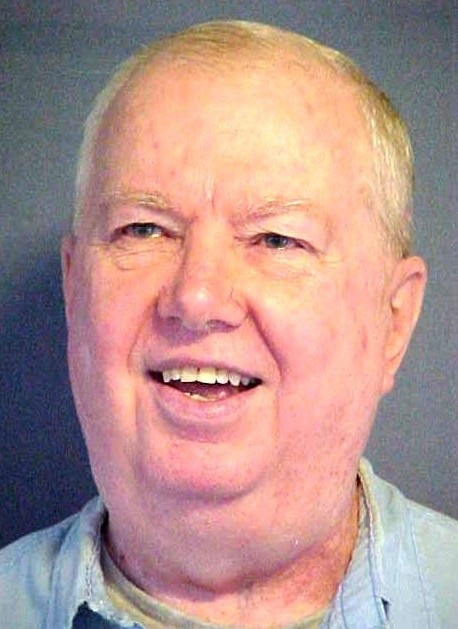
John Albert Boltz
Murderer Brian Kevin Rosenfeld
Murderer · USA · 1985
Brian Kevin Rosenfeld Brian Kevin Rosenfeld was sentenced to three concurrent l…
23 victims
Brian Kevin Rosenfeld
Murderer · USA · 1985
Brian Kevin Rosenfeld Brian Kevin Rosenfeld was sentenced to three concurrent l…
23 victims
 Marvin Gray
Murderer · USA · 1975
Marvin Gray was convicted killer who claimed responsibility for 23 slayings and…
23 victims
Marvin Gray
Murderer · USA · 1975
Marvin Gray was convicted killer who claimed responsibility for 23 slayings and…
23 victims
 Yahweh ben Yahweh
Murderer · USA · 1980
Yahweh ben Yahweh was born and legally named Hulon Mitchell Jr. (October 27, 19…
23 victims
Yahweh ben Yahweh
Murderer · USA · 1980
Yahweh ben Yahweh was born and legally named Hulon Mitchell Jr. (October 27, 19…
23 victims
 Russell Ellwood
Murderer · USA · 1991
Russell Ellwood was a former taxi driver. Authorities suspected him of killing…
20 victims
Russell Ellwood
Murderer · USA · 1991
Russell Ellwood was a former taxi driver. Authorities suspected him of killing…
20 victims
 David Renz
Murderer · USA · 2013
March 14, 2013 — David Renz carjacked Liverpool librarian Lori Ann Bresnahan an…
1 victim
David Renz
Murderer · USA · 2013
March 14, 2013 — David Renz carjacked Liverpool librarian Lori Ann Bresnahan an…
1 victim
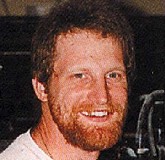 Terry Driver
Murderer · Canada · 1995
Terry Driver was known as the “Abbotsford killer.” He was a convicted Canadian…
1 victim
Terry Driver
Murderer · Canada · 1995
Terry Driver was known as the “Abbotsford killer.” He was a convicted Canadian…
1 victim
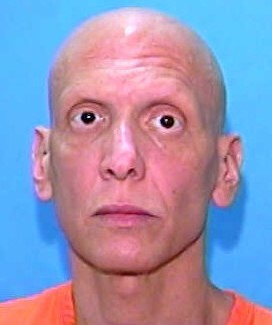 Manuel Pardo
Spree killer · USA · 1986
Manuel Pardo, Jr. was a former police officer who was convicted of nine counts…
9 victims
Manuel Pardo
Spree killer · USA · 1986
Manuel Pardo, Jr. was a former police officer who was convicted of nine counts…
9 victims
 Artur Ryno
Serial killer · Russia · 2006
Artur Ryno led a skinhead gang described as the “Ryno skinhead gang” (also desc…
37 victims
Artur Ryno
Serial killer · Russia · 2006
Artur Ryno led a skinhead gang described as the “Ryno skinhead gang” (also desc…
37 victims
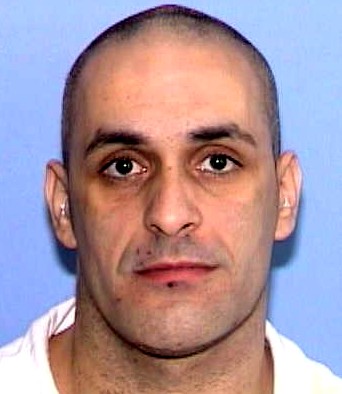 Steven Long
Murderer · USA · 2005
Steven Long was a male. He was White and had brown hair and brown eyes. He was…
1 victim
Steven Long
Murderer · USA · 2005
Steven Long was a male. He was White and had brown hair and brown eyes. He was…
1 victim
 Billy Bailey
Murderer · USA · 1979
Billy Bailey (1947? - January 25, 1996) was a convicted murderer who was execut…
2 victims
Billy Bailey
Murderer · USA · 1979
Billy Bailey (1947? - January 25, 1996) was a convicted murderer who was execut…
2 victims
- Gender
- male
- Country
- USA
- Location
- Pott County, Oklahoma, USA
- Date of birth
- J uly 30, 1931
- Age at first offence
- 53
- Characteristics
- parricide, alcohol, abuse
- Victim profile
- Doug Kirby, 23 ( his step-son )
- Method of murder
- St abbing with knife
- Date(s) of murder
- April 18, 1984
- Years active
- 1984
- Date of arrest
- Same day
- Status
-
Executed
Executed by lethal injection in Oklahoma on June 1, 2006
Case identification
- Name: John Albert Boltz
- Status/Outcome: Executed by lethal injection in Oklahoma on June 1, 2006
- Age at execution: 74
- Victim: Doug Kirby (23), stepson
Background
John Albert Boltz was convicted of the April 18, 1984, murder of his step-son, Doug Kirby. The killing occurred after Boltz made threats to the victim’s mother, Pat Kirby, who had earlier in the day told Boltz she wanted a divorce. Boltz was described as having been drinking during the events leading up to the killing.
In appeals and collateral proceedings, Boltz argued issues including competency and ineffective assistance of counsel. In federal habeas proceedings, Boltz was identified as the petitioner and Mike Mullin as the respondent, with the matter docketed as Boltz v. Mullin, 415 F.3d 1215 (10th Cir. 2005).
The offence
On April 18, 1984, at approximately 9:30 p.m., the Shawnee Police Department received a call from Boltz’s wife, Pat Kirby. She reported that she was at her mother’s house and that Boltz, who had been drinking, had forced his way into the house and had made accusations about her to her mother. When she threatened to call the police, Boltz left. She provided dispatch with Boltz’s car tag number and his home address.
Pat Kirby later went to her son Doug’s house. Boltz called Doug and the conversation lasted only a few minutes. Boltz then called back again and again talked with Doug. After this, Doug left to go to Boltz’s trailer house. Immediately thereafter, Boltz called a third time and Pat Kirby answered. Boltz told her: “I'm going to cut your loving little boy's head off.” Boltz also threatened Pat Kirby, and she immediately called the police and reported the threats. She told the dispatcher where Boltz lived and stated that she was going over there.
Vita Witt testified that during that evening she heard the screeching of brakes, a car door slam, and loud and angry voices. She looked out the window and observed a man later identified as Doug Kirby lying on the ground on his back, not moving. She testified that Boltz was standing over him screaming obscenities and beating him. She also testified that she told her son to call the police. Witt testified that she observed Boltz pull something shiny from his belt and point the object at the man, and that when Boltz looked up and saw her watching, she turned away out of fear.
Boltz was arrested in Midwest City, Oklahoma, at the American Legion Hall after a friend informed the police of Boltz’s location. The friend reported that Boltz had informed him he had killed his stepson and had probably cut his head off. Boltz surrendered to the police upon their arrival.
Investigation
- A .22 caliber revolver was recovered from the passenger seat of Doug Kirby’s car. The gun had no blood on it, although the seat was splattered with blood.
- The Medical Examiner’s Office testified at trial about the injuries sustained by Doug Kirby:
- A total of eleven wounds, including eight stab wounds to the neck, chest and abdomen, and three cutting wounds to the neck.
- One neck wound was so deep that it had cut into the spinal column.
- The carotid arteries on both sides of the neck were cut in half.
- Major arteries in the heart were also cut.
Arrest
Boltz was arrested in Midwest City, Oklahoma, at the American Legion Hall.
Trial
Boltz testified in support of a self-defense theory. He testified that Doug Kirby had called him that evening and threatened to kill him. Boltz claimed that when Doug arrived at his house, he kicked in the front door and as he went for a gun, Boltz stabbed him twice, but did not remember anything after that point.
At trial, Boltz was convicted by a jury of murder in the first degree and sentenced to death.
A recorded phone call was played to the jury during the State’s case-in-chief. The exchange included:
- DISPATCHER: Shawnee Police Department, Cheryl.
- MS. KIRBY: Cheryl, this is Pat again. I hate-I hate to keep calling, but John just now called and said he was going to cut my son's head off, and my son is over there in the trailer park, and John is over there at the trailer. That was Lot 119.
Direct appeal and competency-related issues (Oklahoma Court of Criminal Appeals)
On direct appeal, Boltz argued, among other things, that he should have been declared incompetent after refusing to accept a prosecutor’s plea bargain for voluntary manslaughter. The Court of Criminal Appeals affirmed the conviction and sentence. The Court of Criminal Appeals explained that poor judgment in rejecting a plea bargain did not indicate incompetence, and that the defendant had been quizzed by the judge and his attorney regarding his understanding of his rights and wish to go to trial.
The Court of Criminal Appeals also addressed multiple alleged errors, including:
- refusal to instruct on heat of passion manslaughter and second-degree murder as lesser included offenses;
- admission of evidence relating to an unadjudicated burglary to support the aggravating circumstance of continuing threat;
- instructions regarding sentencing and unanimity;
- whether the aggravating circumstance of especially heinous, atrocious or cruel was applied constitutionally;
- whether the continuing threat aggravator was vague and whether its application was arbitrary;
- sufficiency of evidence supporting the continuing threat circumstance;
- jury instructions for mitigating circumstances;
- proportionality review being no longer required under the then-prevailing statutory scheme;
- ineffective assistance of counsel claims; and
- whether the death sentence was imposed under the influence of passion, prejudice, or any other arbitrary factor, concluding it was not.
The Court of Criminal Appeals affirmed: “The judgment and sentence is AFFIRMED.”
Sentencing
- After the jury returned a verdict of guilty for murder in the first degree, the trial court sentenced Boltz to death.
- The jury found that the murder was especially heinous, atrocious or cruel.
- The jury also found the aggravating circumstance that there was a probability that the defendant would commit acts of violence that would constitute a continuing threat to society.
During sentencing, evidence of an unadjudicated burglary against Boltz was admitted to support the continuing threat aggravating circumstance. The evidence concerned forcible entry discovered the morning after Doug Kirby’s murder, with a picture found on the floor “shattered.”
Appeals
Oklahoma Court of Criminal Appeals (direct appeal)
The Oklahoma Court of Criminal Appeals case was cited as Boltz v. State, 806 P.2d 1117 (Okla. Crim. 1991) (Direct Appeal). The judgment and sentence were affirmed.
Federal habeas proceedings (Tenth Circuit)
The U.S. Court of Appeals for the Tenth Circuit affirmed the denial of habeas relief in Boltz v. Mullin, 415 F.3d 1215 (10th Cir. 2005). The appeal followed:
- state conviction and death sentence in 1984;
- affirmance by the Oklahoma Court of Criminal Appeals in 1991;
- post-conviction proceedings in Oklahoma, including a request filed on July 2, 1992 that was denied and affirmed by the OCCA;
- a habeas petition filed on September 9, 1999 in the United States District Court for the Western District of Oklahoma;
- denial of the habeas petition on March 25, 2004;
- grant of a certificate of appealability by the District Court on Boltz’s claim of ineffective assistance of counsel and on two other claims regarding continuing threat and heat of passion manslaughter instructions;
- Tenth Circuit jurisdiction under 28 U.S.C. §§ 1291 and 2253, resulting in an affirmance of the District Court’s denial.
The Tenth Circuit summarized that:
- a jury convicted Boltz of first-degree murder in the stabbing and decapitation death of his stepson, Doug Kirby, and sentenced him to death in 1984;
- the OCCA affirmed in 1991;
- multiple ineffective assistance claims were reviewed and relief was denied;
- the evidence was sufficient for the continuing threat aggravator; and
- the jury instructions regarding heat of passion voluntary manslaughter were not required based on the evidentiary record as evaluated by the courts.
Ineffective assistance of counsel claims addressed in the habeas opinion
The Tenth Circuit discussed multiple alleged failures by trial counsel, including:
- calling Ralph Robertson as a witness;
- failure to order transcripts of a government witness’s preliminary hearing testimony;
- failure to introduce evidence of bruises on Boltz’s arm;
- failure to introduce evidence concerning Doug Kirby’s glasses;
- failure to present evidence that the victim knew Boltz accused the victim’s mother of adultery;
- failure to investigate the victim’s propensity for violence;
- failure to present evidence that the victim attacked Boltz inside the trailer;
- failure to call Duane Morrison to testify;
- issues relating to Officer Gregg’s testimony and an alleged dispute about a phone call;
- failure to pursue an intoxication defense; and
- failure to rebut the burglary allegation during the penalty phase. The Court also addressed Boltz’s contention that counsel should have conducted a proper investigation of mitigation witnesses, noting that Boltz had advised counsel he did not wish to present additional evidence during the punishment stage except a stipulation that he had no prior criminal record.
Closing conclusions in the habeas decision
The Tenth Circuit concluded:
- Boltz’s ineffective assistance of counsel claim did not warrant habeas relief;
- the OCCA’s determinations regarding the continuing threat aggravator and heat of passion instruction were not grounds for relief. The Court affirmed the District Court’s denial of Boltz’s habeas petition.
Outcome
The Oklahoma Court of Criminal Appeals set June 1 as the execution date for John Albert Boltz. The five-member state Pardon and Parole Board voted 5-0 to deny clemency.
The execution occurred on June 1, 2006, in Oklahoma State Penitentiary at McAlester.
Execution (June 1, 2006)
Boltz was pronounced dead at 7:22 p.m. after receiving a lethal injection of drugs at the Oklahoma State Penitentiary.
His execution was delayed more than one hour due to difficulties finding a vein to inject the lethal cocktail. The execution was witnessed by the victim’s brother, Jim Kirby, and other family members, including Nathan Kirby who was described as just 4 years old when his father died.
Boltz made a statement before being pronounced dead. He said: “This is a time of gladness for me and a time of sadness,” “IIt's a time of gladness because I know I'm going to a better place. It's a time of sadness because I think of all the people involved who got me here and what's in store for them.”
He also referred to passages in the Old Testament book of Deuteronomy. He said: “They need to read this portion of the Bible and see what's down the road for them,” “I've seen so much pain for all these years. And now it's come down to this.”
Attorney General statement
Attorney General Drew Edmondson released a statement that Boltz had been properly convicted and sentenced to death, that his appeals had been turned down by courts at all levels, and that his repeated last-minute attempts to delay punishment had been denied. The statement concluded: “It is time the sentence is carried out.”
Reported last words as characterized in the reporting
In the immediate aftermath of the execution, family members made statements. Jim Kirby, the brother of Doug Kirby, described the execution as “long overdue” and “It was a horrific crime. It deserved the punishment that was given. We're all relieved that it's all over with.”
In a separate statement, Jim Kirby said there was “death with no remorse” and that it was “nothing more than more threats against my family.”
Aftermath
The case record described Boltz as the oldest death row inmate ever put to death in Oklahoma, and referenced that the former oldest inmate executed in Oklahoma was Robert Hendricks, 64, executed in 1957.
Nathan Kirby submitted a letter to the Pardon and Parole Board stating: “Not only have I missed out on having a father, but my father has missed out on having a son,” and reporting: “John Boltz dying will bring us all some peace, but it will never bring Doug back to us,” according to Jim Kirby’s remarks.
Other details
- Boltz’s wife was identified as Pat Kirby.
- Boltz’s attorney in the federal proceedings was identified as James L. Hankins of Oklahoma City.
- A stay ordered by U.S. District Judge Stephen P. Friot followed a hearing challenging the lethal injection method. The stay was later lifted by the 10th U.S. Circuit Court of Appeals and followed by a denial by the U.S. Supreme Court of a subsequent appeal.
- Oklahoma’s execution procedure was described as involving sodium thiopental to put a condemned person to sleep, then vercuronium bromide to stop breathing and potassium chloride to stop the heart.
- Boltz’s grievances protested that the method did not guarantee that he would be successfully anesthetized for the entire duration of the execution.
- The Tenth Circuit opinion referenced that Boltz was charged with first-degree murder after refusing to plead guilty to voluntary manslaughter.
- The direct appeal opinion noted that the jury found the murder especially heinous, atrocious or cruel and that the record showed Doug Kirby was stabbed repeatedly while retreating in an attempt to escape, later collapsing in the yard.
Spotted an error, or have more information about this case?