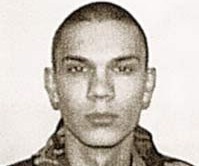
Artur Ryno
Serial killer Maxim Petrov
Serial killer · Russia · 1999
Maxim Vladimirovich Petrov (born 1966) (Russian: Максим Петров) was a Russian d…
19 victims
Maxim Petrov
Serial killer · Russia · 1999
Maxim Vladimirovich Petrov (born 1966) (Russian: Максим Петров) was a Russian d…
19 victims
 Vladimir Mirgorod
Serial killer · Russia · 2002
Vladimir Mirgorod was sentenced to life in prison for killing at least sixteen…
16 victims
Vladimir Mirgorod
Serial killer · Russia · 2002
Vladimir Mirgorod was sentenced to life in prison for killing at least sixteen…
16 victims
 Alexander Bychkov
Serial killer · Russia · 2009
March 20, 2013 — Alexander Bychkov was sentenced to life in prison. · March 22,…
11 victims
Alexander Bychkov
Serial killer · Russia · 2009
March 20, 2013 — Alexander Bychkov was sentenced to life in prison. · March 22,…
11 victims
 Vincent Sims
Murderer · USA · 1996
April 5, 1996 — Forrest Smith arrived home from work around 10:00 p.m. and foun…
1 victim
Vincent Sims
Murderer · USA · 1996
April 5, 1996 — Forrest Smith arrived home from work around 10:00 p.m. and foun…
1 victim
 Raman Raghav
Serial killer · India · 1966
Raman Raghav Sentence reduced to life imprisonment on 4 August 1987; died at Sa…
41 victims
Raman Raghav
Serial killer · India · 1966
Raman Raghav Sentence reduced to life imprisonment on 4 August 1987; died at Sa…
41 victims
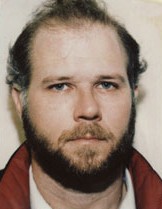 Glenn Barker
Murderer · USA · 1982
Glenn Haslam Barker was a basketball coach for the South Brunswick Family YMCA.…
3 victims
Glenn Barker
Murderer · USA · 1982
Glenn Haslam Barker was a basketball coach for the South Brunswick Family YMCA.…
3 victims
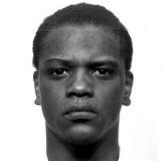 Bruce Edwin Callins
Murderer · USA · 1980
Bruce Edwin Callins filed a petition for certiorari that was docketed in Johnso…
1 victim
Bruce Edwin Callins
Murderer · USA · 1980
Bruce Edwin Callins filed a petition for certiorari that was docketed in Johnso…
1 victim
 Christina Walters
Murderer · USA · 1998
Christina S. Walters was American Indian. She was 20 years old at the time of t…
2 victims
Christina Walters
Murderer · USA · 1998
Christina S. Walters was American Indian. She was 20 years old at the time of t…
2 victims
- Gender
- male
- Country
- Russia
- Location
- Moscow, Russia
- Date of birth
- 1988
- Age at first offence
- 18
- Characteristics
- juvenile (16), hate crime
- Victim profile
- Men and women ( mostly of people from Central Asia and Caucasians region)
- Method of murder
- St abbing with knife
- Date(s) of murder
- August 2006 - April 2007
- Years active
- 2006–2007
- Date of arrest
- April 17, 2007
- Status
-
Imprisoned
Sentenced to 10 years in a medium-security prison in December 2008; two ringleaders Artur Ryno and Pavel Skachevski each received 10-year sentences; Roman Kuzin received 20 years; Vitaly Nikitin received 12 years; the court ruled they pay USD 144,000 to two victims as part of a compensation claim
Background
Artur Ryno led a skinhead gang described as the “Ryno skinhead gang” (also described as the “Ryno gang”). The group’s members were accused of racially motivated murders and attempted murders targeting people from Central Asia and the Caucasus and other non-Slavic migrants.
Ryno was described as a 17-year-old leader of the gang. The gang included a 15-year-old at the time of the arrests, and its members were described as very young.
The offence
A Russian court found seven youths guilty of 20 racially-motivated murders and 12 attempted murders, mostly of people from Central Asia and Caucasians region. The murders of the foreigners and non-Slavic migrants were carried out between August 2006 and October 2007 in the Moscow region.
The members of the Ryno skinhead gang video taped some of the attacks on mobile phones and posted them on the Internet. Prosecutors said the group deliberately targeted migrants from the former Soviet republics in the Caucasus and Asia. Police described planned “hunts” of people of non-Slavic appearance, with groups of two to five gathering and heading out to bedroom communities around Moscow in the evenings; the group would either provoke a fight or attack a dark-skinned person from behind.
The court also found that, during their trial, Ryno and Skachevsky admitted their crimes and claimed they were determined to “cleanse Russian blood”.
Ryno said:
"From my school years I have hated people from the Caucasus who come to Moscow, form ties and start to oppress Russians."
Ryno later told the investigation in justification of his deeds:
"From my school years I have hated people from the Caucasus who come to Moscow and start to oppress Russians."
During earlier police questioning accounts, Ryno also said:
"since school I have hated people from the Caucasus who come to the capital and oppress Russians." "I realised that the city must be cleansed." "We were strolling, I noticed a brawl between our guys, about five or six, and an Asian." "I flew to their assistance." "I pulled out a knife and stabbed the non-Russian several times." "I ran to help out." "I took out a knife and stabbed the non-Russian several times."
A further statement attributed to Ryno included:
Investigation
The charges against the two groups were described as based on specific articles of the Russian Criminal Code. For the Ryno gang and the Ivan Kalinichenko gang, the charges included:
- Article 282, Part 2, Paragraphs ‘а’ and ‘b’
- Article 30, Part 3
- Article 105, Part 2, Paragraphs ‘h’, ‘j’, ‘m’
- Article 30, Part 3
- Article 105, Part 2, Paragraphs ‘а’, ‘h’, ‘j’, ‘m’ (described as concerned with the attempted murder of two or more people by an organized group, through a hooligan impulse, and based on racial hatred and hostility)
- Article 105, Part 2, Paragraphs ‘а’, ‘h’, ‘j’, ‘l’ (described as concerned with the murder of two or more people by an organized group, through a hooligan impulse, and based on racial hatred and hostility)
- Article 213, Part 2 (condemning premeditated hooliganism by an organized group)
The matter was described as following a pattern: the accused gathered in organized groups to commit murders of natives of the former Soviet Republics in Asia and the Caucasus “under the influence of the ideas propagated in different ways by illegal youth organizations about the exclusiveness of the Russian nationality and the inferiority of the people of non-Slavic origin.”
A Moscow district attorney’s office report quoted:
“Under the influence of the ideas propagated in different ways by illegal youth organizations about the exclusiveness of the Russian nationality and the inferiority of the people of non-Slavic origin, the accused gathered in organized groups to commit murders of the natives of the former Soviet Republics in Asia and the Caucasus,”
Investigators were reported to believe the suspects were members of a gang of skinheads led by Artur Ryno. One report stated that Ryno was a student from Yekaterinburg who was detained in May and confessed to 37 murders of dark-skinned people “in a bid to 'clean up the city.'”
Another report said Ryno claimed there had been many witnesses in his crimes and that nobody tried to interfere with an attack. A police source was quoted describing investigators’ initial doubts and later confirmation:
"At first we doubted whether what Ryno said was true - he mentioned too many details and boasted about what he had done, and the dates and crime scenes named were not precise. But the investigations we have carried out confirm that everything he said is true."
Arrest
Ryno was detained in mid-April on suspicion of stabbing an Armenian national to death in Moscow. He was described as being detained after an eyewitness called police and said two men stabbed Armenian businessman Karen Abramyan 20 times and escaped in a streetcar. Police stopped the streetcar and arrested the two youths carrying a knife and whose clothes were covered in blood. Police said a surveillance camera captured the crime.
Ryno and Pavel Skachevskii were arrested on April 17 after the killing of Karen Abramian (Karen Abramyan). Police reports described that the criminals tried to flee from the scene, witnesses saw them boarding a tram, the witness reported the tram’s number to police, and police chased the tram and detained the two young men. Investigators said Ryno and Skachevsky were detained on a tram with their clothes covered in blood and in possession of a bloody knife.
Ryno’s gang was described as having members arrested after Ryno and Skachevsky’s arrests, with “three more” arrested in November, and “another four” arrested in the past two weeks on charges of murder and “fomenting inter-ethnic strife”: 18-year-old Denis Lavrenenkov, 19-year-old Ivan Kitaikin, 21-year-old Svetlana Avvakumova, and 16-year-old Nikolai Dagaev.
Ryno was described in another account as having been detained in April and later recanting a confession after being shown surveillance footage. It was also stated that, in April 2007, two skinheads were arrested after brutal attacks on a young Tadjik and a middle-aged Armenian businessman; a report said Denis Lavrenenkov was detained in late 2006 after detonation of a home-made bomb in the entryway of a young anti-fascist activist and was released for lack of evidence.
Trial
A report stated that On July 1, 2008, the district attorney’s office passed two criminal cases to the Moscow City Law Court concerning accusations against “the Ryno gang” and “the Ivan Kalinichenko gang.”
For the “Ryno gang,” the accused included Артур Рыно (Arthur Ryno) and Павел Скачевский (Pavel Skachevskiy), described as the organizers, as well as seven of its members including a minor adolescent.
The trial resulted in a verdict where out of nine accused, two were acquitted by the jury; the rest were found guilty and undeserving of leniency.
During the trial, Ryno and Skachevsky admitted their crimes and claimed they were determined to “cleanse Russian blood”.
"cleanse Russian blood"
Ryno told investigators:
Sentencing
On December 15, 2008, a Russian court sentenced seven youths for up to 20 years in prison. The court handed out the maximum possible sentences allowable by law because the young men were under 18 at the time of the attacks.
Artur Ryno and Pavel Skachevski were sentenced to 10 years in a medium-security prison each. Roman Kuzin (20) received the longest prison term, 20 years. Vitaly Nikitin, who was taken into custody after the sentences were read out, was sentenced to 12 years. The court also ruled they pay USD 144,000 to two victims as part of a compensation claim.
The men appeared in court inside a glass-walled box to hear their sentences read out.
Appeals
No appeal information was included in the provided material.
Outcome
The court found Artur Ryno and the other accused guilty of racially motivated murders and attempted murders carried out between August 2006 and October 2007 in the Moscow region. The jury acquitted two of the nine accused. The sentencing described maximum terms allowable by law due to the defendants’ minority status.
Other details
Ryno was described as a student of icon-painting and as a student in Moscow from Ekaterinaburg. Ryno was described as aged 17 in one account and aged 18 in another account.
One report described an earlier confession and later retraction:
- Artur Ryno, 17, confessed to killing 37 people and later withdrew his testimony.
- Another report said he later recanted a confession but detectives noted he had given precise addresses and accounts of the murders.
The arrest narrative included the killing of Armenian businessman Karen Abramyan (46), who was stabbed 20 times on April 16 in Moscow. Another narrative included the stabbing of Khairullo Sadykov (26), described as a street sweeper from Tajikistan, who was stabbed 35 times outside an apartment building. The material also described that Ryno’s first murder allegedly took place on August 21, 2006 near the Cherkizov market in the company of unidentified friends, and that it coincided with an explosion carried out by white extremists at Moscow’s Cherkizovsky market, described as leaving 11 people dead and at least 49 injured.
A report described that the gang video taped some attacks on mobile phones and posted them on the Internet. Another report said victims were typically stabbed more than twenty times.
Ryno and Skachevsky were described as being associated with or connected to the bombers of the Cherkizov market in some accounts, and Ryno’s accomplice Pavel Skachevsky denied involvement.
The provided material also included background discussion of racist and xenophobic violence in Russia, including references to other figures and organizations, while keeping the main focus on the Ryno and Ivan Kalinichenko gangs.
Spotted an error, or have more information about this case?