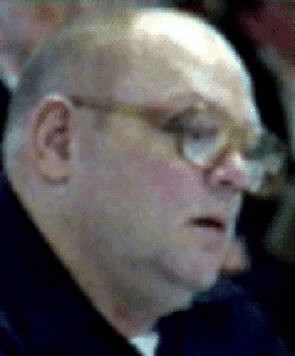
Billy Bailey
Murderer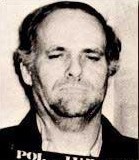 Ervil LeBaron
Murderer · USA · 1972
Ervil Morrell LeBaron (1925 to August 16, 1981) was the leader of a polygamous…
35 victims
Ervil LeBaron
Murderer · USA · 1972
Ervil Morrell LeBaron (1925 to August 16, 1981) was the leader of a polygamous…
35 victims
 Brian Kevin Rosenfeld
Murderer · USA · 1985
Brian Kevin Rosenfeld Brian Kevin Rosenfeld was sentenced to three concurrent l…
23 victims
Brian Kevin Rosenfeld
Murderer · USA · 1985
Brian Kevin Rosenfeld Brian Kevin Rosenfeld was sentenced to three concurrent l…
23 victims
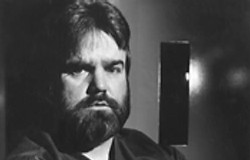 Marvin Gray
Murderer · USA · 1975
Marvin Gray was convicted killer who claimed responsibility for 23 slayings and…
23 victims
Marvin Gray
Murderer · USA · 1975
Marvin Gray was convicted killer who claimed responsibility for 23 slayings and…
23 victims
 Yahweh ben Yahweh
Murderer · USA · 1980
Yahweh ben Yahweh was born and legally named Hulon Mitchell Jr. (October 27, 19…
23 victims
Yahweh ben Yahweh
Murderer · USA · 1980
Yahweh ben Yahweh was born and legally named Hulon Mitchell Jr. (October 27, 19…
23 victims
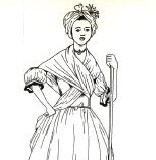 Susanna Cox
Murderer · USA · 1809
Susanna Cox (1785–1809) was a young domestic servant in Berks County, Pennsylva…
1 victim
Susanna Cox
Murderer · USA · 1809
Susanna Cox (1785–1809) was a young domestic servant in Berks County, Pennsylva…
1 victim
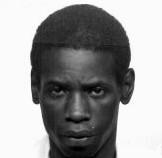 John Fearance
Murderer · USA · 1977
John Fearance (John Fearance Jr.) was executed by lethal injection in Texas on…
1 victim
John Fearance
Murderer · USA · 1977
John Fearance (John Fearance Jr.) was executed by lethal injection in Texas on…
1 victim
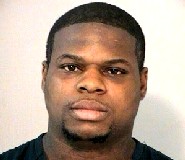 Terence Andrus
Murderer · USA · 2008
Terence Andrus was a Black man. He was male, with black hair, brown eyes, a hei…
2 victims
Terence Andrus
Murderer · USA · 2008
Terence Andrus was a Black man. He was male, with black hair, brown eyes, a hei…
2 victims
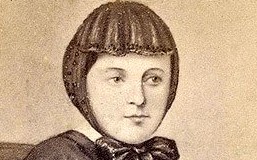 Constance Kent
Homicide · United Kingdom · 1860
Constance Kent was named Constance Emily Kent and was born 6 February 1844. She…
1 victim
Constance Kent
Homicide · United Kingdom · 1860
Constance Kent was named Constance Emily Kent and was born 6 February 1844. She…
1 victim
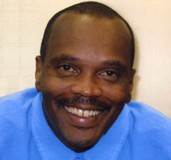 Jarvis Jay Masters
Murderer · USA · 1985
Jarvis Jay Masters (born 1962) was an African American man from Long Beach, CA.…
1 victim
Jarvis Jay Masters
Murderer · USA · 1985
Jarvis Jay Masters (born 1962) was an African American man from Long Beach, CA.…
1 victim
 Stephen Michael West
Murderer · USA · 1986
Stephen Michael West was sentenced to death in 1987. A jury in Union County fou…
2 victims
Stephen Michael West
Murderer · USA · 1986
Stephen Michael West was sentenced to death in 1987. A jury in Union County fou…
2 victims
- Gender
- male
- Country
- USA
- Location
- Kent County, Delaware, USA
- Date of birth
- January 1947
- Age at first offence
- 32
- Characteristics
- robbery
- Victim profile
- Gilbert Lambertson, 80, and his wife, Clara Lambertson, 73
- Method of murder
- Shooting
- Date(s) of murder
- 1979
- Years active
- 1979
- Date of arrest
- —
- Status
-
Executed
Executed by hanging in Delaware on January 25, 1996
Case overview
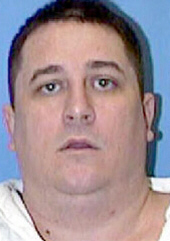
Billy Bailey (1947? - January 25, 1996) was a convicted murderer who was executed by hanging in Delaware on January 25, 1996. He was hanged in 1996 and was the third person to be hanged in the United States since the resumption of executions in 1977. He was the last person in the United States to be executed in this manner thus far.
Bailey escaped from a work release facility in Wilmington, Delaware, later appearing at the home of his foster sister in Cheswold, Delaware, and then robbed a package store clerk at gunpoint. After the robbery, Bailey entered the farmhouse of Gilbert Lambertson and his wife, Clara Lambertson, and shot both Lambertsons. Both Lambertsons died.
Bailey attempted to shoot the helicopter co-pilot with a pistol and was later arrested. Bailey was found guilty of the murders in 1980. After his conviction, a jury held that the crimes were “outrageously or wantonly vile, horrible, or inhuman” and recommended the death penalty.
After his appeals failed, Bailey was executed by the state of Delaware in 1996. He refused to exercise his option to choose lethal injection as a method of execution and was instead hanged.
Timeline
- 1979 — Billy Bailey was arrested for murdering an elderly aunt and uncle during a robbery at their home (discussed in the same federal appellate opinion addressing two related habeas petitions).
- 1980 — Bailey was convicted for the murders; the jury recommended the death penalty after finding the murders “were outrageously or wantonly vile, horrible, or inhuman.”
- 1986 — The wooden gallows had been built in the grounds of the Delaware Correctional Center at Smyrna as Bailey’s first execution date approached.
- 1993 — The Delaware State News publicity period discussed in the federal appellate opinion included articles between May 22, 1979, and June 13, 1979.
- February 22, 1980 — The jury returned verdicts finding Bailey guilty of intentionally killing the Lambertsons (as referenced in a footnote).
- February 25, 1980 — The jury sent a note to the trial judge during deliberations (as referenced in a footnote).
- April 26, 1994 — A panel heard the appeal in the federal appellate case caption for Billie Bailey v. Robert Snyder.
- November 22, 1994 — The cases were rearrued in banc.
- October 19, 1995 — The opinion was filed in the appellate case addressing the denial of habeas corpus petitions.
- January 25, 1996 — Bailey was executed by hanging in Delaware.
Background
Bailey was born the 19th of 23 children. His mother died shortly after his birth and his stepmother beat him and called him worthless according to records of social workers who found Bailey at 12 as “a seriously disturbed child who needs professional help.” It was argued that Bailey got that help in institutions and from the foster family he turned to for support.
Bailey was sentenced to death in 1980, at the age of 33, for the shooting of an elderly farming couple, Clara and Gilbert Lambertson.
After his conviction, the jury held that the crimes “were outrageously or wantonly vile, horrible, or inhuman” and recommended the death penalty.
Bailey had been on death row for 16 years and was 49 years old at the time of his execution. Bailey weighed 220 lbs at the time of the execution.
Bailey told the state Pardons Board at a clemency hearing: “I feel the law sentenced me to hang and I should hang,” and “I don't want to, but that was the law.”
At the execution, Bailey’s glasses had been removed. He wore a prison-issue blue denim coat draped over his shoulders, with the top two buttons fastened to keep it from blowing off in the wind, and his arms were fastened at his sides.
The offence
Bailey was assigned to the Plummer House, a work release facility in Wilmington, Delaware, and he escaped later.
After escaping, Bailey appeared at the home of his foster sister, Sue Ann Coker, in Cheswold, Delaware. Bailey told his foster sister that he was upset and was not going back to the Plummer House.
Bailey and Charles Coker, his foster sister’s husband, left in Coker’s truck to run an errand. On the way, Bailey asked Coker to stop at a package store. Bailey entered the store and robbed the clerk at gunpoint.
Emerging from the store with a pistol in one hand and a bottle in the other, Bailey told Coker that the police would soon be arriving and asked to be dropped at Lambertson’s Corner, about one and one-half miles away.
Bailey then entered the farmhouse of Gilbert Lambertson, aged 80, and his wife, Clara Lambertson, aged 73. Bailey shot Gilbert Lambertson twice in the chest with a pistol and once in the head with the Lambertsons’ shotgun. Bailey shot Clara Lambertson once in the shoulder with the pistol, once in the abdomen, and once in the neck with the shotgun. Both Lambertsons died.
Bailey arranged their bodies in chairs and fled from the scene.
Investigation
Bailey was spotted by a Delaware State Police helicopter as he ran across the Lambertsons’ field.
Bailey attempted to shoot the helicopter co-pilot with the pistol.
Bailey was later arrested.
Arrest
Bailey was arrested after attempting to shoot the helicopter co-pilot.
Trial
Bailey was charged with first-degree murder and other offenses.
After the jury found Bailey guilty, the state sought the death penalty.
On direct appeal, the Supreme Court of Delaware considered whether Bailey’s death sentence had to be vacated because the jury had found the existence of one invalid statutory aggravating circumstance.
The state argued that it had established the existence of the following four statutory aggravating circumstances:
- the murders were committed by one who had escaped from a place of confinement;
- the murders were committed while the defendant was engaged in flight after committing a robbery;
- the defendant’s course of conduct resulted in the deaths of two people where the deaths were a probable consequence of the defendant’s conduct; and
- the murders were “outrageously or wantonly vile, horrible, or inhuman.”
The judge gave the jury instructions that were virtually identical to those given in Flamer’s case.
The jury returned a verdict recommending the imposition of a death sentence.
On an interrogatory form, the jury indicated that it had found all four alleged statutory factors had been proven and that, in recommending a death sentence, it had relied on two of those circumstances: the deaths of two people where the deaths were a probable consequence of the defendant’s conduct, and that the murders were “outrageously or wantonly vile, horrible, or inhuman.”
The federal appellate opinion also described the two appeals as involving “unrelated double homicides and sentenced to death,” and it addressed that Delaware was not a “weighing state,” making Clemons inapplicable and Zant the governing precedent. It held that the “strikingly similar jury instructions and interrogatories used in these two cases did not violate the Eighth Amendment.” It also found no merit in Bailey’s remaining arguments. It further stated that the district court orders denying the habeas corpus petitions would be affirmed.
Sentencing
Bailey was sentenced to death for the murders in 1980.
Appeals
The United States Court of Appeals for the Third Circuit opinion involved two related habeas appeals: William Henry Flamer v. State of Delaware (No. 93-9000) and Billie Bailey v. Robert Snyder, Warden, Delaware Correctional Center (No. 93-9002).
The Court of Appeals held:
- Delaware was not a “weighing state,” making Clemons v. Mississippi inapplicable.
- Zant v. Stephens provided the governing precedent.
- Applying Zant, “the strikingly similar jury instructions and interrogatories used in these two cases did not violate the Eighth Amendment.”
- The Court found no merit in Bailey’s remaining arguments and affirmed the district court’s denial of the habeas corpus petitions for both cases.
A dissenting opinion argued that jury interrogatory #3 transformed Delaware’s sentencing scheme “as applied” into a “de facto” weighing scheme and that the use of unconstitutional statutory aggravating factors required reversal and remand for further proceedings.
Outcome
Bailey became the third person to be hanged in the United States since the 1976 Supreme Court decision Gregg v. Georgia allowed executions, which had been halted in 1967.
Aftermath
Saxton Lambertson, one of the victims’ sons, was present at the execution. When asked for his feelings, he stated that his parents “were very innocent people. They were old and small and he was a big brute. He chose to shoot them, so he chose to die.”
Chris Lambertson, the victims’ great-grandson, stated: “Just because Billy Bailey wanted their truck, he killed my great- grandparents. Without a doubt, he should die.”
There had also been 150 demonstrators for and against the death penalty at the prison.
Delaware had not carried out a hanging for 50 years prior to this execution, and it used an execution protocol written by Fred Leuchter.
Execution details
Delaware used an execution protocol written by Fred Leuchter. The protocol specified:
- 30 feet of 3/4 inch diameter Manila hemp rope, boiled to take out stretch and any tendency to coil;
- the area of the rope sliding inside the knot was lubricated with melted paraffin wax to allow it to slide freely;
- a black hood;
- a sandbag to test the trap door;
- a “collapse board” to which a prisoner could be strapped if necessary.
Bailey was moved from his prison cell to a caravan close to the gallows in preparation for the execution. He spent his last 24 hours sleeping, eating, watching television, and talking with staff, and he met with his sister Betty Odom, 53, the prison chaplain, and his attorney.
For his last meal he requested a well-done steak, a baked potato with sour cream and butter, buttered rolls, peas and vanilla ice cream.
A few minutes before midnight Bailey was led into the yard surrounded by prison guards with dogs. A direct telephone line to the Governor of Delaware (then Thomas R. Carper) was kept open up to the last minute in case of clemency.
Two guards wearing black jumpsuits and black hoods held in place by baseball caps escorted Bailey up the steps to the gallows’ platform. Bailey stood with the six coil noose swaying in the night breeze until the forty or so witnesses entered the compound. Bailey stood flanked by the guards for nearly five minutes. One guard faced forward holding Bailey’s left arm; the other kept his back to witnesses and held the prisoner’s shoulder. Warden Robert Snyder, who was to be the hangman, stood further to the right.
When the witnesses were in position, Bailey was led onto the trap. A nylon webbing strap was placed around his ankles and a black hood was pulled down over his head and upper chest. The noose was placed over the hood.
Several times Snyder felt at the hood to be certain that the knot was correctly positioned beneath Bailey’s left ear.
Snyder asked Bailey if he had any last words but did not hear Bailey’s reply. “Pardon?” Snyder said, “No sir.” Bailey repeated.
Bailey stood calmly on the trap and was seen to squeeze his right fist into a tight ball.
At 12:04 a.m., Warden Snyder holding the gray wooden lever with both hands released the trapdoor, which opened with a loud bang. Five feet of manila rope followed Bailey through the hole and his body jerked to a halt ten feet above the ground. According to one witness it looked like a rag doll with the head over on side at a sharp angle. Bailey’s body spun counter-clockwise six times, then rotated once in the opposite direction.
A canvas tarpaulin was released to conceal the body, with only dangling feet in white tennis shoes remaining visible.
Bailey was pronounced dead eleven minutes later, at 12:15 a.m. EST (0515 GMT) by the doctor.
Gail Stallings, a spokeswoman for the Correction Department, later told reporters that the execution had occurred “without complication.”
An independent trauma surgeon said 11 minutes was not an unusual amount of time to wait for the pulse to stop after the spinal cord has been cut. The surgeon, Willie C. Blair, said: “The heart beats on its own,” and “That's why we can transplant them.”
Bailey’s attorney, Edmund Lyons, said he “found the process mediaeval and barbaric.”
People
- Billy Bailey — defendant; convicted murderer; executed by hanging in Delaware on January 25, 1996.
- Sue Ann Coker — Bailey’s foster sister; home in Cheswold, Delaware.
- Charles Coker — Sue Ann Coker’s husband; drove Bailey in Coker’s truck; stopped at a package store.
- Gilbert Lambertson — victim; aged 80; shot twice in the chest with a pistol and once in the head with the Lambertsons’ shotgun; died.
- Clara Lambertson — victim; aged 73; shot once in the shoulder with the pistol, once in the abdomen, and once in the neck with the shotgun; died.
- Saxton Lambertson — victim’s son; present at the execution; quoted.
- Chris Lambertson — victims’ great-grandson; quoted.
- Betty Odom — Bailey’s sister; age 53; met Bailey during his last 24 hours.
- Warden Robert Snyder — hangman at the execution.
- Fred Leuchter — wrote the execution protocol used by Delaware.
- Thomas R. Carper — Governor of Delaware at the time; the direct telephone line was kept open to him in case of clemency.
- Gail Stallings — spokesperson for the Correction Department; stated the execution occurred “without complication.”
- Willie C. Blair — independent trauma surgeon quoted: “The heart beats on its own,” and “That's why we can transplant them.”
- Edmund Lyons — Bailey’s attorney; quoted.
- Delaware Deputy Attorney General Paul Wallace — quoted regarding the crime as “a heinous crime against innocent people. They were elderly, in their own home. They did not know Billy Bailey. He simply intruded and took their lives in a vicious manner,” and also quoted: “If you drop a man too far you can actually decapitate him. If you don't drop him far enough, you will break his neck, and he'll strangle to death slowly, kicking at the end of the rope,” and “I think that it has a bad image because things can really go wrong. There is no doubt, hanging is not 100 percent certain. Nothing is.”
- Saxton Lambertson — quoted at the execution.
- Chris Lambertson — quoted afterward.
Spotted an error, or have more information about this case?