Robert Allen Brecheen
Murderer Brian Kevin Rosenfeld
Murderer · USA · 1985
Brian Kevin Rosenfeld Brian Kevin Rosenfeld was sentenced to three concurrent l…
23 victims
Brian Kevin Rosenfeld
Murderer · USA · 1985
Brian Kevin Rosenfeld Brian Kevin Rosenfeld was sentenced to three concurrent l…
23 victims
 Marvin Gray
Murderer · USA · 1975
Marvin Gray was convicted killer who claimed responsibility for 23 slayings and…
23 victims
Marvin Gray
Murderer · USA · 1975
Marvin Gray was convicted killer who claimed responsibility for 23 slayings and…
23 victims
 Yahweh ben Yahweh
Murderer · USA · 1980
Yahweh ben Yahweh was born and legally named Hulon Mitchell Jr. (October 27, 19…
23 victims
Yahweh ben Yahweh
Murderer · USA · 1980
Yahweh ben Yahweh was born and legally named Hulon Mitchell Jr. (October 27, 19…
23 victims
 Russell Ellwood
Murderer · USA · 1991
Russell Ellwood was a former taxi driver. Authorities suspected him of killing…
20 victims
Russell Ellwood
Murderer · USA · 1991
Russell Ellwood was a former taxi driver. Authorities suspected him of killing…
20 victims
 Makhele Scott
Murderer · Lesotho · 2012
Name: Makhele Scott · Suspect name given in the case: Makhele Lehlohonolo Josep…
2 victims
Makhele Scott
Murderer · Lesotho · 2012
Name: Makhele Scott · Suspect name given in the case: Makhele Lehlohonolo Josep…
2 victims
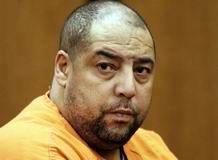 Elias Acevedo
Murderer · USA · 1994
Elias Acevedo Sr. was sentenced to 445 years to life in prison without parole o…
2 victims
Elias Acevedo
Murderer · USA · 1994
Elias Acevedo Sr. was sentenced to 445 years to life in prison without parole o…
2 victims
 Duane Roger Morrison
Murderer · USA · 2006
Duane Roger Morrison (c. 1952—September 27, 2006) was the lone gunman who storm…
1 victim
Duane Roger Morrison
Murderer · USA · 2006
Duane Roger Morrison (c. 1952—September 27, 2006) was the lone gunman who storm…
1 victim
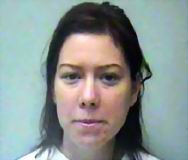 Nicola Edgington
Homicide/Murderer · United Kingdom · 2005
Nicola Edgington was a British woman convicted of manslaughter due to diminishe…
2 victims
Nicola Edgington
Homicide/Murderer · United Kingdom · 2005
Nicola Edgington was a British woman convicted of manslaughter due to diminishe…
2 victims
- Gender
- male
- Country
- USA
- Location
- Carter County, Oklahoma, USA
- Date of birth
- 1955
- Age at first offence
- 28
- Characteristics
- robbery, drug addict
- Victim profile
- Marie Stubbs (female, 59)
- Method of murder
- Shooting
- Date(s) of murder
- March 23, 1983
- Years active
- 1983
- Date of arrest
- Same day
- Status
-
Executed
Executed by lethal injection in Oklahoma on August 11, 1995
Case identification
Robert Allen Brecheen
Timeline
- March 27, 1983 — Hilton Stubbs was awakened by the scream of his wife, Marie Stubbs, and heard a gunshot; Marie Stubbs was shot to death in her living room.
- August 11, 1995 — Robert Brecheen was executed by lethal injection in Oklahoma.
- August 12, 1995 — A New York Times report described the execution and the events on the day of the execution.
- October 14, 1994 — The Tenth Circuit decided an appeal involving denial of a petition for a writ of habeas corpus.
- June 29, 1992 — The Oklahoma Court of Criminal Appeals decided an appeal in a post-conviction matter.
- January 27, 1987 — The Oklahoma Court of Criminal Appeals decided an appeal affirming convictions and sentences.
- February 29, 1988 — The United States Supreme Court denied a petition for a writ of certiorari.
- Nov. 14, 1983 — Morgan v. State was listed as an unpublished case in the later materials.
Background
Marie Stubbs was a prominent local resident, and the crime, investigation and trial received substantial publicity. During his time on death row, Robert Brecheen was described as a model prisoner, taking care of his elderly, disabled cell mate by feeding him, dressing him, and assisting him in daily living.
In an affidavit from his trial attorney, it was stated that there was "general hostility in Ardmore [the town where the crime and the trial took place] to Robert Brecheen", as well as towards the attorney. The attorney stated:
"I firmly believe that Robert Brecheen should not have received the death penalty. A number of factors unfairly hurt Robert's case... perhaps, my unfamiliarity with second stage proceedings in a capital case... This case has troubled me deeply for many years because I know Robert did not receive a fair trial. I have great faith in our system of justice, but here there was a breakdown. A man was unfairly sentenced to die. I wish more than anything that I could try Robert's case again, for I am virtually certain a different result would be obtained."
The offence
During the evening of March 27, 1983, Hilton Stubbs was awakened by the scream of his wife, Marie Stubbs, and then immediately heard a gunshot. Hilton Stubbs saw his wife, who was in the living room, fall to the floor. He reached for his gun and rolled off of his bed to the floor. The intruder came to the bedroom door and fired three shots into the empty bed.
As the intruder turned to leave, Hilton Stubbs fired at him. The man reached the porch and fired two more shots through the storm door at Hilton Stubbs. Hilton Stubbs fired again. The intruder later exited the front gate and walked north.
Hilton Stubbs was unable to identify the intruder, but he could describe him as wearing a light or tan shirt.
A defense version of events was presented by Robert Brecheen. He testified that some black man entered his truck as he left a bar. He testified that this man made him go to the Stubbs residence and carry the rifle to the door. He testified that when Mrs. Stubbs opened the door, the black man pushed him inside, and that the gun accidentally went off and killed her. Hilton Stubbs testified that he had seen only one person at his home on the evening of the killing, and that he was acquainted with Robert Brecheen who had recently approached him for a loan.
Investigation and arrest
When police arrived, they found Robert Brecheen severely wounded lying by his truck approximately two hundred yards north of the Stubbs' residence. Police officers arrived the evening of the homicide to find him lying by his truck in a weakened condition. He was taken to a hospital emergency room with a police officer in his company.
After about thirty minutes, Robert Brecheen made exculpatory statements concerning the shootings while in a "semi-conscious" state. It was testified that the officer did not interrogate him, and that he did not appear to be fully conscious until ten minutes later.
The Tenth Circuit materials also described that following the direct appeal and postconviction proceedings, federal habeas review was sought.
Trial
Charges and convictions
The Oklahoma Court of Criminal Appeals stated that Robert Brecheen was convicted in Carter County District Court, Case No. CRF-83-127, of:
- Burglary in the First Degree
- Murder in the First Degree
Punishment
The Oklahoma Court of Criminal Appeals stated that Brecheen received sentences of twenty years' imprisonment and the death penalty, respectively.
Venue motion and jury selection issues
Robert Brecheen first assigned as error the trial court's refusal to grant him a change of venue for trial. The motion was based primarily on the fact that the Stubbs owned a local clothing store and that practically all veniremen knew who the Stubbs were. The State did not present evidence in opposition to the motion.
It was found that practically all those acquainted with the Stubbs were so because they had traded in the store, that some knew policemen and prosecutors, and that practically all had read newspaper accounts of the incident. It was held that knowledge of victims by jurors did not in itself demonstrate the need for a change of venue, and that the existence of pretrial publicity was insufficient absent clear and convincing evidence that a fair trial was a virtual impossibility. The Oklahoma Court of Criminal Appeals held that an exhaustive voir dire was conducted and that those who served on the jury stated they could fairly and impartially judge the case on the evidence presented, while those who formed opinions concerning guilt or doubted their ability to serve impartially were excused.
In the later United States Supreme Court materials, the petitioner's attorney filed a motion for change of venue accompanied by affidavits, and the trial judge refused to grant it after conducting voir dire despite the motion being unopposed. The Supreme Court materials described the jury as containing one person who knew the victim, one person who knew the victim's daughter, and three who knew the victim's husband, and described that all but one of the jurors were customers at the Stubbs family store. Three jurors knew the prosecuting attorney and three knew officers who would testify for the prosecution. It stated that all jurors had heard of the case through pretrial publicity.
The Oklahoma Court of Criminal Appeals also addressed a death-penalty voir dire excusal. A venireman named Price stated he was against the death penalty but would "go along with the rest of them" if convicted, and later stated he could not imagine a case in which he would vote for a sentence of death regardless of facts or law. The Oklahoma Court of Criminal Appeals held excusal was not improper.
Burglary: sufficiency and definition of "breaking"
Brecheen argued that there was insufficient evidence of a "breaking" to sustain the burglary conviction. The court held there was sufficient circumstantial evidence. It relied on testimony that he and another pushed their way into the house with rifle in hand when Mrs. Stubbs opened the front door with a rifle in hand. Photographs were introduced showing there was a glass and screen door as well as a wooden door at the front of the house.
The court quoted the statute defining burglary in the first degree, describing that the offense is committed by breaking into and entering the dwelling house of another with intent to commit some crime therein, in specified circumstances. It concluded that Brecheen's own testimony provided sufficient circumstantial evidence of a breaking under the statute.
Brecheen also argued that the jury was improperly instructed regarding "breaking." The court advised the jury that:
"[T]he word `breaking' means any act of physical force, however slight, by which obstructions to entering are removed.
Breaking may also occur when entry is obtained by any other manner, such as fraud, trick, or threats being armed with a dangerous weapon.
(Emphasis added.)"
The Oklahoma Court of Criminal Appeals held the instruction correctly stated law and that the statute encompassed a definition of breaking that included "constructive breaking."
Brecheen further argued that the prosecutor misstated the law by arguing constructive breaking; the court held it was without merit given the disposition of the prior assignment.
Juror misconduct and evidentiary hearing
Brecheen assigned as error the refusal of the trial judge to grant a new trial based upon juror misconduct. At the hearing on the motion for new trial, it was suggested for the first time that one juror selected acted improperly by telling a member of the victim's family that the case was in the bag since she got on the jury panel. The issue was not raised in the original or amended motion, and defense counsel never divulged the name of the witness or juror involved. The Oklahoma Court of Criminal Appeals remanded for an evidentiary hearing.
At the hearing, the district court took testimony of the juror alleged to have made the statement, the person to whom it was allegedly made, the person who overheard it, and five other jurors. The trial judge found against juror misconduct, and the Oklahoma Court of Criminal Appeals held there was insufficient evidence of actual prejudice to warrant a new trial.
Access to victim's husband's home
Brecheen contended the trial court erred in not granting defense counsel access to the victim's husband's home where the homicide had occurred. The court found the trial judge did not believe he had authority to grant defense counsel the right to enter the private residence, suggested instead that Stubbs be requested to allow viewing, and it was stated that the record did not indicate the results. The Oklahoma Court of Criminal Appeals held preserved error was not established.
Rebuttal film from pretrial news broadcast
The trial court allowed the prosecutor on rebuttal to show a film from a pretrial news broadcast showing Brecheen moving up and down the arm which was shot by Hilton Stubbs. The defense introduced testimony from a doctor that Brecheen would have been incapable of firing shots back due to injury to his arm. On rebuttal, Dr. Scott Malowney treated Brecheen the night he was shot and stated that if he could move his arm up and down, he was probably able to use his arm immediately following his injury. At the time the film was made and at trial, Brecheen wore a prosthesis on his wrist and fingers. Brecheen complained it was misleading due to his lack of range of motion without the prosthesis, and argued it was irrelevant and emphasized pretrial publicity. The Oklahoma Court of Criminal Appeals held the evidence was relevant and the trial court did not abuse discretion.
Rebuttal testimony about wedding rings
Brecheen argued the prosecutor called a rebuttal witness whose testimony tended to impeach Brecheen's fiancee, Sherry McComber. The testimony concerned whether Brecheen and McComber entered a contract in Ada, Oklahoma to purchase wedding rings. The issue was disputed by the jeweler, Mr. Criswell. The Oklahoma Court of Criminal Appeals agreed the issue was collateral and not proper for rebuttal, but found no actual prejudice because Brecheen's testimony contradicted McComber's and her statement appeared to have been a misunderstanding.
Medical rebuttal and disclosure issues
Brecheen called Dr. Lannie Anderson to testify concerning injury to Brecheen's arm, the surgeon who attempted repair of damage caused when Hilton Stubbs shot at the intruder. Brecheen attempted to prove by Anderson's testimony that he was unable to fire the .22 calibre rifle because of his wound. On rebuttal, the State called Dr. Malowney, who treated Brecheen in the emergency room in Ardmore and again after he returned from Oklahoma City where he had surgery. Brecheen asserted it was exculpatory evidence that should have been disclosed under Brady v. Maryland because Malowney was married to a woman who worked for the prosecutor. The Oklahoma Court of Criminal Appeals held the information was not shown to be material and that there was only possibility it might have helped the defense.
Prosecutor comments and preservation
Brecheen cited comments made by the prosecutor and contended they denied due process of law. The Oklahoma Court of Criminal Appeals found no objections made to any cited comments and no requests for admonishments; since error was not preserved, review was only for fundamental error and none was found.
Statements made in hospital: voluntariness and interrogation
The Oklahoma Court of Criminal Appeals addressed the admissibility of Brecheen's exculpatory statements. Police officer testimony included that Brecheen made exculpatory statements after about thirty minutes while in a "semi-conscious" state, and that the officer did not interrogate him. Brecheen contended statements were not voluntary because he was only semiconscious, and he was not fully conscious until ten minutes later. The court held that if statements were freely and voluntarily offered in partly conscious state, the issue concerned weight to be given to statements for jury decision, with jury instructed on voluntariness without coercion, force, threats, duress, or inducement.
The Oklahoma Court of Criminal Appeals also addressed a second statement made the day after he was wounded to another police officer standing guard at the hospital, contending it was interrogation and that it was not voluntary because his will to remain silent was overborne by psychological pressure. The court held any psychological pressure was self-induced and not purposely imposed by law enforcement, and it referenced instruction given regarding voluntariness.
Instruction on exculpatory statement in confession and accumulation
Brecheen requested an instruction based on Knott v. State about exculpatory statements contained in confession. The Oklahoma Court of Criminal Appeals held it was limited to cases where State introduces confession in case-in-chief and accused does not testify, and here Brecheen testified and denied making both statements; thus instruction was not warranted.
Brecheen argued reversal required by accumulation of errors. The Oklahoma Court of Criminal Appeals held accumulation did not warrant reversal if individual assignments did not.
Brecheen also argued for the first time on appeal that the jury could not consider impeachment evidence as proof of guilt or innocence; the Oklahoma Court of Criminal Appeals held this resulted in waiver because there was no objection or proposed instruction at trial.
Ineffective assistance of counsel at guilt-innocence
Brecheen asserted ineffective assistance because attorney failed to make objections during prosecutor closing argument or request certain instructions. The Oklahoma Court of Criminal Appeals held the general assignment did not meet constitutional error tests and held counsel performance did not fall below reasonably effective counsel.
Sentencing: aggravating circumstance and instructions
Brecheen argued that there was no great risk of death to anyone other than homicide victim and that finding aggravating circumstance was overbroad and unconstitutional. The Oklahoma Court of Criminal Appeals reviewed similar cases and held the assignment without merit.
Brecheen requested comparison for disproportionality; the court held comparison no longer required and discussed the role of mitigating circumstances in cases that did not impose death penalty. It also noted legislative amendment deleting proportionality review.
Brecheen argued the trial court failed to give a particular instruction listing mitigating circumstances. The Oklahoma Court of Criminal Appeals held no error was preserved and that instructions given accurately stated law.
Brecheen asserted that evidence of mitigating circumstances outweighed the one aggravating circumstance. The court held a rational trier of fact could have found beyond a reasonable doubt that Brecheen knowingly created a great risk of death to more than one person and that this was not outweighed by mitigating circumstances.
Brecheen also argued general unconstitutionality of Oklahoma death penalty statutes; the court held it had upheld application against such charges in multiple cases.
Finally, Brecheen argued double jeopardy protections were violated by convictions for both burglary with intent to commit murder and murder from the same transaction. The Oklahoma Court of Criminal Appeals held burglary and other offenses within structure burgled do not merge and conviction of both did not violate double jeopardy.
Outcome of direct appeal
The Oklahoma Court of Criminal Appeals conducted final review assigned by 21 O.S.Supp. 1986 § 701.13(C), found evidence supported the aggravating circumstance, and affirmed judgments and sentences.
Appeals
Oklahoma Court of Criminal Appeals
In BRECHEEN v. STATE (Case Number F-83-710), an appeal from the District Court of Carter County; Woodrow George, District Judge, the Oklahoma Court of Criminal Appeals affirmed all judgments and sentences.
The opinion included a section specially concurring by PARKS, Presiding Judge, who addressed improper conduct by the District Attorney for Carter County, describing improper appeals to societal alarm asserting "chaos and anarchy" and improper requests for punishment as vengeance.
PARKS, Presiding Judge, also expressed a view that application of 21 O.S.Supp. 1985 § 701.13(C) effective July 16, 1985 to cases pending on appeal could be ex post facto, but stated that after comparing sentences imposed herein with prior cases, the sentence was proper.
United States Supreme Court
The United States Supreme Court case listing included "BRECHEEN v. STATE 1987 OK CR 17 732 P.2d 889" and a later entry: "Robert A. Brecheen v. Oklahoma. No. 86-7002." It stated the petition for a writ of certiorari was denied.
A dissent by Justice Marshall described concerns about the denial of petitioner's unopposed motion for change of venue and discussed due process in jury impartiality, as well as possible prejudice in the sentencing phase of a bifurcated capital trial.
Tenth Circuit habeas appeal
A United States Court of Appeals, Tenth Circuit, decision dated October 14, 1994 addressed Brecheen's appeal of denial of his petition for a writ of habeas corpus and denial of a request for a stay of execution. It stated the court granted a certificate of probable cause and affirmed denial of the petition.
The Tenth Circuit listed asserted errors including:
- denial of fair trial due to denial of motion for change of venue
- denial of fair trial due to prosecutorial misconduct
- denial of a fair sentencing phase due to ineffective assistance of counsel
- insufficient mitigating instructions
- overbroad application of aggravating factors
The Tenth Circuit affirmed, and it included a dissent by EBEL, Circuit Judge, addressing ineffective assistance during the sentencing phase.
Tenth Circuit later order on second habeas petition
A later Tenth Circuit order and judgment dated August 10, 1995 affirmed denial of a second petition for writ of habeas corpus. It described the procedural background: direct appeal and state postconviction relief were pursued, federal habeas relief was previously denied, and a second application in Oklahoma state court was filed based on June 1995 discovery of previously unknown evidence of alleged juror misconduct, including a taped interview and a previously known allegation of juror comment.
The order stated the petitioner alleged six grounds in the instant federal habeas petition, including juror misconduct and Brady regarding withheld taped interview, plus claims concerning ineffective assistance of counsel during sentencing phase, denial of proportionality review, denial of fair trial due to failure to discover an "automatic death penalty juror" during voir dire, denial of fair trial due to improper prosecutorial argument, and denial of Sixth, Eighth, and Fourteenth Amendment rights due to failure to provide adequate notice that it was seeking death penalty.
The order stated the Oklahoma state district court conducted an evidentiary hearing limited to the juror misconduct issue and found the verdict was based on evidence presented and instructions and not extraneous events, and that the Oklahoma Court of Criminal Appeals affirmed in an order dated August 7, 1995.
The Tenth Circuit affirmed denial and denied a stay of execution.
Sentencing
After the jury's guilty verdict, Brecheen was sentenced to death for the murder of Mrs. Stubbs and ordered to serve a term of twenty years for burglary.
The jury was instructed that to be authorized to assess death penalty they must find an aggravating circumstance beyond a reasonable doubt, and that it must outweigh mitigating circumstances.
The Oklahoma Court of Criminal Appeals stated that the sentence was not imposed under the influence of passion, prejudice, or any other arbitrary factor.
Outcome
- The Oklahoma Court of Criminal Appeals affirmed convictions and sentences, including death penalty for homicide and twenty years' imprisonment for burglary.
- The United States Supreme Court denied certiorari.
- Robert Brecheen was executed by lethal injection in Oklahoma on August 11, 1995.
Aftermath
A New York Times report described that the authorities had to rouse a condemned man from a self-induced drug stupor so that they could execute him with state-approved drugs. The report included statements attributed to Larry Fields, director of Oklahoma's Corrections Department:
"Certainly, there's irony," said Larry Fields, director of Oklahoma's Corrections Department, after the execution by injection of Robert Brecheen, who was convicted of murder. "But we're bound by the law, the same law that he violated."
The report also included statements attributed to Sandy Howard, an Assistant State Attorney General:
a condemned person "has to be aware of his execution and he has to know why he is being executed."
Hilton Stubbs, the 71-year-old husband of Mr. Brecheen's victim, was at the prison for the execution and stated:
"It wasn't his job to take his life,"
A protester outside, the Rev. Bryan Brooks, was quoted:
"This shows the absurdity of the situation," Mr. Brooks said. "The idea that they're going to stabilize him and bring him back to be executed is plainly outrageous."
The report stated that Brecheen was supposed to have been put to death at midnight but guards had trouble waking him in his holding cell at 9 P.M. on Thursday; he was taken to McAlester Regional Hospital, where his stomach was pumped. The report stated that officials said he was breathing heavily, his pupils were dilated, and he drifted in and out of consciousness, but his condition was never life-threatening. The execution was delayed about two hours.
The report stated that the warden at the penitentiary, Ron Ward, refused to speculate on how Brecheen could get enough sedatives to cause an overdose or whether the killer was attempting suicide or just trying to delay execution.
Before three drugs were pumped into his arm, Brecheen made a brief statement from the gurney on which he lay strapped, but his words were inaudible due to microphone problems. Guards later said he thanked his parents and did not mention the overdose.
The report stated that Brecheen was strip-searched early Thursday before he was put in the cell next to the execution chamber. The only people to come in contact with him after that, officials said, were two defense lawyers and prison guards, and that all would be questioned.
The report reiterated that Brecheen was convicted of shooting to death Marie Stubbs, 59, in a 1983 dispute over money.
In later materials, the case was discussed as having included an allegation of juror misconduct involving a juror telling Barbara Stubbs, the victim's daughter, "It's in the bag, I'm on the jury." The Tenth Circuit order described that in 1985 trial counsel filed a motion for new trial alleging juror misconduct and that the trial court refused to hear it; in late 1985 the Oklahoma Court of Criminal Appeals ordered an evidentiary hearing. It also described that taped interviews by the district attorney's office occurred and that one juror, Linda Winchester, revealed an allegation that juror Pat Mullenix watched the news on television during trial, and that the state did not turn over the taped interview to the defense.
The later Tenth Circuit order described that in August 1995 deposition testimony from juror Mullenix stated she did not watch television news during the trial and followed the instructions of the judge. The state court found the verdict was based on evidence and instructions, and the federal district court denied relief on the juror misconduct and Brady claims while concluding other claims were successive or abusive.
The execution-related New York Times report included the specific report title: "A Doomed Inmate Drugs Himself, Is Revived and Then Executed" and included the publication date "The New York Times August 12, 1995".
Spotted an error, or have more information about this case?