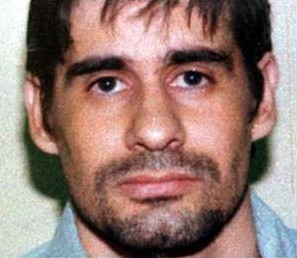
Angel Francisco Breard
Murderer Brian Kevin Rosenfeld
Murderer · USA · 1985
Brian Kevin Rosenfeld Brian Kevin Rosenfeld was sentenced to three concurrent l…
23 victims
Brian Kevin Rosenfeld
Murderer · USA · 1985
Brian Kevin Rosenfeld Brian Kevin Rosenfeld was sentenced to three concurrent l…
23 victims
 Russell Ellwood
Murderer · USA · 1991
Russell Ellwood was a former taxi driver. Authorities suspected him of killing…
20 victims
Russell Ellwood
Murderer · USA · 1991
Russell Ellwood was a former taxi driver. Authorities suspected him of killing…
20 victims
 Robert Martines Perez
Murderer · USA · 1994
Name: Robert Martines Perez · Other name used in proceedings: Robert Martinez P…
15 victims
Robert Martines Perez
Murderer · USA · 1994
Name: Robert Martines Perez · Other name used in proceedings: Robert Martinez P…
15 victims
 Billy Frank Vickers
Murderer · USA · 1993
Billy Frank Vickers Vickers was executed by lethal injection in Texas on Januar…
14 victims
Billy Frank Vickers
Murderer · USA · 1993
Billy Frank Vickers Vickers was executed by lethal injection in Texas on Januar…
14 victims
 Tia Skinner
Murderer · USA · 2010
Tia Skinner was convicted as the daughter of Paul Skinner and Mara Skinner and…
1 victim
Tia Skinner
Murderer · USA · 2010
Tia Skinner was convicted as the daughter of Paul Skinner and Mara Skinner and…
1 victim
 Eric Christopher Houston
Spree killer · USA · 1992
Eric Christopher Houston was a 20-year-old former student at Lindhurst High Sch…
4 victims
Eric Christopher Houston
Spree killer · USA · 1992
Eric Christopher Houston was a 20-year-old former student at Lindhurst High Sch…
4 victims
 Catherine May Wood
Murderer · USA · 1987
Catherine May Wood was an American caregiver who worked at the Alpine Manor Nur…
5 victims
Catherine May Wood
Murderer · USA · 1987
Catherine May Wood was an American caregiver who worked at the Alpine Manor Nur…
5 victims
 Virginia Krall
Murderer · USA · 2006
Virginia Ann Krall was the defendant and appellant. The case was titled: The Pe…
1 victim
Virginia Krall
Murderer · USA · 2006
Virginia Ann Krall was the defendant and appellant. The case was titled: The Pe…
1 victim
 Dale Dean Finch
Murderer · USA · 1976
Dale Dean Finch (born Oct. 21, 1956) was convicted of two murders and a robbery…
2 victims
Dale Dean Finch
Murderer · USA · 1976
Dale Dean Finch (born Oct. 21, 1956) was convicted of two murders and a robbery…
2 victims
- Gender
- male
- Country
- USA
- Location
- Arlington County, Virginia, USA
- Date of birth
- 1966
- Age at first offence
- 26
- Characteristics
- rape, attempted rape, history of mental illness, alcoholic, torture, domestic violence
- Victim profile
- Ruth Dickie (female, 29)
- Method of murder
- St abbing with knife
- Date(s) of murder
- February 17, 1992
- Years active
- 1992
- Date of arrest
- —
- Status
-
Executed
Executed by lethal injection in Virginia on April 14, 1998
Case name and parties
Angel Francisco Breard was the petitioner-appellant. Samuel v. Pruett, Warden, Mecklenburg Correctional Center, was the respondent-appellee.
Status
Breard was executed by lethal injection in Virginia on April 14, 1998.
Timeline
- February 17, 1992 — Ruth Dickie was assaulted and stabbed to death in her apartment in Arlington County, Virginia; Breard was convicted later for the murder and for attempted rape.
- October 31, 1994 — The United States Supreme Court denied Breard's petition for a writ of certiorari.
- May 1, 1995 — Breard sought state collateral relief by filing a petition for writ of habeas corpus in the Circuit Court for Arlington County.
- June 29, 1995 — The circuit court dismissed the petition.
- January 17, 1996 — The Supreme Court of Virginia refused Breard's petition for appeal.
- August 30, 1996 — Breard sought federal collateral relief by filing a petition for writ of habeas corpus in the United States District Court for the Eastern District of Virginia.
- November 27, 1996 — The district court denied relief.
- December 24, 1996 — Breard filed a timely notice of appeal.
- April 7, 1997 — The district court granted Breard's application for a certificate of appealability as to all issues raised.
- October 1, 1997 — The case was argued before the United States Court of Appeals for the Fourth Circuit.
- January 20, 1998 — The Fourth Circuit decided the appeal.
- January 1998 — The Fourth Circuit Court dismissed a civil suit seeking an injunction to prohibit Breard's execution and the vacating of his death sentence.
- April 9, 1998 — The International Court of Justice unanimously ruled in favour of a “provisional measures” order requiring the United States to “take all measures at its disposal” to stop Breard's execution pending full adjudication.
- April 14, 1998 — The United States Supreme Court issued a decision denying all appeals; Breard was executed by lethal injection shortly after.
- April 15, 1998 — Breard was pronounced dead at 10:39 p.m. (reported as the day after the execution date in a later report).
Background
Angel Francisco Breard was a citizen of both Argentina and Paraguay. He faced execution in Virginia.
Breard was born in Argentina; his family moved to Paraguay when he was 13. He enrolled in English classes and found a job in the Washington, D.C., suburbs of northern Virginia. A marriage to his English teacher lasted just 4 months. After his marriage, he became an alcoholic.
According to court documents filed by Amnesty International, Breard was sexually assaulted by a soldier when he was 7 and suffered head injuries in a 1985 car accident that left him impulsive and short-tempered. After the accident, family members later reported a distinct change in Breard's personality.
By 1992, Amnesty International said, his alcoholism had reached the point where he was drunk on a daily basis and unable to work. His alcoholism had deteriorated his personal life despite his continued work and his sending regular financial support to his mother in Paraguay.
While on Virginia's death row, Breard married his wife Roseanna in October 1996, prison officials said.
The offence
Murder of Ruth Dickie
On February 17, 1992, Ruth Dickie, who resided alone at 4410 North Fourth Road, Apartment 3, in Arlington County, Virginia, was assaulted and stabbed to death in her apartment. Police found her lying on the floor. She was on her back, naked from the waist down, and her legs were spread. She was bleeding and did not appear to be breathing. A telephone receiver near her head was covered with blood. Her underpants had been torn from her body.
Autopsy revealed that Dickie sustained five stab wounds to the neck; two of which would have caused her death. Police observed body fluid on Dickie's pubic hair and on her inner thigh. Hairs were found clutched in Dickie's bloodstained hands and on her left leg.
Evidence linking Breard to Dickie
Foreign hairs found on Dickie's body were determined to be identical in all microscopic characteristics to hair samples taken from Breard. Hairs found clutched in Dickie's hands were Caucasian hairs microscopically similar to Dickie's own head hair and bore evidence that they had been pulled from her head by the roots. Semen found on Dickie's pubic hair matched Breard's enzyme typing in all respects, and his DNA profile matched the DNA profile of the semen found on Dickie's body.
Attempted rape
The jury convicted Breard of attempted rape. Breard told police he intended to rape her but ran away when he heard someone knock on the door.
Investigation
Ann Isch, who lived in an apartment directly below Dickie's, heard Dickie and a man arguing loudly in the hall and said the arguing continued as she heard Dickie and the man enter Dickie's apartment. Almost immediately thereafter, Isch called Joseph King, the maintenance person for the apartment complex. King knocked on the door and heard a noise that sounded like someone was being dragged across the floor. After receiving no response, King called the police.
When police arrived, they entered Dickie's apartment with a master key that King provided. Inside the apartment, police found Dickie lying on the floor.
Arrest and related allegations
Breard was arrested and charged with attempted rape and capital murder. He was arrested six months later for allegedly attempting to sexually assault another northern Virginia woman and became a suspect in Dickie's killing.
Breard told police that he intended to rape Dickie but ran away when he heard someone knock on the door.
Trial
Jury trial and verdicts
Following a jury trial in the Circuit Court for Arlington County, Virginia, Breard was convicted of both attempted rape and capital murder for the murder of Ruth Dickie.
The jury fixed Breard's punishment for the attempted rape at ten years' imprisonment and a $100,000 fine.
In the bifurcated proceeding for capital murder, the jury heard evidence in aggravation and mitigation. Based upon findings of Breard's future dangerousness and the vileness of the crime, the jury fixed Breard's sentence at death. The trial court sentenced Breard in accordance with the jury's verdicts.
Breard's plea and testimony about a curse
Breard confessed to murdering Dickie but said he was under a Satanic curse placed on him by his ex-wife's father. He rejected a plea bargain that would have spared his life and pleaded for mercy from a jury that sentenced him to die.
Breard pleaded “not guilty”. During the trial, he insisted on confessing on the witness stand and appealed to the jury, claiming that the actions were the result of a curse placed upon him.
Sentencing
On June 25, 1993, Angel Francisco Breard was sentenced to death. The jury deliberated for six hours before agreeing on a sentence.
Jurors asked the judge for instructions on the length of time that Breard would be incarcerated if they sentenced him to life imprisonment. They also asked if they could recommend a sentence of life imprisonment without parole, but the judge refused to provide additional sentencing information.
Amnesty International stated that Breard's attorneys presented almost no mitigating evidence during the penalty phase. It also stated that the jury never learned of changes to his personality and behaviour following his head injury and never heard from a number of family members, friends and former teachers who were willing to testify about his good character prior to his car accident. Amnesty International also stated that Breard's mother was one of the few witnesses who testified on his behalf.
Appeals
Direct appeal in state court
Breard appealed his convictions and sentences to the Supreme Court of Virginia. That court affirmed. See Breard v. Commonwealth, 248 Va. 68, 445 S.E.2d 670 (1994).
Petition for writ of certiorari to the U.S. Supreme Court
On October 31, 1994, the United States Supreme Court denied Breard's petition for a writ of certiorari. See Breard v. Virginia, 513 U.S. 971, 115 S.Ct. 442, 130 L.Ed.2d 353 (1994).
State habeas petition
On May 1, 1995, Breard filed a petition for writ of habeas corpus in the Circuit Court for Arlington County. On June 29, 1995, the circuit court dismissed the petition. On January 17, 1996, the Supreme Court of Virginia refused Breard's petition for appeal.
Federal habeas petition and certificate of appealability
Breard then sought federal collateral relief in the United States District Court for the Eastern District of Virginia by filing a petition for writ of habeas corpus on August 30, 1996. On November 27, 1996, the district court denied relief. See Breard v. Netherland, 949 F.Supp. 1255 (E.D.Va.1996).
Breard filed a timely notice of appeal on December 24, 1996. On April 7, 1997, the district court granted Breard's application for a certificate of appealability as to all issues raised.
Fourth Circuit decision (habeas denial)
The Fourth Circuit affirmed the denial of relief requested by Breard.
Vienna Convention on Consular Relations claim and procedural default
Breard contended that at the time of his arrest, the Arlington County authorities failed to notify him that, as a foreign national, he had the right to contact the Consulate of Argentina or the Consulate of Paraguay pursuant to the Vienna Convention on Consular Relations, see 21 U.S.T. 77.
The Commonwealth of Virginia argued that Breard did not raise his Vienna Convention claim in state court and thus failed to exhaust available state remedies, and further that Virginia law would bar the claim, resulting in procedural default for purposes of federal habeas review. The district court held that, because Breard had never raised the claim in state court, it was procedurally defaulted and Breard failed to establish cause to excuse the default. See Breard v. Netherland, 949 F.Supp. at 1263.
The Fourth Circuit stated that Murphy foreclosed Breard's argument that he could not have raised his Vienna Convention claim at the time he filed his initial state habeas petition in May 1995. The court concluded that Breard's showing was insufficient to establish cause for the procedural default of his Vienna Convention claim and therefore the claim was entitled to no relief.
The Fourth Circuit stated it was unnecessary to address whether the AEDPA abrogated the “miscarriage of justice” exception to procedural default, and it found that no miscarriage of justice occurred. The court found that Breard made no showing that he was actually innocent of the offense, or innocent of the death penalty in the sense that no reasonable juror would have found him eligible for the death penalty.
Furman v. Georgia and related death penalty claims
Breard contended that his death sentence violated Furman v. Georgia, 408 U.S. 238, 92 S.Ct. 2726, 33 L.Ed.2d 346 (1972), and its progeny. He argued:
- that given the prosecutor's alleged offer to forego the death penalty if Breard would plead guilty, the prosecutor violated his constitutional rights by seeking and obtaining a death sentence once Breard insisted upon pleading not guilty;
- that the Commonwealth of Virginia imposes the death penalty arbitrarily in capital murder cases; and
- that his death sentence was unconstitutionally disproportionate.
The court said the first two claims had never been raised in state court. The remaining claim was raised on direct appeal but only as a state law claim; on the appeal from the denial of state habeas relief, the Virginia Supreme Court found it procedurally barred under the rule of Slayton v. Parrigan. The Fourth Circuit concluded that Breard had not established cause for procedural default or that a miscarriage of justice would result, so it could not address the merits.
Vagueness challenge to aggravating circumstances instructions
Breard argued that the aggravating circumstances instructions given by the trial court were unconstitutionally vague. The Fourth Circuit said this claim was not procedurally barred because the Supreme Court of Virginia rejected it on direct appeal.
The court noted Breard's concession that similar instructions had been upheld in Bennett and Spencer, and because it was bound by Bennett and Spencer as a panel, it rejected Breard's attack on the constitutionality of the aggravating circumstances instructions given by the trial court.
U.S. Supreme Court denial and execution timing after ICJ
In the final days leading up to execution, new appeals were filed with the Supreme Court based on the ICJ ruling. The U.S. government told the Court that no stay of execution should be granted because the assistance of consular officials would not have changed the outcome of the criminal proceedings.
The U.S. Supreme Court issued its decision denying all appeals after receiving requests related to the ICJ ruling and after considering counterarguments described in later reporting. The execution was carried out shortly after.
International Court of Justice proceedings
Paraguay sought a binding ruling from the International Court of Justice that the execution of Breard not take place due to the violation of his consular rights. Attorneys representing the USA and Paraguay presented arguments before the 15-member International Court of Justice on April 7, 1998.
On April 9, 1998, the ICJ unanimously ruled for “provisional measures” requiring the United States to “take all measures at its disposal” to stop Breard's execution pending adjudication by the ICJ. Several judges issued separate opinions on the ruling, including the President of the Court, Stephen M. Schwebel, who wrote: “An apology does not assist the accused”. Schwebel also noted that the United States had a strong interest in seeing that Article 36 is honoured worldwide, if only to protect its own citizens abroad, and wrote: “In my view, these considerations outweigh the serious difficulties which this order imposes on the authorities of the United States and Virginia”.
UN tribunal and other international/legal dispute statements
The 15-member United Nations Tribunal ruled that the execution should be blocked because Virginia authorities failed to notify Paraguay of Breard's arrest as required by the Vienna Convention. The reporting also stated that rulings by the UN tribunal were not binding.
Pardons/clemency and governor action
Breard sought mercy from a jury that sentenced him to die, and his clemency petition was denied by Virginia Governor Jim Gilmore shortly before the execution. His clemency petition denial was followed by the execution by lethal injection.
A spokesperson said that delay of the execution “would have the practical effect of transferring responsibility from the courts of the commonwealth and the US to the International Court.”
Remarks and dissents in court proceedings
In the Fourth Circuit proceedings, Senior Judge Butzner wrote a concurring opinion emphasizing the importance of the Vienna Convention. In that concurrence, he provided verbatim Article 36 text and also wrote: “The protections afforded by the Vienna Convention go far beyond Breard's case. United States citizens are scattered about the world...Their freedom and safety are seriously endangered if state officials fail to honor the Vienna Convention and other nations follow their example... The importance of the Vienna Convention cannot be overstated. It should be honored by all nations that have signed the treaty and all states of this nation.”
Outcome
Breard was executed by lethal injection in Virginia. He entered the death chamber flanked by an attorney and a spiritual adviser.
Department of Corrections spokesman Larry Traylor said Breard’s final words were: “May glory be to God,”.
The execution occurred after the U.S. Supreme Court refused to intervene and after Virginia Governor Jim Gilmore refused to stop the sentence from being carried out.
Other details
Victim details
Ruth Dickie was stabbed and died in her Arlington, Virginia apartment. She was found naked from the waist down with her legs spread. An autopsy revealed five stab wounds to the neck; two were fatal.
Related people and roles
- Ann Isch heard arguing in the hall and called Joseph King.
- Joseph King was the maintenance person who provided a master key and called the police.
- Joseph King knocked on the door and heard a noise sounding like someone being dragged across the floor.
- Joseph King called the police after receiving no response to his knocking.
- Larry Traylor was a Department of Corrections spokesman.
- James Gilmore was the governor of Virginia who refused to block the execution and denied clemency.
- Jim Gilmore’s clemency denial was followed by the execution.
Additional procedural and legal context mentioned
- The case involved AEDPA provisions including Chapter 153 and discussion of the “opt-in” provisions of Chapter 154.
- The Fourth Circuit discussed principles of exhaustion, procedural default, and “cause” and “prejudice” under Coleman and related cases.
- The Fourth Circuit cited Matthews v. Evatt for exhaustion, Coleman v. Thompson for procedural default, Murray v. Carrier for “cause,” and Sawyer v. Whitley for miscarriage of justice related to death eligibility.
- The Fourth Circuit referenced decisions including Lindh v. Murphy and Howard v. Moore regarding standards applicable to habeas petitions filed before or after April 24, 1996.
Comments attributed in international dispute reporting
- A spokesperson for Senator Jesse Helms, Chairman of the US Senate Foreign Relations Committee, was quoted as saying: “It’s an appalling intrusion by the United Nations into the affairs of the State of Virginia”, Mark Thiessen said. “There’s only one court that matters here. That’s the Supreme Court. There’s only one law that applies. That’s the United States Constitution”.
- Paraguay’s government employee Miriam Delgado was quoted as saying: “Breard's guilt is not in doubt, but the United States acted in an overbearing way in its lack of respect for an international treaty.”
- Deputy Foreign Minister Leila Rachid was quoted as saying: “the United States has been the champion of democracy...let them be the first one to demonstrate to us the principles of democracy; let them also respect human rights”. She also said: “there is not an international summit at which they [the US government] do not preach the preservation of human rights”.
- Secretary of State Madeleine Albright was quoted as expressing that the execution would not endanger consular rights of Americans abroad, and that the United States “did the right thing”.
- Albright was also quoted as saying: “We have made very clear that it is essential any foreign national who is arrested for any reason...is told immediately that he or she is entitled to be in touch with their consulate. It is something that we will insist on and do insist on when one of our citizens is in trouble abroad.”
- Albright’s spokesperson was quoted as stating she wanted to ensure: “that nothing that happens in this complicated legal situation undermines the important value that American citizens get...(by being) able to meet with consular officers overseas. We have to bear in mind in many parts of the world the justice systems are rather fragmentary and unfair in many occasions.”
- An Amnesty International statement included a quotation: “buy 1992, his alcoholism had reached the point where he was drunk on a daily basis and unable to work.”
Names, citizenship, and marriage detail
- Breard was described as having citizenship of both Argentina and Paraguay.
- Breard married his wife Roseanna in October 1996 while on Virginia's death row.
Execution facility and timing details included in later reporting
A report described the death chamber entry and execution timing, stating Breard died by injection at Greensville Correctional Center and was pronounced dead at 10:39 p.m. The report also described that he was put to death shortly before 11 P.M. and that the U.S. Supreme Court voted 6 to 3 not to block the execution.
Spotted an error, or have more information about this case?