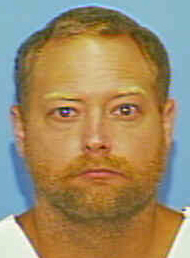
David M. Brewer
Murderer Brian Kevin Rosenfeld
Murderer · USA · 1985
Brian Kevin Rosenfeld Brian Kevin Rosenfeld was sentenced to three concurrent l…
23 victims
Brian Kevin Rosenfeld
Murderer · USA · 1985
Brian Kevin Rosenfeld Brian Kevin Rosenfeld was sentenced to three concurrent l…
23 victims
 Marvin Gray
Murderer · USA · 1975
Marvin Gray was convicted killer who claimed responsibility for 23 slayings and…
23 victims
Marvin Gray
Murderer · USA · 1975
Marvin Gray was convicted killer who claimed responsibility for 23 slayings and…
23 victims
 Yahweh ben Yahweh
Murderer · USA · 1980
Yahweh ben Yahweh was born and legally named Hulon Mitchell Jr. (October 27, 19…
23 victims
Yahweh ben Yahweh
Murderer · USA · 1980
Yahweh ben Yahweh was born and legally named Hulon Mitchell Jr. (October 27, 19…
23 victims
 Russell Ellwood
Murderer · USA · 1991
Russell Ellwood was a former taxi driver. Authorities suspected him of killing…
20 victims
Russell Ellwood
Murderer · USA · 1991
Russell Ellwood was a former taxi driver. Authorities suspected him of killing…
20 victims
 Mary Ann Wittich
Murderer · USA · 2007
Mary Ann Wittich committed suicide by shooting herself the same day she drugged…
2 victims
Mary Ann Wittich
Murderer · USA · 2007
Mary Ann Wittich committed suicide by shooting herself the same day she drugged…
2 victims
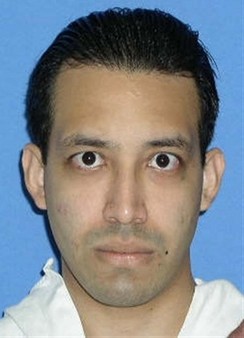 Vincent Gutierrez
Murderer · USA · 1997
Vincent Gutierrez — defendant · Jose Cobo — victim, U.S. Air Force Captain · Ra…
1 victim
Vincent Gutierrez
Murderer · USA · 1997
Vincent Gutierrez — defendant · Jose Cobo — victim, U.S. Air Force Captain · Ra…
1 victim
 Bruce Williams
Homicide · USA · 1999
Bruce Williams (TDCJ Number 999338) was born on 12/16/1981. He was male, from D…
1 victim
Bruce Williams
Homicide · USA · 1999
Bruce Williams (TDCJ Number 999338) was born on 12/16/1981. He was male, from D…
1 victim
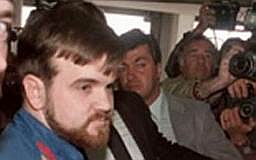 Denis Lortie
Murderer · Canada · 1984
Denis Lortie was a Canadian army corporal in the Royal 22 e Régiment of the Can…
3 victims
Denis Lortie
Murderer · Canada · 1984
Denis Lortie was a Canadian army corporal in the Royal 22 e Régiment of the Can…
3 victims
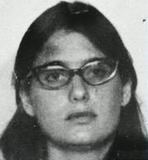 Kathy Boudin
Murderer · USA · 1981
Kathy Boudin pleaded guilty. She was sentenced to 20 years to life in prison. S…
3 victims
Kathy Boudin
Murderer · USA · 1981
Kathy Boudin pleaded guilty. She was sentenced to 20 years to life in prison. S…
3 victims
- Gender
- male
- Country
- USA
- Location
- Greene County, Ohio, USA
- Date of birth
- April 22, 1959
- Age at first offence
- 26
- Characteristics
- rape
- Victim profile
- Sherry Byrne, 21 ( the wife of a college fraternity brother )
- Method of murder
- St abbing with knife 15 times
- Date(s) of murder
- February 21, 1985
- Years active
- 1985
- Date of arrest
- March 25, 1985
- Status
-
Executed
Executed by lethal injection in Ohio on April 29, 2003
Case details
David M. Brewer was convicted and sentenced to death for aggravated murder.
Background
Joe Byrne and David M. Brewer were fraternity brothers who socialized, along with their wives, occasionally after college.
At about 10:15 on the morning of Thursday, March 21, 1985, Sherry Byrne called her husband Joe and told him that she was going to the Red Carpet Inn in Sharonville, north of Cincinnati, to meet David Brewer and his wife Kathy.
According to Sherry, David Brewer and his wife were at the motel to celebrate Kathy's pregnancy, and to deliver a set of stereo speakers which Brewer had promised Joe. Sherry and her dog arrived at the motel sometime before noon that morning. Brewer was there alone, having told his wife that he would be in Cincinnati for the day on business.
Brewer and Sherry engaged in sexual intercourse. Brewer testified at trial that Sherry was a willing partner. He made statements to police officers suggesting that Sherry may not have been willing, or might have been intimidated by his size. Brewer said Sherry expressed guilt about what had happened.
After leaving the motel, Brewer and Sherry drove in Brewer's car to a park to talk about what had happened. Sherry was upset and threatened to tell her husband. Brewer put her in the trunk of his car because he could not handle it and because he could not get her to calm down. Brewer maintained throughout that she voluntarily got into the trunk.
Brewer drove to a less populated area north of Cincinnati where he opened the trunk and tried to convince Sherry not to tell her husband or his wife. He bound Sherry's feet with speaker wire, closed the trunk again, and drove to another location. After another conversation, he locked her in the trunk once more and returned to the motel in Sharonville.
The offence
Brewer moved Sherry's car from the motel parking lot to a place about a block away. He then took Sherry to a park in Mason, drove around and unlocked the trunk twice, trying to convince her not to tell her husband. He then drove back toward Sharonville, stopping at a convenience store to release the dog. The dog was later recovered in Mason, and the dog's license tag was missing.
Brewer checked out at around 4:30 p.m. He went to the Remco store on Linden Avenue in Dayton, where he was employed as a manager. He was in the store about ten minutes. When he came out, he heard Sherry pounding on the lid of the trunk.
Brewer went to a nearby drugstore and bought some tape “for bondage.” Brewer told police officers that he used the tape to bind Sherry's hands, but he denied this at trial.
Several witnesses saw a hand holding a piece of paper through a gap in the trunk seal with the words “HELP ME PLEASE” written in what appeared to be lipstick. These people called law enforcement authorities. Patrol officers searched for the car. The Beavercreek police ran a computer check of the license number, called Brewer's home and Remco, and visited the Remco store to search for Brewer's car.
After buying gas a second time, Brewer drove north toward Xenia. At the Cattlemen's Inn on U.S. Route 35, he stopped and made a pay phone call to Remco. One of the employees told Brewer that the police were looking for him “about the way you were driving.” Brewer then drove to a remote area near Factory Road, stopped between 7:30 and 8:00 in the evening, opened the trunk, but closed it quickly when a car drove by, and left the area when the car returned.
Brewer returned to Remco at about 8:00 and called the Beavercreek police. He spoke with Sergeant Richardson, who told him to come to the station that night and bring his car. Brewer stayed at Remco for about ten minutes, then left in his car. He stopped a short distance away and opened the trunk to tell Sherry he would let her go in a remote area.
Brewer then went back to the Factory Road area. When Brewer opened the trunk, he claimed that Sherry got out, slapped him, and ran. Brewer caught her and choked her, first with his hands and then with a necktie. Brewer returned to his car and got a butcher knife. He stabbed Sherry several times and then slashed her throat. He left Sherry's body in a roadside ditch.
Brewer drove to the Beavercreek police station. He went into a restroom to wash blood from his shoes and hands. He then spoke with officers, who asked about the “HELP” sign that had been seen sticking out of his trunk. Brewer said he had picked up a female hitchhiker and had been riding around with her, and he explained the sign as a prank suggested by the hitchhiker, whom he said he could not identify. The Beavercreek police cited Brewer for inducing panic and released him.
Brewer returned to the Factory Road area and placed Sherry's body in the trunk of his car. He stopped by Remco to call his wife, telling her he would be home soon. He then went home and went to bed.
Investigation
During the night, Joe Byrne became concerned when his wife failed to come home. Joe called Kathy Brewer, who told him she had not seen Sherry that day, was not pregnant, and knew nothing about any stereo speakers. Joe notified the police and filed a missing persons report. Accompanied by a friend, he drove around the Sharonville area that night looking for Sherry or her car. The friend later found Sherry's car where Brewer had left it.
The following day, Brewer placed the body in a sleeping bag and drove to Franklin. He rented a self-storage locker, purchased a padlock, and left Sherry's body. Brewer cleaned his car at a car wash and went to work at Remco. Later that morning, Brewer called Joe Byrne and asked if the police considered Brewer to be a suspect.
The following evening, Brewer and Kathy visited Joe at his home to console him. Joe believed that “someone who knew both of us” was responsible for Sherry's disappearance. Brewer expressed a fear that this same person might want to “get” Kathy.
Arrest and police interview
The following Monday, Brewer was called by the Springdale Police Department to come in for questioning. Brewer was interviewed by Officer David Koenig, Lieutenant Ronald Pitman, and Detective Augustus Teague.
The interview began at 6:43 that evening and lasted until 2:25 the following morning. Numerous interruptions occurred, so the total time of questioning was slightly less than three hours. The entire interview was tape recorded. Brewer, though told he was not in custody, was fully advised of his Miranda rights.
In the interview, Brewer gave several stories to the police. At first, he claimed only to have called Sherry from a pay phone to tell her about the stereo speakers. When asked about the “HELP ME PLEASE” sign hanging out of his trunk, Brewer repeated, with some embellishments, the hitchhiker story he told the Beavercreek police. When questioned about discrepancies in his story, Brewer admitted that he had lied. He said he met Sherry at the motel, claimed that Sherry was fearful because she had been getting obscene phone calls and was being followed by a mysterious stranger, and said he last saw Sherry at the motel.
At 10:47 p.m., the officers took a break from interviewing Brewer. Brewer wanted to speak to his wife. The police approached Kathy Brewer and told her “there were numerous problems in the interview with her husband * * *.” Kathy became hysterical and was taken to the hospital. She returned to the station at about 2:00 a.m., accompanied by her father and brother.
In the intervening hours, the police searched Brewer's car pursuant to a written waiver signed by Brewer, but had no other contact with him. Upon her return, the officers asked Kathy to speak with her husband. They told her they would observe the meeting through a two-way mirror. Detective Teague testified that Kathy was also informed that the officers would be able to listen to their conversation.
Kathy went into the interview room alone and spoke with Brewer for a few minutes, while officers, Kathy's father and brother listened and watched through the two-way mirror. This conversation, in which Brewer admitted killing Sherry, was not recorded or introduced into evidence at trial. Kathy came out of the room and told the officers that Brewer wanted to speak to them again.
Detective Teague restarted the tape recorder at about 2:15, and Brewer confessed to the killing. He told where he had hidden Sherry's body. Later that morning, Brewer led officers to the scene of the killing. While in the car, Brewer, after indicating his awareness of his Miranda rights, gave further details. He gave additional statements to the Beavercreek police later that day.
Recovery and medical findings
The police recovered Sherry Byrne's body from the storage locker. The Hamilton County Coroner's office performed an autopsy.
The autopsy revealed that Sherry's killer had attempted to strangle her, which caused fractures of her hyoid bone and of her spinal cord at the seventh cervical vertebra. The deputy coroner testified that the attempted strangulation did not kill her, but would have left her partially paralyzed.
There were multiple stab wounds to her chest and abdomen and a slash across her throat inflicted with a butcher knife. There were bruises on her chest caused by a blunt injury, bruises on her arms consistent with defense wounds, bruising in her pelvic area that may have been caused by “forcibl[e] thrust[ing]” of a man's body on top of her, and a knife wound to her right hand.
Trial
On March 28, 1985, Brewer was indicted by the Greene County Grand Jury on one count of aggravated murder during the commission of a kidnapping, R.C. 2903.01(B), and one count of aggravated murder with prior calculation and design, R.C. 2903.01(A). Each count carried two specifications of aggravating circumstances: commission of the offense while committing or attempting to commit kidnapping, R.C. 2929.04(A)(7), and commission of the offense in order to escape detection, apprehension, trial or punishment for another offense, R.C. 2929.04(A)(3).
Brewer pled not guilty and not guilty by reason of insanity. The insanity plea was withdrawn before trial. Brewer waived his right to a jury and elected to be tried by a three-judge panel.
Brewer was found guilty on both counts and all specifications on September 19, 1985. A hearing on mitigation and imposition of sentence was held on October 16, 1985.
Sentencing
Brewer was sentenced to death.
Appeals
Brewer’s conviction and death sentence were affirmed on direct appeal.
Direct appeal and post-conviction litigation timeline
Timeline
- 10/16/1985 — Hearing on mitigation and imposition of sentence held
- 10/16/1985 — First review of original trial (direct appeal)
- 08/26/1988 — Court of Appeals decision
- 01/10/1990 — Supreme Court decision
- 10/01/1990 — First U.S. Supreme Court review
- 06/03/1991 — Second petition for post-conviction relief filed in trial court (pursuant to R.C. 2953.21)
- 08/02/1993 — Trial court decision
- 09/28/1994 — Court of Appeals decision
- 02/15/1995 — Supreme Court decision
- 10/02/1995 — Second U.S. Supreme Court review
- 11/13/1995 — Prisoner’s notice of intent
- 04/07/1997 — Re-examine first review/original trial (“Murnahan” appeal) Court of Appeals decision
- 06/20/1996 — Prisoner’s petition
- 08/19/1996 — State’s return of writ
- 02/03/1997 — Prisoner’s traverse
- 09/07/2000 — Evidentiary hearing / district court decision (review of habeas corpus decision)
- 10/05/2000 — Sixth Circuit Court of Appeals notice of appeal
- 08/10/2001 — Prisoner’s final brief
- 08/14/2001 — State’s final brief
- 06/18/2002 — Oral argument
- 09/10/2002 — Court of Appeals decision
- 11/08/2002 — U.S. Supreme Court certiorari petition
- 01/21/2003 — Supreme Court decision
- 04/29/2003 — Executed by lethal injection in Ohio
- (No date given) — Third U.S. Supreme Court review (not dated in the provided information)
- (No date given) — “U.S. / Federal procedural history request Writ of Habeus Corpus” (not dated in the provided information)
- (No date given) — U.S. District Court in Columbus Judge: Weber (not dated in the provided information)
Outcome
On April 29, 2003, David M. Brewer was executed by lethal injection.
Other details
In State v. Brewer (1990), 48 Ohio St.3d 50, the Supreme Court, Herbert R. Brown, J., held that: (1) the prohibition against use of victim impact statements in sentencing phases of a capital trial under Booth v. Maryland applies only in jury tried cases, not to bench trials; (2) testimony of the homicide victim's husband concerning the content of the victim's telephone conversation with defendant, that according to victim she was going to meet defendant and defendant's wife at motel to celebrate defendant's wife’s pregnancy, was admissible to show why victim went to defendant's motel, and admission of other statements defendant made to victim at the same time was not reversible error; and (3) the State established the aggravating circumstance that defendant committed aggravated murder while also committing kidnapping, and such circumstance outweighed mitigating circumstances. Affirmed.
In State v. Brewer, 549 N.E.2d 491 (Ohio 1990), the Court of Appeals decision described the issues in Brewer’s post-conviction litigation. Brewer appealed from the trial court's order dismissing his petition for post-conviction relief. Brewer claimed ineffective assistance of trial counsel based upon an alleged conflict of interest, alleging the defense attorney employed part-time as an assistant Ohio Attorney General at the time and did not disclose the potential conflict of interest. The conflict of interest claim had not previously been presented to the trial court in his earlier post-conviction petition. The trial court held an evidentiary hearing on the claim. At the conclusion of that hearing, the trial court ruled from the bench that Brewer failed to demonstrate that he suffered any adverse effects as a result of defense counsel's representation.
Brewer appealed arguing the trial court was required to enter findings of fact and conclusions of law when it dismissed his post-conviction petition, and that the trial court should have granted post-conviction relief due to defense counsel's conflict of interest. The court found no merit in these arguments and affirmed the judgment of the trial court.
Spotted an error, or have more information about this case?