
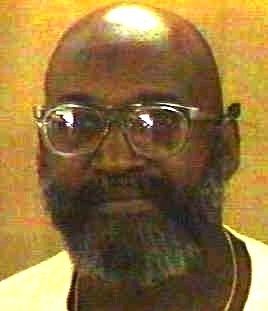
Gary Leon Brown
Murderer Russell Ellwood
Murderer · USA · 1991
Russell Ellwood was a former taxi driver. Authorities suspected him of killing…
20 victims
Russell Ellwood
Murderer · USA · 1991
Russell Ellwood was a former taxi driver. Authorities suspected him of killing…
20 victims
 Robert Martines Perez
Murderer · USA · 1994
Name: Robert Martines Perez · Other name used in proceedings: Robert Martinez P…
15 victims
Robert Martines Perez
Murderer · USA · 1994
Name: Robert Martines Perez · Other name used in proceedings: Robert Martinez P…
15 victims
 Billy Frank Vickers
Murderer · USA · 1993
Billy Frank Vickers Vickers was executed by lethal injection in Texas on Januar…
14 victims
Billy Frank Vickers
Murderer · USA · 1993
Billy Frank Vickers Vickers was executed by lethal injection in Texas on Januar…
14 victims
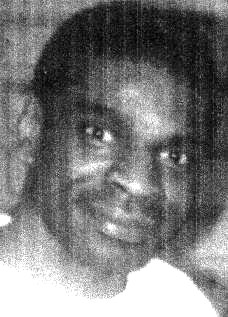 Brian Keith Baldwin
Murderer · USA · 1977
Brian Keith Baldwin (also known as Brian K. Baldwin) was executed by electrocut…
1 victim
Brian Keith Baldwin
Murderer · USA · 1977
Brian Keith Baldwin (also known as Brian K. Baldwin) was executed by electrocut…
1 victim
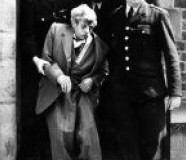 Tom Lionel Burns
Homicide · 1958
Tom Lionel Burns was a retired driver and played the piano. He was 71 years old…
2 victims
Tom Lionel Burns
Homicide · 1958
Tom Lionel Burns was a retired driver and played the piano. He was 71 years old…
2 victims
 Stephen Nefstad
Murderer · USA · 1987
Stephen Nefstad was an Oregon state prisoner. He appealed the district court’s…
1 victim
Stephen Nefstad
Murderer · USA · 1987
Stephen Nefstad was an Oregon state prisoner. He appealed the district court’s…
1 victim
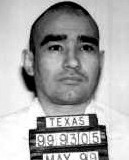 Joel Escobedo
Murderer · USA · 1998
Joel Escobedo (TDCJ Number 999305) · Date of Birth: 02/06/1962 · Race: Hispanic…
1 victim
Joel Escobedo
Murderer · USA · 1998
Joel Escobedo (TDCJ Number 999305) · Date of Birth: 02/06/1962 · Race: Hispanic…
1 victim
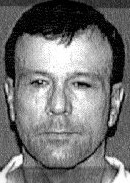 Richard Charles Duncan
Murderer · USA · 1987
Richard Charles Duncan was the longtime homosexual partner and business partner…
2 victims
Richard Charles Duncan
Murderer · USA · 1987
Richard Charles Duncan was the longtime homosexual partner and business partner…
2 victims
- Gender
- male
- Country
- USA
- Location
- Jefferson County, Alabama, USA
- Date of birth
- J uly 14, 1958
- Age at first offence
- 38
- Characteristics
- robbery, drugs, alcohol
- Victim profile
- Jack McGraw, 59 (gay man)
- Method of murder
- St abbing with knife 78 times
- Date(s) of murder
- May 26, 1996
- Years active
- 1996
- Date of arrest
- June 5, 1996
- Status
-
Executed
Executed by lethal injection in Alabama on April 24, 2003
Case overview
Gary Leon Brown was indicted for the capital offense of the murder of Jack McGraw during a robbery in violation of § 13A-5-40(a)(2), Code of Alabama 1975. The jury found Brown guilty of capital murder as charged in the indictment. After the punishment phase, the jury returned an advisory verdict for death by a vote of ten “for death” and two “for life without parole.” The trial judge accepted the jury’s recommendation and sentenced Brown to death. Brown’s conviction and death sentence were affirmed on direct appeal. After postconviction proceedings, a federal habeas petition was denied by the district court, and the denial was affirmed on appeal.
Brown was executed by lethal injection in Alabama on April 24, 2003.
Timeline
- May 26, 1986 — Gary Leon Brown, Archie Bankhead, James Bynum, and Jimmy Davenport went fishing near Locust Fork, Alabama, drank alcohol while they fished, and later went to Chuck and Willie's Lounge in Birmingham where they continued to drink and played pool.
- May 26, 1986 — Brown, Bankhead, and Bynum went to Jack McGraw’s home after leaving the lounge; McGraw let them in and said he could not “party” with them that evening because he had to work the next morning.
- May 26, 1986 — After the men began to leave, McGraw walked outside; Bankhead grabbed McGraw in a headlock; Brown and Bynum began hitting McGraw; the three picked him up and carried him inside his home; Brown admitted repeatedly stabbing McGraw in the back with a small pocket knife.
- May 26, 1986 — The men gathered McGraw’s possessions, loaded items into Davenport’s car, and drove to Bankhead’s house where they divided the stolen property and the money from McGraw’s wallet and burned their clothes covered in blood.
- May 29, 1986 — Sgt. Eddie White first talked with Brown at the Center Point Sheriff's Office and recorded his questioning; the taped session was played for the jury.
- July 17, 1986 — A third statement from Brown was taken in the Jefferson County, Alabama Jail.
- December 1985 — Walter James, Jr. testified that he last saw the victim in December of 1985 and did not notice physical ailments or obvious physical deformities at that time.
- January 21, 1990 — The Rule 20 court denied Brown’s postconviction petition.
- June 29, 2001 — The United States Court of Appeals for the Eleventh Circuit affirmed the denial of Brown’s habeas petition.
- May 5, 2002 — The U.S. Supreme Court stayed Brown’s execution when Brown was within hours of dying in the electric chair.
- April 24, 2003 — Brown was executed by lethal injection in Alabama; he was pronounced dead at 6:19 p.m. after a series of seven injections.
Background
At the time of the murder, Jack McGraw was a 60-year-old Center Point man. Brown was 44 years old at the time of execution and had spent 16 years on Alabama’s Death Row.
Walter James, Jr., the cousin of the victim, testified that he last saw the victim in December of 1985 and that he did not notice any physical ailments or obvious physical deformities.
At the time of the murder, McGraw lived alone and was unarmed and unsuspecting of his assailants’ foul purposes, and his deceased age was treated as 59 years of age at his death. Dr. Robert Brissie, coroner/medical examiner, testified about the victim’s injuries and opined on the cause of death and whether the victim was alive throughout the homicidal acts.
The offence
The murder involved a planned attack and robbery of Jack McGraw.
Brown and the other men went to McGraw's home on Memorial Day to drink with him with the plan that he would pass out and they could rob his home. McGraw said he had to work the next day and couldn't party with them. When McGraw walked outside with the men, Bankhead grabbed McGraw in a headlock, while Brown and Bynum began hitting McGraw. Brown later recalled or admitted that the men carried McGraw back inside and that Bankhead said they would have to kill McGraw because McGraw had seen Bankhead.
Brown struck the first blows and repeatedly stabbed McGraw with a pocketknife as Bankhead stood over him with a skillet. McGraw was stabbed in the back 59 times, his throat and neck were slashed 16 times, and his face showed three knife wounds. Dr. Brissie found several stab wounds to the head and a contusion to the back of the victim's head and testified that there were “at least fifteen or sixteen cuts” to the neck including those that “cut down through the carotid artery and the jugular venous complex.” Dr. Brissie also described 59 stab wounds in the back from the base of the neck downward to the base of the shoulder blades and opined that many stab wounds were “notched,” an appearance most consistent with “a suspect weapon having its position altered or twisted at the time of stabbing.”
The evidence at trial included that the deepest stab wounds approximated 2.0 inches. Dr. Brissie opined that death was caused by bleeding to death from the stab wounds and that the deceased was, in all probability, alive throughout the course of the homicidal acts, with “all wounds depicted” being “anti mortem or prior to decedant's death.”
After the slaying, the trio loaded some household appliances and took $67. Some accounts stated the men took additional items including beer, television sets, stereos, a microwave, a checkbook, and a wallet. The men also burned their clothes covered in blood.
Neighborhood children found McGraw’s body the next afternoon.
Victim discovery and description at trial
Chris Mitchell, a 13 year old, stated that when he knocked on the victim’s door he saw the victim lying face down inside his trailer near the door; Mitchell and other boys went to Johnny Harris' house and told his parents. James Harris, father of Johnny Harris, and two of his neighbors then went to the victim's trailer. Harris testified that they did not disturb anything but just looked through the glass door and saw the victim's body, and Harris called the sheriff's department. Harris testified that the victim's trailer was located in Pinson, Alabama.
McGraw was described in testimony as a homosexual.
Investigation and evidence
After the murder, Jefferson County deputy sheriffs found Brown at Bankhead’s house. Brown accompanied them to the Center Point substation and gave a statement that he and the other three men had gone fishing, to the bar, and then home. After giving this statement, Brown rode with officers to Bynum’s house while officers questioned Bynum and Brown remained in the squad car.
Sgt. Don Gaskey testified that on May 30, 1986, he went to the home of Blanche Bankhead and collected pieces of clothing from an area that appeared to have been burned from the backyard.
Ted Williams photographed and sketched the scene and identified numerous exhibits collected from the victim’s residence. Steve Dexler, a trace analyst with the Alabama Department of Forensic Sciences, examined burned materials found in the backyard of the Bankhead home and testified that three portions of the burned material were “consistent with material coming from clothing.” Dexler also testified that two metal fragments were “consistent with speed-lacing eyelets off of footwear.”
Sgt. Eddie White stated that a knife and an iron skillet were found in the victim’s kitchen sink, that the bottom of the skillet was missing, and that an antenna wire was hanging from the den ceiling and had been cut.
Sgt. White recorded his questioning of Brown; Brown was advised of his constitutional rights both verbally and in writing before questioning began. Sgt. White read most of the transcript of the taped session for the jury.
Arrest and statements
Brown gave multiple statements to police, including at the Center Point Sheriff's Office on May 29, 1986, and a third statement on July 17, 1986, in Jefferson County, Alabama Jail.
In the first statement recorded on May 29, 1986, Brown stated that on May 16, 1986, he and Bynum went to the victim's trailer and stole a VCR and some checks, and that Bynum cashed two or three checks from the victim's checkbook. Brown stated that this was the last time he had been to the victim's residence.
In a second statement recorded after the officers questioned Bynum, Brown admitted going to the victim's trailer on May 26, 1986; Davenport stayed in the car while Bynum, Bankhead, and Brown went into the victim's residence; after McGraw and the men came outside, Bankhead grabbed McGraw around the neck and choked the victim until he passed out; Bankhead told them they could not let the victim live because he could identify them; Bankhead took out his pocket knife and stabbed the victim a few times in the back; Brown stated he did not see Bankhead cut the victim’s throat. Brown stated that from the victim’s residence the men stole beer, two television sets, two stereos, a microwave, a checkbook, and a wallet; a towel was used to wipe off fingerprints; Brown got into the trunk of Davenport’s vehicle because the back seat was full of stolen items; stolen items were taken into Bankhead’s house; the victim’s checkbook and wallet and outer clothing were burned; Davenport and Bynum left after splitting money found in the wallet; Bankhead and Brown later loaded stolen items and stored them at someone else’s house overnight. Brown stated the reason he did not remember things clearly was because he was drunk.
In a third statement taken July 17, 1986, Brown stated that Bynum suggested that they go to the victim's trailer and steal some things; Davenport stayed in his automobile while Bankhead, Bynum, and Brown went into the victim's trailer; when they started to leave, Bankhead grabbed the victim from behind and choked the victim while Bynum was hitting the victim in the face; after they dragged the victim inside, the victim made a moaning sound; Bankhead told Brown they had to kill the victim; Bankhead handed Brown a brown pocket knife with a three inch blade; Bankhead returned with an iron skillet; Brown jumped on the victim's back and started stabbing him, and Brown stated he was afraid of what Bankhead might do; Brown admitted stabbing the victim “quite a few times”; Bankhead stated the pocket knife was not going to get it and hit the victim in the head with the iron skillet; Bynum said he would get the victim and cut the victim’s throat with a butcher knife from the victim’s kitchen; the three men carried items to Davenport’s vehicle; Bankhead, Bynum, and Brown pulled off shirts and pants and burned them in Bankhead’s backyard.
Brown did not request his attorney be present during the third statement.
Trial
Indictment and guilt verdict
Brown was indicted for the capital offense of the murder of Jack McGraw during a robbery in violation of § 13A-5-40(a)(2), Code of Alabama 1975. Brown’s appointed counsel was Russell T. McDonald, Jr.
At the penalty phase, the jury returned an advisory verdict for death by a vote of ten “for death” and two “for life without parole.” The trial judge upheld the advisory verdict by sentencing Brown to death by electrocution.
Witness testimony and evidence at trial
Jimmy Davenport testified about the day of the fishing trip and the subsequent visit to Chuck and Willie's Lounge and said that during fishing they were drinking beer and whiskey. Davenport testified that he heard the men say “something about going and killing a queer, or something like that.” Davenport testified that the men asked Bynum “ 'How hard can you hit?' ” and that James was saying “ 'Pretty hard.' ” and that Gary asked “ 'Well, can you knock this old man out?' ” and James responded “yes,” and Davenport continued with “And then Gary said, 'Well, if you can't, I can', or something like that. And that's about it.” (R. 570)
Davenport testified that Bynum gave directions to the victim's trailer; the victim opened the door and let them come inside; after a short time all four came back outside; Bankhead grabbed the victim around the neck in a “headlock”; Bynum and the appellant were hitting the victim; the men picked up the victim and carried him inside. Davenport testified that he observed blood on all three men when they came out and that the back seat was full of items from the victim’s trailer so Brown rode in the trunk to Bankhead’s house. Davenport testified that Bankhead gathered shirts, the appellant’s pants, and Bankhead’s pants and burned them in the backyard, and that the reason for burning the clothing was that it had blood on it. Davenport also testified that he had blood on the shoulder of his shirt because Bankhead had brushed Davenport’s shirt when he got into Davenport’s automobile.
On cross-examination, Davenport admitted that he had not told the grand jury about seeing a wallet, Bankhead’s burning Davenport’s shirt, or statements made on the way to the victim’s house. Davenport admitted he talked with prosecutors the day before the jury for this trial was struck and that Mr. Anderton and Mr. McGregor were assistant district attorneys; Davenport stated that Anderton told him that a case could be made against Davenport but that they were not going to charge Davenport with any crime. Davenport testified that there was no conversation at Bankhead’s house because they did not want Bankhead's wife to overhear them.
Blanche Bankhead testified that she overheard a conversation in which Archie Bankhead asked “Are you sure he's dead? Are you sure you killed him, Gary?” and that the response was “I kept stabbing and stabbing and stabbing and stabbing.” She testified that Archie again asked “Yes, but are you sure he's dead?” and Gary said “No, because then when we was getting the stuff out, he began to get up.” She testified that “Bantum [sic] [Bynum] had said 'Archie handed the butcher knife to me said we have to kill him.' ... he said he [Bynum] 'sliced his throat.' ” (R. 651-652)
Blanche Bankhead testified that Davenport later said “I can't believe y'all done this. I've got to get out of here. Get the stuff out of my car.” (R. 652)
Blanche Bankhead testified that the men looked for money in a wallet and split the “sixty something dollars” found in the wallet. She testified that Archie later said, “We've got to take all our clothes off, we've got to burn them. We'll go burn them outside, even our shoes.” (R. 654)
Blanche Bankhead testified that Brown then went to a local store and bought some beer. When the men were in the back yard with the fire, she saw Archie’s pocket knife in a pan of water on the stove. She later found the knife behind the stove and turned it over to Sgt. White. She also testified that later that night she overheard her husband and Brown loading stuff in a car and leaving.
On cross-examination, Blanche Bankhead admitted that in her May 29 statement, the only conversation she overheard concerned the burning of something, and that other details she testified to “must have been typed incorrectly.”
Sgt. White testified that on May 29, 1986, he first talked with Brown, recorded questioning, and read most of the transcript of the taped session for the jury. Brown was advised of his constitutional rights both verbally and in writing before questioning began.
Davenport’s coercion claim
Brown argued that Davenport's testimony was procured through coercive prosecutorial tactics. The appellate opinion described that Davenport was subpoenaed as a witness shortly before trial; one of the prosecutors flew Davenport to Birmingham; prosecutors met with Davenport the day before trial and interrogated him for two hours, with the entire interview taped.
The appellate opinion described that during early responses Davenport denied hearing any conversation about killing McGraw on the way to McGraw's home, that the prosecutors persisted insisting he must have heard conversation, and that Davenport ultimately said, “[They] said they was going to go over to a queer's house to do a job,” then admitted hearing Brown, Bankhead, and Bynum talking about hitting McGraw. The opinion also described prosecutors telling Davenport he could be charged, possibly not charged, and that a case would be made against him if he lied on the stand. The appellate opinion stated that Brown’s trial counsel engaged in lengthy cross-examination about the interrogation and the changes in Davenport’s testimony, that the taped interrogation was played for the jurors, and that the appellate court concluded the trial testimony was both voluntary and truthful and that constitutional rights were not violated.
Sentencing
During the punishment phase, the court found aggravating circumstances beyond a reasonable doubt, including that the capital offense was committed while the defendant was engaged in the commission of a robbery. The court also found the offense was especially heinous, atrocious, or cruel compared to other capital offenses.
The court noted factual findings about the deceased: the deceased was 59 years of age at his death, lived alone, was unarmed and unsuspecting of his assailants’ foul purposes.
Dr. Robert Brissie testified about 16 incised wounds to the neck, 59 stab wounds in the back deep enough to allow probing, the deepest approximated 2.0 inches, three stab wounds to the face, an incised wound to the scalp, extensive abrasion and contusion consistent with the attack outside the mobile home, and that the most extensive injuries were to the neck, carotid artery, and jugular vein being severed.
The court found no other aggravating circumstances to exist.
Brown’s sentencing resulted in a death sentence by electrocution, based on the jury’s advisory verdict.
Appeals and postconviction proceedings
Direct appeal
On direct appeal, the Alabama Court of Criminal Appeals, Brown v. State, 545 So.2d 106 (Ala.Crim.App.1988), and the Alabama Supreme Court, Ex parte Brown, 545 So.2d 122 (Ala.1989), affirmed Brown’s conviction and death sentence. The United States Supreme Court denied Brown’s petition for writ of certiorari. Brown v. Alabama, 493 U.S. 900, 110 S.Ct. 257, 107 L.Ed.2d 206 (1989) (Cert. Denied).
Postconviction under Rule 20 and certiorari denial
After his conviction and death sentence for capital murder were affirmed on appeal, Brown applied for postconviction relief. The Circuit Court, Jefferson County, James Hard, J., denied petition. Brown appealed. The Court of Criminal Appeals, Montiel, J., held that:
- recusal of judge who presided at trial from postconviction relief proceeding was not required;
- trial counsel was not ineffective for failing to present evidence of petitioner's history of alcohol and drug abuse and of his antisocial personality disorder;
- counsel's failure to identify veniremen who would automatically recommend death sentence did not prejudice petitioner at trial;
- petitioner did not otherwise receive ineffective assistance of trial counsel; and
- petitioner failed to establish ineffective assistance of appellate counsel.
The Court of Criminal Appeals affirmed. Bowen, P.J., concurred in the result only.
The case also included that Brown’s postconviction relief was denied and later reviewed through federal habeas proceedings.
Federal habeas appeal (Eleventh Circuit)
Brown then petitioned the district court for a writ of habeas corpus pursuant to 28 U.S.C. § 2254. On October 1, 1999, the district court denied the petition, holding that most of Brown’s federal constitutional claims were procedurally barred and that remaining claims failed on the merits.
On appeal, the United States Court of Appeals for the Eleventh Circuit affirmed the district court’s denial on June 29, 2001.
The appellate opinion addressed Brown’s claims of ineffective assistance at both guilt and penalty phases based on failure to investigate and present evidence of drug and alcohol abuse effects on mental state, and failure to engage in a “reverse-Witherspoon” inquiry during voir dire. It also addressed Brown’s claim that Davenport’s testimony was procured through coercive prosecutorial tactics. The appellate court concluded Brown had failed to establish ineffective assistance and that Brown’s constitutional rights were not violated due to Davenport’s testimony, and it affirmed the denial of relief.
Outcome
Brown v. State, 545 So.2d 106 (Ala.Crim.App.1988) (Direct Appeal) affirmed his conviction and death sentence, and Ex parte Brown, 545 So.2d 122 (Ala.1989) affirmed as well. The United States Supreme Court denied certiorari in Brown v. Alabama, 493 U.S. 900, 110 S.Ct. 257, 107 L.Ed.2d 206 (1989) (Cert. Denied). After postconviction and federal habeas proceedings, the denial of habeas relief was affirmed by the United States Court of Appeals for the Eleventh Circuit.
Aftermath
Brown requested no last meal and ate only an ice cream sandwich from a vending machine.
Brown made no final public statement. He appeared to mouth the words “go with God” and “forgive them” to his wife, Elizabeth Anne Brown, who was in the witness room with Brown’s friend separated by a glass window. During the execution, Brown kept his eyes locked on his wife and waved to her with the fingers of his left hand. It was reported that Brown mouthed “Goodbye sweetie,” and “I love you.”
Brown spent his last day alive visiting with his mother and his wife, whom he met and married while on Death Row at Holman Prison near Atmore. He also visited with other friends and family including his son Chris Brown, 22; spiritual adviser Glenn Webber; sisters Donna Jordan and Brenda Bourquard; brother David Brown; and friend Richard Smith. The group sang hymns, prayed, and took communion.
Brown left his wife $109.92 from his prison account, three Bibles, and the journal he kept while on Death Row. His son received his watch and a wooden cross. The remaining belongings—radio, headphones, books, a dictionary, and a television—went to the remaining Death Row inmates.
Brown’s execution was carried out after Gov. Bob Riley denied him clemency on Wednesday.
Other details
Brown had been out of jail on bond in an unrelated robbery at the time of the murder. The trial judge noted this fact in upholding the jury's recommendation for death.
Bankhead’s death sentence was reversed on appeal. Bankhead was retried and convicted again, and the jury sentenced him to life in prison without parole instead of death. Bankhead was accused in court of cutting McGraw's throat with a butcher knife and was serving life without parole.
Bynum was convicted of murder, sentenced to life in prison, and later paroled in 1997. At the time of the murder, Bynum was 21.
Davenport drove during the offence and was later described in testimony as a witness. Davenport’s testimony included that he did not see the victim after the altercation when the victim was carried back inside.
The appellate opinion described Brown’s “mitigating circumstances” arguments in general terms, but the court determined the evidence of alcohol and drug abuse would not have been helpful at the penalty phase and concluded there was no reasonable probability the result would have been different even if the evidence had been explored in detail. The appellate court also described a strong case for death based on the heinous nature of the crime and the absence of mitigating factors.
Spotted an error, or have more information about this case?