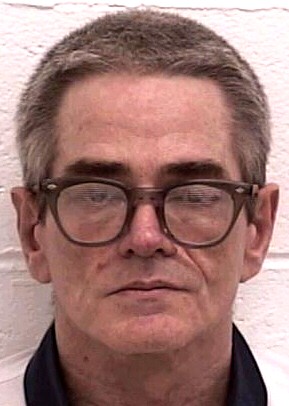
James Willie Brown
Murderer Ervil LeBaron
Murderer · USA · 1972
Ervil Morrell LeBaron (1925 to August 16, 1981) was the leader of a polygamous…
35 victims
Ervil LeBaron
Murderer · USA · 1972
Ervil Morrell LeBaron (1925 to August 16, 1981) was the leader of a polygamous…
35 victims
 Brian Kevin Rosenfeld
Murderer · USA · 1985
Brian Kevin Rosenfeld Brian Kevin Rosenfeld was sentenced to three concurrent l…
23 victims
Brian Kevin Rosenfeld
Murderer · USA · 1985
Brian Kevin Rosenfeld Brian Kevin Rosenfeld was sentenced to three concurrent l…
23 victims
 Marvin Gray
Murderer · USA · 1975
Marvin Gray was convicted killer who claimed responsibility for 23 slayings and…
23 victims
Marvin Gray
Murderer · USA · 1975
Marvin Gray was convicted killer who claimed responsibility for 23 slayings and…
23 victims
 Yahweh ben Yahweh
Murderer · USA · 1980
Yahweh ben Yahweh was born and legally named Hulon Mitchell Jr. (October 27, 19…
23 victims
Yahweh ben Yahweh
Murderer · USA · 1980
Yahweh ben Yahweh was born and legally named Hulon Mitchell Jr. (October 27, 19…
23 victims
 Ricky Chase
Murderer · USA · 1989
Ricky Chase was convicted in February 1990 of capital murder for the robbery an…
1 victim
Ricky Chase
Murderer · USA · 1989
Ricky Chase was convicted in February 1990 of capital murder for the robbery an…
1 victim
 Travis Runnels
Murderer · USA · 2003
Travis Runnels (TDCJ Number: 999505). Name recorded as Travis Trevino Runnels.…
1 victim
Travis Runnels
Murderer · USA · 2003
Travis Runnels (TDCJ Number: 999505). Name recorded as Travis Trevino Runnels.…
1 victim
 Barbara Graham
Murderer · USA · 1953
Barbara Graham (June 26, 1923 – June 3, 1955) was an American criminal and conv…
1 victim
Barbara Graham
Murderer · USA · 1953
Barbara Graham (June 26, 1923 – June 3, 1955) was an American criminal and conv…
1 victim
 Ernesto Picchioni
Murderer · Italy · 1944
March 12, 1949 — He was sentenced to life in prison. · 2016 — The case record l…
16 victims
Ernesto Picchioni
Murderer · Italy · 1944
March 12, 1949 — He was sentenced to life in prison. · 2016 — The case record l…
16 victims
 Gary Leon Brown
Murderer · USA · 1996
Gary Leon Brown was indicted for the capital offense of the murder of Jack McGr…
1 victim
Gary Leon Brown
Murderer · USA · 1996
Gary Leon Brown was indicted for the capital offense of the murder of Jack McGr…
1 victim
- Gender
- male
- Country
- USA
- Location
- Gwinnett County, Georgia, USA
- Date of birth
- J une 6, 1948
- Age at first offence
- 27
- Characteristics
- rape
- Victim profile
- Brenda Sue Watson, 21 ( dancer at an nightspot)
- Method of murder
- Asphyxiation
- Date(s) of murder
- May 13, 1975
- Years active
- 1975
- Date of arrest
- 2 days after
- Status
-
Executed
Executed by lethal injection in Georgia on November 4, 2003
Case information
James Willie Brown was a white male who was scheduled for execution in Georgia and was executed by lethal injection on November 4, 2003.
Timeline
- May 12, 1975 — James Willie Brown and Brenda Watson ate a carryout steak and potato dinner brought with them to the Mark Inn lounge in Gwinnett County, spent several hours drinking and dancing, and left together at approximately 11:00 p.m.
- May 13, 1975 — Brenda Watson’s body was found near a trash pile close to an old logging road in a heavily wooded area some 500 feet off Deshon Road in Gwinnett County.
- May 15, 1975 — Brown was arrested.
- May 16, 1975 — Brown was questioned after initially denying knowing Brenda Watson.
- June 1975 — Dr. Dellatorre testified that he examined Brown after he was arrested and charged, and Brown was “out of contact with reality” and “overtly psychotic.”
- 1975 to 1989 — Central State Hospital determined Brown was paranoid schizophrenic a total of seventeen times.
- 1981 — Brown was tried, convicted, and sentenced to death for the murder of Brenda Watson.
- 1988 — A federal district court overturned Brown’s conviction on grounds relating to Brown’s competence to stand trial; the order directed the state to make a reliable determination of Brown’s competency before any retrial.
- 1989 — Brown was retried.
- 1990 — Brown was retried and again sentenced to death.
- November 15, 2001 — The Eleventh Circuit issued its decision in James Willie Brown, Petitioner-Appellant, v. Frederick Head, Warden, Georgia Diagnostic and Classification Prison, Respondent-Appellee (No. 00-15886).
- February 4, 2003 — The state trial court conducted an evidentiary hearing on Brown’s claim regarding Anita Tucker’s alleged recantation and whether prosecuting attorneys knew her testimony was false.
- June 2, 2003 — The state trial court entered an order denying Brown relief.
- September 22, 2003 — The Georgia Supreme Court declined to review the denial of relief.
- November 3, 2003 — Brown filed a motion for relief from judgment under Federal Rule of Civil Procedure 60(b) in the United States District Court for the Northern District of Georgia.
- November 4, 2003 — Brown was executed by lethal injection.
Background
Brenda Sue Watson had recently moved to DeKalb and worked as a dancer at an Atlanta nightspot. She met James Willie Brown on May 12, 1975.
Brown had a long history of mental illness. He had been diagnosed as being a paranoid schizophrenic. He had been found incompetent to stand trial and was committed to a state mental institution until 1981, when he was found competent. The conviction and death sentence were later overturned on federal habeas corpus due to questions about his mental competency, and he was retried and again sentenced to death.
The offence
On May 12, 1975, Brown and Brenda Watson went together to the Mark Inn lounge. They ate a steak dinner, downed several drinks, and danced for hours before leaving about 11 p.m.
Watson’s body was found the next day in a secluded, heavily wooded area near a trash pile close to an old logging road in Gwinnett County. She was mostly naked except for a blue terrycloth blouse which had been pulled up over her breasts. A cord had been tied around her left ankle, and there were indentations on her wrists and her right ankle that could indicate she had been tied there also.
Watson had been restrained, with marks on her ankles and wrists indicating restraint, and the likelihood of rape was confirmed through abrasions and contusions and the presence of seminal fluid in her throat and vagina. A pair of panties had been forced so far down her throat that they were not discovered until the autopsy. The cause of death was asphyxiation from the panties in her throat.
Testimony from the State Crime Lab placed the death as suffocation from the panties and described seminal fluid and sperm in the victim’s throat and vagina. From abrasions and contusions around the victim’s vagina, the conclusion was that she had been raped and that this had occurred before her death. An undigested meal of steak and potatoes was found in the stomach, and an estimate was given that Watson died no later than 4:00 a.m.
Investigation and evidence
Warren Tillman of the State Crime Lab testified that Watson’s death was caused by suffocation from the panties in her throat and that he discovered seminal fluid and sperm in her throat and vagina. He also testified that abrasions and contusions around her vagina supported that she had been raped before her death.
An undigested meal of steak and potatoes was found in the victim’s stomach. Because a meal is usually digested within 4 hours, Tillman estimated that Watson died no later than 4:00 a.m.
Brown was arrested May 15. A nylon cord found in Brown’s car was identical to that tied around Watson’s left ankle. A hairbrush found in Brown’s car contained hair similar in color and medulation to the victim’s hair.
During questioning on May 16, Brown initially denied knowing Brenda Watson. After being informed that he had been seen with her the night before her body had been discovered, he admitted going to the Mark Inn for drinks. He claimed that afterwards they went to a lounge off Covington Highway, where he left her.
Later he stated that after leaving the Mark Inn, Watson suggested going to a quiet place in the country. Brown took her to a secluded spot off Deshon Road, and he stated that she told him that if he didn’t pay her $200 she was going to call the police and claim he had tried to rape her. Brown’s response was to tie her up and gag her, and he decided he might as well have sexual intercourse with her.
He also stated that on his way home he discovered Watson’s pocketbook was still in his car. He stopped at a bridge on Killian Hill Road and threw the pocketbook into the Yellow River.
Arrest
Brown was arrested on May 15.
Trial
After Brown was initially found incompetent to stand trial, he was committed to a state mental institution until 1981, when he was found competent. He was tried, convicted, and sentenced to death in 1981.
At trial, Brown did not present an insanity defense at the retrial, contending instead that he simply was not guilty. At the sentencing phase, two experts appeared on his behalf: one testified Brown was psychotic when first examined him in June 1975 and had no opinion about sanity at the time of the crime, while the other testified that when examined in 1980 Brown was psychotic but in complete remission. The psychiatrist chosen by the state testified that symptoms of post-hallucinogenic perceptual disorder were similar to schizophrenia and that schizophrenia was a chronic, unrelenting disorder, and stated that in his opinion Brown was never schizophrenic, but either had been malingering or had suffered from post-hallucinogenic perceptual disorder.
Brown’s wife was permitted to invoke marital privilege and not testify.
The jury found three statutory aggravating circumstances:
- Brown had a prior felony conviction of armed robbery;
- Brown committed the crime of rape during this murder; and
- the capital crime involved both depravity of mind and torture to the victim before she died.
The jury also heard and was permitted to consider, in sentencing, the fact that Brown had previously attacked two other women in a manner similar to the way he attacked the victim, though those other two women escaped with their lives.
A special jury was impaneled to hear Brown’s special plea of incompetence pursuant to OCGA § 17-7-130 and found him competent to stand trial.
Witness testimony at sentencing stage and recantation issues
During the sentence phase of the retrial, Anita Tucker testified that she had met Brown while both were incarcerated in the Gwinnett County Jail, and that on one occasion Brown told her she “should play crazy and that [she] would not do any more than two years.” Tucker testified that Brown knew of her because he had been incarcerated with her co-defendants in an unrelated case. Tucker testified about another meeting that occurred after her conviction while Tucker was incarcerated at Hardwick Correctional Institution: she testified that Brown asked “what happened to you in Gwinnett County?” and that Tucker told him she “was found guilty and given a sentence of life plus sixty years,” to which Brown replied, “Well, I told you.” Tucker explained that the statement referred to earlier conversation about “playing crazy.”
Tucker testified that she denied receiving a benefit for her testimony, explaining that she had been convicted of murder and armed robbery, and stating that she had served her sentence and was out on parole.
On cross-examination, Brown’s trial counsel inquired about how the prosecution had become aware of Tucker’s testimony. Tucker explained that Detective Burt Blanott had come to see her at Hardwick prison before Brown’s first trial, and that she had told the detective about Brown’s statement.
Brown later presented Tucker’s recantation to the state courts in a collateral proceeding filed November 18, 2002, the day before he was previously scheduled to be executed. Brown’s execution was stayed, and the state trial court conducted an evidentiary hearing on the claim that Tucker had lied during her testimony and that one or more prosecuting attorneys knew her testimony was false.
At the evidentiary hearing, which was conducted on February 4, 2003, the state court received a large number of documents into evidence and heard testimony of three witnesses, including Tucker and David Porter, who was the prosecutor at the retrial. Following the hearing, on June 2, 2003, the state trial court denied Brown relief. The state trial court found as a fact that Brown failed to carry his burden of proving that Tucker’s testimony was false, and alternatively found there was no evidence that any prosecutor knew her testimony was false.
On September 22, 2003, the Georgia Supreme Court declined to review the denial of relief.
Sentencing
Brown was sentenced to death in 1981, and later sentencing to death was imposed again after retrial. Brown was pronounced dead after receiving lethal injection on November 4, 2003.
Brown requested a last meal consisting of “a foot-long chili dog with everything, French fries, a dill pickle, strawberry ice cream and a 7Up soft drink.”
When asked whether he wanted to make a final statement, Brown shook his head no. When asked whether he wanted a final prayer, Brown shook his head no.
As the drugs were pumped into his body, Brown twitched slightly and moved his head back and forth. He took a few deep final breaths and then was still.
Appeals
Direct appeals and competence-related rulings
The Georgia Supreme Court affirmed Brown’s conviction and death sentence. In Brown v. State, 250 Ga. 66, 71-72, 295 S.E.2d 727 (1982), the court affirmed and addressed issues including Brown failing to prove by a preponderance of the evidence that he was insane at the time of the crime.
In 1988, a federal district court granted Brown’s petition for writ of habeas corpus on grounds relating to Brown’s competence to stand trial. The order directed the state to make a reliable determination of Brown’s competency before any retrial.
After return for retrial, Brown was found competent by a special jury and again was convicted and sentenced to death.
In Brown v. State, 401 S.E.2d 492 (Ga. 1991), the Georgia Supreme Court affirmed again and held that, among other points, Brown was competent to stand trial for the second time.
Federal habeas proceedings and denial
Brown sought federal habeas relief after his state remedies were exhausted. After denial by the district court in 2000, the Eleventh Circuit affirmed in 2001 and on rehearing in 2002.
The Eleventh Circuit decision described that the evidence of Brown’s guilt was overwhelming and addressed ineffective assistance claims relating to two witnesses who testified during the sentence stage: Carl White and Anita Tucker, and also addressed Brady and Giglio claims.
The Eleventh Circuit held that even assuming trial counsel should have discovered and used certain impeachment evidence to attack the testimony of Carl White and Anita Tucker, Brown did not establish prejudice.
The court addressed Brown’s Brady claim relating to potential impeachment evidence and a note about an individual named John Wood that concerned an alibi-related report. The court concluded that even assuming suppression, Brown failed to show materiality because the time of death was never pinned down at trial, and the note’s exculpatory value was limited.
The Eleventh Circuit also addressed a Giglio claim relating to Tucker’s testimony during the sentencing phase and found that Brown failed to show that Tucker’s statement was false or that the State knowingly used false testimony.
In a later proceeding, Brown pursued relief based on Anita Tucker’s recantation and alleged fraud on the federal habeas court. In that proceeding, the Eleventh Circuit denied relief and denied Brown’s motion for a stay of execution and denied his motion for a certificate of appealability.
Outcome
James Willie Brown was executed by lethal injection in Georgia on November 4, 2003.
Other details
- Brown’s inmate identification information included Inmate #154075 and date of birth 06/06/1948.
- Brown’s height was listed as 5'08'' and weight as 130.
- Brown’s eye color was Blue and hair color was Brown.
- The county listed in the materials was Gwinnett County, Georgia.
- The victim was Brenda Sue Watson, described as an Atlanta go-go dancer and as a topless dancer.
- The case involved allegations of rape and murder in 1975, including that Watson suffocated on her panties forced down her throat.
- Burt Blanott was identified as the lead Gwinnett County police investigator in the murder case, who had interviewed James Brown a few days after Watson’s death.
- In a statement quoted from Burt Blanott, he said: "What a terrible, terrible way to die."
- Burt Blanott said: "I'd say anyone who goes out and does something like this has problems, but I do think he is a calculated, coldblooded killer."
Spotted an error, or have more information about this case?