
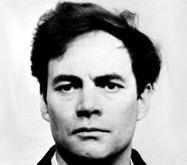
Stephen Nefstad
Murderer Brian Kevin Rosenfeld
Murderer · USA · 1985
Brian Kevin Rosenfeld Brian Kevin Rosenfeld was sentenced to three concurrent l…
23 victims
Brian Kevin Rosenfeld
Murderer · USA · 1985
Brian Kevin Rosenfeld Brian Kevin Rosenfeld was sentenced to three concurrent l…
23 victims
 Yahweh ben Yahweh
Murderer · USA · 1980
Yahweh ben Yahweh was born and legally named Hulon Mitchell Jr. (October 27, 19…
23 victims
Yahweh ben Yahweh
Murderer · USA · 1980
Yahweh ben Yahweh was born and legally named Hulon Mitchell Jr. (October 27, 19…
23 victims
 Russell Ellwood
Murderer · USA · 1991
Russell Ellwood was a former taxi driver. Authorities suspected him of killing…
20 victims
Russell Ellwood
Murderer · USA · 1991
Russell Ellwood was a former taxi driver. Authorities suspected him of killing…
20 victims
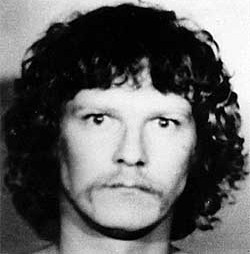 Darren Dee O'Neall
Serial killer · USA · 1987
Darren Dee O'Neall was sentenced to life in prison in Washington on January 198…
6 victims
Darren Dee O'Neall
Serial killer · USA · 1987
Darren Dee O'Neall was sentenced to life in prison in Washington on January 198…
6 victims
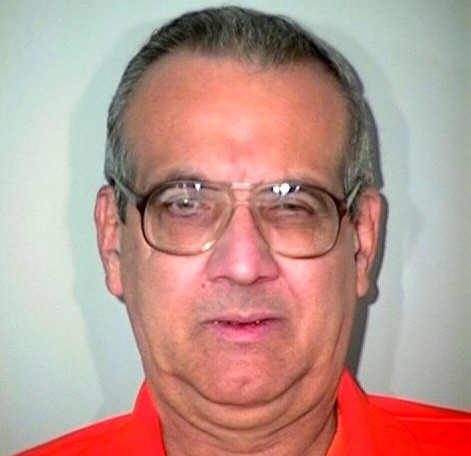 Edward Schad
Murderer · USA · 1978
Edward Schad was tried for the killing of Lorimer “Leroy” Graves, a 74-year-old…
1 victim
Edward Schad
Murderer · USA · 1978
Edward Schad was tried for the killing of Lorimer “Leroy” Graves, a 74-year-old…
1 victim
 Robert Joe Wagner
Serial killer · Australia · 1992
Robert Joe Wagner (born 28 November 1971 in Parramatta, New South Wales) was an…
10 victims
Robert Joe Wagner
Serial killer · Australia · 1992
Robert Joe Wagner (born 28 November 1971 in Parramatta, New South Wales) was an…
10 victims
 Eric Christopher Payne
Murderer · USA · 1997
Eric Christopher Payne v. Commonwealth of Virginia (Record No. 980559); Eric Ch…
2 victims
Eric Christopher Payne
Murderer · USA · 1997
Eric Christopher Payne v. Commonwealth of Virginia (Record No. 980559); Eric Ch…
2 victims
- Gender
- male
- Country
- USA
- Location
- Multnomah County, Oregon, USA
- Date of birth
- February 1, 1954
- Age at first offence
- 33
- Characteristics
- robbery
- Victim profile
- Steven A. Jackson (male)
- Method of murder
- St abbing with knife
- Date(s) of murder
- March 13, 1987
- Years active
- 1987
- Date of arrest
- —
- Status
-
Life imprisonment
Sentenced to death on February 23, 1988; commuted to life
Case overview
Stephen Nefstad was an Oregon state prisoner. He appealed the district court’s denial of his 28 U.S.C. Sec. 2254 habeas petition. He challenged rulings made during the trial and argued that constitutional errors occurred in the course of the proceedings.
Timeline
- February 23, 1988 — Stephen Nefstad was sentenced to death.
- February 23, 1988 — The death sentence was commuted to life.
Background
A panel of three judges considered the appeal: GOODWIN and HUG, Circuit Judges, and SCHWARZER, District Judge. The appeal addressed the denial of Stephen Nefstad’s habeas petition under 28 U.S.C. Sec. 2254.
Stephen Nefstad argued that the trial court erred in multiple ways:
- The trial court erred in denying his motion for judgment of acquittal because the State failed to establish proper venue and jurisdiction.
- His due process rights were violated by two separate instances of prosecutorial misconduct.
- His due process rights were violated by trial court evidentiary rulings.
- The trial court erred by not giving his requested jury instructions.
Stephen Nefstad’s arguments were reviewed under federal habeas standards.
Venue and jurisdiction (motion for judgment of acquittal)
Stephen Nefstad contended that the trial court erred by denying his motion for judgment of acquittal because the State failed to establish venue and jurisdiction beyond a reasonable doubt. The court reviewed the denial de novo.
The appellate court explained the standard for sufficiency of the evidence:
- The court said that when reviewing whether sufficient evidence supported a conviction, it determined whether, “viewing the evidence in the light most favorable to the prosecution, any rational trier of fact could have found the essential elements of the crime beyond a reasonable doubt.”
- The court quoted the case and included emphasis in the cited formulation: Jackson v. Virginia, 443 U.S. 307, 319 (1979) (emphasis in original).
- The appellate court also stated that State court determinations on factual issues are presumed correct under 28 U.S.C. Sec. 2254(d).
The appellate court concluded that the evidence, viewed in the light most favorable to the prosecution, showed that the victim was murdered in Oregon.
The prosecution evidence described in the decision included the following:
- The victim met Stephen Nefstad and codefendant Reyes Miranda in a bar in Oregon and was last seen leaving the bar with the two defendants.
- Less than an hour later, a bank surveillance camera photographed Miranda stealing $200 from the victim’s account through an automatic teller machine in Oregon.
- Blood appeared to be on Miranda’s shirt.
- Almost no blood was found at the scene where the body was dumped.
- Miranda’s car was soaked with the victim’s blood.
- A medical examiner testified that the victim’s blood was out of his body before it was dumped in a gorge in Vancouver, Washington.
- The medical examiner testified that the victim was stabbed while sitting in the car and would have lost his blood there.
- The victim sustained stab wounds to his heart and lung that would cause the victim to have died within minutes of receiving those wounds.
The court also described jury instructions given by the trial court. The instruction for aggravated murder required the jury to find beyond a reasonable doubt:
- that “an act or an element of the offense was committed in Multnomah County, Oregon” and
- that “either the robbery or the homicide commenced in Oregon.”
The court noted that the trial court similarly instructed the jury for the felony murder charge.
The appellate court stated that it is presumed the jury followed the instructions and cited United States v. Van Cauwenberghe, 827 F.2d 424, 432 (9th Cir.1987), cert. denied, 484 U.S. 1042 (1988).
The appellate court referenced findings by the Oregon Supreme Court and by the district court. It stated that both courts found sufficient evidence existed to allow the jury to reasonably infer that:
- the murder occurred in Oregon and
- the defendants thereafter disposed of the body in Washington.
The appellate court concluded that the district court did not err in determining that the State met its burden of establishing beyond a reasonable doubt that venue and jurisdiction were proper in Oregon.
Prosecutorial misconduct (due process)
Stephen Nefstad argued that two separate instances of prosecutorial misconduct violated his due process rights.
The appellate court stated the controlling inquiry for prosecutorial conduct:
- “When prosecutorial conduct is called in question, the issue is whether, considered in the context of the entire trial, that conduct appears likely to have affected the jury’s discharge of its duty to judge the evidence fairly.” It cited United States v. Simtob, 901 F.2d 799, 806 (9th Cir.1990) (citing United States v. Young, 470 U.S. 1, 11 (1985)).
- The appellate court also stated: “The relevant question is whether the prosecutors’ comments ‘so infected the trial with unfairness as to make the resulting conviction a denial of due process.’” It cited Darden v. Wainwright, 477 U.S. 168, 181 (1986) (quoting Donnelly v. DeChristoforo, 416 U.S. 637 (1974)).
(1) Voir dire or juror inquiries about the death penalty
Stephen Nefstad contended that his due process rights were violated when the court allowed prosecutors to make remarks to potential jurors that could be interpreted as expressing the prosecution’s belief that he would be found guilty. He likened the situation to one where a prosecutor vouches for the credibility of witnesses.
The appellate court concluded that Stephen Nefstad’s due process rights were not violated. It reasoned that the State sought the death penalty against him, and therefore the prosecution was allowed to inquire into jurors’ views on the death penalty and whether those views would prevent or substantially impair jurors’ performance in accordance with instructions and oaths. The appellate court cited Wainwright v. Witt, 469 U.S. 412, 424 (1985) and also referenced that it reaffirmed the standard established in Adams v. Texas, 448 U.S. 38 (1980).
The appellate court stated that the Oregon Supreme Court properly concluded the statements were “neither expressions of belief nor improper.” The appellate court quoted the Oregon Supreme Court’s reasoning in full:
A prosecutor cannot effectively learn the views of a juror who thinks that the inquiries into the death penalty merely are academic, and who does not understand that there truly exists the possibility of ultimately having to decide whether a defendant should receive a sentence of death. To answer the prosecutor’s questions candidly, the juror must anticipate fulfilling the role of a factfinder not only during the guilt phase but also during the penalty phase of the trial. State v. Nefstad, 789 P.2d 1326, 1330 (Or.1990).
The appellate court characterized the prosecutors as merely attempting to “ferret out views on the death penalty.” It also stated that a criminal conviction is not to be lightly overturned based on a prosecutor’s comments standing alone and quoted the Supreme Court:
- “a criminal conviction is not to be lightly overturned on the basis of a prosecutor’s comments standing alone, for the statements or conduct must be viewed in context.” It cited United States v. Young, 470 U.S. at 11.
In context, the appellate court concluded the prosecutors’ comments were not improper because jurors might face the question of invoking the death penalty and reaching the penalty phase.
(2) Closing argument comparison of photographs
Stephen Nefstad also contended that his due process rights were violated by improper closing argument. He alleged the prosecutor asked the jury to compare a photograph of the victim before the murder with an autopsy photograph of the victim. He contended the tactic improperly appealed to the jurors’ emotions and was irrelevant.
The appellate court disagreed. It reasoned that, to prove its case, the prosecution had to establish that Stephen Nefstad acted intentionally when he murdered his victim.
The appellate court stated that the trial judge was in a better position to evaluate the prosecutor’s conduct and its impact, and that the appellate court accorded deference to the trial court’s view. It quoted:
- “The district judge is in a much better position to evaluate the prosecutor’s conduct and its impact. This court properly accords considerable deference to the trial court’s view of such matters.” It cited United States v. McChristian, 47 F.3d 1499, 1508 (9th Cir.1995) (quoting United States v. Sanchez-Rubles, 927 F.2d 1070, 1077 (9th Cir.1991)).
The appellate court agreed again with the Oregon Supreme Court and quoted the Oregon Supreme Court’s rationale:
The photographs of [the victim's] corpse show literally dozens of stab wounds, on his face and on virtually every other part of his body. These photographs [before and after] obviously were strong evidence that [the victim's] murder was committed by defendants with intent. [The victim's] condition while he still was alive in contrast to the condition of his corpse directly was relevant to remove any doubt from the minds of the jurors that defendant Nefstad acted with intent when he murdered [the victim]. Nefstad, 789 P.2d at 1350-51 (emphasis added).
Based on the role of intent as an essential element, the appellate court concluded that the trial court did not err in allowing the prosecutor to ask jurors to compare before and after photographs.
Exhaustion of remaining contentions
The appellate court concluded that Stephen Nefstad failed to exhaust his remaining contentions. It set out the exhaustion requirement for federal claims in state court.
It quoted Duncan v. Henry, 115 S.Ct. 887, 888 (1995) (per curiam) (emphasis added), stating:
If a habeas petitioner wishes to claim that an evidentiary ruling at a state court trial denied him due process of law guaranteed by the Fourteenth Amendment, he must say so, not only in federal court, but in state court.
The appellate court stated that Stephen Nefstad did not inform the state courts that he pursued a federal due process claim with respect to:
- his two alleged state evidentiary error claims, or
- his claim of error in the jury instructions.
The appellate court also stated that mere citation of federal cases was insufficient to notify the state court that the petitioner was pursuing a federal due process claim. It added that the Oregon Supreme Court’s analysis was confined to state law and cited portions of the Oregon Supreme Court opinion:
- Nefstad, 789 P.2d at 1340-42, 1343-45, 1348-49.
Outcome
The appellate court affirmed the district court’s denial of Stephen Nefstad’s habeas petition:
- “AFFIRMED.”
Other details
Stephen Nefstad was born on 2/1/54. The criminal conduct at issue involved a victim who was last seen leaving a bar with Stephen Nefstad and codefendant Reyes Miranda, and the record described a subsequent bank account theft of $200 through an automatic teller machine in Oregon.
People involved
- Stephen Nefstad — Oregon state prisoner; appellant in the habeas proceeding.
- Reyes Miranda — codefendant in the incident described; photographed stealing $200 from the victim’s account via an automatic teller machine in Oregon; was associated with blood found on his shirt and his car.
- The victim — met Stephen Nefstad and Reyes Miranda in an Oregon bar; was last seen leaving with them; was murdered and the body was dumped in a gorge in Vancouver, Washington.
- GOODWIN — Circuit Judge.
- HUG — Circuit Judge.
- SCHWARZER — District Judge.
- United States v. Simtob; United States v. Young; Darden v. Wainwright; Donnelly v. DeChristoforo; Wainwright v. Witt; Adams v. Texas; United States v. McChristian; United States v. Sanchez-Rubles; United States v. Van Cauwenberghe; Jackson v. Virginia; Jeffries v. Blodgett; Duncan v. Henry — cited authorities used to describe standards and reasoning.
Spotted an error, or have more information about this case?