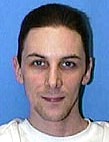
Jasen Shane Busby
Murderer Brian Kevin Rosenfeld
Murderer · USA · 1985
Brian Kevin Rosenfeld Brian Kevin Rosenfeld was sentenced to three concurrent l…
23 victims
Brian Kevin Rosenfeld
Murderer · USA · 1985
Brian Kevin Rosenfeld Brian Kevin Rosenfeld was sentenced to three concurrent l…
23 victims
 Russell Ellwood
Murderer · USA · 1991
Russell Ellwood was a former taxi driver. Authorities suspected him of killing…
20 victims
Russell Ellwood
Murderer · USA · 1991
Russell Ellwood was a former taxi driver. Authorities suspected him of killing…
20 victims
 Robert Martines Perez
Murderer · USA · 1994
Name: Robert Martines Perez · Other name used in proceedings: Robert Martinez P…
15 victims
Robert Martines Perez
Murderer · USA · 1994
Name: Robert Martines Perez · Other name used in proceedings: Robert Martinez P…
15 victims
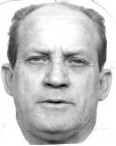 Billy Frank Vickers
Murderer · USA · 1993
Billy Frank Vickers Vickers was executed by lethal injection in Texas on Januar…
14 victims
Billy Frank Vickers
Murderer · USA · 1993
Billy Frank Vickers Vickers was executed by lethal injection in Texas on Januar…
14 victims
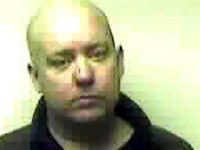 Andrew Randall
Murderer · United Kingdom · 2005
Andrew Randall (born 1974) was a British murderer. He murdered his seven-week-o…
1 victim
Andrew Randall
Murderer · United Kingdom · 2005
Andrew Randall (born 1974) was a British murderer. He murdered his seven-week-o…
1 victim
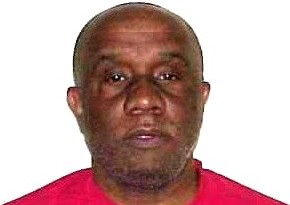 Charles Bussell
Murderer · USA · 1990
Charles Bussell (DOB 3-11-55) was sentenced to death on January 17, 1992. Busse…
1 victim
Charles Bussell
Murderer · USA · 1990
Charles Bussell (DOB 3-11-55) was sentenced to death on January 17, 1992. Busse…
1 victim
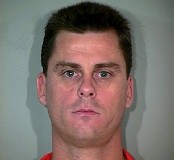 Charles Hedlund
Murderer · USA · 1991
Charles Hedlund was convicted in connection with the murders of 40-year-old Chr…
2 victims
Charles Hedlund
Murderer · USA · 1991
Charles Hedlund was convicted in connection with the murders of 40-year-old Chr…
2 victims
 Miguel Rios
Murderer · USA · 1992
Miguel Rios was sentenced to death on April 2, 1996 for the shooting death of M…
2 victims
Miguel Rios
Murderer · USA · 1992
Miguel Rios was sentenced to death on April 2, 1996 for the shooting death of M…
2 victims
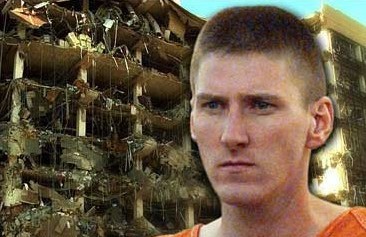 Timothy McVeigh
Mass murderer · USA · 1995
Timothy James McVeigh (April 23, 1968 – June 11, 2001) was a United States Army…
168 victims
Timothy McVeigh
Mass murderer · USA · 1995
Timothy James McVeigh (April 23, 1968 – June 11, 2001) was a United States Army…
168 victims
- Gender
- male
- Country
- USA
- Location
- Cherokee County, Texas, USA
- Date of birth
- November 21, 1975
- Age at first offence
- 20
- Characteristics
- robbery, drug addict, murder for hire
- Victim profile
- Brandy Gray (female, 16) and Tennille Thompson (female, 18)
- Method of murder
- Shooting (automatic assault rifle)
- Date(s) of murder
- April 16, 1995
- Years active
- 1995
- Date of arrest
- Same day
- Status
-
Executed
Executed by lethal injection in Texas on August 25, 2004
Case information
Name: Jasen Shane Busby Status: Executed by lethal injection in Texas on August 25, 2004
Timeline
- April 16, 1995 — Busby, Christopher Kelley, and Kelley’s girlfriend Brandy Gray spent the night in a trailer in Antioch with Tenille Thompson.
- April 17, 1995 — Busby shot Chris Kelley, Tennille Thompson, and Brandy Gray; Thompson and Gray died and Kelley was wounded; Busby drove off in Kelley’s pickup truck.
- June 20, 1995 — Busby was indicted in the 2nd Judicial District Court of Cherokee County, Texas, for the capital offense of murdering Tennille Thompson and Brandy Gray during the same criminal incident.
- July 19, 1996 — A jury found Busby guilty of the capital offense.
- July 27, 1996 — After a separate punishment hearing, the court sentenced Busby to death by lethal injection.
- March 31, 1999 — The Texas Court of Criminal Appeals affirmed Busby’s conviction and sentence in a published opinion.
- January 10, 2000 — The U.S. Supreme Court denied Busby’s petition for writ of certiorari.
- September 13, 2000 — The Court of Criminal Appeals denied relief on Busby’s state application for writ of habeas corpus.
- September 12, 2001 — Busby filed a federal petition in the U.S. District Court for the Eastern District of Texas, Sherman Division.
- March 31, 2003 — The district court denied Busby’s federal writ petition.
- April 25, 2003 — The district court granted Busby permission to appeal four issues.
- August 15, 2003 — The 5th U.S. Circuit Court of Appeals denied Busby permission to appeal several remaining issues.
- February 4, 2004 — The Fifth Circuit affirmed the district court’s decision in a published opinion on the four issues on which Busby was granted permission to appeal.
- June 7, 2004 — The U.S. Supreme Court denied Busby’s petition for certiorari review.
- August 25, 2004 — Busby was executed by lethal injection in Texas; he was pronounced dead at 6:20 p.m.
Background
Busby, his friend Christopher Kelley, and Kelley’s girlfriend Brandy Gray lived together in a cabin in Maydelle, Texas. On Sunday, April 16, 1995, they spent the night in a trailer in Antioch with Tenille Thompson, an acquaintance. The next morning, Busby drove Kelley’s truck to buy donuts for breakfast. When Busby returned, he was accompanied by Darrell Smith.
At the time of the offenses, Busby was described as 19 years old in some accounts. Busby was 28 at the time of execution. Busby was described as “scheduled to be executed after 6 p.m. Wednesday, August 25, 2004.”
The offence
Around ten o’clock that night, Busby and Smith went outside the trailer. Kelley, who was still inside the trailer, heard them loading a gun and talking about how many bullets were in it. Kelley started to open the door but found that someone else was already opening it from the other side.
Busby then shot Chris Kelley, Brandy Gray, and Tenille Thompson. The two women were dead; Kelley suffered a gunshot wound in the neck.
After the shootings, Busby rolled Kelley over, took his wallet, car keys, and $15.00 from Kelley’s front pocket, and drove off in Kelley’s truck with Smith. Kelley went to a neighboring house for help and described Busby and the truck to police.
Some accounts described the group as taking turns shooting an assault rifle outside the cabin and smoking marijuana. Officers found Gray and Thompson lying on the floor of the trailer, with spent shell bullet cases inside the trailer and bullet holes in a wall of the trailer.
Investigation and arrest
Police took Busby and Smith into custody on the night of the shootings after an officer spotted Kelley’s truck on the highway nearby. Busby had a clip of bullets in his pocket.
Investigators spoke to both men late that night and into the next morning. After being read his rights, Busby gave a taped confession. Busby later claimed that the confession was the product of drug intoxication. Smith told investigators that Busby had hidden the murder weapon, and Smith showed them where to find it. The authorities recovered the gun, which was later linked to shells found at the scene.
Investigators also reported that Busby told an officer that “Devil made me do it.” Kelley testified at Busby’s trial that three days before the shootings Busby said that he had sold his soul to the devil.
Ballistics evidence was described as including findings that an unspent cartridge was ejected from an SKS rifle and that one spent cartridge was fired from the rifle. A firearms examiner, Larry Fletcher, conducted ballistics tests on shell casings retrieved by police at the crime scene. In some accounts, a police officer stopped the red truck after spotting it heading eastbound on Highway 79 in Jacksonville, and the truck was connected to evidence scattered in the back of the vehicle and ammunition.
Trial
Charges
Busby was indicted for capital murder for murdering Tennille Thompson and Brandy Gray during the same criminal incident.
Venue motion and jury selection
Busby challenged venue, alleging he could not obtain a fair trial in Cherokee County and that he was entitled to a change of venue as a matter of law. The State filed controverting affidavits, and when the State’s affiants were placed on the witness stand, they contradicted assertions in their affidavits. The trial court denied the motion to change venue.
In a later decision, the Texas Court of Criminal Appeals overruled points of error related to venue and the denial of the venue motion.
Busby also challenged the order and timing of peremptory challenges during voir dire. The trial court permitted peremptory challenges to be exercised at the end of voir dire using the procedure permitted for non-capital cases, and Busby requested that procedure. Points of error relating to this issue were overruled.
Busby also raised ineffective assistance of counsel related to counsel’s request for the non-capital peremptory challenge procedure; points of error were overruled.
Motion to suppress
Busby challenged the denial of his motion to suppress evidence arising from an allegedly illegal arrest and search. The Texas Court of Criminal Appeals described testimony from State Trooper Wayne Davis and Patrolman Jesse Mayberry.
The court addressed Busby’s arguments regarding arrest warrant requirements and the legality of the arrest, searches of his person, a passenger, and the truck, and corresponding claims under the Fourth Amendment and Texas constitutional provisions. The court overruled points of error nine and ten.
Expert requests
Busby complained about the trial court’s refusal to proceed ex parte regarding requests for appointment of a jury consultant and a substance abuse expert. The court overruled supplemental point of error one.
The Texas Court of Criminal Appeals also addressed denial of a request for a jury consultant and denial of a request for a substance abuse expert, concluding that a jury consultant was not a “basic” tool of the defense and that the psychiatrist appointed for Busby, Dr. David Self, was qualified to assist in drug abuse issues. Points of error five and six were overruled.
Direct appeal issues on constitutionality of death penalty
Busby raised multiple contentions challenging the constitutionality of the death penalty scheme, including claims about definitions in future dangerousness instructions, mitigation special issue burdens and structure, and the effect of a failure of the jury to agree. The Texas Court of Criminal Appeals overruled point of error one and affirmed.
Testimony and letters
During the trial, the State presented letters written by Busby while he was confined in the Cherokee County Jail. One witness, Mark Oppen, testified that Busby wrote several letters to him and that the letters included admissions to killings and descriptions of the shootings. Busby also stated in letters that he wanted to kill two other persons and then himself during the night in question, and that the letters contained threats against others including the trial judge and Kelley.
Cynthia Neely, April Davenport, and Erin Isenburg testified about verbal and nonverbal threats of violence by Busby. Busby also made statements in jail to a man named Byers regarding Busby’s lack of remorse and plans of future violence. Busby told Byers that the murders “don’t bother me a bit,” and that:
“[i]f they think I went on the rampage that time let me get a gun and a hit of acid. I will get out of here and show them how to go on a rampage.”
Dr. Tom Allen, a psychologist, testified regarding the probability that Busby would commit future acts of dangerousness. Dr. Allen stated that Busby’s actions prior to committing the murders pointed toward future dangerousness and concluded that Busby constituted “a significant risk to commit continuing acts of violence against society.”
Sentencing
After a separate punishment hearing, the court sentenced Busby to death by lethal injection. The jury’s answers to special issues under Texas Code of Criminal Procedure provisions were described as resulting in the trial judge sentencing appellant to death.
Appeals
Direct appeal (Texas Court of Criminal Appeals)
The Texas Court of Criminal Appeals affirmed Busby’s conviction and sentence in a published opinion delivered on March 31, 1999.
State habeas proceedings
Busby filed a state application for writ of habeas corpus in the trial court on November 20, 1998. Following a hearing, the trial court entered findings of fact and conclusions of law recommending that Busby be denied relief. The Court of Criminal Appeals adopted the trial court’s findings and conclusions and denied relief on September 13, 2000.
Federal habeas proceedings
Busby filed a federal petition in the U.S. District Court for the Eastern District of Texas on September 12, 2001. The district court denied Busby’s federal writ petition on March 31, 2003, but granted permission to appeal four issues on April 25, 2003.
The Fifth Circuit affirmed the district court’s decision in a published opinion on February 4, 2004.
The decision described factual and procedural background regarding:
- pretrial publicity and denial of change of venue, and
- jailhouse letters admitted as evidence, including the jail’s policy of reading outgoing non-privileged mail, copying letters, and turning copies over to investigators.
The Fifth Circuit addressed whether appellate counsel was ineffective for failing to argue that the trial court erred in admitting the jailhouse letters in both the guilt phase and punishment phase, whether denial of a motion to suppress letters violated the First Amendment, and whether denial of change of venue deprived him of a fair trial, including an exhaustion issue. The Fifth Circuit found these issues without merit and affirmed denial of habeas relief.
The U.S. Supreme Court denied Busby’s petition for certiorari review on June 7, 2004.
Outcome
Busby was executed by lethal injection on August 25, 2004 in Texas. He was pronounced dead at 6:20 p.m., and nine minutes later in another account.
Aftermath
Final meal
Busby requested the following final meal: fried chicken breasts, jalapenos, barbecue ribs, catfish with tartar sauce, a medium steak, french fries with ketchup, plain M&M’s candy, cherries, strawberries, and a peach. He also had milk mixed with chocolate syrup.
Final words
Busby made the following final statement:
"I want to tell everyone, my family, thanks for standing by me. I want to tell Mr. and Mrs. Gray and everyone that I didn't do what I did to hurt you all. I am sorry that I did what I did. I don't think you know the true reason for doing what I did, but Brandy and I had a suicide pact and I just didn't follow through with it. That did not come out in the trial. I am not trying to hurt you by telling you this. I am trying to tell you the truth. I want Cindy to know that I know she is out there - and Vicente Hernandez that I love them. Thank you for all you have done and I want to make sure you are all right. After saying that, Busby said he was ready and that he would "see you later." As lethal drugs began to flow, Busby remarked: "Here it comes. I can feel it." He took a couple of breaths, closed his eyes, and then slipped into unconsciousness.
Other details
Prior criminal history
Busby was described as convicted of Class B misdemeanor theft over $20 but less than $200 in 1993, and as convicted of burglary of a vehicle, a Class A misdemeanor, in 1995.
Victims and related testimony
- Brandy Gray was described as a teenager; in some accounts she was 16 years old.
- Tennille Thompson was described as a teenager; in some accounts she was 18 years old.
- Christopher Kelley was described as 18 years old at the time of the crime in some accounts and as surviving his gunshot wound; he identified Busby and testified at trial.
Additional quotes and statements referenced in proceedings
Busby told an officer that “Devil made me do it.” Kelley testified that three days before the shootings Busby said that he had sold his soul to the devil.
Execution location references
Execution was described as occurring at the Texas Department of Criminal Justice Huntsville Unit, and Busby was described as being executed in Huntsville, Texas.

Spotted an error, or have more information about this case?