
John Earl Bush
Murderer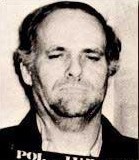 Ervil LeBaron
Murderer · USA · 1972
Ervil Morrell LeBaron (1925 to August 16, 1981) was the leader of a polygamous…
35 victims
Ervil LeBaron
Murderer · USA · 1972
Ervil Morrell LeBaron (1925 to August 16, 1981) was the leader of a polygamous…
35 victims
 Brian Kevin Rosenfeld
Murderer · USA · 1985
Brian Kevin Rosenfeld Brian Kevin Rosenfeld was sentenced to three concurrent l…
23 victims
Brian Kevin Rosenfeld
Murderer · USA · 1985
Brian Kevin Rosenfeld Brian Kevin Rosenfeld was sentenced to three concurrent l…
23 victims
 Marvin Gray
Murderer · USA · 1975
Marvin Gray was convicted killer who claimed responsibility for 23 slayings and…
23 victims
Marvin Gray
Murderer · USA · 1975
Marvin Gray was convicted killer who claimed responsibility for 23 slayings and…
23 victims
 Yahweh ben Yahweh
Murderer · USA · 1980
Yahweh ben Yahweh was born and legally named Hulon Mitchell Jr. (October 27, 19…
23 victims
Yahweh ben Yahweh
Murderer · USA · 1980
Yahweh ben Yahweh was born and legally named Hulon Mitchell Jr. (October 27, 19…
23 victims
 Russell Ellwood
Murderer · USA · 1991
Russell Ellwood was a former taxi driver. Authorities suspected him of killing…
20 victims
Russell Ellwood
Murderer · USA · 1991
Russell Ellwood was a former taxi driver. Authorities suspected him of killing…
20 victims
 Timothy Boham
Murderer · USA · 2006
Timothy Boham also known as Marcus Allen (born May 27, 1981) was a former adult…
1 victim
Timothy Boham
Murderer · USA · 2006
Timothy Boham also known as Marcus Allen (born May 27, 1981) was a former adult…
1 victim
 Marianne Bachmeier
Homicide · Germany · 1981
Marianne Bachmeier (born 3 June 1950 in Sarstedt; died 17 September 1996 in Lüb…
1 victim
Marianne Bachmeier
Homicide · Germany · 1981
Marianne Bachmeier (born 3 June 1950 in Sarstedt; died 17 September 1996 in Lüb…
1 victim
 Arthur Martin Boyd
Murderer · USA · 1982
Arthur Martin Boyd was executed by lethal injection in North Carolina on Octobe…
1 victim
Arthur Martin Boyd
Murderer · USA · 1982
Arthur Martin Boyd was executed by lethal injection in North Carolina on Octobe…
1 victim
 John Caudle
Homicide · USA · 2009
John Caudle was the 14-year-old biological son of Joanne Galla (also referred t…
2 victims
John Caudle
Homicide · USA · 2009
John Caudle was the 14-year-old biological son of Joanne Galla (also referred t…
2 victims
- Gender
- male
- Country
- USA
- Location
- Martin County, Florida, USA
- Date of birth
- 1958
- Age at first offence
- 24
- Characteristics
- kidnapping, robbery, torture
- Victim profile
- Frances Julia Slater (convenience store clerk)
- Method of murder
- Shooting
- Date(s) of murder
- April 27, 1982
- Years active
- 1982
- Date of arrest
- —
- Status
-
Executed
Executed by electrocution in Florida on October 21, 1996
Case information
Defendant: John Earl Bush Victim: Frances Julia Slater Status: Executed by electrocution in Florida on October 21, 1996
Timeline
- April 27, 1982, 3:00 a.m. — Frances Slater was abducted from the convenience store where she worked. Incident to the kidnapping, the store's cash register and floor safe were robbed of approximately $134.
- April 27, 1982 (later that day) — The victim's body was discovered thirteen miles from the store. She had a stab wound in her abdomen and had been shot once in the back of her head at close range.
- May 4, 1982 (morning) — John Earl Bush went to the Martin County Sheriff's Department to inquire about his car, which had been confiscated pursuant to a search warrant.
- October 21, 1996 — John Earl Bush was executed by electrocution in Florida.
- Nov. 29, 1984 — Supreme Court of Florida decision: John Earl Bush, Appellant, v. State of Florida, Appellee. No. 62947.
- Jan. 31, 1985 — Rehearing denied.
- February 26, 1987 — Supreme Court of Florida decision on habeas corpus and extraordinary relief: 505 So. 2d 409.
- October 16, 1996 — United States Supreme Court-related docket: 682 So. 2d 85 (opinion docket referenced).
- March 30, 1993 — United States Court of Appeals, Eleventh Circuit decision: 988 F.2d 1082 (affirming denial of habeas relief).
- Oct. 18, 1996 — Eleventh Circuit decision on application for leave to file a second habeas corpus petition (permission denied; stay denied).
Other details
John Earl Bush, who was 38 years old, was executed on October 21, 1996 for the 1982 slaying of Frances Julia Slater, an heir to the Envinrude outboard motor fortune.
The offence
Frances Slater was working in a Stuart convenience store when she was kidnapped and murdered.
At 3:00 a.m. on April 27, 1982, Frances Slater was abducted from the convenience store where she worked.
Later that day, the victim's body was discovered thirteen miles from the store.
At trial, the jury returned a verdict of guilty on the charges of first-degree murder, robbery with a firearm, and kidnapping.
Investigation and statements
A delivery person for the local newspaper testified that she was passing by the store between 2:30 and 3:00 a.m., and saw a car in the parking lot occupied by one black man. Inside the store were two black men with another person.
In a photo lineup, she identified Bush's car and identified Bush as being one of the men in the store.
Four taped statements given by Bush were played during the trial. They constituted the only known version of the events and were presented by Bush in the light most favorable to him.
Bush's taped statements were to the effect that he did not realize that his accomplices, Alfonso Cave, "Pig" Parker and Terry Johnson, were planning to rob the convenience store, and that during and after the robbery he was under their domination.
Bush stated that after the robbery, they drove toward Indiantown, when his accomplices ordered him to stop. The victim was pushed out of the car, and Bush averred that he intended to set her free. However, Bush said the accomplices decided that Slater might be able to identify them and they told Bush to dispose of her.
Bush said he did not desire to kill the victim and faked a blow at her with his knife, stabbing her superficially. Bush said Slater fell to the ground and an accomplice, Parker, shot her.
People involved
Defendant
- John Earl Bush — convicted of the first-degree murder of Frances Slater; sentenced to death.
Co-defendants / accomplices mentioned
- Alfonso Cave
- "Pig" Parker
- Terry Johnson
Trial
Conviction and charges
Bush was convicted of the first-degree murder of Frances Slater.
The trial judge imposed the death penalty in accordance with the jury's advisory sentence recommendation.
Bush appealed from the conviction and the sentence of death.
Evidentiary matters raised on appeal
Bush challenged the admissibility of certain photographs.
- Exhibit fifteen — a blowup of the victim's bloody face, taken at the morgue and admitted solely to identify Frances Slater.
- Exhibit twenty-one — a close-up of the gunshot wound to the victim's head.
The court held the test of admissibility of photographs was relevancy and not necessity, and that the exhibits were admissible to assist explanation of the wounds.
Bush also contested excusing a juror on a challenge for cause. The statements of the juror excluded in this case were:
Prosecutor: "Do you know of any reason why anything outside might come into it, other than what you hear here?"
Juror: "I don't know if I could take the responsibility of committing one to death. I just don't know if I could handle that."
Prosecutor: "Let me point out two things to you. First, your sentence is only advisory. The final decision, responsibility and burden lies with His Honor, the Judge ... Would that in any way cause you to change your opinion as to whether or not you could?"
Juror: "I just don't think I could handle the responsibility of condemning somebody. I think it's up to God."
Prosecutor: "And you feel like that would affect you even in the first stage, in determining the guilt or the innocence, knowing if you rendered a verdict of guilty of murder in the first degree that the man could be put to death, you feel that it could affect you?"
Juror: "I feel it would be a problem for me, myself, in my heart."
Defense Counsel: "I understand, of course, sympathy will enter into practically any case .... It's not anything that is unique to this case or any particular type of case. Do you understand that? How would you feel about it with that in mind?"
Juror: "I don't know. It would just be a very difficult thing to do."
Defense counsel: "Do you think you could do it, put sympathy out of your mind and base your verdict on the law and the evidence?"
Juror: "No, I don't think so."
Bush also raised an argument contesting his confessions as inadmissible on grounds of improper influence and lack of full Miranda warnings.
The decision addressed the lawfulness of the confessions and whether Bush’s second statement required a fresh Miranda warning.
Bush also argued error in rejecting a third-degree murder instruction. The decision noted that third-degree murder is defined as an unlawful killing without any design to affect death when perpetrated by a person engaged in perpetration or attempt to perpetrate certain felonies, including robbery and kidnapping, and that since the jury found Bush guilty of both kidnapping and robbery, failure to instruct was at most harmless.
State investigator testimony discrepancy
Bush contended that the trial judge should have conducted a Richardson inquiry or granted a mistrial because a state investigator's testimony contradicted his earlier deposition.
The deposition testimony concerned investigator Forte stating in his deposition that Charlotte Grey, a clerk from a nearby convenience store which had been visited by Bush, had not identified any photographs. At trial, Forte testified that witness Grey did identify Bush's photograph during the photo lineup.
The court addressed whether this amounted to a discovery violation warranting a Richardson inquiry or a mistrial.
Sentencing
Advisory recommendation and sentence imposed
Subsequent to the sentencing hearing, the jury recommended, in a 7-5 advisory sentence, that the death penalty be imposed.
The trial judge, citing three aggravating factors and no mitigating factors, sentenced Bush to death.
Jury vote and instructions
Bush argued against the trial judge’s repeated instructions to the jury that a sentencing decision requires a majority, asserting this was erroneous.
The trial judge corrected himself by explaining:
"if by six or more votes the jury determines that [Bush] should not be sentenced to death, your advisory sentence will be [imposition of a life sentence.]"
Argument to instruct jurors on intent to kill
Bush argued that the trial judge should have instructed the jury during the sentencing phase that a sentence of death may not be imposed absent intent to kill or contemplation that life would be taken, citing Enmund v. Florida.
The court rejected the argument, reasoning that Bush was a major, active participant in the convenience store robbery and his direct actions contributed to the death of the victim.
Prosecutor’s closing argument
Bush raised an issue regarding the prosecutor's statement asking the jury:
"I ask you, don't consider the sympathy that Mr. and Mrs. Campbell have. Don't consider that when Mr. and Mrs. Campbell sit down to Thanksgiving dinner just three days from now that they are going to look across the table and they are going to look at Cathy and they are going to see Frances Julia Slater, the identical twin sister. If sympathy had any part of it, think of what they go through. And every time they sit down and look at her, this whole incident is going to come back ..."
Bush contended the appeal for retribution was devastating because the jury vote was 7-5 in favor of imposing the death penalty.
The court rejected this contention and found the prosecutor’s appeal to be of minor impact and not merit resentencing.
Appeals
Supreme Court of Florida (direct appeal)
The decision in No. 62947, Supreme Court of Florida, dated Nov. 29, 1984, affirmed Bush’s conviction and sentence. Rehearing was denied Jan. 31, 1985.
The opinion stated that having reviewed the record and considered the issues presented on appeal, the court found no reversible error and affirmed.
Habeas corpus / extraordinary relief
John Earl Bush, Petitioner, vs. Louie L. Wainwright, Respondent: consolidated case referenced as Docket #68617 and Docket #68619.
The Florida Supreme Court denied requested relief in February 1987:
- 505 So. 2d 409; February 26, 1987.
United States Supreme Court denial
Certiorari was denied in October 1987. Bush v. Florida, 484 U.S. 873.
Eleventh Circuit habeas appeal
In 988 F.2d 1082, the Eleventh Circuit addressed four claims raised in Bush’s appeal of the district court’s denial of his 28 U.S.C. § 2254 petition.
The Eleventh Circuit affirmed the district court’s denial of relief.
Issues raised in the Eleventh Circuit
Bush argued:
- Death sentence was cruel and unusual punishment because state courts did not make a finding on his individual culpability sufficient to satisfy the Eighth Amendment.
- Prosecutor's inaccurate, inconsistent, and misleading presentation violated the Eighth and Fourteenth Amendments.
- Jury was misled by comments and instructions about needing a majority to recommend life, creating risk of death due to inappropriate factors.
- Ineffective assistance of counsel at the sentencing phase.
Discussion excerpts included in the record
The decision included the trial judge’s sentencing transcript remarks, stating:
"Of course, the only version of the actions that took place that night that we have come from your statements both out of court and in court. I guess we don't have to believe your statement, but since there is no other evidence we can't act upon anything that wasn't in evidence. So we must assume that you were an accomplice in the offense and we must assume, that from the evidence of Dr. Wright, that the actual death occurred as a result of the bullet wound and the only evidence, direct evidence that we have is that another person imposed that. But the third part here is, and the Defendant's participation was relatively minor. The evidence that was presented in this case is that you were together with these other people during this entire evening, that it was your car, that you were doing all the driving and that it was your weapon. The evidence then shows that when you stopped down in that road you and Parker got out of the car and took the girl back and between the two of you you did her in. You took the first step by stabbing her. You said you did not intend to kill her. Apparently the jury disbelieved that and I am privileged to disbelieve it as well. In any event, what you did, stabbing her, making her fall to the ground, facilitated and cooperated with Parker in what he did next, and therefore in my opinion there is no way to say what you did was relatively minor. R.8 at 1304-1305, Sentencing Transcript (emphasis added)."
The Eleventh Circuit also quoted an instruction from the sentencing transcript:
"Now, if the majority of the jury determines that John Earl Bush should be sentenced to death, your advisory sentence will be 'a majority of the jury by a vote of blank advises and recommends to the court that it impose the death penalty upon John Earl Bush.' One [sic] the other hand, if by six or more votes the jury determines that John Earl Bush should not be sentenced to death, your advisory sentence will be 'the jury advises and recommends to the court that it impose a [life sentence].' R.8 at 1290, Sentencing Transcript (emphasis added)."
The opinion included the sentencing judge’s description of participation and the analysis of whether the sentencing instructions misled the jury.
In the opinion’s discussion of ineffective assistance, it included the district court’s description of counsel’s strategy and reasons for not presenting mitigating evidence during sentencing, and described the defendant’s decision to testify against counsel’s advice.
Separate opinions noted
- The Eleventh Circuit included a concurrence/dissent section by KRAVITCH, Circuit Judge, with disagreement on effective assistance of counsel at sentencing.
- The dissent discussed counsel’s failure to investigate and develop mitigating evidence and concluded that there was a reasonable probability that but for counsel’s deficient performance Bush would not have been sentenced to death.
Application for permission to file a second habeas corpus petition
In 99 F.3d 373, John Earl Bush applied for permission to file a second habeas corpus petition.
Permission to file a second habeas corpus petition was denied. A request for a stay of execution was also denied.
The Eleventh Circuit found it unnecessary to address an argument that the 1996 amendments did not abrogate the miscarriage of justice exception to the abuse of the writ doctrine articulated in Sawyer. The court held that no miscarriage of justice occurred and that Bush failed to meet the requirements of § 2244(b)(2).
Outcome and status
Bush’s convictions and sentences were affirmed on direct appeal by the Supreme Court of Florida.
The judgment denying federal habeas relief was affirmed by the Eleventh Circuit.
A later application for permission to file a second federal habeas corpus petition was denied, and a stay of execution was denied.
John Earl Bush was executed by electrocution in Florida on October 21, 1996.

Spotted an error, or have more information about this case?