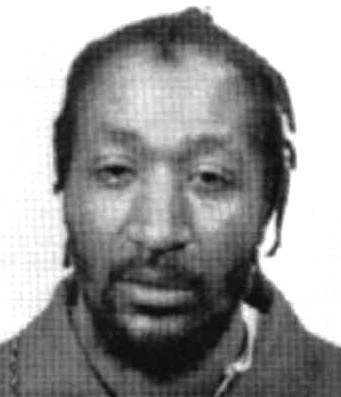
Gary Burris
Murderer Ervil LeBaron
Murderer · USA · 1972
Ervil Morrell LeBaron (1925 to August 16, 1981) was the leader of a polygamous…
35 victims
Ervil LeBaron
Murderer · USA · 1972
Ervil Morrell LeBaron (1925 to August 16, 1981) was the leader of a polygamous…
35 victims
 Brian Kevin Rosenfeld
Murderer · USA · 1985
Brian Kevin Rosenfeld Brian Kevin Rosenfeld was sentenced to three concurrent l…
23 victims
Brian Kevin Rosenfeld
Murderer · USA · 1985
Brian Kevin Rosenfeld Brian Kevin Rosenfeld was sentenced to three concurrent l…
23 victims
 Marvin Gray
Murderer · USA · 1975
Marvin Gray was convicted killer who claimed responsibility for 23 slayings and…
23 victims
Marvin Gray
Murderer · USA · 1975
Marvin Gray was convicted killer who claimed responsibility for 23 slayings and…
23 victims
 Yahweh ben Yahweh
Murderer · USA · 1980
Yahweh ben Yahweh was born and legally named Hulon Mitchell Jr. (October 27, 19…
23 victims
Yahweh ben Yahweh
Murderer · USA · 1980
Yahweh ben Yahweh was born and legally named Hulon Mitchell Jr. (October 27, 19…
23 victims
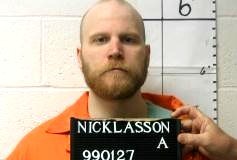 Allen Nicklasson
Murderer · USA · 1994
Allen Nicklasson · late August 1994 — Dennis Skillicorn, Allen Nicklasson, and…
3 victims
Allen Nicklasson
Murderer · USA · 1994
Allen Nicklasson · late August 1994 — Dennis Skillicorn, Allen Nicklasson, and…
3 victims
 John Ghobrial
Murderer · USA · 1998
John Samuel Ghobrial was an Egyptian national and a panhandler in La Habra. He…
1 victim
John Ghobrial
Murderer · USA · 1998
John Samuel Ghobrial was an Egyptian national and a panhandler in La Habra. He…
1 victim
 Rachael Mullenix
Homicide · USA · 2006
Defendant: Rachael Scarlett Mullenix (also referred to as Rachael Mullenix), 16…
1 victim
Rachael Mullenix
Homicide · USA · 2006
Defendant: Rachael Scarlett Mullenix (also referred to as Rachael Mullenix), 16…
1 victim
 Cindy Lou Landress
Murderer · USA · 1988
Cindy Lou Landress — appellant/defendant · Leonard Fowler — victim, found dead…
1 victim
Cindy Lou Landress
Murderer · USA · 1988
Cindy Lou Landress — appellant/defendant · Leonard Fowler — victim, found dead…
1 victim
 Catherine Andrus
Murderer · Canada · 2009
Catherine Andrus — common-law wife of Michel Leblanc; pleaded guilty to second-…
1 victim
Catherine Andrus
Murderer · Canada · 2009
Catherine Andrus — common-law wife of Michel Leblanc; pleaded guilty to second-…
1 victim
 Samuel Flippen
Murderer · USA · 1994
August 18, 2006 — Samuel Flippen was executed by lethal injection in North Caro…
1 victim
Samuel Flippen
Murderer · USA · 1994
August 18, 2006 — Samuel Flippen was executed by lethal injection in North Caro…
1 victim
- Gender
- male
- Country
- USA
- Location
- Marion County, Indiana, USA
- Date of birth
- December 17, 1956
- Age at first offence
- 24
- Characteristics
- robbery
- Victim profile
- Kenneth W. Chambers, 31 (taxicab driver)
- Method of murder
- Shooting (.38 handgun)
- Date(s) of murder
- January 29, 1980
- Years active
- 1980
- Date of arrest
- —
- Status
-
Executed
Executed by lethal injection in Indiana on November 20, 1997
Case details
Gary Burris was convicted of felony murder and was sentenced to death in Marion Superior Court. The presiding judge was John Tranberg.
Burris was executed by lethal injection in Indiana on November 20, 1997.
Timeline
- In January of 1981 — Burris was convicted of felony murder and was sentenced to death.
- In 1984 — The Supreme Court of Indiana affirmed Burris’s conviction.
- In 1980 — Burris and his companions decided to call a cab, rob the driver, and kill him no matter who the driver was.
- In January of 1980 — North Side Cab Company of Indianapolis dispatched driver Kenneth Chambers in response to a cab call.
- On January 28 — Burris arrived at the apartment around 5:40 p.m., and James Thompson and Emmett Merriweather joined him.
- In the morning of the murder — Thelma Williams testified that Emmett was with Burris at the M & J Social Club.
- On December 19, 1995 — The Seventh Circuit heard the case en banc.
- On April 24 of this year — The President signed into law the Antiterrorism and Effective Death Penalty Act of 1996.
- On September 12, 1996 — The Seventh Circuit panel heard the case.
- On May 29, 1997 — The Seventh Circuit case was argued.
- On June 19, 1997 — The Seventh Circuit case was decided.
- On November 20, 1997 — Burris was executed by lethal injection in Indiana.
The offence
In January of 1980, Gary Burris and his companions, James Thompson and Emmett Merriweather, decided that they would call a cab, then rob the driver, and no matter who the driver was they would kill him. Burris was described as the leader.
North Side Cab Company of Indianapolis dispatched their driver, Kenneth Chambers, in response to the call. After the men directed the driver where to go, they announced a robbery. They directed the driver to stop near an alley, required him to remove all of his clothing, took him into the alley, made him lie face down on the ground, and tied his hands behind him.
Burris placed the muzzle of his pistol against the victim’s temple and shot him.
Several hours later the victim’s body was discovered lying in a frozen pool of his own blood.
Background
The M & J Social Club at 1821 North College employed Thelma Williams as a barmaid. Williams testified that she telephoned the cab company at the request of the defendant.
Williams stated that she knew the defendant and that he usually ran around with two other men, Emmett and James.
Carol Wilkins lived at 1827 North College above the M & J Social Club. Carol testified that Burris rented the apartment and that he was dating her sister, Debra Wilkins.
On January 28, the day before the murder, Burris arrived at the apartment around 5:40 p.m. Burris told Carol that he had a deadline to pay $230 back rent and telephone bills.
Investigation
Williams said she assumed the cab arrived within fifteen minutes of her call because Burris left at that time. Burris, Merriweather, and Thompson later returned to the apartment.
Carol testified that when Burris left the apartment, he put a .38 pistol in his pocket. She identified State’s Exhibit 16 as being similar to the .38 pistol. Later, Burris tossed a clipboard with a paper on it onto the bed. Carol recognized the paper as a cab driver’s run sheet.
The defendant burned the run sheet and flushed the remains down the toilet.
Merriweather and the defendant then had a dispute over a gun. The defendant wanted to give Merriweather the gun but Merriweather refused to take it. The defendant kept the gun. Carol also saw that the defendant had quite a bit of money, described as two wads of money big enough to create a noticeable bulge in both of the defendant’s front pockets.
Carol later heard about the cab driver who had been shot and put the pieces together.
After police investigation, Emmett Merriweather and James Thompson were arrested in connection with the death of Chambers.
Emmett Merriweather and James Thompson, along with other sources, informed the police that the defendant was with them at the time of the murder.
Acting on information that defendant Burris was at Debra Wilkins’ apartment and planned to leave town, the police moved quickly and arrested Burris at 2035 North Meridian in Indianapolis.
A search of the apartment revealed that a sawed-off shotgun and a .38 pistol were hidden in a stereo speaker.
A member of the Indianapolis Police Department Crime Lab testified that the .38 pistol was used to kill Chambers. During the penalty phase of the trial, the same witness testified that the pull of the pistol’s trigger made it a little harder to shoot than an average weapon. The gun had no observable mechanical defect and did not exhibit any propensity for accidental discharge.
A pathologist, Dr. Robert Ransburg, testified that the body had a gunshot entrance wound in the right temple and that the wound was a “contact wound,” meaning that the muzzle of the gun would have had to have been held against the temple to create such a wound.
Other forensic specialists testified that the victim’s blood type and the bloodstain on the recovered .38 pistol were both type A.
Arrest
The police arrested Burris at 2035 North Meridian in Indianapolis.
Trial
One of the chief witnesses for the prosecution was William Allen Kirby. Kirby had shared a cell with Burris in the Marion County Jail where Burris admitted his involvement and culpability in the murder.
Kirby testified in recounting the defendant’s story, including that the defendant and his friends were in need of money; that they entered a dance contest but failed to win anything; that they took a cab to the “M & L Club” (Kirby said he was not sure “M & J Social Club” was what the defendant said but he knew the name was alphabetical); and that on the way to the club the defendant saw an envelope containing money on the front seat of the cab. Kirby testified that the defendant replied they were not prepared to take it because they did not have their “roscoes” (pistols).
Kirby testified that inside the “M & J Social Club” the defendant said to his friends that he was ready to get some “paper” (money) and that the defendant told his accomplices he would kill during the robbery if that would keep him out of prison. Kirby testified that Burris went up to his apartment, picked up a pistol, and had Thelma Williams call for a cab.
Kirby testified that after the cab arrived, the defendant and the other two men told the driver to proceed to 21st and Alvord, and that after proceeding only a couple of blocks on 21st, the three men drew their pistols, forced the driver to call in that his run was completed, and ordered the driver into the back seat.
Kirby testified that the cab was driven to an alley off 34th Street where the cab driver’s clothes were thrown out, and that in an alley between Guilford and Fall Creek Parkway the driver was forced out of the cab.
Kirby testified that the driver pleaded for his life by saying, “Man, take the money, take the cab, leave me alone, I'm not going to bust you, you know, I'm a street fellow, too.”
Kirby testified that the plea for mercy had no effect on the defendant, that the victim’s hands were bound, and that the defendant shot Chambers in the head.
Kirby testified that the defendant told him he used .38 hollow point shells because he thought they would explode on impact and thus leave nothing that could be identified through ballistics.
In its discussion leading to its conclusion regarding sentencing, the court stated:
Thus, the cold-blooded nature of this murder, the character of the offender, and the compliance of the trial court with Ind.Code § 35-50-2-9, lead us to conclude that the death penalty was not arbitrarily or capriciously applied, and is reasonable and appropriate. This cause is remanded to the trial court for the purpose of setting a date for the death sentence to be carried out.
The names and roles of the panel are recorded as GIVAN, C.J., and DeBRULER and HUNTER, JJ., concur, and PRENTICE, J., concurs in result.
Sentencing
Burris was convicted of felony murder and sentenced to death in Marion Superior Court, with Judge John Tranberg, and an attorney identified as Prosecutor: J.
After the first death sentence, the case went through direct appeal and postconviction proceedings.
The Supreme Court, Givan, J., dissented in an opinion in which Pivarnik, J., joined, relating to postconviction and sentencing.
The procedural history included a requirement for a new sentencing hearing after the Supreme Court concluded that defense counsel did not adequately represent Burris during the sentencing presentation to the jury. After eleven years had expired since the original sentencing jury decision, the trial court assembled a new jury to hear evidence and make a recommendation to the trial court as to the sentencing.
After hearing the evidence and deliberating, the jury informed the trial court that they were hopelessly deadlocked. The trial court discharged the jury and proceeded to enter judgment ordering the death penalty.
Appeals
Direct appeal and initial postconviction
Burris v. State, 558 N.E.2d 1067 (Ind. 1990) (PCR) included that Burris was convicted of murder and sentenced to death in the Marion Superior Court, Judge John Tranberg, J., and that Burris appealed. The Supreme Court affirmed and remanded for further actions on sentencing, with concurrences and dissents recorded in the opinion.
The later direct appeal and postconviction history included Burris v. State, 642 N.E.2d 961 (Ind. 1994) (Direct Appeal), and described that the Supreme Court held that the trial court could impanel new jury without any effort to determine if original jury could be reassembled, that photographs of victim did not cause undue prejudice and were admissible to explain police officer’s testimony, and that defendant was properly sentenced to death. The Supreme Court’s conclusion was recorded as affirmed.
Federal habeas corpus and later appeal
A federal habeas corpus history is recorded. Burris filed a petition under 28 U.S.C. sec. 2254 limited to the determination of guilt. The district court denied this petition, and the Seventh Circuit affirmed.
While appellate remedies in Indiana were pursued, Burris filed another petition under 28 U.S.C. sec. 2254 limited to the determination of guilt, and later filed additional federal habeas corpus challenging constitutional deficiencies in the second death sentence. The district court dismissed the petition as an abuse of the writ, and the Seventh Circuit affirmed with one judge dissenting: Burris v. Parke, 72 F.3d 47 (7th Cir. 1995) (per curiam) (Cudahy, J., dissenting).
The case was reheard en banc after a stay of execution. The Seventh Circuit’s opinion included analysis of the Antiterrorism and Effective Death Penalty Act of 1996 and its applicability. It concluded that the new law did not apply to Burris’s case, but the old law did, and that the state forfeited any defense based on the old law. The judgment dismissing the petition was vacated and the case was remanded to the district court for further proceedings.
The Seventh Circuit’s decision included the disposition:
VACATED AND REMANDED, WITH DIRECTIONS.
Separate opinions included an explanation by MANION, Circuit Judge, joined by KANNE, Circuit Judge, concurring, and an opinion by CUDAHY, Circuit Judge, dissenting in part and concurring in part.
In another Seventh Circuit proceeding, Burris v. Parke, 95 F.3d 465 (7th Cir. 1996) (en banc) and Burris v. Parke, 72 F.3d 47 (7th Cir. 1995), along with other related Supreme Court of Indiana decisions, were referenced.
The later Seventh Circuit appeal record included that three experienced criminal lawyers represented Burris at the second penalty proceeding and presented substantial evidence in mitigation. It included that Burris’s current lawyers argued that counsel did not investigate possible brain damage, did not introduce evidence that Burris blamed himself for the death (by heart attack) of the woman most responsible for his upbringing, and did not argue on appeal that juror disagreement was a mitigating circumstance the judge was obliged to consider.
The later Seventh Circuit decision concluded that the mitigation arguments did not require further evidentiary exploration and concluded that counsel’s performance was well in excess of the constitutional floor, and it stated:
Like the district judge, we conclude that the sentence was imposed in accord with all constitutional requirements. AFFIRMED.
Outcome
Burris’s conviction was affirmed on direct appeal.
His second death sentence was later affirmed.
His federal collateral challenge was vacated and remanded at one stage, with further proceedings directed. In the later Seventh Circuit decision, the sentence was affirmed.
Burris was ultimately executed by lethal injection in Indiana on November 20, 1997.
Aftermath
Burris’s execution occurred after the conclusion of the appellate and collateral proceedings described in the federal and Indiana litigation history.
Other details
The record includes references to Indiana’s requirement for successive petitions and procedural rules for post-conviction remedies, including a requirement that prisoners obtain approval from the Supreme Court for successive petitions, and that a trial judge declined to consider the successive petition in state practice.
In the federal proceedings, the record referenced that the Antiterrorism and Effective Death Penalty Act of 1996 replaced the doctrine of abuse of the writ with more restrictive rules for successive petitions. It also referenced that the law addressed filing of successive federal petitions and standards for evidentiary hearings.
The Seventh Circuit’s later appeal record included headings describing that six appellate opinions and three Supreme Court of Indiana decisions laid out the history of the capital case, listing those cases by citation.
The record included the case caption for a Seventh Circuit matter:
- “Gary Burris, Petitioner-Appellant, v. Al C. Parke, Superintendent, Indiana State Prison, and Pamela Carter, Attorney General of the State of Indiana, Respondents-Appellees.”
- No. 95-3725
- Federal Circuits, 7th Cir.
- September 12, 1996
- Before POSNER, Chief Judge, and CUMMINGS, CUDAHY, COFFEY, FLAUM, EASTERBROOK, RIPPLE, MANION, KANNE, ROVNER, DIANE P. WOOD, and EVANS, Circuit Judges.

Spotted an error, or have more information about this case?