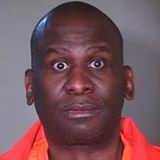
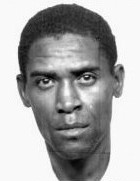
Eric John King
Murderer Brian Kevin Rosenfeld
Murderer · USA · 1985
Brian Kevin Rosenfeld Brian Kevin Rosenfeld was sentenced to three concurrent l…
23 victims
Brian Kevin Rosenfeld
Murderer · USA · 1985
Brian Kevin Rosenfeld Brian Kevin Rosenfeld was sentenced to three concurrent l…
23 victims
 Yahweh ben Yahweh
Murderer · USA · 1980
Yahweh ben Yahweh was born and legally named Hulon Mitchell Jr. (October 27, 19…
23 victims
Yahweh ben Yahweh
Murderer · USA · 1980
Yahweh ben Yahweh was born and legally named Hulon Mitchell Jr. (October 27, 19…
23 victims
 Russell Ellwood
Murderer · USA · 1991
Russell Ellwood was a former taxi driver. Authorities suspected him of killing…
20 victims
Russell Ellwood
Murderer · USA · 1991
Russell Ellwood was a former taxi driver. Authorities suspected him of killing…
20 victims
 Robert Martines Perez
Murderer · USA · 1994
Name: Robert Martines Perez · Other name used in proceedings: Robert Martinez P…
15 victims
Robert Martines Perez
Murderer · USA · 1994
Name: Robert Martines Perez · Other name used in proceedings: Robert Martinez P…
15 victims
 Larry Bellmore
Murderer · USA · 1985
Larry Bellmore Bellmore and Wesley went to Denney's home near Martinsville. Aft…
1 victim
Larry Bellmore
Murderer · USA · 1985
Larry Bellmore Bellmore and Wesley went to Denney's home near Martinsville. Aft…
1 victim
 Marco Bergamo
Serial killer · Italy · 1985
Marco Bergamo (detto il “mostro di Bolzano”) was a saldatore and carpentiere wh…
5 victims
Marco Bergamo
Serial killer · Italy · 1985
Marco Bergamo (detto il “mostro di Bolzano”) was a saldatore and carpentiere wh…
5 victims
 Dennis Duane Webb
Murderer · USA · 1973
Defendant: Dennis Duane Webb · Victims: John Rainwater and Lori Rainwater · Cou…
7 victims
Dennis Duane Webb
Murderer · USA · 1973
Defendant: Dennis Duane Webb · Victims: John Rainwater and Lori Rainwater · Cou…
7 victims
 Mark Dixie
Murderer · United Kingdom · 2005
Mark Philip Dixie — defendant Sally Anne Bowman — victim; British model Lewis S…
1 victim
Mark Dixie
Murderer · United Kingdom · 2005
Mark Philip Dixie — defendant Sally Anne Bowman — victim; British model Lewis S…
1 victim
 Frederick Deeming
Mass murderer · United Kingdom/Australia · 1891
Frederick Bailey Deeming (30 July 1853 – 23 May 1892) was an English-born Austr…
6 victims
Frederick Deeming
Mass murderer · United Kingdom/Australia · 1891
Frederick Bailey Deeming (30 July 1853 – 23 May 1892) was an English-born Austr…
6 victims
- Gender
- male
- Country
- USA
- Location
- Maricopa County, Arizona, USA
- Date of birth
- September 30, 1963
- Age at first offence
- 26
- Characteristics
- robbery, drug addict, alcohol
- Victim profile
- Ron Barman (store clerk) and Richard Butts (store security guard)
- Method of murder
- Shooting (.357 revolver)
- Date(s) of murder
- December 27, 1989
- Years active
- 1989
- Date of arrest
- Next day
- Status
-
Executed
Executed by lethal injection in Arizona on March 29, 2011
Case record: Eric John King
Background
Eric John King was convicted of two first-degree murder counts and armed robbery connected to a robbery at a Short Stop convenience store in Phoenix, Arizona.
King was also described in court proceedings as having a history that included substance abuse. Evidence discussed in later proceedings included that he abused alcohol and drugs after he left his prison sentence for rape and kidnapping. He also reported hearing voices on and off his entire life, and suffered from anxiety and insomnia. Court materials described King’s father as alcoholic, abusive, and mentally disturbed, and described the father’s death when King was 11.
King was released after serving seven years for rape and kidnapping and later committed the convenience store robbery and murders in late 1989.
The offence
On December 27, 1989, Eric John King, accompanied by a black male later identified as Michael Page Jones, robbed the Short Stop convenience store in Phoenix, Arizona.
During the robbery, King shot and killed the store clerk, Mr. Ron Barman, and the store’s security guard, Mr. Richard Butts. Officers believed King used Mr. Butts’s .357 revolver in the commission of the offences.
Approximately $72 was taken from the cash register in the store.
After the shootings, King was seen returning to the scene to wipe off Mr. Butts’s holster and belt with a white cloth. Witnesses described King throwing a plastic bag into a dumpster after the shootings; Hill testified that the bag contained a gun and a dark sweater with a white diamond pattern she had seen King wearing earlier that night.
Investigation
The robbery was captured on two time-lapse video cameras, and the videotape was admitted into evidence. Photographs developed from the videotape depicted a black male wearing a dark sweater with a band of light colored, diamond-shaped markings across the chest and arms. No one else was present in the store at the time of the robbery.
A Phoenix police officer received a radio call directing him to the Short Stop and providing a description of the suspects. The officer saw two men more or less fitting the description, told them to halt, and Michael Page Jones stopped while the other man wearing a distinctive sweater ran away.
Hill, described as Jones’s childhood friend’s girlfriend, called the police after seeing King’s picture on television that she recognized from the events near the dumpster.
Arrest
King was arrested on December 28, 1989.
People involved
Defendant
- Eric John King (defendant)
Accomplice and witness
Michael Page Jones (accomplice; state witness at trial)
- Jones admitted at trial that he was at the Short Stop when the robbery and murders occurred.
- Jones testified that he had gone to the Short Stop with King to buy wine and that he remained outside while King went inside the store.
- Jones later testified about events he claimed he remembered and stated that after police apprehended both men, charges against him had been dismissed and he was later released with no charges filed.
Joann Smith (witness; walked with Hill)
Frank Madden (witness)
- Madden saw the security guard lying on the ground with an empty gun holster.
- Madden dialed 911.
- Madden saw the man in the distinctive sweater wipe the security guard’s holster and belt off with a white cloth and leave.
Kevin Harris (witness)
David Dils (witness)
Nolan Thomas (witness; drove into the Short Stop with his son Derek and Greg Hecky)
Derek Thomas (witness; directed his dad’s attention to the security guard)
Greg Hecky (witness)
Phoenix Police Sergeant Richard Switzer (responding officer described in trial facts)
Nekita Renee Hill (witness)
Ms. Hill’s friend Joann Smith (witness)
Ms. Hill and Ms. Smith (described as walking nearby and noticing helicopters)
Victims
- Mr. Ron Barman (store clerk)
- Mr. Richard Butts (store security guard)
Timeline
- December 27, 1989 — Eric John King and Michael Page Jones robbed the Short Stop convenience store in Phoenix, Arizona; King shot and killed clerk Ron Barman and security guard Richard Butts; approximately $72 was taken.
- December 28, 1989 — King was arrested.
- August 28, 1990 — Start of trial.
- September 5, 1990 — Verdict.
- March 4, 1991 — Sentencing.
- March 29, 2011 — Executed by lethal injection in Arizona; pronounced dead at 10:22 a.m. after being moved to the death house and administered a sedative beginning at 10:04 a.m.
Trial
Court and participants
- Presiding Judge: Michael D. Ryan
- Prosecutor: Paul Rood
Charges and verdict
Following jury trial, the jury convicted King of:
- two counts of premeditated first-degree murder
- one count of armed robbery, dangerous
The special verdict included findings of aggravating circumstances under Arizona law.
Evidence and identification
Multiple witnesses testified to details of the perpetrators and the events. Hill recanted her identification in part at trial, while also testifying that she called the police after recognizing the surveillance image broadcast on television.
Defendant did not testify at trial.
Opening statement and witness testimony (verbatim quotations)
The prosecutor made the following opening statement remarks:
You will hear from a man by the name of Michael Page Jones. Mr. Jones was with Eric King that night. In fact, at one time Mr. Jones was charged as an accomplice. The case was later dismissed. Michael Jones was with Mr. King. He told the police officers later in December exactly what happened. I can't guarantee you what Mr. Michael Page Jones is going to say when he gets on the stand, ladies and gentlemen, but he was there that night and he has information, and I suggest to you that if he testifies truthfully as he should, he will implicate the defendant, Eric King, without a doubt.
The prosecutor also made the following remarks about Renee Hill:
Who else? Renee Hill is here. Renee Hill at one time was the girlfriend of Michael Jones. Renee Hill currently lives in the Projects. She is on welfare, and she is scared to death. She comes to Court today not voluntarily, but because Detective House managed to go out and find her over the last 24 or 36 hours and bring her to the Court. She is scared. Whether she should be or whether she shouldn't be, ladies and gentlemen, it doesn't matter, because in her own mind she is scared. She does not want to testify. She does not want to come into this courtroom under any circumstances. Ladies and gentlemen, she will be brought into this courtroom, and you will hear her testify.
Defendant’s statements at sentencing hearing (verbatim quotations)
During the sentencing hearing, King left in the middle of the hearing and told the judge:
I thought I had a right to be proven not guilty. Like I said I did not commit the crime. No evidence, no effect. You already heard the case. I know the situation. You will give me the death penalty or life. I feel either way you go and I want to leave.
Sentencing
King was sentenced to death for each of the two first-degree murder convictions, and to a consecutive, aggravated term of 21 years on the armed robbery conviction.
King was ordered to pay restitution of $72.84.
Aggravating circumstances found
In its special verdict, the court found that the state proved beyond a reasonable doubt three aggravating circumstances:
- Pecuniary gain
- Especially depraved
- Multiple homicides
Mitigating circumstances found
The trial court found no statutory mitigating circumstances proved by a preponderance of the evidence, but it found six non-statutory mitigating circumstances proved by the defendant:
- Traumatic childhood
- Dysfunctional family
- Post-traumatic distress
- Substance abuse problem
- Antisocial personality disorder produced in part by dysfunctional childhood
- Family loves him
The trial court determined that none of these mitigating circumstances, taken individually or collectively, warranted leniency.
Appeals
State v. King (direct appeal)
- State v. King, 190 Ariz. 268, 883 P.2d 1024 (1994).
- The convictions and sentences were affirmed.
The Arizona Supreme Court held:
- the witness who feigned loss of memory could be impeached with prior statements
- the prosecutor did not engage in improper vouching
- defendant’s acquaintances could testify as to identification of defendant as suspect in surveillance videotape
- diminished capacity was not established as a mitigating factor
- potential for rehabilitation and minimal risk for future dangerousness were not established as mitigating factors
- witness elimination did not support finding especially heinous or depraved manner in the specific manner challenged (the aggravating-factor finding was later vacated, while the death sentences were affirmed)
The Arizona Supreme Court vacated the trial court’s finding that the murders were committed in an especially depraved manner while still affirming the death penalty.
King v. Schriro (federal habeas)
King petitioned unsuccessfully for habeas corpus in federal court; the Court of Appeals affirmed.
Certified issues in that appeal included:
- prosecutorial misconduct by vouching for one witness and implying that another witness was scared
- ineffective assistance of counsel at sentencing
The Court of Appeals affirmed denial of habeas relief.
Outcome
King’s death sentences were affirmed despite the vacatur of the statutory aggravating factor that the murders were committed in an especially depraved manner.
Aftermath
On March 29, 2011, King was executed by lethal injection in Arizona.
During the execution:
- A last meal included fried catfish, collard greens, candied yams, cornbread, chocolate cake with ice cream, and cream soda.
- When asked if he had any last words, King said “no.”
- He was pronounced dead at 10:22 a.m.
Arizona Attorney General Tom Horne witnessed the execution. Maricopa County Attorney Bill Montgomery witnessed the execution. King’s attorney Michael Burke declined comment. The U.S. Supreme Court refused to consider the case and stay the execution. Late-stage litigation included arguments about stays or reprieves based on issues ranging from flaws in the original evidence to the quality and origin of the drugs used to put him to death.
The Arizona Department of Corrections dismissed the misclassification of the drugs as a clerical error committed by an import broker engaged by the department to handle importation details. In an emergency clemency hearing, Burke argued the “clerical error” involved a drop-down menu on a computer program that grouped animal and human drugs, and suggested that the misclassification occurred multiple times in September and October.
Spotted an error, or have more information about this case?